
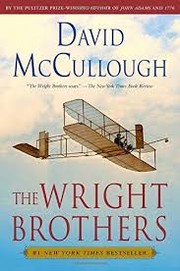
The Wright Brothers
2,027-word summary 9 min read 336 pages in the book
- First published
- 2015
- Publisher
- Simon & Schuster
- Pages
- 336
- ISBN
- 9781476728759
Reading options
What's inside (10 sections)
There is a moment early in McCullough's book where he notes that the two men who figured out how to fly had no college education, no government funding, no institutional backing, and worked out of a bicycle shop in Dayton, Ohio. I had heard the bicycle shop detail before, of course. Everyone has. But the full weight of it did not land until McCullough laid out what their competitors had, which was enormous endowments, university laboratories, prestige, and staff. The Wrights had a workbench and each other. That contrast is the engine of the book, and it is more remarkable every time you think about it.
I came to this one because McCullough has a reputation for making history feel intimate, and because I knew almost nothing about the Wrights beyond the date and the place of the first flight. What I found was less a book about aviation than a book about a particular kind of American character, patient, methodical, stubborn, deeply religious, and completely uninterested in what the rest of the world thought of it. It is also, unexpectedly, a family story, and the family is what gives the book its warmth.
Two brothers, and how they worked
The first thing to understand about Wilbur and Orville is that they were not identical in temperament, and McCullough makes the difference legible without ever overdoing it. Wilbur was the older, the more intellectual, the one whose early years included a period of withdrawal and reading that the family worried about. He was the thinker and the writer of the partnership. Orville was the tinkerer, the one who built things with his hands and who had a natural engineering instinct that did not need to be verbalized first.
What they shared, and what McCullough returns to repeatedly, is a way of working that looks almost comically slow by modern standards. They did not rush to build. They read everything that had been written about flight, much of it wrong. They studied birds for years. And then, crucially, they built a wind tunnel in the back of the shop and spent months testing more than two hundred wing shapes, gathering data nobody had bothered to gather because everyone else assumed the theory was already settled.
That wind tunnel is, to my mind, the hinge of the entire story. The accepted aeronautical figures of the day, drawn from the work of earlier experimenters, turned out to be wrong, and the Wrights discovered this because they refused to trust them. When they finally had their own data, they had something their better-funded rivals did not, which was knowledge that was actually true. The lesson is almost too neat, and McCullough resists moralizing about it, which makes it land better.
The family, and Muriel in particular
One of the more enjoyable decisions in the book is the attention McCullough pays to the Wright family as a unit. Their father, whom everyone called Bishop Wright, was a traveling preacher of real force, and he shaped the household in ways that are visible in both sons for the rest of their lives. He was stern, devout, and confident in his judgment, and the brothers remained loyal to him even as they quietly went their own way.
But the figure I found most interesting was their sister Muriel. She was, in the book's telling, the most socially polished of the siblings and the one most attuned to the world outside the family. She traveled with Wilbur to Europe during the period when the brothers were famous there, and she served as something like a cultural interpreter for a pair of Ohio mechanics who had become the most talked-about people on the continent. McCullough gives her real space, and the book is better for it.
There is a quietly poignant thread here about the gender dynamics of the era. Muriel was plainly brilliant and plainly excluded from the work her brothers did, and the book does not need to make a speech about it. The exclusion is visible in the structure of the household and in the fact that the brothers' great project was hers to support and admire but never to join.
Kitty Hawk, and the years of failure
Everyone knows about December 17, 1903. What the book restores is the four years of work and disappointment that preceded it, and the fact that the brothers went back to Kitty Hawk season after season, sleeping in a shed, eating badly, and being mocked by the locals for their strange gliders.
The Kitty Hawk setting is itself a good story. The brothers chose the Outer Banks for reasons of wind and privacy, and the remoteness meant that their experiments were conducted with essentially no witnesses, which suited them perfectly. They were not showmen. When the famous photograph of the first flight was taken, the man who operated the camera had to be persuaded that the event was worth photographing, and Wilbur's mother had to be told by telegram what had happened because she would not have believed it otherwise.
McCullough is good on the incremental nature of the progress. Each glider was a small improvement, and each season ended with lessons learned rather than with triumph. There is a version of this story that turns the brothers into visionaries struck by inspiration, and the actual story is much duller and much more impressive. They were engineers, and engineers advance by being careful.
The first powered flight lasted twelve seconds and covered a hundred and twenty feet. McCullough does not undercut the moment, but he does not inflate it either, which is exactly right. The brothers knew what they had done, even if the world would take several more years to catch on.
The world finds out, and does not believe it
One of the more entertaining sections of the book covers the period after the first flights, when the Wrights attempted to interest the United States government and various European powers in their invention, and were met with a level of disbelief that reads as almost comical in retrospect. They were mechanics from Ohio claiming to have flown. Of course people were skeptical. The problem was that the skepticism shaded into contempt, and the brothers spent years being patronized by officials who knew less than they did.
McCullough documents the letters, the meetings, and the endless delays with a kind of restrained indignation that mirrors the brothers' own. Wilbur in particular emerges as a man of enormous patience and considerable steel. He was unfailingly polite in correspondence while refusing to concede anything, and he understood, better than the government men did, exactly what he had.
The European tours are the most colorful part of this period. The brothers were celebrities there in a way they never quite were at home, and the image of Wilbur and Orville, modest and unpreening, being feted by royalty while remaining essentially unchanged, is one of the book's recurring pleasures. McCullough notes more than once that neither brother was altered by fame, which is rare enough to be worth remarking on.
Innovation as craft
The book's quiet argument, the one it never announces, is about the nature of invention. The Wright story is usually told as a story about genius, and McCullough reframes it as a story about method. The brothers succeeded because they worked in a particular way, patiently, empirically, with relentless attention to detail, and without any interest in being first for its own sake.
There is a famous episode involving Lilienthal, the German glider pioneer whose death in a crash motivated the Wrights to begin their own work. They studied his data, and when that data proved unreliable, they rebuilt the foundations themselves. This willingness to distrust inherited knowledge, even prestigious inherited knowledge, recurs throughout. It is the reason they won, and it is the reason their victory is instructive rather than merely impressive.
McCullough also makes clear how much of the work was unglamorous. There were years of correspondence. There were disputes with suppliers. There were the endless practical problems of building a reliable engine when no one made engines suitable for the purpose, which forced the brothers to design and build their own with the help of their shop mechanic, Charlie Taylor. The mechanic deserves the credit he gets here, and in most accounts he does not get it.
The cost of it
The book does not shy from what the achievement took. The brothers were consumed by their work for a decade, and their personal lives bear the marks of it. Neither married during the critical years, and Wilbur's marriage late in life was cut short by his death from typhoid fever at forty-five, just as the world was beginning to understand what the Wrights had done.
That death is handled with restraint, and it is one of the sadder passages in a book that is otherwise quite cheerful. McCullough notes that Wilbur did not live to see the full consequences of his work, and there is something genuinely unjust about that. The man who solved flight was dead before flight became ordinary.
Orville lived a long life afterward, and the book follows him into a period of quiet celebrity and quiet regret, including the bitter patent litigation that embittered his later years. McCullough largely steers around the legal battles, which is a defensible choice given the book's focus, though a reader interested in the business of early aviation will find the treatment somewhat thin.
McCullough's method
It is worth saying something about the prose, because it is a large part of why the book works. McCullough writes in short, declarative sentences that rarely call attention to themselves. He favors concreteness over abstraction, which is fitting in a book about two men who thought the same way. And he uses primary sources, particularly the family letters, to let the Wrights speak in their own voices, which keeps them from becoming figures in a historian's argument.
The warmth of the book comes partly from this. The brothers are allowed to be funny, and odd, and particular. You learn that they were frugal to a degree that borders on the extraordinary, that they were beloved in their Dayton neighborhood, that they cared about clothes less than almost anything. These details do not advance the argument about innovation. They make the brothers into people, which is the book's real achievement.
There are moments where the narrative pace slows, particularly in the sections detailing the mechanical evolution of successive aircraft models. A reader interested primarily in the human story may find these passages skimmable, and I suspect a few readers did. But they are also evidence of McCullough's seriousness, which is that he does not want to give you the impression that the engineering was simple.
What the book is really about
Underneath the aviation history, The Wright Brothers is about a certain American ideal, the self-made, self-taught, self-reliant individual who succeeds through persistence rather than through connections or credentials. McCullough is clearly drawn to this ideal, and the book is in part a tribute to it. A reader from a different political temperament might find the celebration somewhat unexamined, since the Wrights also had advantages, of family stability, of race, of era, that the book does not dwell on.
The counterargument is that the advantages they did not have were more decisive than the ones they did. They had no degree. They had no money. They had no access to the centers of power and science. And they beat everyone. That is a fact, and it is a fact worth telling plainly, which McCullough does.
The book left me with a particular image I did not expect. Not the flight itself, which is too familiar to shock, but the picture of two men in a shed at Kitty Hawk, in the cold, eating badly, arguing about wing curvature, with no audience and no certainty that any of it would work. That is where the twentieth century began, and McCullough is right that it deserves to be remembered as a place rather than as a moment.
FAQ
How does The Wright Brothers differ from other books about the invention of flight?
McCullough focuses on the two brothers as people and on the years leading up to 1903, with less attention to the legal battles and the later military aviation business that other histories emphasize.
Is The Wright Brothers readable for someone who is not into aviation?
Yes. It is narrative biography written for general readers, and the flying is almost secondary to the portrait of the brothers, their family, and their working habits.
What sources did David McCullough use?
He drew heavily on the Wright family correspondence and papers, which is why the brothers' own voices and their letters home run through the book.
Similar books
1776
Washington's amateur army from Boston siege to Trenton through mud and doubt.
2,139-word summary · 10 min read
John Adams
McCullough follows Adams from Braintree lawyer to second president.
2,515-word summary · 11 min read

Long Walk to Freedom
Mandela's account of a Thembu childhood, a law practice, a banned movement, twenty-seven years in prison, and the negotiation that ended apartheid.
2,454-word summary · 11 min read
1491: New Revelations of the Americas Before Columbus
Charles C. Mann gathers archaeology, ecology, and demography to argue that the Americas before Columbus were older, fuller, and more deliberately shaped than…
2,712-word summary · 12 min read
Bury My Heart at Wounded Knee: An Indian History of the American West
Dee Brown's 1970 retelling of the American West from the point of view of the people it destroyed.
2,233-word summary · 10 min read
The Letters of Vincent van Gogh
Vincent van Gogh's letters to his brother Theo, in a Penguin Classics selection edited by Ronald de Leeuw, trace a decade of work, faith, and obsession.
2,611-word summary · 12 min read
The World Is Flat: A Brief History of the Twenty-first Century
Thomas L. Friedman's 2005 bestseller argues that technology, trade, and open borders leveled the global playing field, and it names the ten forces that did it.
2,369-word summary · 11 min read
Catherine the Great: Portrait of a Woman
A German princess survives a miserable marriage and a coup to rule Russia for thirty-four years, torn between Enlightenment ideas and absolute power.
2,065-word summary · 9 min read
The Warmth of Other Suns
Three migrants ride north out of Jim Crow toward Chicago and LA.
2,561-word summary · 11 min read
The Emperor of All Maladies
A biography of cancer from Galen to chemo through one doctor cases.
2,255-word summary · 10 min read
Killing Lincoln
Booth plots as Lincoln pushes war end and reunion in 1865.
2,486-word summary · 11 min read
Hidden Figures
Black women computers at Langley launch rockets past Jim Crow.
2,385-word summary · 11 min read
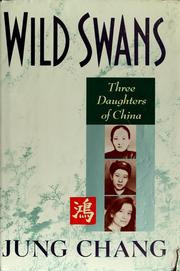
Wild Swans
Three generations of women survive warlords, revolution, and the Cultural Revolution in Jung Chang's family memoir.
2,356-word summary · 10 min read
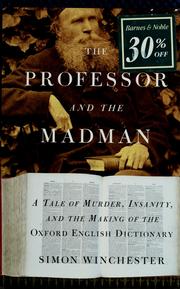
The Surgeon of Crowthorne
James Murray built the Oxford dictionary with Broadmoor inmate William Minor, whose thousands of slips shaped this 1998 HarperCollins story of murder, madness…
2,775-word summary · 12 min read
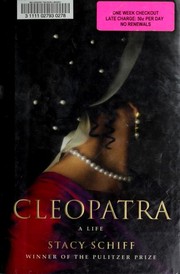
Cleopatra: A Life
Pulitzer winner Schiff restores Cleopatra as a capable ruler, from Ptolemy debts and Caesar to Antony, Actium, and her death in 30 BC, built from coins and…
3,586-word summary · 16 min read
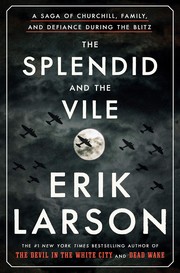
The Splendid and the Vile
Larson follows Churchill circle through Blitz year with diaries and bombing nights.
2,038-word summary · 9 min read
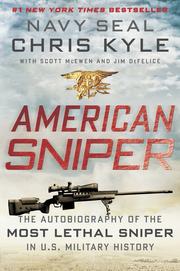
American Sniper: The Autobiography of the Most Lethal Sniper in U.S. Military History
Navy SEAL sniper Chris Kyle recounts Texas roots, SEAL training, four Iraq tours, and the strain combat placed on his marriage and health.
2,011-word summary · 9 min read
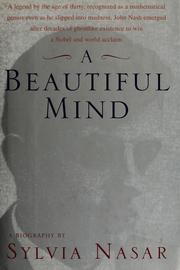
A Beautiful Mind
Mathematician John Nash's brilliant game theory rise, schizophrenia collapse, and Nobel return, with wife Alicia's care.
2,142-word summary · 10 min read

Cosmic Music
The first full biography of Alice Coltrane, from Detroit church piano to ashram guru.
2,048-word summary · 9 min read
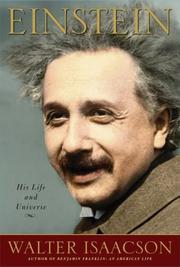
Einstein: His Life and Universe
Isaacson traces Einstein from patent clerk to world fame using newly opened papers, through 1905, relativity, exile, and the long unified theory search.
2,773-word summary · 12 min read
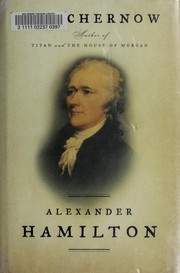
Alexander Hamilton
Orphaned Caribbean immigrant becomes Washington's aide and America's first Treasury secretary, then falls in a duel.
2,004-word summary · 9 min read
In the Garden of Beasts
Ambassador Dodd takes his family to 1933 Berlin and watches charm curdle into terror.
1,927-word summary · 9 min read
Homo Deus
After ruling the world, humans chase upgrades and delegate feeling to systems that know patterns.
2,013-word summary · 9 min read
The Autobiography of Malcolm X
Malcolm X traces his life from Michigan childhood through Harlem, prison, and the Nation of Islam to Mecca in this 1965 memoir told to Alex Haley.
2,816-word summary · 13 min read
Unbroken
Louis Zamperini survives a Pacific crash, sharks and POW camps after running in the Berlin Olympics.
3,263-word summary · 15 min read

Becoming
Michelle Obama traces her path from South Side Chicago through Princeton, Harvard law and the White House years in this warm, candid memoir of family, work and…
2,143-word summary · 10 min read
Steve Jobs
Walter Isaacson's authorized Steve Jobs: forty interviews covering the garage, the 1985 ouster, Pixar, and the return that made the iPhone.
2,415-word summary · 11 min read

The Zookeeper's Wife: A War Story
The directors of the Warsaw Zoo hid roughly three hundred Jews in empty cages and outbuildings after the German invasion, while Jan worked for the resistance.
2,065-word summary · 9 min read

Sybil
A 1973 case study of a woman treated for multiple personalities, and the book that made dissociative identity disorder a household phrase.
2,054-word summary · 9 min read
The DaVinci Code: A Quest for Answers
A short 2006 dialogue in which three friends test Dan Brown's claims about Jesus, Mary Magdalene, Nicaea, and the canon.
2,088-word summary · 9 min read