
Bury My Heart at Wounded Knee: An Indian History of the American West
2,233-word summary 10 min read 487 pages in the book
- First published
- 1970
- Publisher
- Holt, Rinehart & Winston
- Pages
- 487
- ISBN
- 9780030853227
Reading options
What's inside (8 sections)
I came to this book the way most people do, late and slightly suspicious. A friend kept saying that if you wanted to understand the American West, read it, and I kept nodding and then reading something else. When I finally did, the first thing I noticed was that the book opens with a question that has no comfortable answer. "Where today are the Pequot? Where are the Narragansett, the Mohican, the Pokanoket," Brown asks on his first page, and then he spends 487 pages showing you what happened to them and to everyone who came after. The book appeared in 1970 from Holt, Rinehart & Winston, ISBN 9780030853227, and it has never been out of print. Nearly four million copies, seventeen languages, more than a year on the bestseller list in hardcover. It is also the reason a lot of people who grew up on Westerns now feel oddly sheepish about them.
A survey first, then one war at a time
Brown's method is easy to miss if you only know the famous title. He does not start with a battle. He starts with a survey. The opening chapter, "Their Manners Are Decorous and Praiseworthy," runs from 1492 to 1860 and sets the terms: the early meeting between Native peoples and Europeans was mostly peaceful, the trade goods and the horse and the guns began to reshape life on the Plains, and open resistance only hardened once land was being taken and the eastern nations had already been shoved west by war, removal and broken treaty. The chapter ends in 1860 with the Plains about to go up in fire.
After that, the book works campaign by campaign. The table of contents in this edition runs to nineteen chapters, and under each chapter heading Brown lists numbered entries, forty-nine of them in all, the way a historian with something to prove builds a case rather than a story. Chapter by chapter the cast changes: the Navahos, the Apaches led by Cochise, the Cheyennes and Arapahos, the Santee Dakota, the Lakota, the Poncas, the Modocs, the Utes, the Nez Perce, the Kiowa and Comanche, and the handful of others the great armies of the settlement era crushed on the way to filling the map. By the time the last chapter puts an old Red Cloud in his last years, the reader has been through about thirty years of war with very little page break.
I found that method both the book's strength and its problem. The strength is that Brown lets a campaign breathe. When he gets to the Navahos, we live with Manuelito, a leader who would not surrender, who walked his people away from their homeland rather than sign away what they had.
The Long Walk of the Navahos
Chapter Two is "The Long Walk of the Navahos," and it is the one I remember. Brown sets it in 1860, when the Navahos were still resisting from their strongholds in the canyons. In February of that year, Brown writes, Manuelito led five hundred warriors against an Army horse herd, and the soldiers began answering by attacking bands rather than villages. The treaty of 1864 changed the arithmetic. The government offered rations and land in exchange for the Navahos going to Bosque Redondo, a new reservation in New Mexico. Then Carleton came, and the offer turned into an order.
The roundup is the ugliest passage in the book to read. Families were cut off from their food, kept moving in winter, and the count of dead in transit grows in Brown's account. His numbers are the kind you can check. The first contingent of 1,430 reached Fort Sumner on March 13. Ten died on the road. Three children were kidnapped, he reports, probably by Mexicans riding with the soldier escort. A later group of about 946 came in, and about 110 of those died.
Brown does not editorialize at that moment. He lets the arithmetic speak and then shows the reservation that was supposed to be a gift. The soil was alkaline and unpromising, and the water was black and brackish, the Navahos said. They stayed four years and then walked back. That decision to leave a promised reservation and go home is the part of the story I have never forgotten, because Brown lets a people make a decision instead of only receiving one.
Cochise, Fetterman, and the reports that went wrong
Other chapters are built the same way, out of a specific place and a specific quarrel. The Apache chapters cover the old war chief Mangas Colorado, called Red Sleeves, a Mimbreño of about seventy who was said to be even taller than Cochise, and then Cochise himself, whom the government invited to Washington and whom no white man could find until the spring of 1871. When Lieutenant Bascom had him arrested in 1871, the uneasy peace in the Apache country collapsed. Brown quotes Cochise on what he would do to Crook, the commander he called the Gray Wolf. He would fight with rocks if he had to, and if God willed it, the rocks would fall on Cochise and cover him up.
Brown is at his best when the paperwork and the memory disagree, because then you can see the two versions of the West. The Army reported a fight at a village as "the attack on Crazy Horse's village," when Crazy Horse was camped miles away to the northeast and the men who were attacked were Two Moon's and the others. He also gives the Fetterman fight its Indian name, the Battle of the Hundred Slain, and notes the aftermath: almost two hundred dead and wounded, and the survivors turning back with the wounded because of the cold. He then points out the obvious, that this was the worst defeat the Army had yet suffered in Indian warfare.
The same care runs through the method notes. Brown explains in his preface that the real sources of Native testimony are the records of treaty councils and the other formal meetings where Indians and officials sat down together, and that he interviewed warriors and chiefs and gave them the chance to explain what was happening to them. He is also honest that the quality of those interviews varied with the abilities of the interpreters, which is a warning most popular history books do not print. The back matter carries a bibliography with real citations in it, an interview with Cochise held by the Kansas State Historical Society, Senate report 156, and a Westernlore edition of the Long Walk published in Los Angeles in 1964. You can audit him. That matters more than it sounds.
The end of the war and the argument about it
The last chapters move to the reservation and allotment era, the years when the buffalo herds were fenced off and the pressure was applied to the last armed resistance. Standing Bear, Little Wolf, Ouray, Colorow, the Chiricahua prisoners at Fort Pickens, Geronimo, Victorio, Nana, and then Wovoka, the Paiute prophet whose ghost dance panicked the country, and Big Foot's death. The book does not end in a victory parade. It ends with old Red Cloud.
The reception was enormous and mostly warm. Time ran a piece called "The Forked-Tongue Syndrome" in February 1971 and compared Brown to an auditor going through old forgotten records, tallying broken promises and massacres. N. Scott Momaday, who had won a Pulitzer by then, wrote in the New York Times that the book's documentation of council records and firsthand description was extraordinary, and called the whole thing a narrative of singular integrity. Peter Farb weighed in the New York Review of Books in December 1971 and said the Indian wars were finally shown to be the dirty murders they were. The book became a movie in 2007 on HBO, and a new preface by Brown appeared for the thirtieth anniversary edition, with a foreword by Hampton Sides in the 2007 Henry Holt printing. It has been reissued ever since.
The criticism is real, and some of it lands. Francis Paul Prucha, reviewing the book in the American Historical Review in 1972, argued that much of the material went uncited except for direct quotations, that the selection of episodes served a particular point of view rather than balance, and that the story of government and Indian was told without enough of the country's other history around it. More recently the historian Ari Kelman argued in Myth America that a book intended to document a vibrant Native past actually reduced Indigenous history to decline, destruction and disappearance, which is the vanishing Indian story with a white man's name on it.
There is a related objection that is really about form, and it is the one I keep running into as a reader. Brown gives a dozen separate peoples one narrative voice and one rhythm, and the compression does real damage. The Lakota, the Cheyenne, the Apache, the Diné and the Ute did not experience the same war or the same empire, and when they all speak in the same register, quietly and with the same rhythm of grief, they start to blend. Brown also dramatizes. He builds scenes, and sometimes the scene is tidier than the record. The Army's "attack on Crazy Horse's village" is a good example of the reverse case, where the official report is the exaggeration and Brown has to fight his own source.
Then there is the harder question of who gets to narrate. Brown said he wanted the history of the settlement of the West read from the point of view of its victims, and that Americans who always looked westward should read the book facing eastward. It is an extraordinary thing for a white librarian from the South to have done, and the book deserves its four million readers. But the voice that carries the victories and the deaths is still one man's. David Treuer, who is Ojibwe on his mother's side and grew up on a reservation, felt the weight of that and answered it with The Heartbeat of Wounded Knee in 2019, a book written about Indian life rather than Indian death. Neither book cancels the other. They sit on the same table, and the argument between them is the argument the first one started.
The man who wrote it
Brown was born on Leap Year Day in 1908 in a sawmill town in Louisiana and grew up in the oil boom country of Ouachita County, Arkansas. As a boy he read a three-volume history of the Lewis and Clark expedition in the Little Rock public library and never quite came back from it. At Little Rock high school games he got to know Moses Yellowhorse, a pitcher for the Travelers, and Brown said later that the friendship shaped his view of the West and his writing. He worked for the Department of Agriculture as a librarian from 1934, spent the war in the War Department library, and then became an agriculture librarian at the University of Illinois, where he stayed from 1948 to 1972 and where he was still head librarian when Time called him a Western historian. He was part of a generation of archivists who had read everything, and when he sat down to write about the Plains, he had the notes to do it.
A lot of what he wrote before was built the same way. Fighting Indians of the West and Trail Driving Days with Martin Schmitt, The Fetterman Massacre, Showdown at Little Big Horn, and then the one that made his name. He kept writing afterwards, and readers often assumed he was Native American, which he was not. He was a white man from Arkansas, and the book is clearer for it.
Who should read it
Read it if you want the version of the West that starts with the land already inhabited, and if you are willing to be told that the story you were handed as a child had a side that had been cut out. It is short, it is readable, and it will make you angry in a slow way that lasts longer than you expect.
Read something else if you want tribal histories written by tribal historians, or if you want the disagreements left visible. Brown gives you a synthesis, and the synthesis is the point as well as the limit. Ari Kelman, David Treuer and the historians who followed them are not correcting trivia. They are asking whether a nation that has been on the receiving end of a rewritten history for half a century should write the next version itself.
The 2007 HBO film with Adam Beach and Aidan Quinn covers roughly the last two chapters, the Lakota road to Wounded Knee. It is worth seeing, and it is not the book. The book is nineteen chapters long, and the first seventeen of them are the ones that keep the last two from being a tragedy with a happy ending.
I still think about the first page. "Where today are the Pequot?" Brown asks, and a century and a half later the question is the one we still have to answer. He answered it as well as anyone could in 1970, and he left the sources in the back of the book so that the next person could do better.
FAQ
Who wrote Bury My Heart at Wounded Knee and when?
Dee Brown, an Arkansas raised librarian and western historian, published it with Holt, Rinehart & Winston in 1970. The first edition runs 487 pages with ISBN 9780030853227.
Is the book a balanced history of the Indian wars?
No, and scholars have said so. Francis Paul Prucha faulted the citation gaps and the one-sided selection, and Ari Kelman later argued the book repeats the vanishing Indian myth.
Does Bury My Heart at Wounded Knee have a film version?
Yes. HBO made a television film in 2007 with Adam Beach and Aidan Quinn, covering the last two chapters and the Lakota road to Wounded Knee.
Similar books
1491: New Revelations of the Americas Before Columbus
Charles C. Mann gathers archaeology, ecology, and demography to argue that the Americas before Columbus were older, fuller, and more deliberately shaped than…
2,712-word summary · 12 min read
The Zookeeper's Wife: A War Story
The directors of the Warsaw Zoo hid roughly three hundred Jews in empty cages and outbuildings after the German invasion, while Jan worked for the resistance.
2,065-word summary · 9 min read
The Wright Brothers
David McCullough tells the story of two self-taught Ohio brothers, working largely alone and out of a bicycle shop, who solved the problem of flight before…
2,027-word summary · 9 min read
Lone Survivor: The Eyewitness Account of Operation Redwing and the Lost Heroes of SEAL Team 10
Marcus Luttrell's account of the 2005 SEAL mission in Afghanistan that killed three of his team and left him alone.
2,144-word summary · 10 min read
Killing Lincoln
Booth plots as Lincoln pushes war end and reunion in 1865.
2,486-word summary · 11 min read
Cleopatra: A Life
Pulitzer winner Schiff restores Cleopatra as a capable ruler, from Ptolemy debts and Caesar to Antony, Actium, and her death in 30 BC, built from coins and…
3,586-word summary · 16 min read
The Splendid and the Vile
Larson follows Churchill circle through Blitz year with diaries and bombing nights.
2,038-word summary · 9 min read
Band of Brothers
Easy Company, 506th Airborne, from Toccoa training through D-Day, Holland, Bastogne, and Hitler's Eagle's Nest.
2,685-word summary · 12 min read
American Sniper: The Autobiography of the Most Lethal Sniper in U.S. Military History
Navy SEAL sniper Chris Kyle recounts Texas roots, SEAL training, four Iraq tours, and the strain combat placed on his marriage and health.
2,011-word summary · 9 min read
Dead Wake
Larson tracks Lusitania, U-20, and Room 40 toward May 1915 sinking.
2,471-word summary · 11 min read
Days of Love and Rage
Six Syrians build a short democracy in Manbij, then watch inequality and ISIS undo it.
2,022-word summary · 9 min read
A Long Way Gone: Memoirs of a Boy Soldier
A Sierra Leone boy flees rebels, becomes a child soldier at thirteen, and fights his way back through rehab.
2,434-word summary · 11 min read
Killers of the Flower Moon: The Osage Murders and the Birth of the FBI
In 1920s Oklahoma, Osage oil wealth makes tribal members targets for murder, forcing the young FBI under Tom White to expose the conspiracy behind the Reign of…
2,403-word summary · 11 min read
Unbroken
Louis Zamperini survives a Pacific crash, sharks and POW camps after running in the Berlin Olympics.
3,263-word summary · 15 min read

Long Walk to Freedom
Mandela's account of a Thembu childhood, a law practice, a banned movement, twenty-seven years in prison, and the negotiation that ended apartheid.
2,454-word summary · 11 min read
The DaVinci Code: A Quest for Answers
A short 2006 dialogue in which three friends test Dan Brown's claims about Jesus, Mary Magdalene, Nicaea, and the canon.
2,088-word summary · 9 min read
Nothing to Envy
Barbara Demick follows six defectors from Chongjin through the North Korean famine, showing how ordinary people lived, believed, and finally left.
2,068-word summary · 9 min read

Too Much and Never Enough: How My Family Created the World's Most Dangerous Man
Mary L. Trump's 2020 memoir traces how a cold, zero-sum Queens household shaped her uncle, and uses family tax documents to challenge his self-made story.
2,059-word summary · 9 min read

Down and Out in Paris and London
Orwell's account of washing dishes in Paris hotels and tramping through London does not ask for pity, only for a clear look at how poverty actually works.
2,282-word summary · 10 min read
Columbine
Ten years of reporting on the 1999 school massacre, including a journalist's correction of the myths he helped create in the first hours.
2,232-word summary · 10 min read
At Home: A Short History of Private Life
Bill Bryson tours his own Norfolk rectory room by room to explain how private life and the modern home got built.
2,334-word summary · 10 min read
America (The Book): A Citizen's Guide to Democracy Inaction
Jon Stewart and the Daily Show writers turn a high school civics textbook inside out, with a foreword from beyond the grave.
2,511-word summary · 11 min read
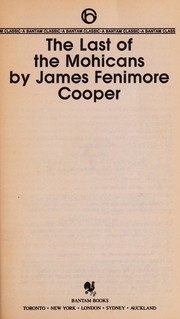
The Last of the Mohicans
During the French and Indian War, Hawkeye and two Mohican warriors try to save two British sisters from a Huron chief whose revenge will end the Mohican line.
2,017-word summary · 9 min read
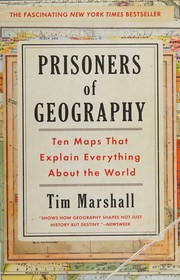
Prisoners of Geography: Ten Maps That Tell You Everything You Need to Know About Global Politics
Tim Marshall explains how mountains, rivers, coasts, and resources shape the choices of nations, from Russia's flat borders to the chokepoints of the South…
2,328-word summary · 10 min read
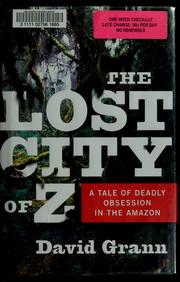
The Lost City of Z: A Tale of Deadly Obsession in the Amazon
David Grann retraces Percy Fawcett's 1925 disappearance in the Amazon and finds that the lost city he sought was not entirely a fantasy.
2,493-word summary · 11 min read

The Letters of Vincent van Gogh
Vincent van Gogh's letters to his brother Theo, in a Penguin Classics selection edited by Ronald de Leeuw, trace a decade of work, faith, and obsession.
2,611-word summary · 12 min read
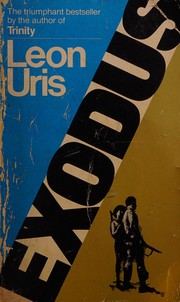
Exodus
Leon Uris's sweeping 1958 novel follows Jewish refugees, Haganah fighters, and Holocaust survivors from Cyprus to the founding of Israel and the 1948 war.
2,529-word summary · 11 min read
The World Is Flat: A Brief History of the Twenty-first Century
Thomas L. Friedman's 2005 bestseller argues that technology, trade, and open borders leveled the global playing field, and it names the ten forces that did it.
2,369-word summary · 11 min read
Catherine the Great: Portrait of a Woman
A German princess survives a miserable marriage and a coup to rule Russia for thirty-four years, torn between Enlightenment ideas and absolute power.
2,065-word summary · 9 min read
The Warmth of Other Suns
Three migrants ride north out of Jim Crow toward Chicago and LA.
2,561-word summary · 11 min read