
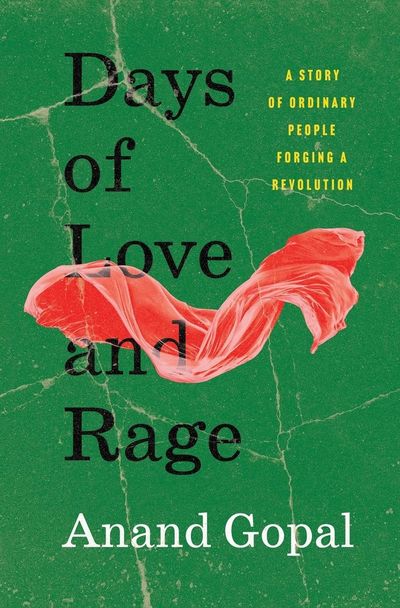
Days of Love and Rage
2,022-word summary 9 min read 592 pages in the book
- First published
- 2026
- Publisher
- Simon & Schuster
- Pages
- 592
- ISBN
- 9781668062173
Reading options
What's inside (14 sections)
This is the longest book in the batch by far, and the one that taught me the most. Gopal spent eight years reporting in Syria, conducting nearly two thousand interviews, to reconstruct eighteen months in one city. Manbij's experiment in self-rule gets the full novelistic treatment: characters, scenes, dialogue reconstructed from memory, tension that builds like a thriller. The outcome is known. The humanity was not, at least not to me.
Read it when you have time to give it. At nearly 600 pages it rewards attention and punishes skimming. Names, factions, and timelines matter. Keep the cast list handy for the first hundred pages. After that the people take hold and the pages turn themselves.
Manbij rises
In 2011, as uprisings shake the region, the northern Syrian city of Manbij throws off decades of dictatorship. What follows is extraordinary: ordinary residents organize assemblies, newspapers, civic groups, courts. For about eighteen months, a city under threat runs itself on talk and argument rather than orders.
Gopal introduces his six central figures as the movement gathers. Two best friends whose politics will split them. A mother who refuses male dominance in meetings. A worker staking everything on equality. Organizers, fighters, skeptics. Each gets a full inner life, built from years of interviews. Nobody reads as a symbol.
The early chapters carry real exhilaration. People taste speech after forty silent years. Meetings run long because everyone finally gets to talk. Mistakes get made openly instead of decreed secretly. Gopal captures the specific joy of collective self-rule without romanticizing the chaos. Bread is distributed, disputes settled, hope budgeted like flour.
The six lives
The book's architecture rests on six Syrians, and Gopal rotates among them with novelistic patience. The best friends' split forms the spine: shared childhood, shared risks, then politics and pride pulling opposite directions until each sees the other as the problem. Their rupture hurts more than any battle scene.
The mother may be the book's finest portrait. She confronts fighters and husbands with equal bluntness, demanding a place in rooms that never held one for her. Her double battle, against the old regime's men and the revolution's own patriarchs, exposes how shallow some liberation runs. Scenes of her staring down armed men half her age crackle.
The worker's story grounds the economics. Dreams of equality meet bread prices, fuel, wages. Gopal shows how material pressure corrodes ideals faster than any ideology. When pay stops and hunger starts, ISIS recruiters arrive with food and certainty. The sequence is devastating because every step makes sense to everyone taking it.
Inequality within revolt
Gopal's hardest argument is that the revolution died as much from inequality as from bombs. The assemblies talked equality while resources pooled in familiar hands. New bosses learned old tricks. Resentment built among people who had risked most and gained least.
This is where the book transcends its setting. The pattern Gopal traces, liberation curdling as economic gaps widen, reads as a warning far beyond Syria. He never lectures. He shows a meeting where a poor man's proposal dies for lack of a seconder, then shows the same man months later listening to a recruiter who promises bread and dignity. Cause, meet effect.
The ISIS chapters are grim and essential. Gopal explains the group's appeal to secular, ordinary Syrians without excusing its horrors. Populist language, salaries, order: the pitch worked on people the revolution had failed. Understanding that mechanism matters more than any battlefield map.
The fall
The last third hurts. The experiment unravels under pressure from outside armies and inside fractures. Characters we have followed for hundreds of pages make choices that doom them, and Gopal withholds judgment while showing costs. Betrayals arrive not as twists but as the slow arithmetic of fear.
Individual fates land hard precisely because the book invested in ordinary life first. A wedding glimpsed early echoes late. A joke between friends curdles. People we watched learn to speak in public go silent again, or die. The revolution's final accounting is personal before it is political.
Gopal closes by widening the lens. Syria's story becomes a story about democracy's fragility everywhere, about what ordinary people can build and how fast it can be taken. The final pages argue that dignity, not ideology, drove everything. That claim earns its weight by then.
A demanding masterpiece
The Times comparison to Gourevitch and Boo fits. This is immersive reported narrative at the highest level, built on sourcing most writers could never attempt. The 592 pages never feel padded, though they demand stamina. Some military passages blur for civilian readers. A few passages repeat the inequality thesis after it has landed.
But the people stay with you. The mother. The split friends. The worker. Their eighteen months of self-rule stand as proof of possibility and warning together. For readers of serious nonfiction, this belongs on the shelf with the best books about power and ordinary life. It will outlast most histories of the war because it remembers that history happens to specific humans first.
How Gopal built it
Eight years of reporting and nearly two thousand interviews sit behind these pages. That sourcing shows in the texture: remembered dialogue, reconstructed meetings, interior states cross-checked against multiple accounts. Gopal is transparent about method without breaking narrative spell. You trust the scenes because the book shows its work in the notes.
The single-city focus is the masterstroke. Instead of surveying the whole war, Gopal stays in Manbij and lets the war come to it. Readers learn factions, smuggling routes, and council procedures the way residents did: as needed, under pressure. The narrow lens paradoxically explains more than any wide survey could.
Comparisons to Gourevitch and Boo are apt but incomplete. Gopal shares their novelistic patience and moral seriousness. He adds an economist's eye for material forces that neither predecessor emphasized as strongly. Bread, wages, fuel: the revolution's balance sheet gets audited alongside its ideals.
The six, remembered
It is worth naming what each central figure teaches. The split friends show how politics rewrites intimacy. The mother shows how patriarchy survives regime change. The worker shows how hunger radicalizes faster than sermons. The organizers show how process sustains hope. The fighters show how violence simplifies everything it touches.
None of them read as types. Gopal gives each contradictions that survive the book's argument. A brave organizer hoards flour. A devout fighter loves pop music. A feminist mother doubts her own daughter's choices. These details are not decoration. They are the book's thesis in miniature: people exceed every category built for them.
The minor figures stick too. A baker calibrating oven shares. A teenager running messages between checkpoints. An old man who attends every assembly and speaks never. Manbij fills with particular humans rather than crowds. When losses come, they land on faces we know.
Where it sits
This will stand as one of the essential books about the Syrian war and about democratic fragility generally. It joins a small shelf of reported narratives that combine novelistic immersion with analytic bite. Future historians will cite it. Present readers should clear time for it.
For book groups, the discussion questions practically ask themselves. Could the experiment have survived with outside help? Did the assemblies fail or get failed? What would you have done with the recruiter's offer? The book's refusal of easy answers makes it ideal for argument.
Dense, humane, devastating, necessary. Gopal spent eight years so Manbij's eighteen months would not vanish. The result honors that investment on every page.
The assemblies in session
The book's most vivid passages reconstruct democratic meetings from memory. Dozens of residents arguing about bread distribution, school staffing, militia oversight. Voices overlap. Procedure gets invented on the fly. Someone always filibusters about flour. These scenes read like great ensemble fiction because they were lived like it.
Gopal shows how thrilling self-rule feels after dictatorship. People who never spoke in public discover they have opinions about everything. Women who were silent in mixed company claim the floor. The learning curve is steep and joyful. Mistakes get made loudly and corrected louder. Democracy as contact sport.
The newspapers merit their own appreciation. Citizen journalists with borrowed laptops document meetings, expose hoarding, argue in print. Their courage under threat from multiple armed sides staggers. A free press built from nothing, defended at mortal risk: the romance of journalism made literal and costly.
What undid the assemblies was not apathy but arithmetic. Participation stayed high. Resources ran out. When the same few ate while others queued, talk of equality rang hollow. Gopal documents this decay without schadenfreude. The sadness comes from watching good structures starve, not from watching bad people scheme, though schemers appear too.
Women at the center
The mother's storyline deserves emphasis as the book's moral compass. Her fight spans two fronts: the old regime's police and the revolution's patriarchs. Both tell her to wait, to whisper, to accept protection in exchange for silence. She refuses both with magnificent stubbornness.
Her confrontations with male organizers crackle. Men who risked death for freedom flinch at sharing a microphone. Gopal lets the irony sit without commentary. Readers will draw the obvious conclusions about revolutions that reproduce the hierarchies they claim to fight. The point lands harder for being shown, not stated.
Other women fill crucial roles: medics, teachers, smugglers of news and bread. Their labor sustains the experiment while rarely making the speeches. Gopal corrects that imbalance on the page, giving organizers the narrative weight fighters usually hog. The revolution's maintenance crew finally gets its due.
The cost borne by women specifically gets honest treatment. Harassment from all sides. Family pressure to withdraw. The double burden of public work and private care. None of this stopped the women of Manbij, which makes their eventual defeat more enraging, not less. They deserved better from history and from their comrades.
Lessons that travel
Readers outside Syria will find uncomfortable mirrors. The mechanisms Gopal traces, inequality hollowing institutions, populists feeding on disappointment, moderates dithering while radicals organize, operate everywhere. Manbij becomes a case study with global application, which is exactly how Gopal frames it.
The ISIS recruitment analysis should be required reading for policymakers. Young men did not join from fanaticism first. They joined from hunger, boredom, and humiliation, with ideology arriving after the paycheck. Any strategy that ignores those material roots will fail the way Manbij's idealists failed to hold their own recruits.
For Americans and Europeans watching democratic norms strain, the book offers both warning and consolation. Warning, because eighteen months can vanish fast. Consolation, because ordinary people built something real under worse conditions than most readers will ever face. If they could do it in Manbij under bombs, the rest of us have fewer excuses.
This is the rare big book that justifies its size on every front. Reporting, narrative, argument, humanity: all present at the highest level. Clear your schedule and read it.
The craft of immersion
It is worth appreciating how Gopal achieves immersion without invention. Every scene rests on interviews, often multiple accounts of the same event. Where memories conflict, the text acknowledges it gracefully. Uncertainty becomes texture rather than flaw. Readers learn to read testimonies the way historians do: comparatively, skeptically, humanely.
Dialogue poses the classic nonfiction challenge, and Gopal handles it by sticking close to what people remember saying about what mattered. Nobody delivers speeches. People repeat themselves, interrupt, talk past each other. The reconstructed talk sounds like actual meetings because it was actual meetings, filtered through careful verification.
Pacing across 592 pages never flags badly. Short chapters alternate among the six lives, creating momentum through variety. Cliffhangers arrive naturally at chapter breaks because real lives kept interrupting each other. The structure mirrors the assemblies it describes: many voices, shared stakes, forward motion through argument.
Maps and chronologies help, and readers should use them. The book rewards those who track factions and dates. Those who skim will still follow the human stories but miss the mechanism. Gopal wrote for careful readers and trusts them to keep up. That trust flatters and demands in equal measure.
FAQ
When was it published?
Simon & Schuster published it on March 3, 2026. The hardcover runs 592 pages with ISBN 9781668062173.
Is it part of a series?
No. It is a standalone work of reported nonfiction, his second book after No Good Men Among the Living.
Who does it follow?
Six residents of Manbij: split best friends, a defiant mother, a worker risking all, plus organizers and fighters around them.
Similar books

The Zookeeper's Wife: A War Story
The directors of the Warsaw Zoo hid roughly three hundred Jews in empty cages and outbuildings after the German invasion, while Jan worked for the resistance.
2,065-word summary · 9 min read

Lone Survivor: The Eyewitness Account of Operation Redwing and the Lost Heroes of SEAL Team 10
Marcus Luttrell's account of the 2005 SEAL mission in Afghanistan that killed three of his team and left him alone.
2,144-word summary · 10 min read

Bury My Heart at Wounded Knee: An Indian History of the American West
Dee Brown's 1970 retelling of the American West from the point of view of the people it destroyed.
2,233-word summary · 10 min read

Killing Lincoln
Booth plots as Lincoln pushes war end and reunion in 1865.
2,486-word summary · 11 min read

Cleopatra: A Life
Pulitzer winner Schiff restores Cleopatra as a capable ruler, from Ptolemy debts and Caesar to Antony, Actium, and her death in 30 BC, built from coins and…
3,586-word summary · 16 min read
The Splendid and the Vile
Larson follows Churchill circle through Blitz year with diaries and bombing nights.
2,038-word summary · 9 min read
Band of Brothers
Easy Company, 506th Airborne, from Toccoa training through D-Day, Holland, Bastogne, and Hitler's Eagle's Nest.
2,685-word summary · 12 min read
American Sniper: The Autobiography of the Most Lethal Sniper in U.S. Military History
Navy SEAL sniper Chris Kyle recounts Texas roots, SEAL training, four Iraq tours, and the strain combat placed on his marriage and health.
2,011-word summary · 9 min read
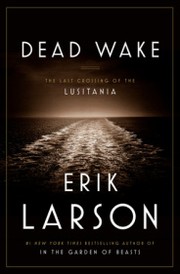
Dead Wake
Larson tracks Lusitania, U-20, and Room 40 toward May 1915 sinking.
2,471-word summary · 11 min read
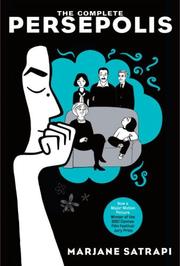
The Complete Persepolis
Satrapi's full black and white memoir in one volume, from revolution era Tehran through Vienna exile and back home again.
2,498-word summary · 11 min read
A Long Way Gone: Memoirs of a Boy Soldier
A Sierra Leone boy flees rebels, becomes a child soldier at thirteen, and fights his way back through rehab.
2,434-word summary · 11 min read
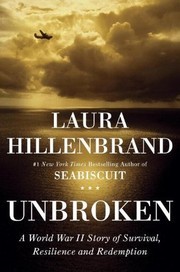
Unbroken
Louis Zamperini survives a Pacific crash, sharks and POW camps after running in the Berlin Olympics.
3,263-word summary · 15 min read

Long Walk to Freedom
Mandela's account of a Thembu childhood, a law practice, a banned movement, twenty-seven years in prison, and the negotiation that ended apartheid.
2,454-word summary · 11 min read
1491: New Revelations of the Americas Before Columbus
Charles C. Mann gathers archaeology, ecology, and demography to argue that the Americas before Columbus were older, fuller, and more deliberately shaped than…
2,712-word summary · 12 min read
The DaVinci Code: A Quest for Answers
A short 2006 dialogue in which three friends test Dan Brown's claims about Jesus, Mary Magdalene, Nicaea, and the canon.
2,088-word summary · 9 min read
Nothing to Envy
Barbara Demick follows six defectors from Chongjin through the North Korean famine, showing how ordinary people lived, believed, and finally left.
2,068-word summary · 9 min read

Down and Out in Paris and London
Orwell's account of washing dishes in Paris hotels and tramping through London does not ask for pity, only for a clear look at how poverty actually works.
2,282-word summary · 10 min read
The Wright Brothers
David McCullough tells the story of two self-taught Ohio brothers, working largely alone and out of a bicycle shop, who solved the problem of flight before…
2,027-word summary · 9 min read
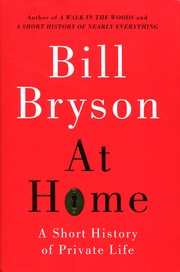
At Home: A Short History of Private Life
Bill Bryson tours his own Norfolk rectory room by room to explain how private life and the modern home got built.
2,334-word summary · 10 min read

Prisoners of Geography: Ten Maps That Tell You Everything You Need to Know About Global Politics
Tim Marshall explains how mountains, rivers, coasts, and resources shape the choices of nations, from Russia's flat borders to the chokepoints of the South…
2,328-word summary · 10 min read

Doctor Zhivago
A doctor and poet lives through revolution, war, and love in Pasternak's novel of private life under the pressure of Russian history.
2,213-word summary · 10 min read
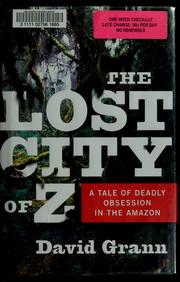
The Lost City of Z: A Tale of Deadly Obsession in the Amazon
David Grann retraces Percy Fawcett's 1925 disappearance in the Amazon and finds that the lost city he sought was not entirely a fantasy.
2,493-word summary · 11 min read

The Letters of Vincent van Gogh
Vincent van Gogh's letters to his brother Theo, in a Penguin Classics selection edited by Ronald de Leeuw, trace a decade of work, faith, and obsession.
2,611-word summary · 12 min read
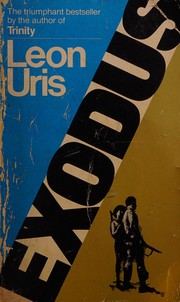
Exodus
Leon Uris's sweeping 1958 novel follows Jewish refugees, Haganah fighters, and Holocaust survivors from Cyprus to the founding of Israel and the 1948 war.
2,529-word summary · 11 min read

The World Is Flat: A Brief History of the Twenty-first Century
Thomas L. Friedman's 2005 bestseller argues that technology, trade, and open borders leveled the global playing field, and it names the ten forces that did it.
2,369-word summary · 11 min read
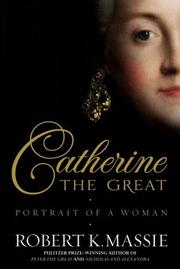
Catherine the Great: Portrait of a Woman
A German princess survives a miserable marriage and a coup to rule Russia for thirty-four years, torn between Enlightenment ideas and absolute power.
2,065-word summary · 9 min read
The Warmth of Other Suns
Three migrants ride north out of Jim Crow toward Chicago and LA.
2,561-word summary · 11 min read
The New Jim Crow: Mass Incarceration in the Age of Colorblindness
How mass incarceration became a racial caste system after civil rights.
2,413-word summary · 11 min read

The History of the Hobbit, Part One: Mr. Baggins
Rateliff traces every draft of Bilbo from 1930 notes to print.
2,410-word summary · 11 min read
The Emperor of All Maladies
A biography of cancer from Galen to chemo through one doctor cases.
2,255-word summary · 10 min read