
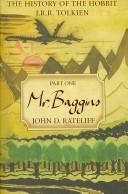
The History of the Hobbit, Part One: Mr. Baggins
2,410-word summary 11 min read 467 pages in the book
- First published
- 2007
- Publisher
- HarperCollins
- Pages
- 467
- ISBN
- 9780007235551
Reading options
What's inside (8 sections)
I picked up this book because I love The Hobbit and I had always wondered how much of it Tolkien planned in advance. Most of us meet Bilbo as a finished thing. A comfortable hobbit, a grumpy wizard, thirteen dwarves at the door, a dragon at the far end of the map. It feels neat and settled. I wanted to know if it started that way. A friend who collects Tolkien scholarship told me Rateliff spent years in the Marquette archives and that this volume reads like a detective story built from paper scraps. That sold me. I read it with my old paperback of The Hobbit open beside me, flipping back and forth.
The edition I am covering is the 2007 HarperCollins edition, cited at 467 pages. It is Part One, with the subtitle Mr. Baggins, and it follows the drafts from the first notes around 1930 through the early Lake Town chapters. A second volume finishes the story. This one stops before Smaug dies and before the Battle of Five Armies. I will walk through it in order, with spoilers for both the drafts and the published book, and I will say plainly where it dragged for me.
How Rateliff sets up the hunt
Rateliff opens by explaining what he had to work with. Tolkien left handwritten pages, typescripts with inked corrections, plot notes on scraps, maps drawn and redrawn, and illustrations meant for his children. Much of it sits at Marquette University in Wisconsin. Some pages are missing. Some are dated only by guesswork from handwriting and paper. Rateliff does not hide those gaps. He tells you when a date is firm and when it is a best guess. I liked that honesty right away.
His method is simple to describe and hard to do. For each chapter of the published Hobbit, he prints the earliest draft text that survives, then adds commentary on what changed, then moves to the next phase. You get a Text Note on handwriting and typing, then a long Commentary on names, sources, and links to the wider mythology Tolkien was building at the same time. Appendices at the back collect stray poems and notes that did not fit elsewhere.
The first surprise for me was how little Tolkien started with. There was no grand outline. There was a famous first sentence written on a blank exam paper, a map with a dragon and a mountain, and a handful of names borrowed from old poems. The plot grew in layers. Rateliff shows that growth without making it sound magical. He treats Tolkien like a working writer who tried things, crossed them out, and tried again.
One small thing helped me a lot. Rateliff keeps reminding you which phase you are in. First phase notes, second phase manuscript, later typescript, and so on. I started marking the edges of pages with pencil. Phase A, Phase B. Without that I would have drowned. With it, I could feel the story getting longer and more serious with each pass.
The Pryftan fragment and the hole in the ground
The earliest surviving bit is often called the Pryftan fragment. It is short, handwritten, and breaks off quickly. Bilbo is there from the start, though his character is thinner. The tone is closer to a children's tale told aloud. Short sentences. Direct address. Jokes about food.
Even here Tolkien was already mixing things he loved. There are dwarves with names pulled from the Old Norse Völuspá, the same list that gave us Dwalin, Balin, Fili, Kili, Dori, Nori, Ori, Oin, Gloin, Bifur, Bofur, and Bombur in the final book. There is a wizard, though he is not yet quite Gandalf. Rateliff spends time on that list because it matters. Tolkien did not invent those sounds from nothing. He took old northern names and made them live again by giving them tempers and hungers and fears.
The dragon in these early pages is not yet Smaug. The name on the page is Pryftan. Rateliff traces that name through Welsh and other old tongues and suggests why Tolkien later dropped it. Pryftan sounds odd in the mouth. Smaug, drawn from an old Germanic verb for squeezing through a hole, fits a long worm who slides into a bedroom of gold. I am no linguist, but the change feels right when you say both aloud. One creaks. The other slides.
What struck me most in this section was the map work. Tolkien drew as he wrote. Lonely Mountain sits in the east, a river runs south to a lake, a forest blocks the middle. Those shapes stayed stable while names moved around them. Rateliff reproduces several sketches. You can see Tolkien testing passes and distances. How many days from the troll camp to Rivendell. Where Beorn's house should sit so the plot can breathe. For a children's book, the geography is oddly careful.
The fragment ends before it really begins. That is part of its charm and part of its frustration. Rateliff does not pad it. He says what is there, guesses what may have come next, and moves on.
Bladorthin, Gandalf, and the great name swap
This is the chapter everyone talks about, and for good reason. In the early drafts, the wizard we know as Gandalf is called Bladorthin. The great dwarf leader we know as Thorin Oakenshield is called Gandalf. Read that twice. It is not a typo.
Rateliff lays out the evidence page by page. In the handwritten manuscript and the first typescript, Bladorthin the wizard speaks and acts much as Gandalf later will. He is gruff, secretive, fond of Bilbo in a rough way. Gandalf the dwarf is proud, stiff, easily offended, and clearly royal even when he is hungry. At some point Tolkien flipped the names. The wizard took the name Gandalf, which fits its old northern sense of a staff elf or magic worker, and the dwarf became Thorin, with Oakenshield added later to mark his history.
Why does it matter. Names steered character. While the dwarf was Gandalf, readers of the draft might have expected more magic from him. Once he became Thorin, Tolkien leaned harder into pride and lineage and the weight of a lost kingdom. While the wizard was Bladorthin, he felt a little more foreign and less warm. As Gandalf, he settled into the familiar shape we know from The Lord of the Rings.
There are other swaps in this middle stretch. The bear man we know as Beorn first appears as Medwed, from an old word for bear and for honey eater. The change to Beorn, tied to words for bear and warrior, made him feel larger and older. Minor dwarves trade traits. Fili and Kili harden from comic extras into younger fighters. Bard of Lake Town is still faint at this stage, a name waiting for a fuller story in Part Two.
I found this section slow in spots because Rateliff lists every spelling shift. Thrain, Thror, Thark. One vowel moves and you get three pages. But I also found it moving. You watch a writer learn his own cast. He tries a name, hears it wrong in his head, and fixes it. Anyone who has written anything will know that feeling.
Trolls, Rivendell, and Gollum in the dark
Once the company leaves Bag End, the drafts start to follow the published road more closely, and Rateliff can compare scene by scene. The troll episode comes first. In the earliest version the three trolls have different names and talk more like music hall comics. Tolkien toned them down in stages but kept the arguing. Rateliff points out borrowings from folk tales where stupid giants talk themselves into dawn. He also notes how Tolkien used the trolls to show Bilbo's growth. In drafts Bilbo tries to pick pockets with less motive. In print he tries to help and fails in a braver way. Small shift, large effect.
Rivendell changes more. Early drafts make it lighter and sillier, closer to a fairy picnic. Elrond is kind but less weighty. The moon letters and the map of the secret door get added and refined across typescripts. Rateliff shows Tolkien testing how much history to load into a children's chapter. Too much and the pace dies. Too little and the door scene means nothing. The final balance, a songs and rest stop with a flash of deep time, took several tries.
Then comes Gollum. This is my favorite part of Part One. In the first riddle drafts, Gollum is less strange and more pitiable. The ring is only a magic ring that makes you invisible. There is no hint that it is the Ruling Ring. Tolkien had not thought that far. Rateliff is clear on this. The dark lord idea came later, after The Hobbit was out and Tolkien started its sequel. So the early riddle game reads as a fair contest with a nasty loser, not a clash of cosmic powers.
The drafts let you see Tolkien improving the riddles one by one. Some early answers are too easy. Some questions repeat. The famous "What have I got in my pocket" moment arrives late and stays because it fits Bilbo. He wins by luck and by hobbit sense, not by force. Rateliff also tracks the Gollum illustrations, sad and froggy in the margins, and the way Tolkien's letters to his children softened the horror. He wanted a scare, not a nightmare.
If you read only one stretch of commentary, make it this one. It shows how revision can keep plot while changing meaning. Same cave, same boat, same fish. Different shadow behind it all.
Spiders, barrels, and the edge of Lake Town
The Mirkwood chapters show Tolkien at his most practical. He had to get thirteen dwarves plus a hobbit through a dark forest, into spider webs, into an elf prison, and out again in barrels, without losing young readers. The drafts are full of false starts. Paths that loop too long. Enchanted sleeps that last too many pages. Spiders that talk too much or too little.
Rateliff does strong work here on sources. He links the forest to poems Tolkien had written about dark woods, to medieval tales of bewitched travelers, and to Tolkien's own love and fear of trees. He does not claim a single source. He shows a mix. A line from one old lay, a spider from another tale, a personal memory of a hot forest walk. That mix feels true to how stories form.
The barrel escape is a good test of his method. In early notes Tolkien considered killing a dwarf or two to raise stakes. He decided against it. The tone would have tipped from peril into grief. Instead he made the barrels leaky and cold and comic. Bilbo rides outside, half drowned, and earns respect without a sword. Rateliff quotes the typescript changes where Tolkien adds a sentence of shivering here, cuts a joke there. You can feel him tuning for children who want danger but also want supper at the end.
Part One closes as the company nears Lake Town, or Esgaroth as it is also named. Bard is still thin. The Master of Lake Town is a sketch of greed. The dragon waits ahead, mostly offstage. Rateliff stops at a natural pause before the dragon talk and the treasure quarrel. He promises the rest in Part Two, and he leaves enough threads hanging that I went straight to check if our shelves held it.
What I carried from these chapters was a new respect for pacing. Tolkien cut miles of walking. He shortened songs when they stalled plot. He added food details when spirits flagged. Honey cakes, fish, ale. The body of the traveler tells the reader how to feel. Hungry means danger. Full means safe, for now.
What drags and who should read it
I should be honest about the hard parts. This is not a quick book. Rateliff writes long sentences packed with dates and shelf marks. He will spend four pages on whether a comma was added in ink or pencil. If you want story, those pages will test you. I skimmed some notes on paper stock. I do not feel bad about it.
The commentary also assumes you know the wider mythology. Names like Beren, Luthien, Gondolin, and Doriath appear often because Tolkien reused them while drafting. Rateliff explains each link, but if you have never opened The Silmarillion, the explanations pile up. I have read it twice, and I still had to pause and recall who was who. New readers may want to keep a simple guide to the Elder Days open nearby.
There is also repetition built into the design. Each chapter gives draft text, then notes on that text, then a summary of changes. You read the same scene three times at slightly different angles. At its best this feels like turning a stone in light. At its worst it feels like homework. I learned to read the draft straight through, take a break, then read commentary with tea.
Still, I am glad I read it. It changed how I read The Hobbit. Now when Gandalf teases Bilbo at the door, I hear Bladorthin underneath. When Thorin stands too proud, I remember he was once named for a wizard and had to earn his harder name. When Bilbo spares Gollum, I know Tolkien had not yet decided what that mercy would mean for the whole later history. That ignorance makes the kindness larger.
Who should pick it up. If you enjoy seeing how books are built, if you like maps and name lists and crossed out lines, you will have a fine time. If you teach writing, the middle chapters give clear lessons on revision without preaching. Show motive earlier. Cut walking. Let food carry feeling. If you only want plot, reread The Hobbit itself and skip this. This book is for people who want the workshop, with shavings on the floor and tools still warm.
I closed Part One with more sympathy for Tolkien as a father writing for his kids. He wanted to thrill them without scarring them. He wanted old songs inside a new tale. Rateliff, for all his scholarly care, keeps that warmth in view. Behind every typescript is a man reading aloud at night, listening for where his children laugh and where they go quiet.
FAQ
Who wrote The History of the Hobbit, Part One: Mr. Baggins and when was it published?
John D. Rateliff wrote it, published in 2007 by HarperCollins. It is the first half of a two part study of how Tolkien wrote The Hobbit.
Do I need to read The Hobbit first?
Yes. Rateliff quotes draft passages against the published text chapter by chapter, so the book works best if you know Bilbo's story well.
How long is the cited edition?
The cited edition runs 467 pages.
Similar books
The Surgeon of Crowthorne
James Murray built the Oxford dictionary with Broadmoor inmate William Minor, whose thousands of slips shaped this 1998 HarperCollins story of murder, madness…
2,775-word summary · 12 min read
The Library Book
Susan Orlean investigates the 1986 Los Angeles Central Library fire and suspect Harry Peak while tracing library history, her mother's influence, and the…
2,319-word summary · 10 min read
The Zookeeper's Wife: A War Story
The directors of the Warsaw Zoo hid roughly three hundred Jews in empty cages and outbuildings after the German invasion, while Jan worked for the resistance.
2,065-word summary · 9 min read

Long Walk to Freedom
Mandela's account of a Thembu childhood, a law practice, a banned movement, twenty-seven years in prison, and the negotiation that ended apartheid.
2,454-word summary · 11 min read

Inkdeath
The final Inkworld novel sends Mo into the land of the dead, leaves Meggie choosing between two boys, and ends the Adderhead's immortality with three written…
2,062-word summary · 9 min read
1491: New Revelations of the Americas Before Columbus
Charles C. Mann gathers archaeology, ecology, and demography to argue that the Americas before Columbus were older, fuller, and more deliberately shaped than…
2,712-word summary · 12 min read
The DaVinci Code: A Quest for Answers
A short 2006 dialogue in which three friends test Dan Brown's claims about Jesus, Mary Magdalene, Nicaea, and the canon.
2,088-word summary · 9 min read
Nothing to Envy
Barbara Demick follows six defectors from Chongjin through the North Korean famine, showing how ordinary people lived, believed, and finally left.
2,068-word summary · 9 min read

Down and Out in Paris and London
Orwell's account of washing dishes in Paris hotels and tramping through London does not ask for pity, only for a clear look at how poverty actually works.
2,282-word summary · 10 min read
The Wright Brothers
David McCullough tells the story of two self-taught Ohio brothers, working largely alone and out of a bicycle shop, who solved the problem of flight before…
2,027-word summary · 9 min read

Lone Survivor: The Eyewitness Account of Operation Redwing and the Lost Heroes of SEAL Team 10
Marcus Luttrell's account of the 2005 SEAL mission in Afghanistan that killed three of his team and left him alone.
2,144-word summary · 10 min read
Bury My Heart at Wounded Knee: An Indian History of the American West
Dee Brown's 1970 retelling of the American West from the point of view of the people it destroyed.
2,233-word summary · 10 min read
At Home: A Short History of Private Life
Bill Bryson tours his own Norfolk rectory room by room to explain how private life and the modern home got built.
2,334-word summary · 10 min read
Prisoners of Geography: Ten Maps That Tell You Everything You Need to Know About Global Politics
Tim Marshall explains how mountains, rivers, coasts, and resources shape the choices of nations, from Russia's flat borders to the chokepoints of the South…
2,328-word summary · 10 min read
The Lost City of Z: A Tale of Deadly Obsession in the Amazon
David Grann retraces Percy Fawcett's 1925 disappearance in the Amazon and finds that the lost city he sought was not entirely a fantasy.
2,493-word summary · 11 min read
The Letters of Vincent van Gogh
Vincent van Gogh's letters to his brother Theo, in a Penguin Classics selection edited by Ronald de Leeuw, trace a decade of work, faith, and obsession.
2,611-word summary · 12 min read
Letters to a Young Poet
Rilke's ten letters to a young officer cadet refuse easy criticism and ask whether he must write, offering patience and solitude as a way of life.
2,530-word summary · 11 min read

The World Is Flat: A Brief History of the Twenty-first Century
Thomas L. Friedman's 2005 bestseller argues that technology, trade, and open borders leveled the global playing field, and it names the ten forces that did it.
2,369-word summary · 11 min read
Catherine the Great: Portrait of a Woman
A German princess survives a miserable marriage and a coup to rule Russia for thirty-four years, torn between Enlightenment ideas and absolute power.
2,065-word summary · 9 min read
Bird by Bird
Anne Lamott's 1994 book on writing and life: shitty first drafts, the one-inch picture frame, and quieting the inner critic so you can take it bird by bird.
2,592-word summary · 12 min read
The Water Dancer
An enslaved man with a strange power for travel fights to free himself and rescue those he loves.
2,910-word summary · 13 min read
The Warmth of Other Suns
Three migrants ride north out of Jim Crow toward Chicago and LA.
2,561-word summary · 11 min read
The War of Art
Pressfield names Resistance and urges daily professional work.
2,565-word summary · 11 min read
The New Jim Crow: Mass Incarceration in the Age of Colorblindness
How mass incarceration became a racial caste system after civil rights.
2,413-word summary · 11 min read
The Emperor of All Maladies
A biography of cancer from Galen to chemo through one doctor cases.
2,255-word summary · 10 min read
The Artist's Way: A Spiritual Path to Higher Creativity
A twelve week course with morning pages and artist dates to recover creativity.
2,345-word summary · 10 min read
Killing Lincoln
Booth plots as Lincoln pushes war end and reunion in 1865.
2,486-word summary · 11 min read
In the Heart of the Sea: The Tragedy of the Whaleship Essex
The whaleship Essex sunk by a whale leaves men in boats for ninety days.
2,750-word summary · 12 min read
Hidden Figures
Black women computers at Langley launch rockets past Jim Crow.
2,385-word summary · 11 min read
Eats, Shoots & Leaves
Truss defends commas with jokes about pandas and posters.
2,423-word summary · 11 min read