

Down and Out in Paris and London
2,282-word summary 10 min read 224 pages in the book
- First published
- 1933
- Publisher
- Harcourt
- Pages
- 224
- ISBN
- 9780156262248
Reading options
What's inside (9 sections)
The first thing Orwell does in this book is count his money. He is living in a cheap hotel in Paris, trying to write, and the francs are running out. He has a few hundred left, then a few dozen, then not enough for the rent. He sells his clothes. He pawns his coat. He eats bread and milk in his room and pretends it is a meal. The book begins not with a grand declaration about poverty but with arithmetic.
That is the right way to begin, because poverty is mostly arithmetic. Orwell is not starving in a poetic way. He is hungry in a way that makes him stupid. He cannot concentrate. He cannot sleep. He cannot ask for help without explaining himself, and explaining himself costs more than he has. The first chapters are funny in a dry, embarrassed way, and the embarrassment is the point. He is a middle-class Englishman learning what it feels like to be broke, and he knows that his education is not the same as the experience of people who were born broke.
George Orwell was not his real name. He was Eric Blair, a former colonial policeman who had come to Paris to write. He was in his late twenties. He had no money, no connections, and no particular reason to think he would succeed. Down and Out in Paris and London, published in 1933, was his first book. It made his reputation, or at least it started it. He chose the pseudonym because he did not want his family to be embarrassed. The name stuck.
The hotel kitchen
Orwell's luck changes when he meets Boris, a Russian who had been a waiter and now lives in the same cheap hotel. Boris is loud, optimistic, and perpetually scheming. He has a plan for everything. He also has no money. He tells Orwell that the way out is to become a plongeur, a dishwasher, in a big hotel. The work is brutal, but it pays. Boris gets him a job at a grand hotel, the kind with marble in the lobby and a kitchen that runs like a factory.
The kitchen chapters are the best in the book. Orwell describes the hierarchy with the precision of an anthropologist. At the top is the chef, then the cooks, then the waiters, then the plongeurs. Everyone screams at everyone. The heat is unbearable. The plates come back faster than they can be washed. The food is expensive and the staff eats scraps. The hotel throws away more food in a night than Orwell has seen in a month, and the waste is described without commentary, which makes it worse.
Orwell is not a natural servant. He is clumsy, slow, and too educated for his own good. He makes mistakes. He gets shouted at. He learns to keep his head down. The work is not just physical. It is the constant awareness that he is at the bottom of a system that depends on him and despises him. The guests do not see him. The waiters do not respect him. The chef treats him like a machine that occasionally breaks.
The plongeur's life is the book's central example of how work can keep a person poor. The hours are long. The pay is low. The meals are provided, but they are bad. The rent is high. There is no time to look for a better job, and no money to move. Orwell is clear about the trap: it is not that the plongeur is lazy or stupid. It is that the job consumes the energy he would need to escape it.
The little restaurant
After the hotel, Orwell works at a small restaurant, the Auberge de Jehan Cottard. It is run by a man who used to be a chef in a big hotel and now has his own place. The restaurant is not grand. It is cramped, smoky, and always on the edge of failure. The staff is small. Everyone does everything. Orwell washes dishes, waits tables, and runs errands. The work is just as hard, but the atmosphere is different. There is more laughter. There is more shouting. There is a sense of shared siege.
The patron is one of the book's best characters. He is proud, anxious, and convinced that the restaurant is one bad review away from ruin. He treats his staff badly and depends on them completely. He is not a villain. He is a small businessman trying to stay afloat in a system that punishes small businesses. Orwell does not excuse him. He just shows him.
The Paris sections are full of characters like this: the waiter who dreams of opening his own place, the cook who drinks, the chambermaid who knows everyone's secrets, the Russian who has fallen from a higher class and cannot stop talking about it. Orwell is good at capturing the way people talk about money when they do not have any. They talk about it constantly. They calculate. They argue. They borrow small sums and forget to repay them. The comedy is black, and it is funny.
The Paris half ends with Orwell leaving for London. He has had enough of the kitchen. He wants to see how the other half lives, or rather the other poor. He has heard about the tramps and the casual wards. He wants to know what happens to people who have no work at all.
The road
London is colder and grayer than Paris. Orwell arrives with almost nothing. He meets Paddy, an Irish tramp who has been on the road for years. Paddy is a talker. He knows the rules of every spike, the location of every cheap lodging house, the best places to beg and the worst. He takes Orwell under his wing, not out of kindness exactly, but because having a companion makes the road less lonely.
The spike is the casual ward, the municipal shelter where tramps can get a bed and a meal in exchange for work. The routine is humiliating by design. You arrive in the afternoon and queue. You give your name and your history. You are searched, bathed, and given a thin mattress and a cold room. In the morning you work: breaking stones, picking oakum, scrubbing floors. The work is pointless. The point is to make you never want to come back.
Orwell describes the spike with a reporter's eye. The smell of carbolic. The noise of the men coughing. The tramp major who bullies the new arrivals. The men who have been doing this for years and have learned to game the system. The young men who are still ashamed. The old men who are not. The book is full of small details that stay with you: the way a man holds his bread, the way another man folds his coat, the way the whole room goes quiet when a guard walks in.
Bozo is the other important figure. He is a Londoner, a pavement artist, and a man with a deformed leg. He is cheerful in a way that seems almost aggressive. He has a theory about poverty: it is not the lack of money that crushes you, it is the lack of respect. He makes jokes about his own situation. He sings. He refuses to be pitied. Orwell likes him, and the reader does too. Bozo is not a saint. He is a man who has decided that despair is a luxury he cannot afford.
The rules of charity
The London chapters are angrier than the Paris chapters. Orwell is not just describing hunger. He is describing a system that is designed to be humiliating. The casual ward, the charity organization, the public assistance office: each one requires the poor to prove that they are deserving, and each one makes sure that the proof is degrading.
The most important rule is the one about money. A man who has a little money is expected to spend it before he can ask for help. If he saves it, he is cheating the system. If he spends it, he is back where he started. The rule keeps tramps poor. It also keeps them afraid. Orwell explains this clearly, without jargon. He does not need to. The logic is obvious once it is laid out.
He also writes about the way charity turns people into cases. The forms, the interviews, the questions about family and history. The poor are asked to explain themselves, and the explanation is never good enough. They are asked why they cannot work, and the answer is often that there is no work. They are asked why they left home, and the answer is often that home was worse. The system hears these answers and files them away. It does not change anything.
Orwell's politics are present but not loud. He is not a revolutionary in this book. He is a witness. He argues that poverty is a problem of money, not of character. He argues that the poor are not lazy, and that the work they do is often harder than the work of the people who employ them. He argues that the solution is to give them enough to live on, and to stop making them grovel for it. The argument is simple, and it is still radical.
The limits of the witness
The book has real problems. Orwell is a middle-class man pretending to be poor, and he knows it. He can leave whenever he wants. He has a family, an education, and a name he can use. The people he meets do not. He tries to be honest about this, but the book is still filtered through his sensibility. The poor are often seen from the outside. They are colorful, tragic, or funny. They are rarely given the kind of interior life Orwell gives himself.
The characters are sometimes caricatures. Boris is the scheming Russian. Paddy is the talkative Irishman. Bozo is the cheerful Cockney. They are memorable, but they are also types. Orwell is better at describing systems than at describing people. He can tell you exactly how a spike works. He is less good at telling you what it feels like to be Paddy, beyond the obvious.
The book is also dated in its attitudes. There are casual slurs, assumptions about race and class, and a tendency to treat women as background figures. The Paris sections are almost entirely male. The London sections are not much better. Orwell is writing about a world that was segregated by gender and class, and he does not always examine his own place in it.
The biggest criticism is that the book is not a solution. It diagnoses poverty with clarity and then stops. Orwell does not propose a program. He does not organize. He writes a book. That is not a failure, exactly. A witness is not a policy maker. But readers who want more than description will be disappointed.
Why it lasts
The book lasts because it is honest about shame. Orwell understands that poverty is not just a lack of money. It is the constant awareness that you are a problem to other people. It is the way a shopkeeper watches you. It is the way a form asks for your address. It is the way you learn to make yourself small. That insight is still useful. It applies to food banks, to unemployment offices, to the gig economy, to anyone who has ever had to prove they deserve help.
It also lasts because it is funny. Orwell is a dry comic writer. The scene where he tries to serve a customer who speaks no French. The scene where Boris explains his latest scheme. The scene where the restaurant staff celebrate a tiny victory. The humor is not a distraction from the politics. It is part of the evidence. Poor people are not miserable all the time. They are also bored, silly, and rude. The book remembers that.
The prose is plain and precise. Orwell does not use big words. He does not need to. He describes what he sees and lets the reader draw the conclusion. That style became his signature, and this is one of the first places he used it. The book is not as polished as his later work. It is uneven. The Paris half is better than the London half. But the voice is already there: curious, stubborn, and unwilling to look away.
Reading it now
Read this if you want to understand where Orwell's politics came from. Read it if you have ever wondered how a person ends up on the street and why it is so hard to get off it. Read it if you like reportage with a novelistic eye. Read it if you want to see a great writer learn his craft in public.
Do not read it as a complete account of poverty in the 1930s. It is one man's journey, and he was a temporary traveler. Do not read it for a happy ending. There is no ending, really. Orwell leaves the road, gets a haircut, and goes back to his life. The tramps stay on the road. The book knows this, and the knowledge is what makes it more than a adventure story.
The last pages are quiet. Orwell reflects on what he has learned. He says that he will never again be surprised by poverty, and that he will never again be able to walk past a tramp without seeing a person. It is a small conclusion. It is also the only one he can honestly make.
FAQ
Is Down and Out in Paris and London a novel?
No. It is a memoir and piece of reportage, published in 1933, based on Orwell's own experiences in both cities.
Why did Orwell use a pseudonym?
He published it as George Orwell because he did not want his family embarrassed by the material, and the name stayed with him.
Does the book have a plot?
Only loosely. It follows Orwell's jobs and travels, with recurring characters, but it is organized around episodes rather than a single story.
Similar books

Long Walk to Freedom
Mandela's account of a Thembu childhood, a law practice, a banned movement, twenty-seven years in prison, and the negotiation that ended apartheid.
2,454-word summary · 11 min read
Nothing to Envy
Barbara Demick follows six defectors from Chongjin through the North Korean famine, showing how ordinary people lived, believed, and finally left.
2,068-word summary · 9 min read
Nickel and Dimed: On (Not) Getting By in America
A journalist works waitress, cleaning, retail, and care jobs undercover to test whether full-time work keeps a person housed and fed.
2,328-word summary · 10 min read
A Promised Land
First-volume memoir from Iowa 2008 through the 2011 bin Laden raid, crisis management and doubt.
2,243-word summary · 10 min read
Between the World and Me
Coates writes to his son about the Black body in America, from Howard to the loss of Prince Jones.
2,234-word summary · 10 min read

In Order to Live: A North Korean Girl's Journey to Freedom
A young North Korean girl crosses the Yalu, survives trafficking in China, and rebuilds her life in Seoul in this unsparing memoir.
2,027-word summary · 9 min read

Too Much and Never Enough: How My Family Created the World's Most Dangerous Man
Mary L. Trump's 2020 memoir traces how a cold, zero-sum Queens household shaped her uncle, and uses family tax documents to challenge his self-made story.
2,059-word summary · 9 min read
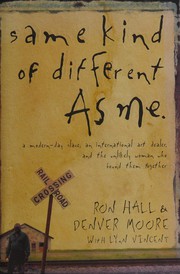
Same Kind of Different as Me
An art dealer and a formerly homeless sharecropper tell the story of the friendship that began at a Fort Worth mission and the woman who insisted on it.
2,023-word summary · 9 min read

Infidel
Ayaan Hirsi Ali's memoir of a Somali childhood, a forced marriage, a Dutch asylum claim, and the political fight that followed the murder of Theo van Gogh.
2,041-word summary · 9 min read

The Girl with Seven Names: A North Korean Defector's Story
Hyeonseo Lee crossed the frozen Yalu River at seventeen, spent years hidden in China, escaped to South Korea, and later returned to rescue her family.
2,404-word summary · 11 min read

Lone Survivor: The Eyewitness Account of Operation Redwing and the Lost Heroes of SEAL Team 10
Marcus Luttrell's account of the 2005 SEAL mission in Afghanistan that killed three of his team and left him alone.
2,144-word summary · 10 min read
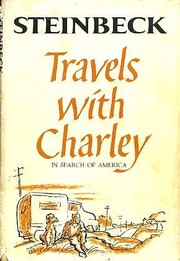
Travels with Charley
Steinbeck drives across America with his poodle Charley, looking for the country he remembers and finding a place that has changed.
2,039-word summary · 9 min read
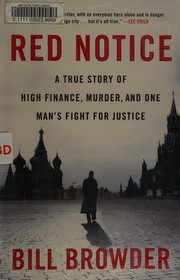
Red Notice
An American financier in Moscow exposes a $230 million tax fraud, watches his lawyer die in prison, and turns the case into an international human rights law.
2,008-word summary · 9 min read
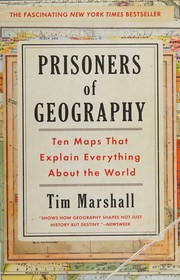
Prisoners of Geography: Ten Maps That Tell You Everything You Need to Know About Global Politics
Tim Marshall explains how mountains, rivers, coasts, and resources shape the choices of nations, from Russia's flat borders to the chokepoints of the South…
2,328-word summary · 10 min read
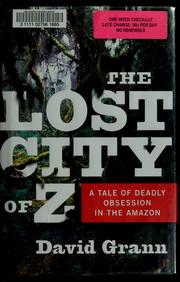
The Lost City of Z: A Tale of Deadly Obsession in the Amazon
David Grann retraces Percy Fawcett's 1925 disappearance in the Amazon and finds that the lost city he sought was not entirely a fantasy.
2,493-word summary · 11 min read
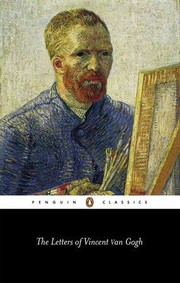
The Letters of Vincent van Gogh
Vincent van Gogh's letters to his brother Theo, in a Penguin Classics selection edited by Ronald de Leeuw, trace a decade of work, faith, and obsession.
2,611-word summary · 12 min read
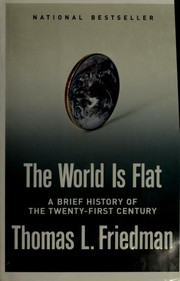
The World Is Flat: A Brief History of the Twenty-first Century
Thomas L. Friedman's 2005 bestseller argues that technology, trade, and open borders leveled the global playing field, and it names the ten forces that did it.
2,369-word summary · 11 min read
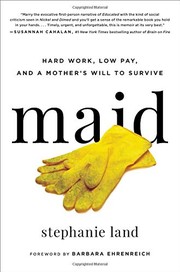
Maid: Hard Work, Low Pay, and a Mother's Will to Survive
Stephanie Land's memoir of cleaning houses as a single mother on the poverty line, and of the paperwork that made every step forward cost something else.
2,039-word summary · 9 min read
The New Jim Crow: Mass Incarceration in the Age of Colorblindness
How mass incarceration became a racial caste system after civil rights.
2,413-word summary · 11 min read
Wild Swans
Three generations of women survive warlords, revolution, and the Cultural Revolution in Jung Chang's family memoir.
2,356-word summary · 10 min read
Notes from a Small Island
Bill Bryson's 1995 farewell tour of Britain, funny and fond, from Dover to London, the north, Scotland and Wales.
2,301-word summary · 10 min read
In a Sunburned Country
Bryson revisits Australia by city walks and long trains, with reef trips, critter comedy, and explorer history.
2,387-word summary · 11 min read
How to Be an Antiracist
Kendi blends memoir and history to argue that fair policy, not self fixing, creates an equal society.
2,513-word summary · 11 min read
Empire of Pain: The Secret History of the Sackler Dynasty
How the Sackler family sold OxyContin and shaped an overdose crisis while giving to museums.
2,048-word summary · 9 min read
Twelve Years a Slave
Free violinist Solomon Northup tells how Brown and Hamilton lured him south into twelve years of Louisiana bondage until Bass letters brought rescue in January…
2,931-word summary · 13 min read
Say Nothing
Patrick Radden Keefe traces Jean McConville's 1972 disappearance through the Price sisters, Brendan Hughes, and Gerry Adams, using Boston College tapes to…
2,846-word summary · 13 min read
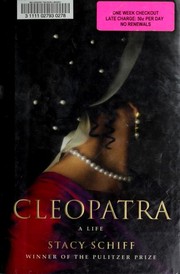
Cleopatra: A Life
Pulitzer winner Schiff restores Cleopatra as a capable ruler, from Ptolemy debts and Caesar to Antony, Actium, and her death in 30 BC, built from coins and…
3,586-word summary · 16 min read
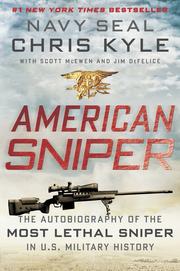
American Sniper: The Autobiography of the Most Lethal Sniper in U.S. Military History
Navy SEAL sniper Chris Kyle recounts Texas roots, SEAL training, four Iraq tours, and the strain combat placed on his marriage and health.
2,011-word summary · 9 min read
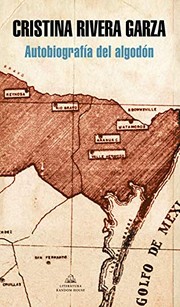
Autobiography of Cotton
A Pulitzer winner traces her cotton-worker grandparents and a 1934 border strike through archives, memory, and damaged land.
2,213-word summary · 10 min read
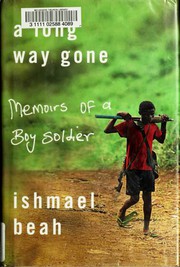
A Long Way Gone: Memoirs of a Boy Soldier
A Sierra Leone boy flees rebels, becomes a child soldier at thirteen, and fights his way back through rehab.
2,434-word summary · 11 min read