
Say Nothing
2,846-word summary 13 min read 513 pages in the book
- First published
- 2018
- Publisher
- Doubleday
- Pages
- 513
- ISBN
- 9780385523370
Reading options
What's inside (8 sections)
I picked up Say Nothing because a friend kept talking about the Boston College tapes, and I thought I knew the outline already. A mother taken in Belfast, a secret archive, a famous politician who says he was never in the IRA. The book first appeared in 2018, with the American edition from Doubleday following in February 2019, and it runs 513 pages. I expected a tight true crime story. What I found was slower and heavier than that, a history of the Troubles told through a small group of people whose choices kept folding back on each other for thirty years.
Keefe starts with Jean McConville, and he stays with her longer than I expected. She was a widowed mother of ten living in Divis Flats in West Belfast when she was seized in December 1972. Her children watched men and women come to the door and pull her away. The youngest was crying on the stairs. The older ones tried to follow and were pushed back. For days they thought she might walk home. She never did. Neighbours whispered that she had helped a wounded British soldier, that she had a radio transmitter, that she was an informer. Keefe shows how thin those claims were and how fast they hardened into permission. A local IRA unit decided she should disappear, and the machinery for disappearing people was already in place. Her body was hidden across the water in County Louth, and her children were left to divide up what was left in the flat and go into care homes and relatives houses.
The point Keefe keeps returning to is what it meant to be disappeared. It was not only murder. It was murder plus denial. The IRA did not claim the killing. It did not return the body. It told the children nothing. For years the family was told different stories, that she had run off with a soldier, that she had abandoned them. The cruelty of that lie sits at the center of the book. When her remains were finally found on a beach at Shelling Hill in 2003, more than thirty years later, only a few fragments and a shoe and clothing were left to identify. One of her sons had died without ever learning where she lay. Keefe handles this material without flash. He lets the dates and the small domestic details do the work. A coat left behind. A chip pan still on the stove. A child counting siblings to figure out who would sleep where.
The Price sisters go to war
From McConville, Keefe moves back to the people who carried out that kind of operation and believed in it completely. Dolours Price and Marian Price grew up in a republican family in Belfast where the past was talked about at the kitchen table. Their father had been in the old IRA. Their aunt had lost hands and sight handling explosives. By the early 1970s both sisters were in the Provisional IRA, and Dolours in particular became known for calm nerve. She drove cars across the border. She moved weapons. She accepted the argument that only force would push Britain out.
Keefe follows them to London in March 1973, when the IRA set off car bombs outside the Old Bailey and the Ministry of Agriculture. Two people died of heart attacks attributed to the blasts, one man later died of injuries, and around two hundred were hurt. The Price sisters were caught at Heathrow trying to fly back to Ireland, with Marian carrying a boarding pass and both of them quickly tied to the rental cars and explosives traces. Their trial and conviction put them in English prisons, where they began a hunger strike to be moved to Northern Ireland. The force feeding that followed is described in plain, hard pages. Tubes, restraints, vomiting, the prison doctor insisting it was treatment. Dolours later said she felt she was being buried alive in her own body. Keefe does not turn them into symbols. He shows two young women who wanted the status of political prisoners and who were willing to let their bodies fail to get it, and he shows the British state deciding it would keep them alive at any cost.
What stayed with me was how young everyone was. Dolours was twenty two at the time of the bombing. Marian was nineteen. The men who sent them were not much older. Keefe keeps ages in view, because the book is partly about what happens when teenagers are given guns and a theory that says funerals are victories.
Brendan Hughes and the code he could not keep
Brendan Hughes, known to friends as Darkey, is the figure I thought about most after finishing. He was a Belfast man who joined the IRA after being caught up in the street fighting around 1969 and 1970, when Catholic streets were burning and British soldiers first arrived as protectors and then stayed as an occupying force. Hughes rose fast. He became officer commanding of the Belfast Brigade and then head of operations for Derry. He planned ambushes. He ordered killings. He also took part in the removal of McConville, a fact he admitted late in life with visible remorse.
Keefe draws Hughes as brave to the point of recklessness and then broken by prison. Hughes led the first hunger strike in the Maze in 1980, calling it off when he thought a deal was near, only to watch the second strike in 1981 go ahead under Bobby Sands and claim ten lives. Hughes believed his decision had cost those men, and he carried that weight openly. After his release he fell out with the leadership. He thought the movement was trading its principles for votes. He drank. He lived thinly. He agreed to sit for the Belfast Project, an oral history run out of Boston College, on the promise that his tapes would stay sealed until after his death. In those interviews, conducted by former IRA man Anthony McIntyre with historian Ed Moloney organizing the project, Hughes spoke with a directness that startled even people who knew him. He named operations. He described who gave orders. He said Gerry Adams had been his commanding officer and had ordered McConville to disappear.
Hughes died in 2008. The tapes did not stay sealed for long in the way he had hoped. Police sought them. Lawyers fought over them. Portions became public. Keefe uses them carefully, quoting what Hughes said while noting where memory slips or where a man settling scores might shape a story. Hughes comes across as someone trying to confess without asking to be forgiven, which makes his chapters the most painful in the book.
Gerry Adams says he was never there
No figure takes up more room in Say Nothing than Gerry Adams, and no figure is more careful with his own room. Adams grew up in Ballymurphy, joined the republican movement young, rose through the Belfast IRA, survived prison and assassination attempts, and then remade himself as the public face of Sinn Fein and the peace process. He denies he was ever a member of the IRA. He says he was never in command of anything. Keefe lays out the contrary evidence in steady layers. Hughes says Adams ordered the McConville operation. Dolours Price said Adams was there when decisions were made. Other interviews from the Belfast Project point the same way. British military assessments from the time list him as a senior commander. Adams answers each claim the same way, that he was not involved, that others misremember, that the work of peace matters more than the argument about the past.
Keefe is open about why he dwells on Adams. If the leader who asked young people to kill and to die will not say what he asked for, then the moral accounting of the whole war stalls. At the same time, this is where I began to feel the book lean. Keefe builds long arcs around Adams, returning to him in chapter after chapter, while Adams himself declines to be interviewed and offers only flat denials through statements. The result is a portrait painted largely by his enemies and former comrades, vivid but one sided by necessity. I found myself wanting more space for what Adams actually did in the 1990s to pull republicans toward a ceasefire, not because that excuses anything, but because the shift from gunman to negotiator is part of the same story. Keefe covers the peace talks, the secret contacts with British officials, the slow break with hardliners, yet those passages feel shorter than the investigation of his IRA past. The emphasis is understandable. It also leaves a gap.
There is a related problem with evidence. The Belfast Project tapes are powerful, but they are memories recorded decades later by people with grievances. Moloney and McIntyre believed in the integrity of the project, and Boston College researcher Robert O'Neill set up strict confidentiality rules, yet once the Police Service of Northern Ireland subpoenaed the archive, every promise of silence looked fragile. Keefe explains the legal fight well, how the United States courts ordered portions handed over, how Ivor Bell, an older republican veteran, was arrested and charged in connection with the McConville case on the basis of material said to come from the tapes, with the prosecution later collapsing. The episode shows how hard it is to write recent history when the sources are still alive and still afraid. Keefe trusts Hughes and Price on central points. He tells the reader why. A more skeptical reader could still ask whether trust is doing more work here than documents can support.
The tapes and the price of remembering
The middle of the book slows to explain how the Belfast Project came to exist, and this stretch tested my patience. Keefe walks through how Moloney, a journalist who had covered the Troubles for years, and McIntyre, a former IRA prisoner turned scholar, persuaded former paramilitaries on both sides to talk on condition the recordings would stay locked in Boston College until they died. The idea was to leave a true record for the future, free from the need to protect careers or court cases. Dozens sat down. Loyalists spoke too. The archive grew in a locked room in America while Belfast tried to move on.
Then Dolours Price gave newspaper interviews before her death in 2013 in which she talked openly about McConville and about Adams. That broke the seal in practice, even if not in law. Police argued the tapes might contain evidence about an unsolved murder. Boston College argued for academic privilege. The courts sided mostly with the police. McIntyre felt betrayed by the university. Moloney said the whole point of the project had been destroyed. Former fighters who had spoken freely now feared prosecution or retaliation. Keefe tells this as a tragedy of good intentions. People who wanted the truth preserved ended up helping to bury it deeper, because after the subpoenas no one with anything to lose would talk again. I thought these chapters were necessary and also too long. Names of lawyers and archivists pile up. The narrative of Belfast recedes while American court filings take over. The stakes are real, but the pace sags for fifty pages or so.
What Keefe does well here is show the clash between two kinds of peace. One kind says forgive and forget so the guns stay silent. The other says name what happened so the silence does not rot. The Good Friday Agreement of 1998 released prisoners early, including people convicted of murder, on the theory that the future needed room. Families like the McConvilles were told their loss was part of the price. Keefe does not mock that bargain, but he shows who paid it. The children grew up poor, scattered, angry at each other and at everyone else. Some drank. Some cut ties. Some kept pushing police and journalists for answers. Their persistence is what finally forced the IRA in 1999 to admit it had killed and hidden a small number of people it called the disappeared, McConville among them, and to point searchers toward bogs and beaches.
Peace with bodies still in the ground
The last third of the book follows the search for the disappeared and the slow unravelling of old loyalties. Keefe describes diggers on beaches in winter, priests carrying messages between former gunmen and police, maps drawn from half remembered instructions. McConville was found in 2003. Others took longer. Some have still not been found. Each recovery gets a short, sober passage. No speeches. Just a family standing near a hole in the ground while scientists work.
Alongside that, Keefe tracks Adams through the peace process into respectability, elected office, handshakes with former enemies, American fundraisers, denials that never change. He tracks Dolours Price into addiction and fury at what she saw as betrayal, dying in 2013 from toxic effects of prescribed medication, with her funeral drawing both mourners and police interest in her papers. He tracks Hughes into early death and posthumous controversy over his tapes. He tracks Marian Price into later arrests and protests that suggested the war never fully ended for some. The structure works. McConville opens the book, the Price sisters and Hughes fill the middle, Adams holds the frame, and the disappeared close it.
My criticism, fairly put, is threefold, though each point has a counter. First, the Adams focus can feel prosecutorial. Keefe is careful to say what is alleged and what is proven, yet the sheer space given to the allegation leaves an impression stronger than the sourcing always earns. Second, the middle dips. The legal history of the Boston College archive matters, but it arrives in a dense block that breaks the human momentum built around Divis Flats and the Old Bailey. Third, loyalist violence gets less attention than republican violence by design, since the central cases are IRA cases, but a reader new to Northern Ireland could come away with a skewed sense of who killed whom across the whole conflict. Keefe notes the numbers and the collusion questions, but briefly.
Against that, the strengths are large. The reporting is deep, built on interviews, inquests, police files, and those disputed tapes, all cited in endnotes. The writing is clear and restrained for a 513 page history that could easily have turned showy. The moral questions are left open rather than pressed into a lesson. I finished feeling I understood better why people joined, why they stayed, why they lied afterward, and why saying nothing felt safer than speech for so long. The Doubleday edition I read notes its 2018 origin on the copyright page and carries the full weight of that research without padding. It is not a fast book. It is a steady one, and the steadiness suits the subject. The McConville children, grown old themselves by the end, get the last word in effect if not in placement. They wanted a grave. They finally got one. Everything else in the book circles that simple fact and finds it is not simple at all.
Where the book strains
I want to be direct about where Say Nothing frustrated me, because admiration should leave room for complaint. The reliance on oral history is both the engine and the weak joint. Hughes and Dolours Price are compelling witnesses, but they spoke when they were ill, angry, and estranged from Adams. Moloney and McIntyre had their own falling out with Sinn Fein. That does not make the tapes false, but it means the reader is asked to weigh memory against denial without much paper in between. Keefe acknowledges this and still leans toward his sources. I leaned with him most of the way, then caught myself. A book that accuses a living man of ordering a mother's murder needs either documents or a chorus, and here it has a small chorus with reasons to sing.
The pacing around the court cases also drags. I understand why Keefe wanted to show how Boston College handled the subpoenas, who decided what, which judges ruled how. Those details matter for future projects. As reading, they sit heavily between the vivid Belfast scenes and the beach searches. I skimmed a few pages of filings and felt guilty about it, then kept skimming.
Even so, I would press this book on anyone trying to grasp Northern Ireland beyond slogans. It shows how ordinary streets produced extraordinary violence, how women like the Price sisters were both agents and tools, how commanders like Hughes lived long enough to doubt, how leaders like Adams learned to speak of peace while refusing to speak of war. The 2018 publication now reads as a marker before the television retelling renewed interest, but the pages themselves have not dated. They describe a place where memory is evidence and evidence is danger, and where one family with ten children learned that history is not what is written but what is hidden and then, decades later, found.
FAQ
Who was Jean McConville and why does she open the book?
She was a Belfast mother of ten abducted in December 1972. Her disappearance frames the Troubles in the book, and her remains were found in 2003.
What was the Belfast Project at Boston College?
It was an oral history where former paramilitaries spoke on condition tapes stayed sealed until death. Police subpoenas later forced portions into public view.
Does the book prove Gerry Adams was in the IRA?
No. Hughes and Dolours Price name him as a commander and Adams denies IRA membership. Keefe lays out the claims while noting the limits of memory.
Similar books
Empire of Pain: The Secret History of the Sackler Dynasty
How the Sackler family sold OxyContin and shaped an overdose crisis while giving to museums.
2,048-word summary · 9 min read

Long Walk to Freedom
Mandela's account of a Thembu childhood, a law practice, a banned movement, twenty-seven years in prison, and the negotiation that ended apartheid.
2,454-word summary · 11 min read
Nothing to Envy
Barbara Demick follows six defectors from Chongjin through the North Korean famine, showing how ordinary people lived, believed, and finally left.
2,068-word summary · 9 min read
Down and Out in Paris and London
Orwell's account of washing dishes in Paris hotels and tramping through London does not ask for pity, only for a clear look at how poverty actually works.
2,282-word summary · 10 min read
Red Notice
An American financier in Moscow exposes a $230 million tax fraud, watches his lawyer die in prison, and turns the case into an international human rights law.
2,008-word summary · 9 min read
Prisoners of Geography: Ten Maps That Tell You Everything You Need to Know About Global Politics
Tim Marshall explains how mountains, rivers, coasts, and resources shape the choices of nations, from Russia's flat borders to the chokepoints of the South…
2,328-word summary · 10 min read
Catch and Kill: Lies, Spies, and a Conspiracy to Protect Predators
Ronan Farrow recounts how NBC killed his Harvey Weinstein reporting, then how The New Yorker published it and helped ignite #MeToo.
2,057-word summary · 9 min read
The World Is Flat: A Brief History of the Twenty-first Century
Thomas L. Friedman's 2005 bestseller argues that technology, trade, and open borders leveled the global playing field, and it names the ten forces that did it.
2,369-word summary · 11 min read
The New Jim Crow: Mass Incarceration in the Age of Colorblindness
How mass incarceration became a racial caste system after civil rights.
2,413-word summary · 11 min read

The Hot Zone
Ebola and Marburg move from African outbreaks to a Virginia monkey house and an Army response in suits.
2,291-word summary · 10 min read
How to Be an Antiracist
Kendi blends memoir and history to argue that fair policy, not self fixing, creates an equal society.
2,513-word summary · 11 min read
The Library Book
Susan Orlean investigates the 1986 Los Angeles Central Library fire and suspect Harry Peak while tracing library history, her mother's influence, and the…
2,319-word summary · 10 min read
Cleopatra: A Life
Pulitzer winner Schiff restores Cleopatra as a capable ruler, from Ptolemy debts and Caesar to Antony, Actium, and her death in 30 BC, built from coins and…
3,586-word summary · 16 min read
The Wager: A Tale of Shipwreck, Mutiny and Murder
Thirty starved men reach Brazil as heroes in 1742, then three more land in Chile calling them mutineers, and Grann sorts the wreck.
2,995-word summary · 13 min read
Helter Skelter
Prosecutor Bugliosi builds Tate-LaBianca case against Manson Family.
2,838-word summary · 13 min read
A Promised Land
First-volume memoir from Iowa 2008 through the 2011 bin Laden raid, crisis management and doubt.
2,243-word summary · 10 min read
A People's History of the United States
A bottom-up history of the United States from Columbus to Clinton, told through workers, women, Native nations and Black voices against elite rule.
2,398-word summary · 11 min read
The Prince
Machiavelli advises Lorenzo on rule through fear and love, fortune, cruelty and mercy.
2,204-word summary · 10 min read
Killers of the Flower Moon: The Osage Murders and the Birth of the FBI
In 1920s Oklahoma, Osage oil wealth makes tribal members targets for murder, forcing the young FBI under Tom White to expose the conspiracy behind the Reign of…
2,403-word summary · 11 min read
Between the World and Me
Coates writes to his son about the Black body in America, from Howard to the loss of Prince Jones.
2,234-word summary · 10 min read
The Devil in the White City
Architect Burnham builds the 1893 Chicago Fair while H.H. Holmes builds his murder hotel nearby.
2,020-word summary · 9 min read
The Zookeeper's Wife: A War Story
The directors of the Warsaw Zoo hid roughly three hundred Jews in empty cages and outbuildings after the German invasion, while Jan worked for the resistance.
2,065-word summary · 9 min read
Nudge: Improving Decisions About Health, Wealth, and Happiness
Thaler and Sunstein show how defaults, framing, and social cues steer choices, and argue for choice architecture with an opt-out.
3,146-word summary · 14 min read
1491: New Revelations of the Americas Before Columbus
Charles C. Mann gathers archaeology, ecology, and demography to argue that the Americas before Columbus were older, fuller, and more deliberately shaped than…
2,712-word summary · 12 min read
The DaVinci Code: A Quest for Answers
A short 2006 dialogue in which three friends test Dan Brown's claims about Jesus, Mary Magdalene, Nicaea, and the canon.
2,088-word summary · 9 min read

In Order to Live: A North Korean Girl's Journey to Freedom
A young North Korean girl crosses the Yalu, survives trafficking in China, and rebuilds her life in Seoul in this unsparing memoir.
2,027-word summary · 9 min read
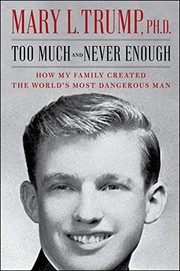
Too Much and Never Enough: How My Family Created the World's Most Dangerous Man
Mary L. Trump's 2020 memoir traces how a cold, zero-sum Queens household shaped her uncle, and uses family tax documents to challenge his self-made story.
2,059-word summary · 9 min read

Infidel
Ayaan Hirsi Ali's memoir of a Somali childhood, a forced marriage, a Dutch asylum claim, and the political fight that followed the murder of Theo van Gogh.
2,041-word summary · 9 min read
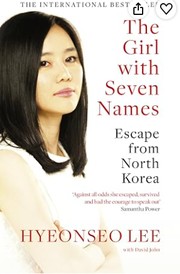
The Girl with Seven Names: A North Korean Defector's Story
Hyeonseo Lee crossed the frozen Yalu River at seventeen, spent years hidden in China, escaped to South Korea, and later returned to rescue her family.
2,404-word summary · 11 min read
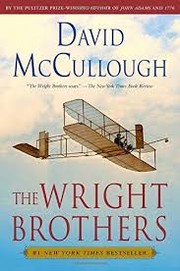
The Wright Brothers
David McCullough tells the story of two self-taught Ohio brothers, working largely alone and out of a bicycle shop, who solved the problem of flight before…
2,027-word summary · 9 min read