

In Order to Live: A North Korean Girl's Journey to Freedom
2,027-word summary 9 min read 288 pages in the book
- First published
- 2015
- Publisher
- Penguin Press
- Pages
- 288
- ISBN
- 9781594206795
Reading options
What's inside (9 sections)
I put off reading this book for a while. North Korea is one of those subjects where the statistics are so large that they stop meaning anything, and I expected another account built out of numbers: famine deaths, prison camps, border crossings. What I found instead was a very specific story about a girl who was thirteen, weighed sixty pounds, and did not know the word for freedom. That specificity is the reason the book stays with me. Yeonmi Park describes a world in which a bowl of rice is a political fact and a pair of shoes can decide whether you live.
The book was written with Maryanne Vollers, a journalist, and published by Penguin Press in 2015. It moves chronologically, from Park's childhood in Hyesan on the Chinese border, through her family's collapse, her escape in 2007, years of trafficking and hiding in China, a desert crossing into Mongolia, and finally resettlement in South Korea. It is a memoir, not a history, and it is shaped by memory and by the demands of telling a story to strangers. That matters when you read it, and I will come back to it.
A Childhood Measured in Electricity and Food
Park was born in 1993 in Hyesan, a city in the far north of North Korea. Her father, Jin Sik, traded on the black market. Her mother, Keum Sook, taught school and believed much of what the state told her. Her older sister, Eunmi, was the one who first began to question the official version of things.
The details Park uses to establish normal life are small and concrete. The electricity came on rarely. Children learned to read by candlelight and to calculate how long a battery would last. The family ate corn and potatoes, and meat was a rumor. Her mother kept a portrait of Kim Il Sung in the apartment and dusted it with more care than anything else. Park explains the songbun system, the hereditary caste ranking that decided where a family could live, what work they could do, and whether a child could go to university. Her family's ranking was already shaky because of her father's black market activity, and it fell further when he was arrested.
What Park does well in these early chapters is show how propaganda and hunger coexist. The state broadcasts a story of abundance while people eat grass and bark. Children are taught to recite slogans and to report on their neighbors. Park's mother, who had internalized much of this, is not a villain in the story. She is a woman trying to keep her children alive inside a system that has taught her to trust it. The book does not mock her for that.
The Market as a Second Education
The jangmadang, the informal markets that grew after the state economy collapsed, become Park's real school. She sees people bargaining, lying to officials, and surviving without permission. She notices that the market has its own logic, one that does not care about songbun. This is where she first understands that the state is not all powerful, that people can carve out small spaces the regime cannot fully control.
Smuggled DVDs and Chinese television reach her through neighbors. She watches South Korean dramas and sees apartments with refrigerators and people who argue with each other without being arrested. She does not yet imagine leaving. She imagines eating bread every day. That distinction is important. Park is not a political dissident as a child. She is hungry, and she is curious, and those two things turn out to be enough.
Her father is the book's most ambiguous figure before Hongwei. Jin Sik is a smuggler, a risk taker, and a man who sometimes puts his family in danger for a deal. He is also the parent who first shows Yeonmi that the state can be cheated. Park does not turn him into a hero. She remembers his charm and his absences, the way he could talk his way past a guard and the way he left his wife to manage the consequences. When he comes back from the labor camp, wasted by illness, the family's grief is mixed with relief and resentment. That kind of messiness is what makes the memoir feel lived rather than constructed.
Her father's arrest in 2002 changes the family's standing. He is sentenced in 2004 to a labor camp. Park describes visiting him and the way prison strips a person down. He returns on medical leave in 2005, thin and in pain. The family moves to Kowon, a rural town, where her mother tries to start over. It is there that rumors reach them about brokers who can take young women into China.
The Night of March 31, 2007
The escape itself is the most vivid sequence in the book. Park had been hospitalized for an intestinal infection that doctors mistook for appendicitis. She was still recovering from surgery when the plan was set. Eunmi had already left for China. Yeonmi and her mother were supposed to follow. On the night of March 31, 2007, they scrambled down the bank of the frozen Yalu River. Park was weak enough that she had to slide down on her bottom, sending rocks into the water. A soldier appeared. The guide bribed him. They ran.
Park's account of that crossing is careful about fear. She does not pretend she was brave. She was paralyzed, and the guide had to drag her across the ice. When she looked back, the power grid was down and the horizon was black. She did not think about freedom. She thought about her sister and about food.
What waits on the Chinese side is worse than she expected. A broker separates mother and daughter almost immediately and rapes Keum Sook. Yeonmi is sold to a man called Zhifang, who tries to rape her and then sells her to another man, Hongwei. Her mother is sold to a farming family. The book does not soften any of this. Park describes the mechanics of trafficking with a flatness that is more disturbing than drama: who paid whom, what was promised, how quickly a person becomes property.
Hongwei
Hongwei is the most complicated figure in the memoir. He is a trafficker and a rapist. He is also, at times, Yeonmi's only protection. He cycles between violence, gifts, and promises. He tells her he will find her mother and her sister if she cooperates. She learns to detach from her body and to treat sex as a transaction, because that is the only way she can keep going. She also helps him with other trafficked women, teaching them basic hygiene and how to navigate Chinese households. Park is honest about the shame she felt doing this, and about the way survival can make a person complicit in things she despises.
Hongwei does keep some of his promises. He reunites Yeonmi with her mother. He brings her father across the border. The family is together again, minus Eunmi, but the reunion is brief. Jin Sik has advanced colon cancer. He dies in early 2008 with Yeonmi beside him. They cremate him in China because they cannot take him home.
The Beijing Olympics crackdown destroys Hongwei's business. He becomes more volatile. He sells Keum Sook to ease his financial problems, and Yeonmi is later kidnapped by a wealthy man named Huang. Hongwei retrieves her, which is the moment the book makes clearest: he is not a rescuer, and she knows it. After that, she decides she will not depend on him again. He lets her go, and she returns the jewelry he gave her. It is not a clean break, and Park does not pretend it is.
Chat Rooms, Missionaries, and the Gobi
In Shenyang, Yeonmi and her mother work in online adult chat rooms, talking to men for money. The work is degrading, and Park describes it without moralizing. It also teaches her that there are other ways to live. Through another refugee, they hear about a Christian network in Qingdao that helps North Koreans reach Mongolia, where they can seek asylum and eventually be resettled in South Korea.
The Qingdao section is quieter. They hide in safehouses with other defectors, study the Bible with missionaries, and prepare for the crossing. Park is not sure what she believes, but she is grateful for the help. The journey to Mongolia is brutal: days on buses, then a foot crossing of the Gobi Desert. When Mongolian soldiers detain them, Yeonmi threatens to kill herself rather than be sent back to China. The soldiers relent and take the group to safety.
They enter South Korea on April 20, 2009. The processing is not the happy ending a reader might expect. They spend weeks being interrogated at the National Intelligence Service, then months at Hanawon, the government resettlement center. Park has to learn how to make choices. A counselor asks her favorite color and she cannot answer. She has never been asked to have a preference. She struggles with depression and anxiety, hides her accent to avoid discrimination, and races through years of missed schooling.
Seoul and the Return of Eunmi
Park starts at Dongguk University in 2012, studying police administration. She begins appearing on South Korean television, partly to earn money and partly in the hope that Eunmi will see her. The strategy works, though not immediately. In 2013, while Park is in the United States with a missionary group, she gets a call. Eunmi is alive and has arrived in South Korea. The sisters reunite after seven years apart. They had been living near each other in China without knowing it.
The last chapters follow Park's emergence as a public speaker. She addresses the United Nations Human Rights Council in 2014. She begins writing the book. Her mother returns to China to retrieve Jin Sik's ashes and brings them to South Korea. The memoir ends with Park hoping to finish her degree and study law, and with her insistence that telling the story is the way to honor the life she fought for.
What the Book Does, and What It Does Not
The strength of In Order to Live is its resistance to abstraction. Park shows how a totalitarian system works through small humiliations: the portrait that must be dusted, the accent that must be hidden, the favorite color that cannot be named. She shows how trafficking works through ordinary transactions. She shows how survival can involve choices that no one should have to make.
The book has limits. It is a memoir written with a journalist, and some scenes are reconstructed with a novelist's pacing. Park's public account has been challenged since publication, most notably in a 2023 Washington Post investigation that raised questions about details of her timeline and her father's death. Some of those questions are about memory, some about the way defector stories are packaged for Western audiences. The core of the book, the famine, the border, the trafficking, the resettlement, is corroborated by other defectors and by human rights organizations. The disputed details matter, but they do not erase the larger picture.
I also think the book is weaker when it tries to explain North Korea as a whole. Park is at her best when she stays close to what she saw. When she generalizes about the regime or about Korean culture, the prose becomes flatter and more predictable. The final chapters, which cover her activism, feel rushed compared with the earlier material.
Still, this is one of the clearer accounts of what a closed society does to a child. Park does not ask the reader to admire her. She asks the reader to understand how quickly a normal life can become a survival problem, and how much of what we call freedom is made of small, ordinary choices. The favorite color question is the one I keep thinking about. It is a trivial question, and it is the whole book. A person who has never been allowed to want anything has to learn how to want, and that is a longer project than a border crossing.
FAQ
Is In Order to Live a verified account?
It is Park's own memoir, written with Maryanne Vollers. Core events are corroborated by other defectors, but a 2023 Washington Post investigation questioned some details, including her father's death and her timeline.
How old was Yeonmi Park when she escaped?
She was thirteen when she and her mother crossed the Yalu River in March 2007.
Where does the book end?
With Park in South Korea, reunited with her sister Eunmi in 2013 and beginning her work as a public speaker and writer.
Similar books

Infidel
Ayaan Hirsi Ali's memoir of a Somali childhood, a forced marriage, a Dutch asylum claim, and the political fight that followed the murder of Theo van Gogh.
2,041-word summary · 9 min read

The Girl with Seven Names: A North Korean Defector's Story
Hyeonseo Lee crossed the frozen Yalu River at seventeen, spent years hidden in China, escaped to South Korea, and later returned to rescue her family.
2,404-word summary · 11 min read
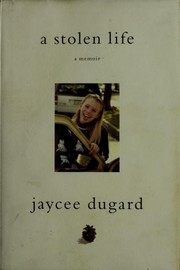
A Stolen Life
Kidnapped at eleven in 1991, Jaycee Dugard survived eighteen years in an Antioch backyard and tells her own story of endurance and motherhood.
2,807-word summary · 12 min read

Long Walk to Freedom
Mandela's account of a Thembu childhood, a law practice, a banned movement, twenty-seven years in prison, and the negotiation that ended apartheid.
2,454-word summary · 11 min read

Too Much and Never Enough: How My Family Created the World's Most Dangerous Man
Mary L. Trump's 2020 memoir traces how a cold, zero-sum Queens household shaped her uncle, and uses family tax documents to challenge his self-made story.
2,059-word summary · 9 min read

Down and Out in Paris and London
Orwell's account of washing dishes in Paris hotels and tramping through London does not ask for pity, only for a clear look at how poverty actually works.
2,282-word summary · 10 min read

Lone Survivor: The Eyewitness Account of Operation Redwing and the Lost Heroes of SEAL Team 10
Marcus Luttrell's account of the 2005 SEAL mission in Afghanistan that killed three of his team and left him alone.
2,144-word summary · 10 min read
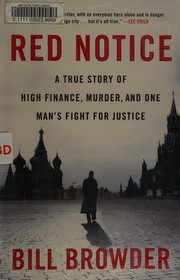
Red Notice
An American financier in Moscow exposes a $230 million tax fraud, watches his lawyer die in prison, and turns the case into an international human rights law.
2,008-word summary · 9 min read
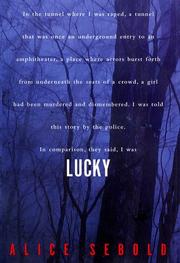
Lucky
Alice Sebold's memoir of the 1981 rape she survived as a college freshman, the courtroom that followed, and a conviction later proven to be a case of mistaken…
2,091-word summary · 9 min read
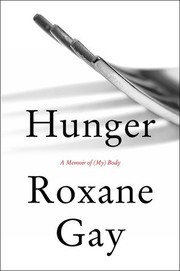
Hunger
Roxane Gay traces how assault at twelve shaped her body, appetite, and daily life as a fat Black woman refusing shame.
2,583-word summary · 11 min read
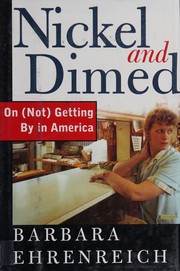
Nickel and Dimed: On (Not) Getting By in America
A journalist works waitress, cleaning, retail, and care jobs undercover to test whether full-time work keeps a person housed and fed.
2,328-word summary · 10 min read
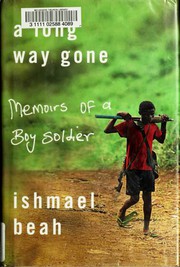
A Long Way Gone: Memoirs of a Boy Soldier
A Sierra Leone boy flees rebels, becomes a child soldier at thirteen, and fights his way back through rehab.
2,434-word summary · 11 min read
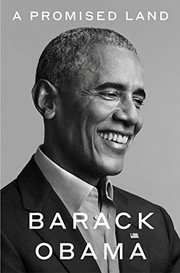
A Promised Land
First-volume memoir from Iowa 2008 through the 2011 bin Laden raid, crisis management and doubt.
2,243-word summary · 10 min read
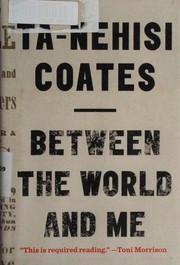
Between the World and Me
Coates writes to his son about the Black body in America, from Howard to the loss of Prince Jones.
2,234-word summary · 10 min read
A Child Called It
Dave survives his mother games of hunger and cold in Daly City until teachers and foster care step in.
2,326-word summary · 10 min read
Sybil
A 1973 case study of a woman treated for multiple personalities, and the book that made dissociative identity disorder a household phrase.
2,054-word summary · 9 min read
Nudge: Improving Decisions About Health, Wealth, and Happiness
Thaler and Sunstein show how defaults, framing, and social cues steer choices, and argue for choice architecture with an opt-out.
3,146-word summary · 14 min read
What Happened to You?
Oprah Winfrey and psychiatrist Bruce Perry explain how early experience shapes the brain, and why asking what happened to someone works better than asking what…
2,238-word summary · 10 min read
Nothing to Envy
Barbara Demick follows six defectors from Chongjin through the North Korean famine, showing how ordinary people lived, believed, and finally left.
2,068-word summary · 9 min read
Same Kind of Different as Me
An art dealer and a formerly homeless sharecropper tell the story of the friendship that began at a Fort Worth mission and the woman who insisted on it.
2,023-word summary · 9 min read
The Happiest Man on Earth
Eddie Jaku's memoir follows a Leipzig childhood, Buchenwald, Auschwitz, a death march, and the slow rebuilding of a life in Australia.
2,597-word summary · 12 min read
Year of Yes: How to Dance It Out, Stand in the Sun and Be Your Own Person
Shonda Rhimes takes her sister’s accusation seriously and spends a year saying yes to the things that frighten her, from live television to her own reflection.
2,585-word summary · 11 min read
Love Does
A lawyer and activist tells stories of saying yes, showing up, and loving people through ordinary, often ridiculous actions.
2,411-word summary · 11 min read
Beautiful Boy: A Father's Journey Through His Son's Addiction
David Sheff recounts watching his son Nic slide into meth addiction, and his own desperate, humbling search for how to help without destroying them both.
2,076-word summary · 9 min read
Columbine
Ten years of reporting on the 1999 school massacre, including a journalist's correction of the myths he helped create in the first hours.
2,232-word summary · 10 min read

The Magnolia Story
How Chip and Joanna Gaines met, closed their first shop, nearly lost everything in a housing development, and built Fixer Upper.
2,994-word summary · 13 min read
Life
The Rolling Stones guitarist tells his own story: a Dartford childhood, the band's first gigs, the drug raids, the tax years and Patti Hansen.
2,761-word summary · 12 min read
Dry
A memoir of drinking, rehab and relapse, and the strange business of getting sober one morning at a time.
2,643-word summary · 12 min read

Dear Girls: Intimate Tales, Untold Secrets & Advice for Living Your Best Life
Ali Wong's debut collects fourteen letters to her daughters, covering sex, money, work, marriage, Vietnam, and being a working Asian American mother.
2,266-word summary · 10 min read
America (The Book): A Citizen's Guide to Democracy Inaction
Jon Stewart and the Daily Show writers turn a high school civics textbook inside out, with a foreword from beyond the grave.
2,511-word summary · 11 min read