
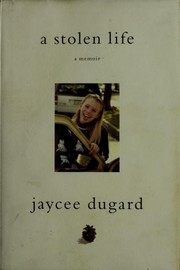
A Stolen Life
2,807-word summary 12 min read 273 pages in the book
- First published
- 2011
- Publisher
- Simon & Schuster
- Pages
- 273
- ISBN
- 9781451629187
Reading options
What's inside (7 sections)
I did not want to read A Stolen Life for entertainment. Jaycee Dugard published it with Simon and Schuster in 2011, a 273 page memoir about being kidnapped at age eleven and held for eighteen years. I read it because I kept seeing it referenced whenever people talked about long captivity cases, and I wanted to hear her account in her own words rather than through crime coverage. The book is plain, painful, and unusually direct. Dugard wrote it herself, with help putting the manuscript in shape, and she keeps the focus on what she remembers day by day. There is no ghostwriter polish smoothing the edges. Some passages repeat. Some stop short. That rawness is part of why it stays with you.
The facts, as she gives them and as court records confirm, are these. On June 10, 1991, eleven year old Jaycee was walking from her house in South Lake Tahoe to the school bus stop. A car stopped. A man shocked her with a stun gun and pulled her inside while his wife held the door. The couple drove her to their house in Antioch, California, and kept her in the backyard for the next eighteen years. She was found on August 26, 2009, after the man brought her with him to a parole office and officers finally asked who the quiet young woman with him was. She had two daughters by then, born during captivity. She was twenty nine. Her children had never been to school, never seen a doctor regularly, never lived outside the fence.
The morning at the bus stop
Dugard starts with a normal childhood. She lived with her mother Terry, her stepfather Carl, and her younger half sister Shayna. She liked animals, she liked school, she argued with her sister about small things. The morning of the kidnapping was ordinary. She was wearing a pink windbreaker, she was running a little late, she was thinking about the school day. Her stepfather watched her walk up the hill toward the bus stop from the garage, which later became a source of guilt he carried for years. She never reached the stop.
What happened next she describes in fragments, because that is how she remembers it. A gray car. A woman opening a door. A flash and buzz and her body locking. Hands pushing her to the floor. The woman covering her. The man driving fast while talking about drugs and prison and Jesus in a loop. Dugard was eleven and small for her age. She thought she would be killed. She tried to memorize road signs through the window and could not. The drive from the mountains to the Bay Area took hours. When they arrived, the man pulled her into a backyard shed, told her to take off the pink jacket, and left her there in the dark.
She writes about that first shed with a clarity that made my chest hurt. The smell of oil and old blankets. A roll of toilet paper. No window. She cried until she threw up. She waited for her mother to find her. When Phillip Garrido came back, he brought food and warned her that guard dogs would tear her apart if she screamed. There were no dogs. She did not know that yet. She believed him because she was eleven and he was an adult with a stun gun. Nancy Garrido, his wife, stood by and said little. That presence, another woman watching and not helping, confused Dugard more than the man's threats. She kept expecting Nancy to act like a mother. She never did.
The first weeks set the pattern. Dugard was kept in sheds and later in tents and small backyard structures hidden behind fences, tarps, and piles of junk. She was given a bucket. She was told her mother did not want her. She was told police would hurt her. Garrido alternated between preaching, crying about his own past, smoking meth, playing guitar, and assaulting her. Dugard learned quickly to stay still and quiet. She counted sounds from the street. She prayed. She thought about her sister's birthday and whether anyone was still looking.
Learning to survive in the backyard
After a few months, Garrido told Dugard she was now his wife in his mind. She was still a child. The sexual abuse, which the book describes without graphic detail but without hiding its frequency, began early and continued for years. Dugard handles this with spare language. She says what happened, then moves to what she did to get through the hour. She sang songs in her head. She petted the cats Garrido let her keep. She cleaned the small space she was given because cleaning gave her something to control. She writes that she split herself in two. One part endured. One part watched from above and waited for it to end.
The backyard itself grew over time into a compound. There were sheds wired with extension cords, tents with mattresses, a shower rigged from a hose, cages for animals, stacks of newspapers and toys and tools. From the street, the house looked messy but not alarming. Neighbors later said they heard children but assumed they were visitors. Parole officers visited Garrido at the front house and never walked around back. That failure is hard to read about. Garrido was a convicted sex offender on parole for much of this period. Officers came to the address, checked a box, and left. No one looked behind the fence for years.
Dugard was not allowed to say her name. Garrido called her Allissa. Nancy went along with it. Dugard writes that losing her name was almost worse than losing the house. She whispered Jaycee to herself when alone so she would not forget the sound. She kept a diary when she could steal paper. She drew. She read discarded magazines and library books Garrido brought home. She learned to cook on a hot plate. She learned to sew. She learned to calm crying babies with almost nothing, because by the time she was fourteen she was pregnant.
The book is careful here. Dugard does not present herself as a hero or a saint. She presents herself as a kid figuring out rules that kept changing. If she cried too loud, she was punished. If she asked about home, she was told home was gone. If she tried to be good, Garrido found a reason she had failed. The only reliable comfort was animals. Cats slept on her chest. A dog she was allowed to feed followed her around the small yard. Those passages are simple and specific, and I believed every one of them because they do not try to make a point. She just tells you the cat was warm.
Becoming a mother with no help
Dugard gave birth to her first daughter in 1994, when she was fourteen, with Nancy's help inside the backyard. No doctor. No hospital. No pain relief beyond towels and breathing. She writes that she was terrified she would die and leave the baby alone with Garrido. She did not die. She held a tiny girl and decided, in that moment, that she had to stay alive and keep this child alive too. Three years later, she gave birth to a second daughter the same way. She was seventeen.
Much of the middle of the memoir is about raising those girls in confinement. Dugard taught them to read with old textbooks. She made up games with sticks and bottle caps. She cut their hair with dull scissors. She told them stories about a mother and a sister far away without explaining that those people were her own family. The girls called Garrido Dad and Nancy Mom for a long time, because those were the words they were given. Dugard let that happen while hating it, because correcting them felt dangerous. She writes about braiding their hair before sleep, about dividing a single can of beans fairly, about keeping their clothes clean when the tents leaked in winter. The love in these pages is fierce and practical. Feed them first. Keep them warm first. Cry later.
She also writes honestly about anger. She was angry at Garrido, angry at Nancy, angry at neighbors who never knocked, angry at herself for not running when doors were briefly left open. There were moments when escape might have been possible, especially in later years when the girls were older and Garrido sometimes left the gate unlocked during the day. Dugard explains why she did not run. She had no money, no ID, no idea if her mother still lived in Tahoe, two children who had never crossed a street alone, and a man who had told her for a decade that police would take her daughters and lock her up. Fear does not need a locked door to work. By the time the girls were school age, the backyard was the only world they knew, and Dugard feared that running and failing would bring worse punishment on all three.
Garrido's behavior in these years swung between control and delusion. He preached about religion and claimed God spoke through him. He ran a small printing business from the front house and sometimes brought customers around while Dugard and the girls stayed silent out back. He wrote long rants about sex and society. He used meth and then stayed awake for days, pacing and ranting. Nancy managed the house, brought groceries, and helped keep the secret. Dugard does not try to diagnose them. She reports what she saw. The man cried and prayed and then did terrible things. The woman brought food and clean sheets and never opened the gate.
Schooling for the girls came entirely from Dugard. She set lessons at a table made from plywood. She taught letters, numbers, handwriting, basic history from whatever books came into the yard. The girls were bright and curious. They asked why they could not go to a real school. Dugard told them the world outside was dangerous and that Dad had reasons. She hated lying and saw no safe alternative. When inspectors or visitors came, the girls were told to be quiet and stay inside the tents. They learned to go still at the sound of a stranger's voice. Reading those passages as a parent, or even as someone who remembers being a kid told to hide during a landlord visit, is sickening because the girls thought this was normal life.
The parole visit that ended it
The end came because Garrido grew bolder, not because the system finally looked hard. In August 2009, he took his daughters, as he called them, to the University of California at Berkeley to hand out religious writings. Staff there found his behavior odd and called campus police. Separately, he brought Dugard, who was calling herself Allissa, and the girls to his parole office for a meeting. Parole officers, to their credit this time, noticed something off. The girls looked pale and sheltered. Allissa looked frightened and much younger than her claimed age. An officer asked direct questions and kept asking when answers did not fit.
Dugard describes that day with shaking hands on the page. She had rehearsed lies for years. She told the officer her name was Allissa. She said Garrido was her father and a good man. Then the officer separated them. A female officer spoke to her alone, gently, and said she did not have to protect anyone in that room. Dugard writes that she felt the floor tilt. She had imagined rescue as sirens and shouting. It was a quiet room with a box of tissues. She said her real name for the first time in eighteen years. Jaycee Lee Dugard. She spelled it. The officer wrote it down.
What followed was a blur she barely narrates. Police cars. Phone calls. FBI agents confirming a missing child case from 1991. Her mother Terry getting a call she had stopped allowing herself to hope for and driving to meet her daughter and two granddaughters she never knew existed. DNA tests. Garridos arrested. News trucks surrounding the Antioch house. Dugard and her daughters taken to a safe place where doctors checked them and counselors sat with them. The girls, then eleven and fifteen, learned in a single week that their Dad was a kidnapper, their home was a crime scene, and their mother had been stolen as a child herself. Dugard shields them from much of this in the book. She does not name them in a way that invites search, she does not share medical details, and she asks readers to let them grow up outside the story. I respected that boundary and will keep it here.
The Garridos later pleaded guilty. Phillip received 431 years. Nancy received 36 years to life. Dugard does not spend many pages on court. She notes the pleas with relief that her daughters would not have to testify. Money cannot repair this, but California later paid a settlement for parole failures, and Dugard used part of it to start a foundation for families recovering from abduction. She mentions that work briefly at the end, without turning the memoir into a brochure.
How she writes and what it costs to read
Dugard's voice is plain and repetitive in a way that feels true to a diary kept under stress. Short sentences. Present tense memories cutting into past tense narration. Lists of small tasks that filled days. Fed the cats. Swept the tent. Taught spelling. She repeats certain phrases about survival because she repeated those thoughts for years to stay steady. Some critics called the prose unpolished. I think polish would have been wrong. An eleven year old taken from a bus stop did not get to finish school. A woman who taught herself to parent in a tent writes like someone who learned by doing. The flat tone in the worst passages is not detachment for effect. It is how she survived them.
That said, this is a hard book to read straight through, and it is fair to say who should pause. There are descriptions of assault, of childbirth without care, of children kept from doctors and schools, of animals neglected when Garrido lost interest. Dugard does not linger to shock, but she does not look away either. I had to put it down twice and walk around the block. If you have lived through abuse or kidnapping, or if you are supporting someone who has, read with care and with someone you trust nearby. The memoir offers no self help steps and no closing speech about healing. It ends with reunion and the start of ordinary life. Learning to drive. Seeing a dentist. Letting her mother cook for her. Watching her daughters sleep in a safe bed.
What the book does best, beyond record, is restore names. For eighteen years she was Allissa in that yard. On the page she is Jaycee. Her mother is Terry. Her sister is Shayna. Her stepfather, who saw her walk up the hill that morning and blamed himself, is given grace she insists on. She writes that he did nothing wrong by watching her go to the bus like any parent would. That generosity, after what she endured, struck me more than any courtroom outcome. She refuses to spread blame to people who loved her.
The limits are real too. Because she protects her daughters privacy, the girls can feel thin on the page despite being central. We learn their habits and jokes but not their full inner lives, which is understandable and still leaves a gap. Because Garrido and Nancy are seen only through her eyes, their motives stay opaque. Readers wanting a full investigation into parole failures or neighbor reports will need other sources. Dugard cites dates and places from memory, and memory under trauma blurs. She says so herself. If a detail about a year or a sequence seems soft, that is why. I trusted the shape even when I doubted a date, because the shape matches public record.
I closed A Stolen Life grateful that Dugard chose to tell it herself rather than letting others tell it for her. Too many books about victims turn pain into puzzle. This one stays with dishes and homework and braids. A girl taken at a bus stop becomes a mother in a tent and then, at twenty nine, a daughter again, knocking on a door she thought she would never see. The final pages, where she describes sitting at her mother's table and not knowing how to act at a family dinner, are quiet and devastating. Freedom, she shows, is not a moment with flashing cameras. It is learning, slowly, to say your name out loud and have someone answer.
FAQ
When was A Stolen Life published?
Simon and Schuster published it on July 12, 2011. The first hardcover runs 273 pages and the ISBN is 9781451629187.
Who kidnapped Jaycee Dugard?
Phillip Garrido and his wife Nancy took her from a bus stop in South Lake Tahoe and held her in Antioch. Both later pleaded guilty and received long prison terms.
Is A Stolen Life difficult to read?
She writes plainly about assault, childbirth without care, and children kept from school and doctors. Readers affected by abuse should read with care and support nearby.
Similar books

In Order to Live: A North Korean Girl's Journey to Freedom
A young North Korean girl crosses the Yalu, survives trafficking in China, and rebuilds her life in Seoul in this unsparing memoir.
2,027-word summary · 9 min read

The Girl with Seven Names: A North Korean Defector's Story
Hyeonseo Lee crossed the frozen Yalu River at seventeen, spent years hidden in China, escaped to South Korea, and later returned to rescue her family.
2,404-word summary · 11 min read
Columbine
Ten years of reporting on the 1999 school massacre, including a journalist's correction of the myths he helped create in the first hours.
2,232-word summary · 10 min read
Lone Survivor: The Eyewitness Account of Operation Redwing and the Lost Heroes of SEAL Team 10
Marcus Luttrell's account of the 2005 SEAL mission in Afghanistan that killed three of his team and left him alone.
2,144-word summary · 10 min read

Red Notice
An American financier in Moscow exposes a $230 million tax fraud, watches his lawyer die in prison, and turns the case into an international human rights law.
2,008-word summary · 9 min read
Lucky
Alice Sebold's memoir of the 1981 rape she survived as a college freshman, the courtroom that followed, and a conviction later proven to be a case of mistaken…
2,091-word summary · 9 min read

The Stranger Beside Me
Ann Rule's classic memoir of her friendship with Ted Bundy, written by the true-crime author who knew him long before the world learned what he had done.
2,481-word summary · 11 min read
Hunger
Roxane Gay traces how assault at twelve shaped her body, appetite, and daily life as a fat Black woman refusing shame.
2,583-word summary · 11 min read

The Wager: A Tale of Shipwreck, Mutiny and Murder
Thirty starved men reach Brazil as heroes in 1742, then three more land in Chile calling them mutineers, and Grann sorts the wreck.
2,995-word summary · 13 min read

A Hymn to Life
Gisele Pelicot tells her own story, from a shattering 2020 phone call to the open Mazan trial where shame changed sides.
2,456-word summary · 11 min read

Orange Is the New Black: My Year in a Women's Prison
A Smith graduate serves a year in Danbury for an old drug crime and learns how women share, fight and survive inside.
2,583-word summary · 11 min read
A Long Way Gone: Memoirs of a Boy Soldier
A Sierra Leone boy flees rebels, becomes a child soldier at thirteen, and fights his way back through rehab.
2,434-word summary · 11 min read

Know My Name
Chanel Miller reclaims her story after the Stanford assault case, tracing family support, trial strain, her viral 2016 statement, and leaving Emily Doe for her…
3,092-word summary · 14 min read
A Child Called It
Dave survives his mother games of hunger and cold in Daly City until teachers and foster care step in.
2,326-word summary · 10 min read
Sybil
A 1973 case study of a woman treated for multiple personalities, and the book that made dissociative identity disorder a household phrase.
2,054-word summary · 9 min read

Long Walk to Freedom
Mandela's account of a Thembu childhood, a law practice, a banned movement, twenty-seven years in prison, and the negotiation that ended apartheid.
2,454-word summary · 11 min read

What Happened to You?
Oprah Winfrey and psychiatrist Bruce Perry explain how early experience shapes the brain, and why asking what happened to someone works better than asking what…
2,238-word summary · 10 min read

Too Much and Never Enough: How My Family Created the World's Most Dangerous Man
Mary L. Trump's 2020 memoir traces how a cold, zero-sum Queens household shaped her uncle, and uses family tax documents to challenge his self-made story.
2,059-word summary · 9 min read
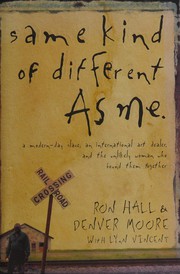
Same Kind of Different as Me
An art dealer and a formerly homeless sharecropper tell the story of the friendship that began at a Fort Worth mission and the woman who insisted on it.
2,023-word summary · 9 min read

Infidel
Ayaan Hirsi Ali's memoir of a Somali childhood, a forced marriage, a Dutch asylum claim, and the political fight that followed the murder of Theo van Gogh.
2,041-word summary · 9 min read

The Happiest Man on Earth
Eddie Jaku's memoir follows a Leipzig childhood, Buchenwald, Auschwitz, a death march, and the slow rebuilding of a life in Australia.
2,597-word summary · 12 min read
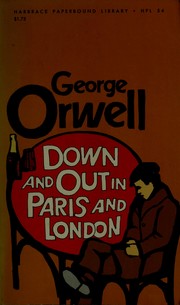
Down and Out in Paris and London
Orwell's account of washing dishes in Paris hotels and tramping through London does not ask for pity, only for a clear look at how poverty actually works.
2,282-word summary · 10 min read
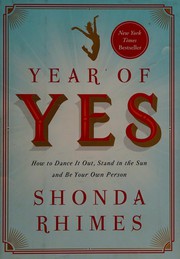
Year of Yes: How to Dance It Out, Stand in the Sun and Be Your Own Person
Shonda Rhimes takes her sister’s accusation seriously and spends a year saying yes to the things that frighten her, from live television to her own reflection.
2,585-word summary · 11 min read

Love Does
A lawyer and activist tells stories of saying yes, showing up, and loving people through ordinary, often ridiculous actions.
2,411-word summary · 11 min read
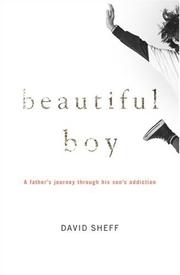
Beautiful Boy: A Father's Journey Through His Son's Addiction
David Sheff recounts watching his son Nic slide into meth addiction, and his own desperate, humbling search for how to help without destroying them both.
2,076-word summary · 9 min read

The Magnolia Story
How Chip and Joanna Gaines met, closed their first shop, nearly lost everything in a housing development, and built Fixer Upper.
2,994-word summary · 13 min read

Still Missing
A realtor is abducted at a Vancouver Island open house and held for more than a year. Told through therapy sessions, the novel follows her escape and the hunt…
2,466-word summary · 11 min read
Life
The Rolling Stones guitarist tells his own story: a Dartford childhood, the band's first gigs, the drug raids, the tax years and Patti Hansen.
2,761-word summary · 12 min read
Dry
A memoir of drinking, rehab and relapse, and the strange business of getting sober one morning at a time.
2,643-word summary · 12 min read

Dear Girls: Intimate Tales, Untold Secrets & Advice for Living Your Best Life
Ali Wong's debut collects fourteen letters to her daughters, covering sex, money, work, marriage, Vietnam, and being a working Asian American mother.
2,266-word summary · 10 min read