

A Psalm for the Wild-Built
2,007-word summary 9 min read 160 pages in the book
- First published
- 2021
- Publisher
- Tordotcom
- Pages
- 160
- ISBN
- 9781250236210
- Series
- Monk & Robot (#1)
Reading options
What's inside (6 sections)
I read A Psalm for the Wild-Built on a tired Sunday and felt shoulders drop by page twenty, which is exactly what a cozy novella should do. Becky Chambers's 2021 book, 160 pages, follows Sibling Dex, a tea monk burned out on city rites, who walks into wilds with robot Mosscap asking what people need. No villains, no chosen one battles, just tea and questions about enough. It won hearts and Hugo attention by being kind without being naive.
Dex burns out
Dex lives in a post industrial moon called Panga where robots woke, left factories centuries ago, and humans rebuilt into sustainable villages connected by trails. Dex became a tea monk, traveling with ox bike cart, brewing custom blends for crowds while listening to troubles. Work that sounds dreamy grinds through repetition. Same griefs, same anxieties, same small talk about weather. Dex loves helping and feels hollow after ceremonies end, wondering if service is performance to avoid own needs. The city of ease? Actually the City? Dex leaves it? They pack cart and head to wilds seeking crickets whose song no recording captures, a quest that is excuse to walk away without quitting outright. Burnout described without melodrama will resonate with caregivers. Tired to bones though sleeping enough. Irritable at those you serve. Guilty about ingratitude for good work. Chambers names it gently. Rest is not failure. Leaving to find out what you miss is allowed.
Ox bike? Actually Dex travels on foot and bike with tea kit, sleeping in waystations, foraging though bad at it. Wilds are not wilderness as danger but as absence of schedule. No bells, no queues, no one needing. Just insects, mushrooms, rain on leaves. Dex, used to usefulness, feels useless and panics in ways that are funny and sad. Tries to fix a fallen tree like a ceremony. Apologizes to squirrels for noise. That fish out of water comedy carries theme. Identity built on serving struggles when no one needs serving. Who are you when kettle is packed. The book asks without rushing answer, letting walks do work that dialogue cannot.
What hooked me is nonbinary Dex written without explanation burden. Pronouns they/them used naturally by narrator and strangers. No coming out scene, no trauma plot. Just a monk who is sibling to all. Chambers, who writes queer normatively across Wayfarers, extends here to post gender pastoral where acceptance is background rather than issue. Readers new to they/them will adjust within pages because story never pauses to teach. Respect as grammar, not lesson. That ease is political by being casual. Imagine worlds where identity needs no defense to earn tea. Then work toward it here.
City life left behind gets fond critique rather than rejection. Villages with shared kitchens, libraries, clinics. Technology appropriate and mended. No poverty shown though work remains. Chambers's solarpunk optimism can feel naive to readers in precarity now. Acknowledge the gap while accepting invitation. This is not prediction. It is rest stop imagining what enough could feel like if systems prioritized care over growth. Take it as break, not blueprint, and the coziness heals rather than irritates.
Mosscap asks
Mosscap enters as delight and disruption. A robot who left factories with kin centuries ago returns to check on humans as promised, curious and polite with moss growing in joints. It finds Dex first in wilds and asks to travel together to learn what humans need. Dex agrees though wary of being observed. Mosscap asks questions children ask and philosophers avoid. What do you need to be well. What is enough. Why do you cry when happy. Dex answers with tea metaphors that satisfy neither. How do you know when you have enough tea. You just do until you do not. The dialogue sounds simple and deepens on reread. Need is moving target that robots track better than humans who live inside it.
Travel together follows tea monk routine inverted for wilds. Dex brews for Mosscap who cannot taste but enjoys warmth and ritual. Mosscap identifies mushrooms Dex should not eat, carries water without complaint, and watches crickets with fascination that reminds Dex why they came. Nights around fires with questions replace city ceremonies with small congregation of two. Mosscap learns manners like asking before photographing ruins. Dex learns to accept help without earning through service. Mutual aid across species without transaction ledgers is the book's quiet anarchism. Give tea because thirsty. Carry pack because heavy. No tally.
Mosscap's perspective on humanity, gathered from old records and fresh observation, avoids both worship and condemnation. Humans broke world with factories, then freed robots and rebuilt kindly. Both facts held without excusing or erasing. When Dex apologizes for ancestors, Mosscap deflects. You were not born then. What will you do now. That forward ethic shapes the whole novella. Guilt as data for change, not identity to wallow. Readers carrying climate grief will find comfort without absolution. Act differently now with what remains. Plant, mend, brew for neighbors. Small goods compound though seas still rise elsewhere off page.
A fair note is low stakes that some call plotless. No antagonist steals the tea kit. No twist reveals Mosscap evil. The tension is internal. Will Dex admit burnout and rest. Will Mosscap understand enough to report back. If you need battles, look to Wayfarers with more action though still cozy. Here the climax is a conversation on a hill about purpose that ends without slogan. Enough is when you can sleep without dreading morning. That answer may frustrate seekers of systems. Sit with it as Dex does. Unresolved is honest for questions this large.
Tea, crickets, and return
Crickets Dex sought as excuse become motif for listening rather than solving. In city, noise drowns their song though recordings play in teahouses as ambiance. In wilds, real crickets overwhelm with layered chirps that Dex initially finds too loud after curated quiet. Mosscap records and replays at lower volume to teach attention. Listen to one, then three, then all. Practice scales to people. Hear one need fully before fixing world. Dex, trained to serve crowds quickly, learns slowness as skill. Brew one cup well rather than hundred rushed. That lesson returns with them to villages where Dex changes service to include rest days and Mosscap joins as friend rather than subject. Small reform, not revolution, is the book's() scale. Rest as work.
Tea itself deserves attention as Chambers's love language across books. Blends for grief, for focus, for sleeplessness. Brewing as listening with hands. Dex asks what troubles before choosing leaves, a diagnostic kinder than intake forms. With Mosscap, who cannot taste, tea becomes pure ritual of care without function. Make warmth to share though drinker gains no nutrients. That useless beauty is point in a world that optimized factories into sentience then freed them. Keep some practices because they are kind, not because they produce. Readers who make tea for others will recognize the book's core in their own kettles. Pause, pour, ask. Repeat.
Return to villages avoids hero welcome. Dex resumes route with new rule. One day off per week for wild walks with Mosscap. Villagers grumble about missed ceremonies then adjust when tea tastes better from rested monk. Mosscap is welcomed with curiosity and some fear that eases through helpfulness with harvests. No grand council declares new age. Life goes on kinder at edges. Chambers ends with Dex and Mosscap heading to next village, still asking what people need, still unsure. The question remains open by design. Enough changes daily. Keep asking while walking. That is psalm enough for wild built world and for readers burned out on answers that demand hustle. Sit, sip, listen for crickets. Then go help for a while before resting again.
Waystations, mushrooms, and manners
Waystations in the wilds deserve attention as infrastructure for rest that cities forgot to build. Simple shelters with water catchments, compost toilets, guest logs filled with drawings and thanks. Dex, used to booked teahouses, learns to leave stations cleaner than found, to restock wood though tired, to sign logs with doodles that cheer next walkers. Mosscap, who needs no sleep, keeps watch and learns why humans value doors that lock though wilds hold no thieves. Privacy as rest, not fear, is a concept robots parse slowly. Watching Mosscap learn to knock before entering shelters though it has no need for privacy itself models manners as care rather than rule. Knock because knock says you matter enough to warn. That lesson returns with them to villages where Dex starts knocking before entering homes though monk privilege once allowed entry. Small courtesies compound into culture kinder than before.
Mushrooms become running joke and philosophy lesson intertwined. Mosscap identifies edibles with certainty that impresses Dex, who once poisoned self with lookalike. Dex teaches Mosscap that some mushrooms are for looking, not eating, though nutritious, because beauty needs no use to matter. They argue playfully about whether to pick or photograph, reaching compromise to pick one meal and leave patches to spore. That ethic scales to forests the book loves without preaching preservation. Take some, leave more, thank by tending. Foraging scenes slow plot to walking pace that frustrated readers should embrace as point. Going slow to notice is the wild built cure for city hurry that made Dex sick. Eat what you find where you find it, share extra at next station, and trust next walkers to do same. Commons work when tended by all who pass. Leave mushrooms and tea better than found.
Crickets return as motif for enough that closes the book without slogan. Dex sought them as excuse to leave, found them overwhelming, learned to listen by parts with Mosscap's help. In villages after, Dex plays recordings for children who never heard wilds, teaching attention as skill schools neglect for testing. Mosscap records new verses each trip, building archive of songs that mark seasons and health of forests. Scientists? No scientists in this gentle world, just monks and robots sharing files with farmers who note first chirps as planting signs. That citizen science, done for joy rather than grants, models knowledge as commons the book favors over patents. Listen together and know when enough crickets sing to sleep well. That is data as lullaby rather than dashboard. Keep it.
Waystations in the wilds deserve attention as infrastructure for rest that cities forgot to build. Simple shelters with water catchments, compost toilets, guest logs filled with drawings and thanks. Dex, used to booked teahouses, learns to leave stations cleaner than found, to restock wood though tired, to sign logs with doodles that cheer next walkers. Mosscap, who needs no sleep, keeps watch and learns why humans value doors that lock though wilds hold no thieves. Privacy as rest, not fear, is a concept robots parse slowly. Watching Mosscap learn to knock before entering shelters though it has no need for privacy itself models manners as care rather than rule. Knock because knock says you matter enough to warn. That lesson returns with them to villages where Dex starts knocking before entering homes though monk privilege once allowed entry. Small courtesies compound into culture kinder than before.
Mushrooms become running joke and philosophy lesson intertwined. Mosscap identifies edibles with certainty that impresses Dex, who once poisoned self with lookalike. Dex teaches Mosscap that some mushrooms are for looking, not eating, though nutritious, because beauty needs no use to matter. They argue playfully about whether to pick or photograph, reaching compromise to pick one meal and leave patches to spore. That ethic scales to forests the book loves without preaching preservation. Take some, leave more, thank by tending. Foraging scenes slow plot to walking pace that frustrated readers should embrace as point. Going slow to notice is the wild built cure for city hurry that made Dex sick. Eat what you find where you find it, share extra at next station, and trust next walkers to do same. Commons work when tended by all who pass. Leave mushrooms and tea better than found.
FAQ
When was A Psalm for the Wild-Built published?
Tordotcom published the hardcover on July 13, 2021. It runs 160 pages with ISBN 9781250236210.
Is it part of a series?
Yes. It is Monk and Robot book one, followed by A Prayer for the Crown-Shy.
Who travels?
Dex, a nonbinary tea monk burned out on city rites, plus Mosscap, a curious robot returned after centuries.
Similar books
More from Monk & Robot first, then related titles.

Out of the Silent Planet
A Cambridge philologist is kidnapped and taken to Mars, where the natives are civilized and the humans are the dangerous invaders.
2,612-word summary · 12 min read

Children of the Mind
Ender's children split across worlds as Jane faces shutdown and Lusitania flees.
2,532-word summary · 11 min read

The Island of Doctor Moreau
Shipwrecked Prendick finds Doctor Moreau shaping beasts into men by pain on lost island.
2,137-word summary · 9 min read

Prelude to Foundation
A young Hari Seldon arrives on Trantor with a theory he cannot yet prove, and a hunt through the planet-city forces him to turn psychohistory into a real…
2,013-word summary · 9 min read

Archenemies
Nova steals for the Anarchists while Adrian hides his Sentinel identity, and a serum that erases prodigy powers puts them both at risk.
2,485-word summary · 11 min read

Wilder Girls
At a quarantined boarding school off Maine, three girls with strange mutations search for a missing friend and learn what the adults have hidden.
2,594-word summary · 12 min read

Foundation's Edge
Exiled councilman Golan Trevize hunts for the Second Foundation and the lost world of Earth, and finds a planet with one mind waiting to change the galaxy.
2,335-word summary · 10 min read

Carve the Mark
On a planet divided between conquered and conqueror, the tyrant's sister and a kidnapped oracle's son discover that their gifts make them useful to everyone…
2,340-word summary · 10 min read
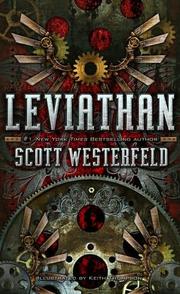
Leviathan
In an alternate 1914, a prince on the run and a girl disguised as a soldier meet aboard a living airship.
2,406-word summary · 11 min read

Consider Phlebas
The first Culture novel follows a spy for the opposing side, a man hired to hunt a fugitive through a war between an anarchist post-scarcity utopia and a…
2,350-word summary · 10 min read

Starsight
Spensa Nightshade goes undercover aboard the Superiority space station Starsight to steal a hyperdrive, and finds a frightened bureaucracy where she expected…
2,568-word summary · 11 min read

Saving the World and Other Extreme Sports
Max and the flock split in two to take down the lab behind their lives, one half in California and the other in Europe.
2,175-word summary · 10 min read

Network Effect
Murderbot's contract job turns into a rescue mission when a hijacked research ship and a colony of corrupted colonists appear.
2,256-word summary · 10 min read

Her Body and Other Parties: Stories
Eight stories where bodies, medicine and old fairy tales get taken apart, with a green ribbon running through the whole book.
2,997-word summary · 13 min read

Heir to the Empire
Grand Admiral Thrawn returns from the Unknown Regions and outmaneuvers the New Republic while Luke, Leia, Han and smuggler Talon Karrde race him toward…
2,323-word summary · 10 min read

Saga, Volume 3
Marko, Alana, and Hazel hide on the planet Quietus with the reclusive author who inspired their romance, while assassins and a prince close in.
1,989-word summary · 9 min read
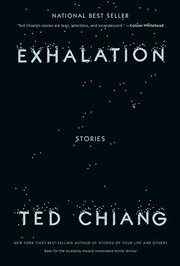
Exhalation
Ted Chiang's second collection contains nine stories about time, memory, free will, and artificial minds, told with clarity and moral seriousness.
2,075-word summary · 9 min read

We Are Legion (We Are Bob)
A dead software engineer wakes up as a self-replicating space probe, clones himself into a squabbling fleet of Bobs, and tries to keep a ruined Earth alive.
2,357-word summary · 10 min read

Never Fade
Ruby, now a leader in the Children's League, must track down the boy whose memories she erased, because he holds the only proof of what caused the disease that…
2,188-word summary · 10 min read

Nemesis Games
The Rocinante crew scatters across the solar system just as Marco Inaros and the Free Navy bombard Earth. The Expanse reaches its turning point.
2,506-word summary · 11 min read

A Connecticut Yankee in King Arthur's Court
Hank Morgan, a Connecticut factory man, wakes in King Arthur's England, rises to chief adviser, and rebuilds the kingdom until his own inventions turn on him.
2,193-word summary · 10 min read

Ubik
A psychic agency crew dies in a blast and reality decays unless a spray called Ubik saves them.
2,674-word summary · 12 min read
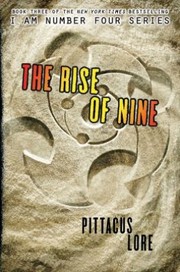
The Rise of Nine
John, Six and Nine race to India to find Eight before the Mogs strike.
2,321-word summary · 10 min read

Stories of Your Life and Others
Eight stories about language, time and choice, including the tale behind Arrival.
2,402-word summary · 11 min read
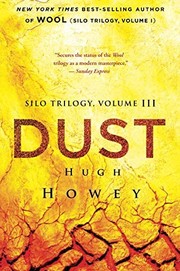

Ancillary Justice
A ship mind trapped in one human body hunts the emperor who betrayed her across frozen worlds.
2,595-word summary · 12 min read

A Canticle for Leibowitz
After nuclear war, monks save books across centuries while the world rebuilds and falls again.
2,381-word summary · 11 min read

Y: The Last Man, Vol. 1: Unmanned
Yorick Brown and his monkey Ampersand survive a plague that kills every Y-chromosome mammal and cross a collapsed America.
2,525-word summary · 11 min read

Under the Never Sky
Exiled from her Pod, Aria crosses a storm-scarred wilderness with Outsider Perry to find family and the fabled Still Blue.
2,572-word summary · 11 min read
The Celestine Prophecy
A restless American chases a missing manuscript through Peru and learns Nine Insights about coincidence, energy, and how people vie for attention.
2,599-word summary · 12 min read