
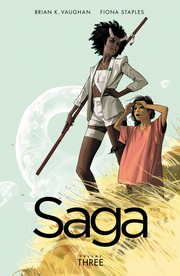
Saga, Volume 3
1,989-word summary 9 min read 144 pages in the book
- First published
- 2014
- Publisher
- Image Comics
- Pages
- 144
- ISBN
- 9781607069317
- Series
- Saga (#3)
Reading options
What's inside (9 sections)
Saga is one of those comics that makes the page look easy. Fiona Staples can draw a battlefield, a nursery, and a talking cat in the same issue without the tone breaking. Brian K. Vaughan can switch from a joke about parenting to a murder in a single panel. By the third volume, the series has stopped being a novelty about star-crossed lovers and become a story about what it costs to keep a child alive in a universe that has decided she should not exist.
The lighthouse at the end of the war
Volume 3 collects issues thirteen through eighteen. Marko, Alana, and their daughter, Hazel, are still fugitives. Landfall and Wreath have been at war for generations, and their love is illegal for reasons that are both political and personal. They travel to Quietus, a quiet planet where D. Oswald Heist lives in a lighthouse. Heist wrote A Nighttime Smoke, the romance novel that made Alana believe a different life was possible. She wants to meet him. Marko wants a place to rest. Hazel, who narrates the series from some future vantage point, wants nothing because she is a baby.
Heist is not what they expect. He is a reclusive, shaggy, slightly ridiculous man who plays a board game called Nun Tuj Nun, reads Hazel stories that are wildly inappropriate for a child, and talks about kindness as if it is a practical strategy rather than a virtue. He also has a history with the war. His books were banned, or ignored, or used as propaganda, depending on who is telling the story. He is a man who has retreated from the world and cannot quite admit that he still cares about it.
The domestic scenes on Quietus are some of the best in the series. Marko and Alana are exhausted. Klara, Marko's mother, is grieving her husband, Barr, and trying to be useful. Izabel, the ghost babysitter, is sarcastic and protective. They play games, argue about money, and try to imagine a future in which they are not running. Klara pushes Marko and Alana to find work and give Hazel something resembling a normal life. Alana gets angry, leaves the house, and Marko follows her to the shore. Their conversation is not a grand romantic reconciliation. It is two people admitting that they are making it up as they go.
A Nighttime Smoke matters because it is the reason Alana and Marko are together. The novel gave Alana a picture of love that crossed the lines her society had taught her to respect. Meeting its author is a pilgrimage, and Heist is both more ordinary and more disappointing than the book suggests. He is not a sage. He is a man who wrote something true and then spent years hiding from what it implied. That gap between the work and the person who made it is one of the volume's quiet concerns.
The Circuit and the journalists
Heist's stories lead Marko and Alana to The Circuit, a traveling theater company whose performers wear masks and costumes. For a moment, acting looks like a possible life: a way to hide in plain sight, to be someone else for a living, to make money without fighting. The idea is romantic and impractical, which is true of most of the solutions in Saga.
The volume also follows Upsher and Doff, two journalists investigating Alana's disappearance. They interview people who knew her, including a Landfall soldier, Alana's stepmother, and Special Agent Gale. The official story is that Alana was kidnapped. The interviews suggest she left voluntarily with Marko. Gale tries to redirect them by claiming that Alana was a deep-cover spy. The journalists keep pulling at the thread, and the thread leads to the Brand, an assassin who poisons them. The poison does not kill them immediately. It leaves them alive with a warning: if they publish what they know, they die.
This is one of the volume's smartest threads. It shows that the war is not only fought with soldiers and spaceships. It is fought with stories. The government needs Alana to be a victim or a traitor, not a woman who made a choice. Upsher and Doff are not heroes. They are professionals who want a story, and they are scared. Their fear is more convincing than a heroic stand would be.
The Will, Gwendolyn, and Sophie
The third major thread follows the Will, the assassin who has been chasing Marko and Alana since the first volume. He is traveling with Gwendolyn, Marko's former fiancée, and Sophie, the child they rescued from a sex-tourism planet. Their ship is stranded on a beautiful planet while it repairs. The Will is haunted by visions of the Stalk, the arachnoid assassin who died earlier in the series. Gwendolyn is trying to keep them alive and figure out what she wants. Sophie is a child in a situation no child should be in, and she is starting to understand that the adults around her are not safe.
The planet's atmosphere causes hallucinations. Sophie sees the Stalk too. Confused and frightened, she stabs the Will in the neck. Gwendolyn restrains her and decides that Marko is the nearest person who might be able to heal him. Their course turns toward Quietus. The plotlines are converging, and the convergence is not a coincidence. It is the story tightening around the family.
The Will and Gwendolyn are an interesting pair, but the volume does not give their relationship enough room. They go from uneasy allies to something more intimate in a few scenes, and the emotional turn is more asserted than earned. Sophie's presence is the best part of the thread. She is a reminder that the adults' wars produce children who have to live with the consequences.
The prince at the door
Prince Robot IV is the volume's most persistent threat. He is a member of the Robot Kingdom, a prince with a television screen for a face, and he has been hunting Marko and Alana because their child is evidence that the war's categories are not as stable as the state claims. He arrives at Heist's lighthouse and confronts the author. Their conversation is strange and compelling. Heist is not afraid of the prince. He is tired of him. The confrontation becomes violent, and Heist is killed.
Heist's death is the emotional center of the volume. It ends the family's temporary refuge and leaves Klara grieving a man she had just begun to love. It also raises the stakes for the finale. The lighthouse was a place where the war could be kept outside for a few days. Once the prince comes through the door, there is no outside anymore.
Klara and Heist's relationship is handled with a light touch. They are two older people who have lost a lot and are not sure whether they have time for another attachment. Their scenes are quiet, and the volume does not make a spectacle of their grief. That restraint makes Heist's death land harder. Klara has spent the whole volume trying to hold her family together, and the one new thing she allowed herself is taken away.
The art deserves its own paragraph. Staples draws Quietus as a world of soft greens and pale skies, and the lighthouse is a warm, cluttered refuge. When the violence comes, it comes in the same visual language: bright blood, sudden motion, a body on the floor. The contrast is the point. Saga does not separate the domestic and the brutal into different genres. It puts them on the same page and trusts the reader to feel the collision.
The escape
Issue eighteen is the payoff. Gwendolyn confronts Marko and Alana while the Will lies injured. Lying Cat and Izabel get into a fight. The issue cuts between several conflicts, and the pacing is deliberately frantic. Marko and Alana escape with Hazel. Alana rises on her wings, which is a visual payoff that Staples has been building toward for several issues, and the family gets away.
The journalists are silenced. The Will is still badly hurt. Heist is dead. The volume ends with a time jump: Hazel is a toddler, and the family is still moving. Nothing is resolved in a way that feels permanent. The pursuit continues, the war continues, and the family continues to be a small, stubborn unit in the middle of it.
What the volume is about
Saga has always been about chosen family, but volume three makes the idea concrete. Marko and Alana are more than lovers defying their governments. They are parents trying to figure out how to raise a child while being hunted. Klara is a grandmother who has lost her husband and does not know how to help. Izabel is a ghost who has attached herself to a family that is not hers. Heist is a man who wrote about love and then hid from it. The volume asks what family means when the institutions that are supposed to protect you are the ones trying to kill you.
It also asks what art is for. Heist's novels are dismissed as pulp, but they changed Alana's life. The Circuit is a tacky traveling show, but it offers a way to imagine other lives. The journalists are trying to tell the truth, and the state is trying to stop them. Saga is not subtle about the politics, but it is generous to its characters. The villains are not monsters. They are people who have chosen sides and are living with the consequences.
Hazel's narration is one of the series' best tricks. She tells the story from a point after the events, which means she knows more than her parents do and can comment on their choices with a child's clarity and an adult's regret. In volume three, her voice is still mostly a frame, but it gives the violence a strange tenderness. The reader knows that Hazel survives, at least long enough to tell the story. That knowledge does not remove the tension. It changes it into something closer to memory.
Where it falls short
The middle volume problem is real. Volume three has to move several pieces into place for the next arc, and some of the movement feels mechanical. The Will and Gwendolyn's romance is the clearest example. The journalists' plot is more compelling, but it ends with them silenced, which is a bleak resolution that the series does not return to quickly enough. Heist is a wonderful character, and his death is effective, but he enters the story and exits it within six issues. I wanted more time with him.
The art is consistently excellent. Staples draws aliens that look like animals, plants, and household objects, and she makes them all feel like people. Her facial expressions are the secret weapon of the series. A character can be wearing a helmet or have a television for a head, and she still finds a way to show embarrassment, grief, or desire.
I would recommend volume three to anyone who has read the first two volumes. It is not a starting point. It is a middle chapter that deepens the relationships and raises the stakes, and it ends with the family still together, which in this series counts as a victory. The final image of Hazel as a toddler is a reminder that time is passing. The war is not waiting for them to figure things out.
If you are new to Saga, start with volume one. If you are already in, volume three is the point where the series settles into its long game. It is less shocking than the first two volumes and more interested in the ordinary work of keeping a family alive. That makes it a quieter book, and a necessary one. The quieter parts are where the characters become people you worry about.
FAQ
Do I need to read Saga volumes 1 and 2 first?
Yes. Volume 3 continues their story directly.
What issues does volume 3 collect?
Saga issues 13 through 18.
Is Saga for adults?
Yes. It contains explicit violence, sex, and language.
Similar books
More from Saga first, then related titles.
Saga, Volume 1
Alana and Marko flee a galaxy-wide war with baby Hazel, hunted by both sides.
2,200-word summary · 10 min read
Saga, Volume 2
Alana and Marko flee with baby Hazel while exes, princes, and ghosts close the net.
2,028-word summary · 9 min read
The Stonekeeper
After their father's death, Emily and Navin chase a monster into a hidden world to save their mother, and Emily's great-grandfather's amulet offers power at a…
2,753-word summary · 12 min read
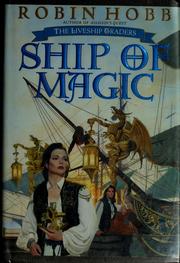
Ship of Magic
A sentient ship wakes when her captain dies, and the family that owns her starts to come apart over who gets to sail her.
2,026-word summary · 9 min read
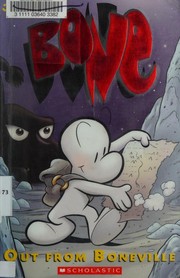
Bone, Vol. 1: Out from Boneville
Three cartoon cousins are run out of Boneville, separated by locusts, and dropped into a valley where rat creatures and an old grudge are waiting.
2,155-word summary · 10 min read

Archenemies
Nova steals for the Anarchists while Adrian hides his Sentinel identity, and a serum that erases prodigy powers puts them both at risk.
2,485-word summary · 11 min read

Carve the Mark
On a planet divided between conquered and conqueror, the tyrant's sister and a kidnapped oracle's son discover that their gifts make them useful to everyone…
2,340-word summary · 10 min read
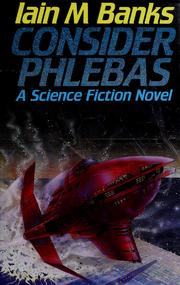
Consider Phlebas
The first Culture novel follows a spy for the opposing side, a man hired to hunt a fugitive through a war between an anarchist post-scarcity utopia and a…
2,350-word summary · 10 min read
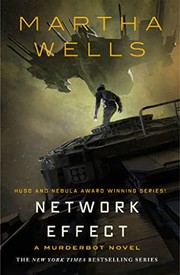
Network Effect
Murderbot's contract job turns into a rescue mission when a hijacked research ship and a colony of corrupted colonists appear.
2,256-word summary · 10 min read
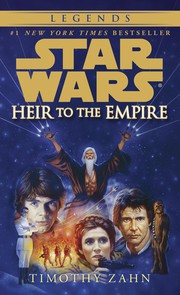
Heir to the Empire
Grand Admiral Thrawn returns from the Unknown Regions and outmaneuvers the New Republic while Luke, Leia, Han and smuggler Talon Karrde race him toward…
2,323-word summary · 10 min read
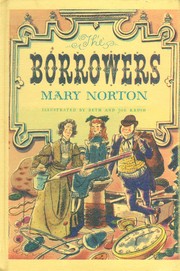
The Borrowers
A family of tiny people live under the floorboards of an English house, borrowing what they need until a lonely boy and a suspicious housekeeper change…
2,164-word summary · 10 min read
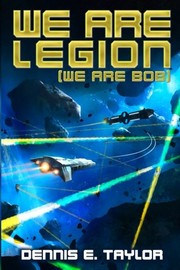
We Are Legion (We Are Bob)
A dead software engineer wakes up as a self-replicating space probe, clones himself into a squabbling fleet of Bobs, and tries to keep a ruined Earth alive.
2,357-word summary · 10 min read
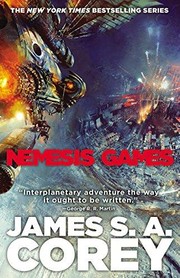
Nemesis Games
The Rocinante crew scatters across the solar system just as Marco Inaros and the Free Navy bombard Earth. The Expanse reaches its turning point.
2,506-word summary · 11 min read
Ancillary Justice
A ship mind trapped in one human body hunts the emperor who betrayed her across frozen worlds.
2,595-word summary · 12 min read
Y: The Last Man, Vol. 1: Unmanned
Yorick Brown and his monkey Ampersand survive a plague that kills every Y-chromosome mammal and cross a collapsed America.
2,525-word summary · 11 min read

Cibola Burn
Settlers and a company fight over a new world while Holden tries to stop a war.
2,011-word summary · 9 min read
The Fall of Hyperion
Keats persona Severn dreams pilgrims to the Time Tombs as Hegemony falls and TechnoCore war breaks the farcasters.
2,115-word summary · 9 min read
Rise of the Evening Star
Kendra and Seth return to Fablehaven as the Society of the Evening Star closes in, with a traitor inside the house and a demon prison key at stake.
2,874-word summary · 13 min read
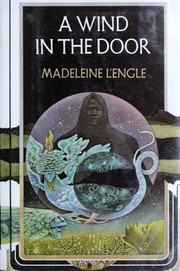
A Wind in the Door
Meg must save Charles Wallace from a cosmic sickness by naming and loving what she fears, helped by a cherubim called Progo.
2,214-word summary · 10 min read
Dragonflight
A kitchen drudge with hidden mind talent Impresses a golden queen and must unite a starved dragon Weyr against Thread. First of Pern.
2,821-word summary · 13 min read

Abaddon's Gate
A dead detective guides Holden, an assassin hunts him, and a pastor walks unarmed into a mutiny as the Ring opens new worlds.
2,672-word summary · 12 min read
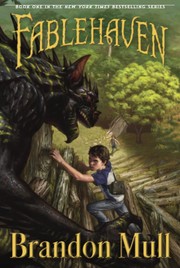
Fablehaven
Kendra and Seth spend the summer with their grandfather and learn his woods hide Fablehaven, a preserve for fairies, satyrs and darker things.
2,949-word summary · 13 min read
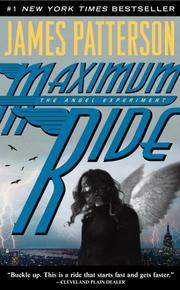
The Angel Experiment
Six winged kids escape the lab that made them and fly cross country to rescue their youngest from wolf hybrids.
2,037-word summary · 9 min read
Morning Star
Broken in a box by the Jackal, Darrow rises with Howlers to open Mars mines to sky.
2,009-word summary · 9 min read

Leviathan Wakes
A destroyed ice hauler, a missing heiress, and an alien growth pull a crew and a tired detective toward war across the solar system.
3,653-word summary · 16 min read
The Thief
A boastful young thief is pulled from a prison to steal a legendary stone for the king's magus, and the story he tells about himself is not the whole story.
2,514-word summary · 11 min read

The Blinding Knife
Kip trains to join the Blackguard while the Prism hides his true identity, loses his colors, and fights a war against a rogue drafter who wants to birth a god.
2,049-word summary · 9 min read

Inkdeath
The final Inkworld novel sends Mo into the land of the dead, leaves Meggie choosing between two boys, and ends the Adderhead's immortality with three written…
2,062-word summary · 9 min read

Heretics of Dune
Fifteen centuries after Leto II, the Bene Gesserit raise a new Duncan Idaho while the Honored Matres return and Rakis burns.
2,673-word summary · 12 min read
Dawnshard
Rysn sails toward forbidden Akinah to save her dying larkin and finds a Dawnshard guarded by the Sleepless.
3,229-word summary · 14 min read