
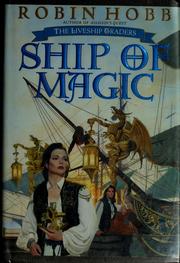
Ship of Magic
2,026-word summary 9 min read 685 pages in the book
- First published
- 1998
- Publisher
- Bantam Spectra
- Pages
- 685
- ISBN
- 9780553103243
- Series
- Liveship Traders (#1)
Reading options
What's inside (9 sections)
Ship of Magic opens with a death and a birth. Captain Ephron Vestrit dies on the deck of his family's liveship, Vivacia, and the ship wakes up. That is how wizardwood works. When three generations of a family die aboard, the ship quickens into a being with a personality, the memories of the dead, and a psychic bond to the relatives still living. Ephron's death is the third, so Vivacia is born in the first chapter, and the rest of the novel is about what happens when a sentient ship is treated as property.
Robin Hobb published it in 1998, the first book of the Liveship Traders trilogy and her second series set in the Elderlings world. The Bantam Spectra hardcover runs 685 pages. It is a slow book. Hobb spends the first hundred pages on the texture of a merchant family in a port city, and readers who want dragons on page ten will be impatient. Readers who stay get one of the best studies of inheritance and entitlement in fantasy.
Bingtown
The setting is Bingtown, a trading town on a coast between Jamaillia, Chalced, and the Rain Wild River. The town was founded on a charter from the Satrap of Jamaillia, and the charter is the source of its independence. That independence is eroding. Chalcedean customs are spreading, the Satrap has stopped honoring the old promises, and slavery is becoming normal in a place that used to define itself against it.
The Vestrit family is old Bingtown money with new Bingtown debt. They owe the Rain Wild Traders for the wizardwood that became Vivacia, and the debt is not just financial. Liveships are rare. They can sail up the Rain Wild River, which no ordinary hull can survive, and they carry the family's status as much as its cargo.
Ephron's death leaves the family in a legal mess. Althea, his younger daughter, has spent her life at sea. She can hand, reef, and navigate. She expects to inherit the ship, and everyone on the crew expects it too. Instead, Ephron leaves Vivacia to his elder daughter Keffria, who has no interest in the sea and whose husband, Kyle Haven, has plenty.
Kyle is from Chalced. He is not a villain in the twirling-moustache sense. He is worse. He is a man who believes he is saving the family, and his plan is to use Vivacia to enter the slave trade, because the profits are enormous and the moral objections are, in his view, sentimental. He takes command, banishes Althea from the ship, and forces his son Wintrow aboard because a blood relative must sail with a liveship.
The unwanted heir
Wintrow is the novel's most interesting character. He is fifteen, he has been living at a monastery on an island, and he was training to be a priest of Sa. He is gentle, bookish, and completely unsuited to a slave ship. Kyle drags him aboard anyway, and the book watches Wintrow try to hold onto his ethics while his father tests them daily.
The relationship between Wintrow and Vivacia is the heart of the novel. Vivacia is young. She has Ephron's memories but not his judgment, and she is desperate to be loved by the family she belongs to. Wintrow does not want her. He wants his monastery. But he cannot help responding to a being who is lonely in the same way he is, and the bond that forms between them is tender without being sentimental.
Hobb is very good at this kind of relationship. She writes about obligation as a physical weight. Wintrow's duty to his family, Althea's duty to the ship, Ronica's duty to the family name, and Vivacia's duty to obey her owners all pull in different directions, and none of them can be satisfied without someone getting hurt.
Althea at sea
Althea's story is the adventure strand. Banished from Vivacia, she cuts her hair, dresses as a boy, and signs on with a slaughter ship, one of the vessels that hunts sea creatures for oil and meat. The work is brutal and the crew is rough, but Althea is good at it. She has been trained by her father, and the sea is the only place she has ever felt competent.
Brashen Trell is on the same ship. He was Vivacia's first mate, the son of a wealthy Bingtown family, and he was dismissed after a drunken failure that may or may not have been his fault. He recognizes Althea under her disguise and keeps her secret. They sleep together. Then they fight, because Brashen is proud and Althea is proud and neither of them knows how to ask for what they want.
The Althea sections are the most conventional part of the book. There is a disguise, a ship, a handsome disgraced sailor, and a captain who turns out to be cruel. Hobb writes it well, but it is familiar. What makes it work is Althea's anger. She is not just proving herself. She is furious at a system that gave her brother-in-law a ship because he married the right sister, and her fury is specific and intelligent.
Paragon
Paragon is the other liveship in the book, and he is the opposite of Vivacia. He sits beached and derelict in Bingtown, mad, blind, and full of rage. His family is dead or gone. His wood is scarred. He speaks to people who are not there and remembers events that may not have happened. Everyone in Bingtown knows about him, and nobody wants to sail him.
Paragon is Hobb's warning about what a liveship becomes when it is treated as a thing. Vivacia is young and hopeful. Paragon is what happens after decades of neglect and grief. The novel does not explain his history in full, but the hints are enough to make him the most unsettling presence in the book. He is a haunted house with a hull.
The liveship rules are also a quiet piece of worldbuilding. Wizardwood comes from the Rain Wild River. The ships quicken after three generations die aboard. They can bond with a family member and feel what that person feels. They cannot leave the water. They are expensive, rare, and impossible to replace. Every one of those rules creates a different kind of pressure on the plot, and Hobb uses all of them.
The pirate
Kennit is the other major thread. He is a pirate captain in the Pirate Isles, and he wants to be king. Not metaphorically. He wants the scattered pirate townships united under one ruler, and he believes a liveship is the symbol that will make it happen. He is charismatic, calculating, and almost entirely without empathy.
His first mate pushes him toward a strategy that accidentally makes him a legend. Instead of raiding slave ships for cargo, Kennit frees the slaves and throws the slavers overboard. The pirate towns hear about it and decide he is a hero. Kennit does not correct them, because the reputation is useful. The gap between what he is and what people believe about him is one of the novel's running jokes, and it is a dark one.
Etta is a sex worker in Divvytown who loves Kennit and is brought aboard his ship. She is not a decorative character. When a sea serpent attacks Kennit, Etta is the one who cuts off his infected leg to save his life. The scene is ugly and intimate, and it changes the balance between them. Kennit is a man who needs to be in control, and Etta has now seen him helpless.
The serpents are a quiet third strand. They swim in the wake of the ships, they are intelligent, and they are looking for something. Hobb drops hints that they are connected to the liveships and to the Rain Wilds, but she does not explain them in this book. That is the series promising to pay off later.
Kennit's sections are the most fun to read and the most morally uncomfortable. He is a man who has decided that his own suffering gives him the right to use everyone else. Hobb lets him be witty, brave, and genuinely impressive, and then reminds you what he does to the people who trust him. That is a harder trick than writing a straightforward villain, and it is one of the reasons the trilogy has lasted.
Malta and the Rain Wilders
Malta is Keffria's daughter, Althea's niece, and the closest thing the novel has to a spoiled brat. She is thirteen, she is beautiful, and she has absorbed her mother's belief that a woman's value is in her marriage prospects. She is also smarter than anyone gives her credit for, and the book lets her be genuinely awful before it lets her be interesting.
At a meeting between the Bingtown Traders and the Rain Wild Traders, Malta catches the eye of Reyn Khuprus, the son of an influential Rain Wilder family. He begins to court her. Malta treats it as a game. Her mother treats it as a financial opportunity. The Rain Wilders treat it as diplomacy. Nobody asks Malta what she wants, and the courtship becomes another arena where the adults' interests are fought over a child.
The Rain Wilders themselves are fascinating and underused in this volume. They live upriver, they are physically changed by the place, and they trade Elderling artifacts that no one fully understands. They are also the family's creditors. The economic relationship between Bingtown and the Rain Wilds is one of the book's best inventions, because it makes magic into a debt.
What the book is doing
Ship of Magic is about the stories families tell themselves to justify what they own. The Vestrits believe they are progressive because they do not trade slaves. They are also willing to sell a daughter's future and a son's vocation to keep a ship. Kyle believes he is a realist. He is a man who has found a moral excuse for greed. The Bingtown Traders believe they are free citizens. Their charter is being quietly rewritten by people who never signed it.
Hobb does not resolve any of this. The novel ends on a cluster of cliffhangers. Kennit boards Vivacia. Wintrow bargains for his father's life and for the ship's cooperation. Vivacia, intrigued by Kennit, agrees to become a pirate ship. Althea is still trying to get home. Malta is still being traded like a commodity. Nothing is settled, and the book stops.
That is my main criticism. Ship of Magic is the first third of one very long story, and it reads like it. The pacing sags in the middle, especially in the Bingtown financial chapters, and several plotlines are left hanging in a way that feels less like suspense and more like a chapter break. Kirkus called it padded with inconclusive plotlines, and that is a fair hit.
The other criticism is that the villains are too easy to dislike. Kyle is a bully. Kennit is a monster with a charming smile. The moral complexity lives with the women, who have to negotiate with men who do not see them as full people. That is realistic, but it makes the book's politics feel one-sided, and the few sympathetic male characters, Brashen and Wintrow, spend most of the novel being pushed around.
None of that stops the book from working. Hobb's prose is plain and precise. She writes ships as workplaces, with watches, repairs, and hierarchies, and the fantasy elements sit inside that realism instead of replacing it. When Vivacia speaks, it feels like a ship speaking, not a dragon in a hull.
I read it over a week and found myself thinking about Vivacia between sessions. A being who is born into a family, loved as an heirloom, and used as a tool is a good idea for a character. Hobb gives her the voice of a child who wants to be good and is learning that her owners are not. That is the reason to start the trilogy. The pirates and the politics are the scaffolding. The ship is the point.
FAQ
Is Ship of Magic the first book in a trilogy?
Yes, it is book one of the Liveship Traders trilogy, followed by The Mad Ship and Ship of Destiny.
Do I need to read the Farseer trilogy first?
No. It is set in the same world as the Farseer books but has a separate cast and story, so it works as an entry point.
What is a liveship?
A ship made of wizardwood that quickens into a sentient being after three generations of its owning family die aboard.
Similar books
More from Liveship Traders first, then related titles.
Fool's Errand
FitzChivalry Farseer has lived in exile for fifteen years. When Prince Dutiful vanishes before his betrothal, Fitz returns to Buckkeep to find him, with a wolf…
2,606-word summary · 12 min read

The Blinding Knife
Kip trains to join the Blackguard while the Prism hides his true identity, loses his colors, and fights a war against a rogue drafter who wants to birth a god.
2,049-word summary · 9 min read
Magician's Gambit
Garion and his companions cross haunted Maragor and the caves beneath Rak Cthol to recover the Orb of Aldur.
2,391-word summary · 11 min read
Homeland
Drizzt Do'Urden is born into the cruel drow city of Menzoberranzan, where his father teaches him to fight and to doubt everything his family believes.
2,303-word summary · 10 min read
Enchanters' End Game
Garion marches toward Torak while Ce'Nedra leads the West's army in the final Belgariad volume, where prophecy and war meet.
2,557-word summary · 11 min read

The Queen of the Tearling
Nineteen-year-old Kelsea leaves the woods to take her throne, ends a shipment of human captives, and draws the Red Queen's revenge.
2,357-word summary · 10 min read
The Sword of Shannara
A young half-Elf and a company of companions set out to recover a magic sword before the Warlock Lord destroys the Four Lands.
2,474-word summary · 11 min read
The Borrowers
A family of tiny people live under the floorboards of an English house, borrowing what they need until a lonely boy and a suspicious housekeeper change…
2,164-word summary · 10 min read
Saga, Volume 3
Marko, Alana, and Hazel hide on the planet Quietus with the reclusive author who inspired their romance, while assassins and a prince close in.
1,989-word summary · 9 min read
Magician: Apprentice
An orphan kitchen boy and a smith's son grow up in a frontier castle just as invaders from another world open a rift and begin a war that will change both of…
2,114-word summary · 9 min read
A Knight of the Seven Kingdoms
Three novellas follow Ser Duncan the Tall and his squire, Egg, through tourneys, feuds, and conspiracies in Westeros ninety years before A Game of Thrones.
2,059-word summary · 9 min read
Fable
Abandoned on a lawless island at fourteen, Fable spends four years diving for gems to buy passage off it, straight into the cutthroat trade of the Narrows.
2,320-word summary · 10 min read
The Stonekeeper
After their father's death, Emily and Navin chase a monster into a hidden world to save their mother, and Emily's great-grandfather's amulet offers power at a…
2,753-word summary · 12 min read
The Tower of the Swallow
Ciri flees as a bandit while Geralt gathers allies to find her.
2,580-word summary · 11 min read
The Emperor's Soul
Forger Shai must stamp a new soul for the dying emperor in 100 days.
2,313-word summary · 10 min read
Shadow's Edge
Kylar fakes death as a king killer while Vi hunts him for the Godking.
2,245-word summary · 10 min read
Pawn of Prophecy
Farm boy Garion learns sorcerers watch him as an old Orb wakes.
2,331-word summary · 10 min read
New Spring
Moiraine and Lan hunt the newborn Dragon before the Black Ajah finds him.
2,475-word summary · 11 min read
Furies of Calderon
Furyless Tavi defends Calderon Valley when the Marat return and lords scheme.
2,587-word summary · 11 min read
Stone of Tears
After the veil tears, Richard seeks training from the Sisters while Kahlan holds a fracturing Midlands and Zedd hunts the missing Stone.
2,483-word summary · 11 min read
The Farthest Shore
Archmage Ged and Prince Arren sail to the far west to stop Cob, whose bid for endless life drains magic across Earthsea in Le Guin's sad 1972 third volume.
2,800-word summary · 12 min read
Edgedancer
Hungry street thief Lift and her vine-like friend Wyndle cross the Herald Nale in Tashikk when a child emperor shows Radiant signs and she refuses to step…
2,328-word summary · 10 min read
Dragons of Autumn Twilight
Old friends reunite at the Inn of the Last Home, guard a glowing Blue Crystal Staff, face black dragon Khisanth, and free slaves at Pax Tharkas in this 1984…
2,803-word summary · 12 min read
The Eyes of the Dragon
In the kingdom of Delain, a jailed prince and his younger brother face a magician whose long plot for the throne turns on a napkin clue.
2,018-word summary · 9 min read
The City of Brass
Cairo con artist Nahri summons djinn Dara and is drawn to Daevabad where Ali questions pureblood rule.
1,993-word summary · 9 min read
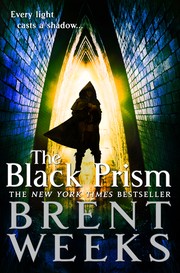
The Black Prism
Dying Prism Gavin Guile hides a secret son while war brews over color magic in the Seven Satrapies.
2,169-word summary · 10 min read
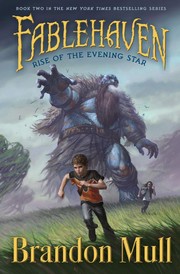
Rise of the Evening Star
Kendra and Seth return to Fablehaven as the Society of the Evening Star closes in, with a traitor inside the house and a demon prison key at stake.
2,874-word summary · 13 min read
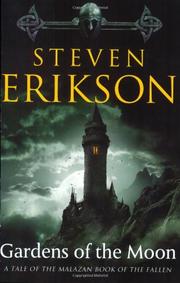
Gardens of the Moon
Empire, gods, and mages collide over Darujhistan as Bridgeburners bleed for Empress Laseen.
2,188-word summary · 10 min read
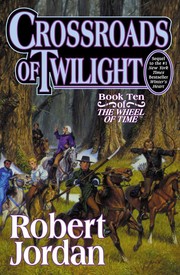
Crossroads of Twilight
Rand cleansed saidin and the whole world felt it. Book ten follows each faction as they react, stall, and choose sides.
2,264-word summary · 10 min read
Lord of Chaos
Rand offers amnesty to men who can channel while Egwene is raised Amyrlin in exile. Book six of The Wheel of Time builds toward rescue and reckoning at Dumai's…
2,255-word summary · 10 min read