
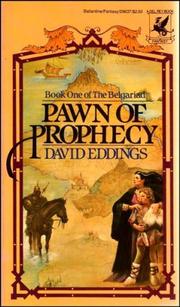
Pawn of Prophecy
2,331-word summary 10 min read 258 pages in the book
- First published
- 1982
- Publisher
- Del Rey
- Pages
- 258
- ISBN
- 9780345296375
- Series
- The Belgariad (#1)
Reading options
What's inside (8 sections)
I came to Pawn of Prophecy late, after a friend kept insisting that old farm boy fantasies still had something to teach the newer doorstop series. I expected something stiff. The 1982 Del Rey paperback is only 258 pages in the edition cited here, and the prose moves fast, almost impatient to get to the next town and the next argument around a campfire. I read it in two sittings, mostly late at night, and I kept thinking about how comfortable it felt, like a story told by someone who knew exactly where to pause.
What caught me first was not the magic. It was the kitchen. Eddings spends real time on cooking, mending, washing up, the small jobs that keep a farm running. That domestic detail makes the later business with gods and glowing stones easier to accept. If you believe in the bread, you will follow the book when it asks you to believe in the Orb.
Faldor's farm and Aunt Pol
Garion grows up on Faldor's farm in Sendaria, a plain, hardworking place with barns, fields, and a kitchen that never quite cools down. He believes he is an ordinary boy. He runs errands, steals apples, scuffles with other farm kids, listens to stories in the evening. His life is run by his Aunt Pol, a tall, dark haired woman with a white streak in her hair who cooks better than anyone, heals scrapes, scolds loudly, and seems to know everything before it happens.
Pol is not exactly warm, at least not in the way Garion wants. She is sharp, practical, and protective to the point of strictness. She keeps Garion close without explaining why. She notices strangers on the road long before anyone else does. As a kid you might think she is just a strict guardian. As an adult, you see the strain. She is guarding something, and she cannot say what.
The farm has its own small cast. Durnik the smith is steady, kind, good with his hands, the sort of man who fixes a hinge without being asked. He has an obvious fondness for Pol, which she pretends not to notice. Garion's early chapters are full of boyish trouble, sneaking out, eavesdropping, trying to impress a local girl. Eddings writes this part plainly. Chores, meals, gossip.
Then Mister Wolf shows up. He is an old man with a ragged cloak and a habit of appearing at the kitchen door as if he owns the place. Pol calls him Old Wolf or Father, which confuses Garion. The old man tells stories, plays with the children, and watches Garion a little too closely. When Garion asks who he is, he gets jokes instead of answers.
Under this ordinary life, Eddings plants small wrong notes. A dry faced man named Asharak, a Grolim priest from the east, keeps passing through the district. He asks questions about a certain boy. Garion senses cold when the man is near. Pol goes pale the first time she hears the name. So when the order comes to leave in the night, it lands hard. Garion is woken, told to pack light, told not to ask questions. Pol burns something in the fireplace. Durnik is already waiting with horses. Mister Wolf is no longer joking. They ride out past the fields Garion has known all his life, and Eddings does not look back.
On the road with Belgarath
On the road, the truth comes out in pieces. Mister Wolf is Belgarath, a sorcerer thousands of years old, disciple of the god Aldur. Aunt Pol is Polgara, his daughter, also a sorceress. They have been hiding Garion since he was a baby, moving from place to place under other names. The dry faced man is hunting him. Something called the Orb of Aldur has been stolen, and the thief knows what Garion is, even if Garion does not.
Eddings handles this reveal well because he keeps it grounded in Garion's confusion. Garion does not suddenly accept that sorcerers are real. He argues. He sulks. He tries to run back. Pol answers with practical orders. Belgarath answers with stories that raise more questions. Durnik, who has come along because he will not leave Pol, accepts it all with a blacksmith's calm. If Pol says the world needs mending, he will carry the tools.
The travel takes up a large part of the book. They ride north and east through Sendaria toward Cherek and Drasnia, avoiding main roads, staying in inns where Belgarath listens for news. Eddings is good at road life. Wet cloaks. Sore legs. Bad food. Suspicious innkeepers. Horses that need rest. Money counted carefully. Silk, who joins them early, teaches Garion how to spot a cheat at cards and how to lie to a guard without smiling too much.
Belgarath's magic here is not flashy. He listens. He sends his mind out. He talks to other sorcerers in a way that leaves him tired. Once or twice he does something that frightens Garion, moving without sound, making a man forget what he saw. Pol's power is quieter still. She heals, she calms, she puts a hand on a fevered head and stays there. Eddings keeps the cost visible. After big workings, they sleep long and eat a lot. That restraint helps. When power finally shows openly, it feels earned.
Garion's part is mostly to watch and misunderstand. He is fourteen or so, quick, stubborn, prone to feeling sorry for himself. He resents being kept in the dark. He tries to prove himself by taking risks that worry Pol. Slowly he learns. He learns to ride better, to keep watch, to hold his tongue when Silk signals him. He starts to notice that Pol and Belgarath argue like family, with old grievances under the jokes. He starts to notice that Durnik looks at Pol the way people look at someone they have loved for years without saying so.
Silk, Barak and the politics of the north
The party grows. Silk is the first real addition, a short, sharp faced Drasnian with a grin that means trouble. He calls himself a merchant, which is partly true. He is also Prince Kheldar, nephew to the King of Drasnia, and a spy by trade. He talks fast, gambles, complains about the food, and can get through a guarded town with a story and a bribe. Garion likes him at once and distrusts him at once, which is the correct response to Silk.
Then comes Barak, a huge Cherek warrior with a red beard, loud laugh, and a temper that fills a room. He is brave to the point of recklessness, loyal to Belgarath from old wars. He treats Garion like a younger brother, which means teasing, rough lessons with a sword, and sudden protectiveness when real danger shows. With Barak around, the group feels less like fugitives and more like a mismatched family.
Eddings uses these men to open up the map. The north is a patchwork of kingdoms with old grudges. Cherek, Drasnia, Algaria, Sendaria. The Chereks are seafaring and blunt. The Drasnians run trade and secrets. The Algars herd horses on wide plains. Above them all hangs the memory of Torak, the maimed god of the east, who once tried to rule the world and was burned by the Orb when he tried to seize it. The Orb's theft has set everything moving.
Eddings does not stop for long history lessons. He drops history in dialogue. Belgarath mutters about something that happened two thousand years ago as if it were last week, because for him it nearly was. Silk explains a border feud while cheating at dice. Barak sings an old song that turns out to be about a battle Belgarath fought in. You get a sense of peoples, not just names.
The group's goal is simple to state and hard to do. Follow the thief. The thief is Zedar, once a disciple of Aldur like Belgarath, now turned to Torak's service. He has taken the Orb and is carrying it east toward his master. Belgarath can sense the trail the way a hound senses scent, but Zedar knows how to hide and how to use Grolim agents like Asharak to slow pursuit. Every time the group thinks they are close, the trail bends.
Nyissa and the Orb
The late part of the book moves toward stranger country. The most memorable stop is Nyissa, land of Queen Salmissra. Nyissa is hot, wet, full of snakes, poisons, and polite smiles that do not reach the eyes. Salmissra herself is kept young by strange drugs, ruling from a palace where every courtesy might hide a knife. Silk, who is usually talking, goes quiet here. Barak keeps his hand near his weapon. Pol warns Garion not to eat or drink anything she has not checked.
Salmissra's court shows Eddings at his most relaxed. He enjoys the verbal sparring. Salmissra tries to charm, threaten, and bargain in the same conversation. Belgarath answers with old familiarity, as if he has outwaited queens before. Pol is openly cold. What matters is that Garion sees how power works when it is not sorcery. Smiles, gifts, veiled warnings, assassins in soft shoes.
The Orb itself appears more as pressure than as object in this first book. A round, gray stone, plain to look at, that burns anyone unclean who touches it. Zedar has wrapped it in iron to carry it, but even so it fights him. When Belgarath speaks of it, his voice changes. This is not a pretty jewel to be won. It is a moral weight. Who can hold it matters more than who is strong.
Garion's link to it is the question Eddings refuses to answer fully here. Pol watches him when she thinks he is asleep. Belgarath tests him with small tasks. Once, when danger is near, Garion does something without knowing how, reaching out with his mind and moving the world a fraction. He is sick afterward, frightened, angry at being frightened. Pol holds him and says little. Belgarath looks both pleased and sad. The book ends with pursuit still on, the party still together, the boy still unready, and the prophecies quoted at chapter heads pointing straight at him.
What works, what creaks
What works best is the tone. Eddings writes like a man who likes people. Even minor innkeepers get a line or two that makes them specific. A ferryman who complains about his feet. A guard who can be bribed with flattery about his uniform. The dialogue carries the book. Belgarath teases Pol. Pol scolds Belgarath. Silk teases everyone. Barak laughs too loud and then apologizes too sincerely. Garion sulks, snaps, apologizes, learns. The banter never quite stops, even when danger is real, and that keeps 258 pages moving fast.
What creaks is harder to miss now than in 1982. The women, apart from Pol and Salmissra, get little to do in this volume. The eastern peoples, Murgos and Grolims, are drawn in broad strokes as cruel or treacherous, with little inner life. The book leans on familiar types. The bluff warrior. The sly thief. The wise old man. Eddings executes those types with skill, but he does not question them here. Readers who want moral complexity from the start may find the lines too cleanly drawn between west and east.
Pacing sags a little in the middle if you are impatient for the Orb. There are many inns, many explanations of who is king where, much riding through rain. I did not mind, because I liked the company, but some readers will skim. Pawn of Prophecy is frankly a beginning. It introduces, it moves pieces, it ends with more questions than answers. If you need a complete arc in one volume, this will feel unfinished.
Garion himself can irritate. He whines. He keeps secrets from people trying to protect him. But he is fourteen, taken from home, lied to for years, told he is hunted without being told why. Eddings does not ask you to admire him yet. He asks you to recognize him. The boy who memorized the kitchen so well he can find his way in the dark is the same boy who will later need to memorize stranger paths.
Why the pawn matters
The title does a lot of work. Pawn of Prophecy sounds like Garion is small, moved by larger hands. He is, in this book. Belgarath moves him. Pol shields him. Zedar hunts him. Yet Eddings keeps showing small choices that suggest a pawn can become something else. Garion chooses to stay with the group when he could run. He chooses to warn Durnik when he senses danger. He chooses to trust Silk a little, Barak a lot, Pol completely even when angry with her. Those choices are tiny against gods and Orbs, but the book treats them as important.
I finished thinking less about Torak or Zedar and more about Pol in the kitchen at the start, rolling dough while listening for horses on the road. Big powers move in the distance. Ordinary people keep working, keep feeding children, keep mending clothes, and that work is what the big powers want to protect or spoil. Belgarath says something like this late in the book about why Aldur cares for farmers as much as kings. After all those meals and mended hinges, it sounds earned.
Should you read it. If you like fast, friendly epic fantasy with a clear quest, a growing party, and humor that does not undercut danger, yes. Start here. The Belgariad only makes sense if you meet Garion when he is still a kitchen boy who burns toast and eavesdrops at doors. Later books will give him more power and harder choices. This one gives you the reason to care. I closed the Del Rey paperback wanting the next volume at once. For a first book in a five book series, that is the only test that matters.
FAQ
Is Pawn of Prophecy the first Belgariad book?
Yes. Published in 1982 by Del Rey, it opens The Belgariad with Garion still a farm boy. Queen of Sorcery continues the pursuit.
Who are Mister Wolf and Aunt Pol really?
Mister Wolf is Belgarath the sorcerer and Aunt Pol is his daughter Polgara. They hid Garion since babyhood and guard him on the road.
Does the book finish the quest for the Orb?
No. The Orb remains stolen and Zedar still flees east, so the party rides on into the next volume.
Similar books
More from The Belgariad first, then related titles.

Magician's Gambit
Garion and his companions cross haunted Maragor and the caves beneath Rak Cthol to recover the Orb of Aldur.
2,391-word summary · 11 min read
Enchanters' End Game
Garion marches toward Torak while Ce'Nedra leads the West's army in the final Belgariad volume, where prophecy and war meet.
2,557-word summary · 11 min read
Fool's Errand
FitzChivalry Farseer has lived in exile for fifteen years. When Prince Dutiful vanishes before his betrothal, Fitz returns to Buckkeep to find him, with a wolf…
2,606-word summary · 12 min read
The Sword of Shannara
A young half-Elf and a company of companions set out to recover a magic sword before the Warlock Lord destroys the Four Lands.
2,474-word summary · 11 min read

The Blinding Knife
Kip trains to join the Blackguard while the Prism hides his true identity, loses his colors, and fights a war against a rogue drafter who wants to birth a god.
2,049-word summary · 9 min read

Secrets of the Dragon Sanctuary
Kendra is replaced by a plant copy and held by the Society, while Seth steals a unicorn horn so the family can enter a dragon sanctuary.
2,590-word summary · 12 min read

Lioness Rampant
Alanna searches for the Dominion Jewel with the Shang Dragon, then returns to Tortall to face Duke Roger at Jonathan's coronation.
2,478-word summary · 11 min read

Homeland
Drizzt Do'Urden is born into the cruel drow city of Menzoberranzan, where his father teaches him to fight and to doubt everything his family believes.
2,303-word summary · 10 min read

The Queen of the Tearling
Nineteen-year-old Kelsea leaves the woods to take her throne, ends a shipment of human captives, and draws the Red Queen's revenge.
2,357-word summary · 10 min read
Magician: Apprentice
An orphan kitchen boy and a smith's son grow up in a frontier castle just as invaders from another world open a rift and begin a war that will change both of…
2,114-word summary · 9 min read
The Tower of the Swallow
Ciri flees as a bandit while Geralt gathers allies to find her.
2,580-word summary · 11 min read
The Emperor's Soul
Forger Shai must stamp a new soul for the dying emperor in 100 days.
2,313-word summary · 10 min read
Shadow's Edge
Kylar fakes death as a king killer while Vi hunts him for the Godking.
2,245-word summary · 10 min read
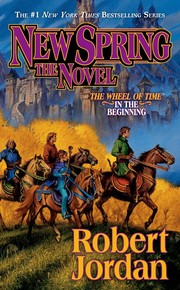
New Spring
Moiraine and Lan hunt the newborn Dragon before the Black Ajah finds him.
2,475-word summary · 11 min read
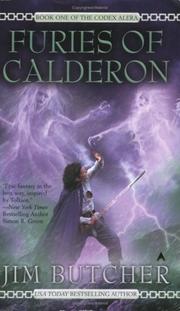
Furies of Calderon
Furyless Tavi defends Calderon Valley when the Marat return and lords scheme.
2,587-word summary · 11 min read
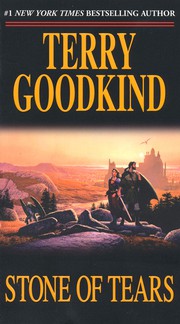
Stone of Tears
After the veil tears, Richard seeks training from the Sisters while Kahlan holds a fracturing Midlands and Zedd hunts the missing Stone.
2,483-word summary · 11 min read
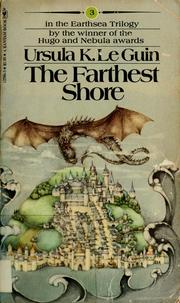
The Farthest Shore
Archmage Ged and Prince Arren sail to the far west to stop Cob, whose bid for endless life drains magic across Earthsea in Le Guin's sad 1972 third volume.
2,800-word summary · 12 min read
Edgedancer
Hungry street thief Lift and her vine-like friend Wyndle cross the Herald Nale in Tashikk when a child emperor shows Radiant signs and she refuses to step…
2,328-word summary · 10 min read
Dragons of Autumn Twilight
Old friends reunite at the Inn of the Last Home, guard a glowing Blue Crystal Staff, face black dragon Khisanth, and free slaves at Pax Tharkas in this 1984…
2,803-word summary · 12 min read
The Eyes of the Dragon
In the kingdom of Delain, a jailed prince and his younger brother face a magician whose long plot for the throne turns on a napkin clue.
2,018-word summary · 9 min read
The City of Brass
Cairo con artist Nahri summons djinn Dara and is drawn to Daevabad where Ali questions pureblood rule.
1,993-word summary · 9 min read
The Black Prism
Dying Prism Gavin Guile hides a secret son while war brews over color magic in the Seven Satrapies.
2,169-word summary · 10 min read
Gardens of the Moon
Empire, gods, and mages collide over Darujhistan as Bridgeburners bleed for Empress Laseen.
2,188-word summary · 10 min read
Crossroads of Twilight
Rand cleansed saidin and the whole world felt it. Book ten follows each faction as they react, stall, and choose sides.
2,264-word summary · 10 min read
Lord of Chaos
Rand offers amnesty to men who can channel while Egwene is raised Amyrlin in exile. Book six of The Wheel of Time builds toward rescue and reckoning at Dumai's…
2,255-word summary · 10 min read
A Crown of Swords
After Dumai's Wells, Rand holds Cairhien while Egwene besieges Tar Valon and Elayne and Nynaeve hunt relief in Ebou Dar. Book seven crowns kings and queens at…
2,828-word summary · 13 min read
Wizard's First Rule
Woods guide Richard joins Kahlan and wizard Zedd to find the Boxes of Orden before Darken Rahl, learning why people believe lies.
2,220-word summary · 10 min read
The Hero of Ages
Vin and Elend face ash, mist, and Ruin itself as the prophecies fail and Sazed searches old faiths for answers.
2,559-word summary · 11 min read
The Thief
A boastful young thief is pulled from a prison to steal a legendary stone for the king's magus, and the story he tells about himself is not the whole story.
2,514-word summary · 11 min read
Ship of Magic
A sentient ship wakes when her captain dies, and the family that owns her starts to come apart over who gets to sail her.
2,026-word summary · 9 min read