
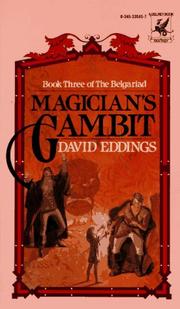
Magician's Gambit
2,391-word summary 11 min read 320 pages in the book
- First published
- 1983
- Publisher
- Del Rey
- Pages
- 320
- ISBN
- 9780345335456
- Series
- The Belgariad (#3)
Reading options
What's inside (9 sections)
A friend lent me the whole Belgariad in one stack of battered paperbacks, and I read the first two in a week. Then I stalled for a month before starting this one. Middle volumes have a reputation. They move the pieces, they do not finish the game, and you can feel the author marking time until the last book. Magician's Gambit, first published in 1983 and cited here in the 1986 Del Rey paperback, 320 pages, is the third of five. It has that problem. It also has one scene I have not been able to shake: a boy in a cave with a dead foal, refusing to let it stay dead.
A quest that has to keep moving
The setup is carried over almost intact. The Orb of Aldur was stolen by the apostate sorcerer Zedar, and then taken from him by the Angarak sorcerer Ctuchik, who has it in Rak Cthol, in Cthol Murgos, deep in the east. Garion, Belgarath, Polgara, Silk, Barak, Mandorallen, Hettar, Durnik, Ce'Nedra, and the boy Errand travel to get it back. That is the whole engine of the book. Everything else is road.
By this point the party is less a band of adventurers than a caravan. There is a sorcerer who complains about his feet, a sorceress who runs the camp, a spy, a giant, a knight, a horseman, a smith, a princess, and a child. Eddings gets comic mileage out of the logistics alone. Who cooks. Who sulks. Who refuses to sleep near whom. The book is at its most comfortable when it is a travelogue with jokes, and at its most ambitious when it remembers that Garion is supposed to be learning something.
The first detour is to the Vale of Aldur, the home country of the sorcerers, a green and quiet place that Garion has heard about all his life and has never seen. It functions as a pause before the hard country. It also sets up the scene the whole novel is built around.
The colt in the cave
On the road, before they reach the Vale, they shelter in a cave during bad weather. A mare in the party's string goes into labor. Garion helps deliver the foal, and it is born dead.
What happens next is the best writing in the book, and it is almost entirely quiet. Garion does not make a speech. He does not bargain with a god. He looks at the small dead animal and simply refuses the fact of it. He reaches for the Will and the Word, the discipline Belgarath has been teaching him in fragments, and he says the thing that makes it alive. The colt breathes. It stands. It nurses. And on its hide there is a mark in the shape of Garion's hand.
Polgara and Belgarath are not pleased. They are frightened. Restoring the dead was supposed to be impossible, even for them, and here is a boy doing it in a cave because he did not want to be sad. Their reaction is the first real hint that Garion is not simply a promising student. It is also the first time the book asks a question it does not answer here: what does it cost to have that kind of power, and who decides when it should be used.
I like that Eddings does not turn this into a training montage. Garion does not suddenly understand his gift. He is shaken, and a little proud, and then everyone rides on. The colt lives, marked, alive. It is a small miracle in a book full of large ones, and it lands harder than any of the battles.
Maragor, where the god still weeps
The party crosses Maragor, and the novel changes temperature. Maragor was the country of the Marags, and the Tolnedrans wiped them out for their gold, then spread the story that the Marags were cannibals so that nobody would mourn them. The god Mara survived his people, and he has been weeping over them ever since. His grief has made the land a trap. Ghosts crowd it. Intruders are driven mad by the dead.
Belgarath protects the party the only way he can, by putting them into a waking sleep, a compulsion that keeps their minds turned away from the haunting. They ride through in a daze while the country howls around them. Garion shakes it off. He should not be able to, and the effort nearly breaks him.
What he finds on the other side of the compulsion is the dry voice that has been speaking in his head since the earlier books. Eddings keeps it deliberately vague here. It is not Belgarath's voice. It is not Garion's own. It tells him that something went wrong a very long time ago and that he is the one who has to set it right, which is a heavy thing to say to a boy who has just learned he can raise a foal from the dead.
Then Mara himself comes close. He nearly takes Ce'Nedra, and the voice in Garion stops him. Not with a duel or a spell, but with a kind of recognition. The god of a murdered people backs away from a boy who had already raised the dead, with a prophecy in his skull.
This section is the reason to read the book. It has real horror in it, the horror of a whole people erased and then slandered, and real grief, and it does not resolve into a fight. Eddings is usually a cheerful writer. Here he lets the cheerfulness drop, and the silence afterward is the most effective thing in the novel.
Bandits, snowballs, and the long road
After Maragor the book relaxes into episodes. In bandit country Silk talks a gang of robbers out of their horses and hands them bags of gravel in place of coin, which is the sort of trick that makes Silk the best company in the series. Garion and Ce'Nedra have a snowball fight that turns into something closer to a truce. They see Grolim monsters in the hills, and Brill, the assassin who has been dogging them since the first book, turns out to be a Dagashi, which explains why he is so hard to kill.
These chapters are pleasant and forgettable in about equal measure. Eddings is good at the texture of travel, the wet boots and bad bread and arguments about who has to sleep nearest the horses, but the plot does not advance so much as accumulate. Brill appears, is escaped, appears again. The Grolims loom and withdraw. You can feel the author moving characters toward the border of the next country because the map requires it.
Brill is the closest thing the book has to a recurring threat, and he is a good one for about two encounters. He is patient, he is quiet, and he keeps surviving things that should have killed him, which makes him feel like weather rather than a person. The Dagashi reveal gives him a training and a reason, but not a face. When he is not on the page, the tension drops away entirely, because the party's real enemy is somewhere beyond the next border and has no interest in them yet.
This is the honest weakness of a middle volume. Magician's Gambit has no beginning of its own and no ending of its own. It inherits a quest and hands it on. Read on its own it would feel like a series of errands. Read in sequence it is a pleasant stretch of road with two or three scenes that matter enormously, and a great deal of scenery between them.
Ulgoland, Relg, and the god who says no
The party goes into Ulgoland, the mountain country of the Ulgos, who worship UL and live in caves. There they recruit Relg, a zealot with a rigid conscience and the ability to pass through solid rock. Relg is difficult company. He judges everyone, he prays constantly, and he regards the surface world as a sewer of sin. He is also the only person who can guide them through the caves beneath Rak Cthol, so they take him.
For all his rigidity, Relg is the book's one real argument about belief. He is not a hypocrite and he is not a liar. He is a man who has organized his entire life around a god who does not compromise, and he looks at the party's jokes and appetites and sees a people who have made peace with sin. Eddings lets him be ridiculous without letting him be wrong about everything, which is a harder balance than it looks. His contempt for the surface world is funny until you remember what the surface did to Maragor.
They reach Prolgu, the abandoned city of the Ulgos, and the Gorim, their leader. Prolgu is one of the book's better pieces of atmosphere, a city built for a people who mostly left, and a religion that has outlasted its own architecture.
Then UL speaks, and the journey splits. The god warns that Ce'Nedra will die if she enters Cthol Murgos. She has to stay behind, as a guest of the Ulgos, while the others go on. Garion is furious. He argues, he sulks, he is overruled by powers he cannot shout at. It is the first time the book makes him weigh the quest against a person, and he does not weigh it well. Ce'Nedra, for her part, is given almost nothing to do about it. She waits. She is protected. She is a reason for Garion to want to come back.
That is a fair criticism of the novel and of the series. The women in this volume are Polgara, who is formidable and maternal and mostly concerned with feeding people and keeping them alive, and Ce'Nedra, who is brave and sharp and spends the book being parked. The story keeps telling us she matters, and then it keeps leaving her at the inn.
The caves and Rak Cthol
The last third is the reason the book exists. Relg leads Garion, Belgarath, Silk, and the others through the caves under the mountains, a long dark passage that Eddings writes with genuine claustrophobia. Relg can walk through stone. Everyone else has to squeeze and crawl and trust him. It is the best sustained sequence in the book after Maragor, and it earns the arrival.
They come out in Rak Cthol, Ctuchik's city, and Belgarath and Ctuchik fight.
The duel is short. That is its virtue. Eddings does not stretch it into a chapter of flashing lights. Two old sorcerers stand in a room and try to unmake each other, and Ctuchik, losing, does the one thing nobody should do: he tries to will the Orb out of existence. The attempt destroys him. There is no corpse to gloat over, no speech, just a man erased by his own reach. It is brutal and over quickly, and it is the correct way to end a book like this.
The escape is a mess, which is also correct. Belgarath is down, unconscious, maybe worse. Errand is there. And there is Taiba, a Marag woman kept as a slave, whom they free and bring out with them. Her presence is the book's quietest accusation. She tells them that Marags were kept as slaves in Tolnedra, which means the genocide the party rode through in a fog of ghosts never actually ended. It just became a business.
They get out with the Orb. They do not get out clean. Belgarath is carried. The war that has been gathering since the first page is still gathering. Ce'Nedra is still in Prolgu. The book closes on a party that has won a thing and lost ground doing it.
What the middle book is for
The villains are thin. Ctuchik is a name with a temper, and Zedar is mostly offstage. The Grolims are hooded menace and not much else. Eddings is not interested in giving the east a point of view, and the book is poorer for it. The prose is plain to the point of transparency, which keeps the pages turning but leaves few sentences to reread. The plot is a sequence of travel episodes stitched together by prophecy, and if you are reading for structure rather than company, the stitching shows.
What holds it up is the relationship between Garion and Belgarath. Belgarath is funny and tired and endlessly patient in the way of a man who has done this too many times. He teases Garion, tests him, loses his temper, apologizes by pretending nothing happened. Garion is learning to trust him and learning that trust is not the same as obedience. The colt, the dry voice, the ghosts of Maragor, and the choice to use power are all stages in that education. He is not becoming a hero. He is becoming a person who understands what a hero would have to pay.
Polgara is formidable, and the book knows it even when it does not give her enough to do. Silk is the best company on the road. Ce'Nedra deserved better than a waiting room. And the Maragor chapters are the ones I will recommend to anyone who thinks Eddings only writes banter.
If you want a fantasy novel that stands alone, this is not it. Start with Pawn of Prophecy or skip the series. If you are already two books in, this is the volume where the cosiness starts to crack, and the crack is worth the ride. The Maragor chapters alone justify the 320 pages, and the Ctuchik duel is the first time the series shows a sorcerer's death up close.
I finished the Del Rey paperback on a wet afternoon and sat for a while with the image of that colt in the cave, standing on shaky legs with a hand shaped mark on its coat. Garion did not save the Marags. He did not save the foal's mother, or stop the war, or keep Ce'Nedra from being left behind. He saved one animal because he could not bear otherwise, and the book never tells us whether that was wisdom or arrogance. That question is what the next two volumes are for. It is also the only reason a middle book needs to exist.
FAQ
Is Magician's Gambit a standalone novel?
No. It is the third of five books in The Belgariad, and it assumes readers have read Pawn of Prophecy and Queen of Sorcery.
Which edition does this summary cite?
The 1986 Del Rey paperback, 320 pages, of a novel first published in 1983.
What is the main quest in Magician's Gambit?
Garion and his companions travel toward Rak Cthol to recover the Orb of Aldur from the sorcerer Ctuchik.
Similar books
More from The Belgariad first, then related titles.
Pawn of Prophecy
Farm boy Garion learns sorcerers watch him as an old Orb wakes.
2,331-word summary · 10 min read
Enchanters' End Game
Garion marches toward Torak while Ce'Nedra leads the West's army in the final Belgariad volume, where prophecy and war meet.
2,557-word summary · 11 min read
Fool's Errand
FitzChivalry Farseer has lived in exile for fifteen years. When Prince Dutiful vanishes before his betrothal, Fitz returns to Buckkeep to find him, with a wolf…
2,606-word summary · 12 min read
The Sword of Shannara
A young half-Elf and a company of companions set out to recover a magic sword before the Warlock Lord destroys the Four Lands.
2,474-word summary · 11 min read
Crossroads of Twilight
Rand cleansed saidin and the whole world felt it. Book ten follows each faction as they react, stall, and choose sides.
2,264-word summary · 10 min read
Lord of Chaos
Rand offers amnesty to men who can channel while Egwene is raised Amyrlin in exile. Book six of The Wheel of Time builds toward rescue and reckoning at Dumai's…
2,255-word summary · 10 min read
A Crown of Swords
After Dumai's Wells, Rand holds Cairhien while Egwene besieges Tar Valon and Elayne and Nynaeve hunt relief in Ebou Dar. Book seven crowns kings and queens at…
2,828-word summary · 13 min read

The Blinding Knife
Kip trains to join the Blackguard while the Prism hides his true identity, loses his colors, and fights a war against a rogue drafter who wants to birth a god.
2,049-word summary · 9 min read
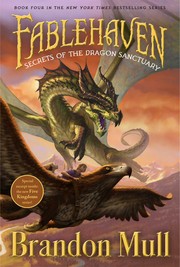
Secrets of the Dragon Sanctuary
Kendra is replaced by a plant copy and held by the Society, while Seth steals a unicorn horn so the family can enter a dragon sanctuary.
2,590-word summary · 12 min read

Lioness Rampant
Alanna searches for the Dominion Jewel with the Shang Dragon, then returns to Tortall to face Duke Roger at Jonathan's coronation.
2,478-word summary · 11 min read
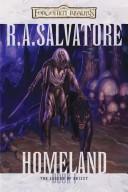
Homeland
Drizzt Do'Urden is born into the cruel drow city of Menzoberranzan, where his father teaches him to fight and to doubt everything his family believes.
2,303-word summary · 10 min read

The Queen of the Tearling
Nineteen-year-old Kelsea leaves the woods to take her throne, ends a shipment of human captives, and draws the Red Queen's revenge.
2,357-word summary · 10 min read
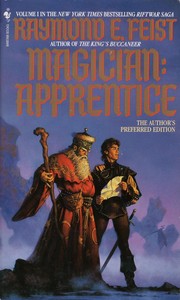
Magician: Apprentice
An orphan kitchen boy and a smith's son grow up in a frontier castle just as invaders from another world open a rift and begin a war that will change both of…
2,114-word summary · 9 min read
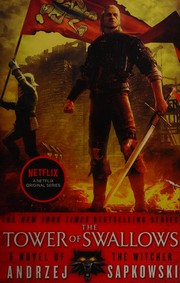
The Tower of the Swallow
Ciri flees as a bandit while Geralt gathers allies to find her.
2,580-word summary · 11 min read
The Emperor's Soul
Forger Shai must stamp a new soul for the dying emperor in 100 days.
2,313-word summary · 10 min read
Shadow's Edge
Kylar fakes death as a king killer while Vi hunts him for the Godking.
2,245-word summary · 10 min read
New Spring
Moiraine and Lan hunt the newborn Dragon before the Black Ajah finds him.
2,475-word summary · 11 min read
Furies of Calderon
Furyless Tavi defends Calderon Valley when the Marat return and lords scheme.
2,587-word summary · 11 min read
Stone of Tears
After the veil tears, Richard seeks training from the Sisters while Kahlan holds a fracturing Midlands and Zedd hunts the missing Stone.
2,483-word summary · 11 min read
The Farthest Shore
Archmage Ged and Prince Arren sail to the far west to stop Cob, whose bid for endless life drains magic across Earthsea in Le Guin's sad 1972 third volume.
2,800-word summary · 12 min read
Lirael
A Sightless Clayr girl and a prince afraid of Death join the Dog and Mogget to stop necromancers from waking the Destroyer Orannis at the Red Lake while old…
2,692-word summary · 12 min read
Edgedancer
Hungry street thief Lift and her vine-like friend Wyndle cross the Herald Nale in Tashikk when a child emperor shows Radiant signs and she refuses to step…
2,328-word summary · 10 min read
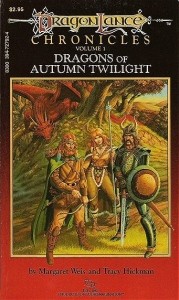
Dragons of Autumn Twilight
Old friends reunite at the Inn of the Last Home, guard a glowing Blue Crystal Staff, face black dragon Khisanth, and free slaves at Pax Tharkas in this 1984…
2,803-word summary · 12 min read
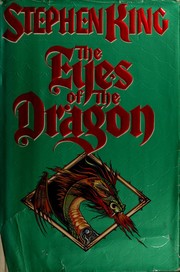
The Eyes of the Dragon
In the kingdom of Delain, a jailed prince and his younger brother face a magician whose long plot for the throne turns on a napkin clue.
2,018-word summary · 9 min read
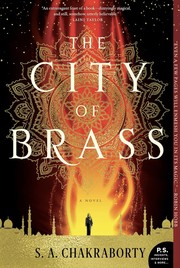
The City of Brass
Cairo con artist Nahri summons djinn Dara and is drawn to Daevabad where Ali questions pureblood rule.
1,993-word summary · 9 min read
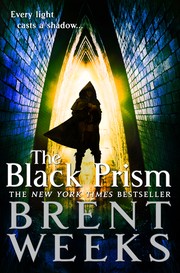
The Black Prism
Dying Prism Gavin Guile hides a secret son while war brews over color magic in the Seven Satrapies.
2,169-word summary · 10 min read
Gardens of the Moon
Empire, gods, and mages collide over Darujhistan as Bridgeburners bleed for Empress Laseen.
2,188-word summary · 10 min read
Winter's Heart
Trapped in Far Madding without the Power, Rand baits his betrayers while Mat plots escape from Ebou Dar and Elayne fights for Caemlyn.
2,906-word summary · 13 min read
The Path of Daggers
Rand wields Callandor against Seanchan while Elayne and Egwene maneuver.
2,492-word summary · 11 min read
Knife of Dreams
Rand sets a Seanchan trap while Mat weds Tuon, Perrin storms Malden, Elayne takes Caemlyn, and Egwene defies Elaida.
2,988-word summary · 13 min read