
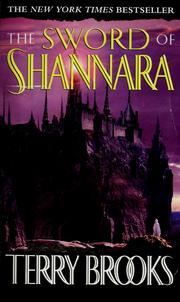
The Sword of Shannara
2,474-word summary 11 min read 736 pages in the book
- First published
- 1977
- Publisher
- Ballantine Books
- Pages
- 736
- ISBN
- 9780345314253
- Series
- The Original Shannara Trilogy (#1)
Reading options
What's inside (9 sections)
The first thing people say about The Sword of Shannara is that it is The Lord of the Rings with the serial numbers filed off. The second thing they say is that it sold anyway. Both statements are true, and neither one is the whole story. I read it as a teenager before I read Tolkien, and I loved it. I read it again as an adult and found the imitation obvious, the prose bloated, and the characters thin. I also found that the ending still works, and that the book's central idea, a magic sword that wins by forcing people to see the truth about themselves, is good enough to survive the derivativeness around it.
Terry Brooks published The Sword of Shannara in April 1977. Ballantine Books issued a trade paperback and Random House issued a hardcover at the same time, and the Ballantine edition launched the Del Rey imprint under editor Lester del Rey. The first edition ran 726 pages. The Del Rey mass-market edition I used runs 736 pages and carries the ISBN 9780345314253. It is the first book in what is now called The Original Shannara Trilogy, followed by The Elfstones of Shannara and The Wishsong of Shannara. The trilogy was not planned as a trilogy. It became one because the first book sold.
Shea and the druid
Shea Ohmsford is a young half-Elven man living in Shady Vale, a small community in the Southland. He is the adopted son of the innkeeper Curzad Ohmsford and the adoptive brother of Flick Ohmsford. He does not know that his Elven father and human mother died when he was an infant, or that he is a distant descendant of Jerle Shannara, the Elven king who carried the Sword against Brona five hundred years earlier. He is not a prince or a warrior. He is an ordinary young man who doubts his courage, and his arc is less about becoming a hero than about accepting responsibility.
Allanon arrives at the inn and changes everything. He is the last Druid of Paranor, tall, dark, cloaked, and centuries old. He warns Shea that the Warlock Lord has returned to the Skull Kingdom and is hunting the last Shannara heir. He tells the history of the Great Wars, the Druids, Brona, and the Sword. He leaves Shea three blue Elfstones for guidance and protection, warning that they are for Shea alone and must be used only when all else fails. He does not tell Shea the full truth about the Sword. He is a mentor who withholds information, and the novel treats that as wisdom rather than manipulation.
A Skull Bearer drives Shea and Flick out of Shady Vale and into the wider world. They meet Menion Leah, a prince who is reckless, vain, and brave. Allanon assembles a company at Culhaven: Shea, Flick, Menion, Balinor Buckhannah, the dwarf Hendel, and the Elven brothers Durin and Dayel Elessedil. Their goal is to recover the Sword of Shannara from Paranor before the Warlock Lord can destroy it. The company is a familiar fantasy assortment, and Brooks does little to make the members surprising. Balinor is the exiled prince, Hendel is the loyal dwarf, the Elven brothers are graceful and brave, and Menion is the one who grows the most.
The early journey is episodic. The company crosses the Wolfsktaag, passes through the Passes of Noose and Jade, and is attacked by a Creeper that poisons Shea. They seek healing at Storlock, the village of the Stors, who are healers. They pass the Valley of Shale, where Allanon summons the shade of Bremen, and the Hall of Kings, where he battles the Valg. At the Dragon's Teeth an earthquake separates Shea from the group. The company reaches Paranor only to find the Sword already gone. Allanon fights a Skull Bearer and falls into a furnace, then rejoins them later. The plot keeps moving, but it moves through set pieces rather than through character.
Panamon Creel and Keltset
After the earthquake, Shea falls into a river and is captured by Gnome hunters. They strip him of the Elfstones and leave him tied up. He is rescued by Panamon Creel, a one-handed thief whose left hand has been replaced by an iron pike, and Keltset Mallicos, a mute Rock Troll of high honor who carries the Black Irix. Panamon is talkative, cynical, and morally ambiguous. Keltset is silent and loyal. They become Shea's companions, recover the Elfstones, and help him pursue Orl Fane, a half-mad Gnome deserter from the Pelle tribe who has stolen the Sword.
Panamon and Keltset are the best characters in the book. Panamon is funny without being cute, and his cynicism gives the quest a welcome change of tone. Keltset is a Troll, and the novel uses him to complicate the racial politics of the Four Lands. Trolls are usually enemies, but Keltset is honorable, and his Black Irix proves their honor to a Troll encampment and wins them an escort to Skull Mountain. The friendship between the thief and the Troll is more interesting than most of the company's interactions.
Keltset dies in the escape from Skull Mountain. He holds up a collapsing ceiling so Shea and Panamon can pass, and is crushed to death. Panamon, wounded, stays behind to fight a Muten pursuer so Shea can escape. These deaths are the emotional high point of the novel. They are also the only deaths that feel earned, because Panamon and Keltset have been given enough space to become people.
The war in the south
While Shea is traveling with Panamon, the novel follows the war in the south. Flick rescues King Eventine from the Northland camp. Menion saves Shirl Ravenlock and evacuates Kern. Balinor is imprisoned by his brother Palance, whom the traitor Stenmin has driven mad, and is freed with Menion's help. The Border Legion fights at the Mermidon and holds Tyrsis through a three-day siege. Hendel dies in the tunnels beneath Tyrsis. Menion kills Stenmin. The Northlanders break at the Bridge of Sendic when the Warlock Lord falls.
The war plot is where the Tolkien parallels become almost comical. Tyrsis is Minas Tirith, the siege is the Pelennor Fields, Stenmin is Grima Wormtongue, and Palance is a corrupted king. Brooks is not trying to hide it. He is trying to write a big, exciting story in the same mode, and for readers who want more of that mode, the war delivers. The problem is that the outcome of the war depends on the outcome of Shea's quest, so the battles feel like a side plot. The novel cuts between them, but the cutting does not create much tension, because the reader knows which storyline matters more.
The southern sections also introduce the book's only significant female characters, Shirl Ravenlock and the Siren. Shirl is a noblewoman who needs rescuing and then becomes Menion's love interest. The Siren is a monster who tries to seduce and kill Menion. Neither is given much interiority. The novel is a product of its time, and its treatment of women is one of the things that has aged worst.
Skull Mountain and the truth
Shea, Panamon, and Keltset reach the Skull Kingdom in the Northland. The land is cold and barren, littered with the remains of battles, and guarded by Skull Bearers, winged black servants who have sacrificed their humanity. Shea finds Orl Fane in a cell, takes back the Sword, and confronts Brona. The Warlock Lord is a former Druid of the First Council who embraced dark magic and departed with the Ildatch, a magical tome. He was defeated in the First War of the Races and returned centuries later as a wraithlike being kept alive by evil magic. He believes himself immortal and godlike.
The Sword does not cut him. It forces him to see himself as he truly is, stripped of self-justification. Brona's existence depends on the illusion of his own immortality and godhood. When Shea turns the Sword on him, Brona is forced to see that he is not a god and cannot be deathless. The contradiction destroys him. The Sword is the novel's best invention, and it is the one element that does not feel borrowed. It turns the final battle into an act of self-knowledge rather than a swordfight, and it gives Shea a victory that is consistent with his character.
Shea first learns the Sword's nature when he holds it and feels its magic turn inward, confronting him with his own fears and doubts. He wonders how truth alone can defeat the Warlock Lord, and Allanon explains that magic is illusion given substance by belief. The explanation is a bit of a cheat, but the idea is strong. Evil in the novel is not just a force. It is a story that a person tells himself about himself, and the Sword breaks the story.
The ending is orderly. Skull Mountain collapses. Keltset dies holding up a tunnel, and Panamon stays behind to fight a Muten so Shea can escape. Shea emerges to find Allanon, who saves his life, answers his questions, and reveals that he is Bremen's son. In the south, the Northland army retreats. Balinor becomes king of Callahorn. Menion returns to Leah with Shirl. Durin and Dayel return to the Westland. Shea and Flick return to Shady Vale. The Sword is embedded blade-down in a block of red marble and placed in a vault in the People's Park in Tyrsis, with an inscription naming it the heart and soul of the nations. Weeks later, Panamon returns the missing Elfstones.
Publishing history and the Tolkien problem
Brooks began writing the novel in 1967, when he was twenty-three, and worked on it sporadically for seven years while attending law school. He submitted it to DAW Books. Donald A. Wollheim rejected it but recommended Judy-Lynn del Rey at Ballantine. Ballantine accepted it in November 1974. Lester del Rey used the book to launch Del Rey Books, and the Brothers Hildebrandt provided the cover and interior illustrations. Their Tolkien work helped position the book for Tolkien's audience.
The commercial impact was huge. The novel became the first fantasy fiction novel to appear on the New York Times trade paperback bestseller list, and it sold about 125,000 copies in its first year. It helped turn epic fantasy into a mass-market category, and it opened the door for the big series that followed. The claim that it was the first fantasy novel from a major publisher is not accurate. Ballantine was already a major publisher and Tolkien's American publisher. The defensible claim is that Shannara was the first fantasy novel on the New York Times trade paperback list and the launch title of Del Rey.
The critical reception was mixed. Choice called it exceptionally well written and very readable. Frank Herbert, reviewing it in the New York Times, called it a split work, with the first half running a poor second to the second, but admitted he was sorry when it ended. Lin Carter called it the single most cold-blooded, complete rip-off of another book he had ever read. Tom Shippey mapped the parallels point for point: Brona is Sauron, Allanon is Gandalf, Shea and Flick are the hobbits, Balinor is Aragorn, Menion is Boromir, Hendel is Gimli, Durin and Dayel are Legolas, Orl Fane is Gollum, the Skull Bearers are the Nazgul, Culhaven is Rivendell, Storlock is Lothlorien, Paranor is Moria, and Tyrsis is the Pelennor Fields.
Brooks has never denied the influence. He has said he deliberately removed Tolkien's poetry, songs, linguistic appendices, and academic digressions in order to write a straightforward adventure story that barreled ahead. He has also cited Dumas, Stevenson, Scott, and Conan Doyle as influences, and argued that the post-apocalyptic setting and the truth-based resolution were his own. Gene Wolfe defended the book's imitation, saying that we need imitators and that all imitations of a great original must be inferior. Frank Herbert argued that it does not matter where you get the idea, what matters is that you tell a rousing story.
What works and what does not
The novel's length is a real problem. The first half is slow, the prose is wordy, and the interior monologue repeats itself. Brooks does not spend enough time with most of the company to make them come to life. Only Shea and Menion show real flickers of personality, and Shea is often passive. The middle sections are episodic and padded. The cast is overwhelmingly male, and the two women who appear directly are treated as rewards or obstacles.
The world-building is better than the characterization. The Four Lands have a history, a geography, and a logic. The post-apocalyptic background, a far-future Earth devastated by the Great Wars, is a genuinely interesting twist on Tolkien's secondary world. The Druids, the Skull Bearers, and the Warlock Lord all have a place in that history, and the novel is good at suggesting depths it does not always explore.
The Sword itself is the book's lasting contribution. It is a weapon that wins by revealing the truth, and that idea has been copied almost as often as the plot. It gives the finale a philosophical edge that the rest of the novel does not quite earn. When Shea faces Brona, the book briefly becomes about something more than a quest. It becomes about the stories we tell ourselves and the cost of seeing through them.
Why it matters
The Sword of Shannara is not a great novel. It is an important one. It proved that there was a mass audience for epic fantasy beyond Tolkien, and it helped create the commercial landscape that made later series possible. It is also a useful example of how imitation can be both a weakness and a strategy. Brooks took a story he loved and told it again for readers who wanted more of it. Some of those readers went on to write their own books. Some of them went back to Tolkien. Either way, the book did its job.
I still like the ending. I like the idea of a hero who wins by telling the truth, and I like the fact that the truth is not a simple moral lesson but a confrontation with self-delusion. The rest of the book is a long, uneven journey to that moment. It is worth reading if you want to understand the history of fantasy publishing, or if you want a big, familiar adventure with a clever final twist. It is not worth reading if you want prose, nuance, or original characters. The book knows what it is, and it has been successful for a long time because a lot of readers wanted exactly that.
FAQ
Is The Sword of Shannara the first book in a series?
Yes. It is the first book of The Original Shannara Trilogy, followed by The Elfstones of Shannara and The Wishsong of Shannara.
Is The Sword of Shannara a copy of The Lord of the Rings?
It follows Tolkien's plot and character types closely, and critics have mapped the parallels for decades, though Brooks added a post-apocalyptic setting and a truth-based magic sword.
Can I start with this book if I have never read Terry Brooks?
Yes. It is the first published Shannara novel and introduces the world, the Druids, and the Ohmsford family.
Similar books
More from The Original Shannara Trilogy first, then related titles.
Magician's Gambit
Garion and his companions cross haunted Maragor and the caves beneath Rak Cthol to recover the Orb of Aldur.
2,391-word summary · 11 min read
Enchanters' End Game
Garion marches toward Torak while Ce'Nedra leads the West's army in the final Belgariad volume, where prophecy and war meet.
2,557-word summary · 11 min read
Fool's Errand
FitzChivalry Farseer has lived in exile for fifteen years. When Prince Dutiful vanishes before his betrothal, Fitz returns to Buckkeep to find him, with a wolf…
2,606-word summary · 12 min read
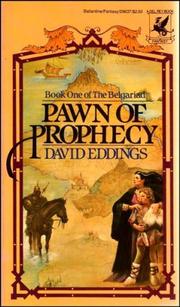
Pawn of Prophecy
Farm boy Garion learns sorcerers watch him as an old Orb wakes.
2,331-word summary · 10 min read

The Blinding Knife
Kip trains to join the Blackguard while the Prism hides his true identity, loses his colors, and fights a war against a rogue drafter who wants to birth a god.
2,049-word summary · 9 min read
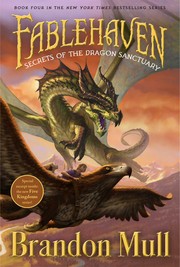
Secrets of the Dragon Sanctuary
Kendra is replaced by a plant copy and held by the Society, while Seth steals a unicorn horn so the family can enter a dragon sanctuary.
2,590-word summary · 12 min read

Lioness Rampant
Alanna searches for the Dominion Jewel with the Shang Dragon, then returns to Tortall to face Duke Roger at Jonathan's coronation.
2,478-word summary · 11 min read
Homeland
Drizzt Do'Urden is born into the cruel drow city of Menzoberranzan, where his father teaches him to fight and to doubt everything his family believes.
2,303-word summary · 10 min read

The Queen of the Tearling
Nineteen-year-old Kelsea leaves the woods to take her throne, ends a shipment of human captives, and draws the Red Queen's revenge.
2,357-word summary · 10 min read
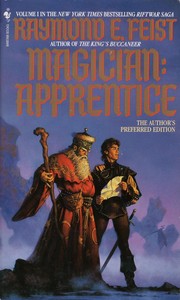
Magician: Apprentice
An orphan kitchen boy and a smith's son grow up in a frontier castle just as invaders from another world open a rift and begin a war that will change both of…
2,114-word summary · 9 min read
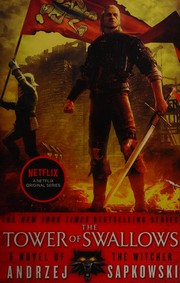
The Tower of the Swallow
Ciri flees as a bandit while Geralt gathers allies to find her.
2,580-word summary · 11 min read
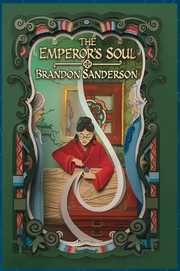
The Emperor's Soul
Forger Shai must stamp a new soul for the dying emperor in 100 days.
2,313-word summary · 10 min read
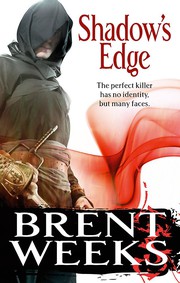
Shadow's Edge
Kylar fakes death as a king killer while Vi hunts him for the Godking.
2,245-word summary · 10 min read
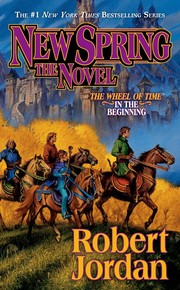
New Spring
Moiraine and Lan hunt the newborn Dragon before the Black Ajah finds him.
2,475-word summary · 11 min read
Furies of Calderon
Furyless Tavi defends Calderon Valley when the Marat return and lords scheme.
2,587-word summary · 11 min read
The Last Unicorn
A unicorn learns she may be the last of her kind and sets out to find the others, with a failed magician and a tired woman at her side.
2,245-word summary · 10 min read
Stone of Tears
After the veil tears, Richard seeks training from the Sisters while Kahlan holds a fracturing Midlands and Zedd hunts the missing Stone.
2,483-word summary · 11 min read
The Farthest Shore
Archmage Ged and Prince Arren sail to the far west to stop Cob, whose bid for endless life drains magic across Earthsea in Le Guin's sad 1972 third volume.
2,800-word summary · 12 min read
Edgedancer
Hungry street thief Lift and her vine-like friend Wyndle cross the Herald Nale in Tashikk when a child emperor shows Radiant signs and she refuses to step…
2,328-word summary · 10 min read
Dragons of Autumn Twilight
Old friends reunite at the Inn of the Last Home, guard a glowing Blue Crystal Staff, face black dragon Khisanth, and free slaves at Pax Tharkas in this 1984…
2,803-word summary · 12 min read
The Tombs of Atuan
Priestess Arha guards dark Tombs until wizard Ged comes to steal back ring.
2,043-word summary · 9 min read
The Eyes of the Dragon
In the kingdom of Delain, a jailed prince and his younger brother face a magician whose long plot for the throne turns on a napkin clue.
2,018-word summary · 9 min read
The City of Brass
Cairo con artist Nahri summons djinn Dara and is drawn to Daevabad where Ali questions pureblood rule.
1,993-word summary · 9 min read
The Black Prism
Dying Prism Gavin Guile hides a secret son while war brews over color magic in the Seven Satrapies.
2,169-word summary · 10 min read
Gardens of the Moon
Empire, gods, and mages collide over Darujhistan as Bridgeburners bleed for Empress Laseen.
2,188-word summary · 10 min read
Crossroads of Twilight
Rand cleansed saidin and the whole world felt it. Book ten follows each faction as they react, stall, and choose sides.
2,264-word summary · 10 min read
Lord of Chaos
Rand offers amnesty to men who can channel while Egwene is raised Amyrlin in exile. Book six of The Wheel of Time builds toward rescue and reckoning at Dumai's…
2,255-word summary · 10 min read
A Crown of Swords
After Dumai's Wells, Rand holds Cairhien while Egwene besieges Tar Valon and Elayne and Nynaeve hunt relief in Ebou Dar. Book seven crowns kings and queens at…
2,828-word summary · 13 min read
Wizard's First Rule
Woods guide Richard joins Kahlan and wizard Zedd to find the Boxes of Orden before Darken Rahl, learning why people believe lies.
2,220-word summary · 10 min read
The Silver Chair
Eustace and Jill retold: four signs, a lost prince, Puddleglum the Marsh-wiggle, giants at Harfang, and the Lady below.
2,940-word summary · 13 min read