
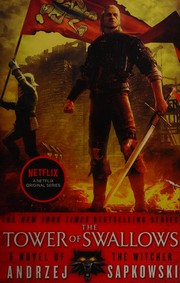
The Tower of the Swallow
2,580-word summary 11 min read 464 pages in the book
- First published
- 1997
- Publisher
- Orbit
- Pages
- 464
- ISBN
- 9780316273718
- Original title
- Wieża Jaskółki
- Series
- The Witcher (#6)
Reading options
What's inside (8 sections)
I picked up The Tower of the Swallow because Baptism of Fire left me annoyed in the best way. Geralt was still limping, Ciri was riding with criminals under a false name, and Yennefer had vanished. I wanted them back in the same story. The 1997 novel, Wieza Jaskolki in Polish, first from superNOWA and in English from Orbit and Gollancz in the David French translation, runs 464 pages in the Orbit paperback. It does not bring them together. It keeps all three apart for almost the whole book and still feels urgent, because everyone is closing in at once.
The shape is odd. Ciri part is a story inside a story, told to an old man in a swamp. Geralt part is walking and ambushes. Yennefer part is painful. Around them are spies and officers writing reports. I found the opening slow, then I could not stop. Sapkowski keeps them apart so each must face alone what they did before they can meet again.
If you read the earlier books you know the setup. Cintra is gone. The coup on Thanedd island broke the Brotherhood of Sorcerers. Ciri fell through a portal, crossed the Korath desert, and fell in with the Rats, a gang of teenage robbers. Geralt was badly hurt by Vilgefortz and now travels with Dandelion, the archer Milva, the vampire Regis, and Cahir, the Nilfgaardian who once chased Ciri. Yennefer tried to find Ciri and disappeared. Emhyr var Emreis, emperor of Nilfgaard, has presented a girl he calls Ciri as his future bride. Every power wants the real one.
The Old Man in the Swamp
Vysogota is not the kind of character who usually opens a fantasy novel. He is sixtyish, a former surgeon and philosopher from Corvo, living alone in a hut in the Pereplut swamp with a few chickens, a goat, and too many books. He fled politics years ago after falling out with the powerful. Now he drains abscesses for peasants and talks to himself.
One rainy morning he finds a girl tangled in reeds at the edge of the marsh. Her leg is ruined, her face is cut open, her ankle is swollen black, and she is feverish. He carries her in, cleans the wounds, sets what he can, and feeds her broth a spoon at a time. For days she says almost nothing except a name that sounds like Falka.
I liked these chapters more than I expected. Vysogota is fussy, kind, and lonely. He lectures the empty room about ethics while he changes bandages. He worries about infection, about hunger in winter, about whether the girl will ever walk right. He has a daughter he has not seen in years, and her old ice skates hang in the hut. That detail sits there for a long time before it matters.
When Ciri can sit up, he asks for her story. She does not trust him at first. She tests him with silence, with rudeness, with half answers. He does not push. He treats her, reads, and waits. Slowly she starts talking, and the book slides into her account. The frame never quite leaves. Every so often we cut back to the hut, to Vysogota adding wood to the fire or noting that she is lying about something. It gives the wild events a tired, human edge. An old man listening, interrupting to ask what she ate or whether she slept.
Vysogota knows he is sheltering someone dangerous to shelter. Soldiers and agents are moving through nearby villages. He hides her anyway. His death, quiet and alone in the hut after she leaves, hit me harder than most of the battles in this series. He prays in his own skeptical way for her to live. It is a small scene and it stays.
Falka, the Rats, and Bonhart
Ciri tells Vysogota what happened after Baptism of Fire, and it is grim.
She had been happy, in a feral way, with the Rats. Giselher, Mistle, Kayleigh, Iskra, Reef, and Asse robbed tax convoys, shared coin, dressed well, and slept in barns and empty houses. They called her Falka. She tells Vysogota she liked the speed of it, the lack of lessons and prophecy. Mistle in particular was close to her, in a bond that was tender and possessive and too old for Ciri age. Sapkowski does not excuse it. He shows a girl who had lost everything grabbing at warmth where she found it.
The trouble starts when word reaches them that a Ciri of Cintra has appeared in Nilfgaard. Ciri decides the imposter must be exposed and that she must claim her own name. Before she can act, she learns that Leo Bonhart, a bounty hunter with a reputation for killing witchers and keeping their medallions as trophies, is hunting them for Stefan Skellen, the Nilfgaardian coroner called Owl.
She rides back to warn the Rats and arrives too late. Bonhart has already done the work. The fight is short and ugly. Giselher tries to stand and dies. The others die one by one. Ciri, who trained at Kaer Morhen and learned more on the road, faces Bonhart and loses. He beats her, breaks her, and takes her alive.
What follows is humiliation as theater. Skellen wants her dead but Bonhart wants to show her off. He forces her to fight in an arena in Claremont, against seasoned killers, while crowds bet. She kills because she has no choice. Bonhart watches like a trainer judging a horse. He becomes convinced she had witcher training, which only feeds his pride in owning her.
Readers sometimes ask why Sapkowski spends so long on this. I think it is to strip away the romance of the Rats. The gang life looked free. It ends in mud and unpaid debts and a man counting coins for corpses. Ciri survives, but the price is clear in how she talks about Mistle death. Flat, angry, unfinished.
The fair criticism here is that Bonhart borders on too much. He is clever, brutal, immune to magic tricks, and always one step ahead. Every scene with him feels tilted so he wins. I rolled my eyes once or twice. Still, as the human face of the hunt, he works. Vilgefortz is distant. Emhyr is distant. Bonhart is close, smelling of leather and blood, and that makes Ciri fear feel real.
Geralt Walks, Argues, and Bleeds
Geralt chapters feel like a different book stitched in, and I mean that fondly.
After saving Queen Meve of Lyria and Rivia from an assassination, Geralt party travels with her guerrilla force for a while. The group is Dandelion, still singing and complaining, Milva pregnant and hiding it, Regis calm and strange, Cahir trying to earn trust, and the new girl Angouleme, a sharp tongued former criminal who joins after her old gang tries to kill them for bounty. They want to find druids who might locate Ciri by magic. They also want to find out who put the price on their heads.
Much of this is talk on the road. Who owes whom. Whether Cahir can be forgiven. Whether Geralt should keep going when every sign says Ciri is beyond reach. Milva throws up in the mornings and snaps at anyone who notices. Dandelion writes ballads that annoy the soldiers. Regis makes herbal cures and says little that is little. I found the banter warm, though Sapkowski lets it run. If you want monsters, there are almost none here. There is mud, bad food, and politics.
The ambush plot gives it spine. A half elf called Schirru and a gang led by a man called Nightingale, on Vilgefortz coin, hunt them. Angouleme knows their methods because she ran with them. The party sets a trap, the trap goes wrong, and Geralt and Cahir end up hiding in a peasant hut, wounded, while the others push on to Toussaint. The two men finally talk plainly. Cahir, who once took Ciri from the sack of Cintra and then let her go, says he wants to save her, not serve Nilfgaard. Geralt, who has hated him for books, starts to believe him.
In Toussaint the druids prove unhelpful in the way holy people often are in these books. They capture Geralt group, kill Nightingale men before Geralt can question them, and offer riddles. Geralt also meets Avallac'h, an elven sage who knows more about Ciri blood and Ithlinne prophecy than any human. Avallac'h tells him not to chase her, that what must happen will happen. Geralt refuses. It is stubborn and a little foolish and completely in character.
Bold truth: these chapters are the slowest and also the ones I remember for friendship. Regis with feverish Milva. Dandelion teaching Angouleme rhymes. Cahir standing watch without being asked.
I did not expect to care so much about breakfast arguments, but I did.
Yennefer, Skellige, and Vilgefortz
Yennefer thread is short and hard to read.
She survived the Lodge attempt to hold her. She reaches Skellige and asks Crach an Craite, the jarl who once hoped to marry her, for help. She wants ships and mages to find Vilgefortz hideout. Crach gives her shelter out of old love, though his people fear sorcery and the sea beyond Skellige is cursed ground.
Sapkowski gives her a vision in the temple of Freya, where she is pressed to choose a side in the coming war of the worlds, Ragh Nar Roog. She refuses easy answers. She wants Ciri, not causes. With a guide she sails to Vilgefortz castle, hidden by magic past reefs and fog.
She loses. Vilgefortz and Schirru take her. The torture scenes that follow are drawn without glee but they are still rough. They try to use her link to Ciri to find the girl. Yennefer holds out, gives nothing about Ciri, but under pain she lets slip enough for Vilgefortz to guess where Geralt is. He sends Schirru to kill him. Yennefer hatred for herself after is plain on the page.
Meanwhile the Lodge of Sorceresses meets and schemes. Philippa Eilhart leads, with Triss Merigold uneasy among them. They plan to put magic above kings, to build influence in Kovir, to use Ciri blood for their own future. Dijkstra, Redania spymaster, travels to Kovir looking for money for war and finds the sorceresses already there, polite and immovable. Triss looks for news of Yennefer and fears she is dead.
I admired how Sapkowski refuses to make the Lodge simple villains. Philippa is cold and brilliant. She believes mages must rule because kings waste lives. Triss believes in people more than plans but stays because she thinks she can soften the outcome. Both use Ciri as a piece. Yennefer, for all her pride, is the only mage here who wants the girl rather than the prophecy.
If there is a drag, it is the council talk. Kovir finance, Redanian armies, Nilfgaardian parties. Names pile up. I kept notes. Readers who love courts will enjoy it. I skimmed a little in the middle and did not feel I lost the heart of it.
Owls, Spies, and a Psychic on Trial
Back in Nilfgaard the plot turns into a cold inquiry.
Vattier de Rideaux, the imperial spymaster, wants Ciri alive for the emperor. Stefan Skellen, the coroner, secretly works with dissatisfied nobles who hate Emhyr choice of bride and hate Emhyr himself. Skellen hired Bonhart and Rience to kill the real Ciri. He even dreams of toppling the empire and building something like a republic, though his talk of freedom covers a lot of cruelty.
Sapkowski cuts between Ciri account and an official hearing where a psychic named Kenna is questioned for treason. Kenna can read minds by touch. She was with Skellen group. Through her testimony we learn how Skellen, Rience, and Bonhart met, how Vilgefortz spoke to them through a magic device, and how Vilgefortz guessed Skellen double game.
These pages are talky, full of reports and cross questions, but they explain a lot. Why Bonhart kept Ciri alive in the arena. Why Rience kept appearing. Why Skellen fears both the emperor and Vilgefortz. Power here is not swords. It is who pays whom and who writes the record.
Kenna matters for another reason. When she tries to read Ciri mind, the contact breaks something open in Ciri and her own power rushes back. That accident lets Ciri escape Skellen camp. She runs wounded, Skellen cuts her face as she flees, and she makes for Vysogota warning about patrols in the towns ahead.
I found the hearing device clever, though it asks patience. Names, titles, places. A reader who wants only Geralt and Ciri may fidget. Stick with it. The payoff is that you see the hunt from the hunters side, petty and frightened, not grand.
The Lake, the Skates, and the Tower
The ending earns its title.
Ciri leaves Vysogota hut knowing Skellen men wait in villages. She takes the old ice skates that belonged to his dead daughter, straps them on, and heads for a frozen lake in fog. Her pursuers follow on foot, clumsy on ice. She moves fast, low, sure from childhood practice she barely remembers telling Vysogota about. She cuts through them out of the mist, turning, striking, vanishing. Panic spreads. Horses shy. Men shout at shapes.
Rience dies there. For a character who chased Ciri across books, his end is quick and almost careless, which felt right. He was always someone errand boy. Skellen watches, furious and afraid. Bonhart waits on the shore, confident he will take her when she tires.
Then the fog parts and the Tower appears.
Tor Zireael, the Tower of the Swallow, is not a normal building. Elven stories call it a gate between worlds. Ciri rides straight for it on her skates while Bonhart stares. She enters and is gone from their world. The men left on the ice find only tracks ending at nothing.
Inside, or beyond, she meets people who speak like elves and say they waited for her. Avallac'h name returns. The Aen Elle. The prophecy of the White Frost. Sapkowski does not explain everything. He gives enough to know she has stepped out of one hunt into a larger and stranger danger.
Vysogota, back in his hut, dies of his heart soon after. No battle. No last words that fix anything. He prays to gods he half doubts to keep her. I sat with that for a while after closing the book.
What works best here is how personal the scale stays inside a big war story. A girl on skates. An old man soup pot. A vampire mixing herbs. What drags is repetition. Ambush, escape, council, ambush again. Some middle chapters circle. And Bonhart winning every exchange until the lake tests belief.
Still, I came out loving it more than Baptism of Fire. Ciri stops being a prize to argue over and becomes the one who acts. Geralt stops brooding and chooses his strange family. Yennefer chooses Ciri over safety. The Tower does not resolve them. It points to the last book, The Lady of the Lake, and makes you want to follow.
For readers going in order, read Baptism of Fire first. This book assumes you know the Rats, Skellen, the Lodge, and why a fake Ciri sits in Nilfgaard. New readers would be lost. For the rest of us, it is the cold middle of winter before the thaw, and worth it.
FAQ
Where does The Tower of the Swallow sit in The Witcher?
First published in Polish in 1997 as Wieza Jaskolki. The Orbit edition runs 464 pages with ISBN 9780316273718, following Baptism of Fire.
Do I need to read Baptism of Fire first?
Yes. Ciri flight with the Rats, Geralt injury, and Yennefer loss continue directly, so start there or you will be lost.
Who is hunting Ciri in this book?
Leo Bonhart holds her for Stefan Skellen, Rience tracks her for Vilgefortz, and Nilfgaard, the Lodge, and Northern spies all want her Elder Blood.
Similar books
More from The Witcher first, then related titles.
The Last Wish
Geralt hunts strigas genies and golden dragons while Law of Surprise binds Ciri.
2,598-word summary · 12 min read
Sword of Destiny
Geralt hunts a golden dragon, faces a doppler in Novigrad, and meets Ciri in Brokilon as old promises close around him.
2,256-word summary · 10 min read
Blood of Elves
Geralt shelters Ciri at Kaer Morhen while Triss and Yennefer train her wild Source talent as Rience hunts her and Northern kings and Nilfgaard plot open war…
3,394-word summary · 15 min read
The Time of Contempt
Geralt and Yennefer shelter Ciri as mages split and war breaks over the Thanedd coup.
2,355-word summary · 10 min read
Baptism of Fire
Wounded Geralt crosses war country with odd allies to find Ciri after the Thanedd coup.
2,076-word summary · 9 min read

The Blinding Knife
Kip trains to join the Blackguard while the Prism hides his true identity, loses his colors, and fights a war against a rogue drafter who wants to birth a god.
2,049-word summary · 9 min read
The Black Prism
Dying Prism Gavin Guile hides a secret son while war brews over color magic in the Seven Satrapies.
2,169-word summary · 10 min read
Gardens of the Moon
Empire, gods, and mages collide over Darujhistan as Bridgeburners bleed for Empress Laseen.
2,188-word summary · 10 min read

Magician's Gambit
Garion and his companions cross haunted Maragor and the caves beneath Rak Cthol to recover the Orb of Aldur.
2,391-word summary · 11 min read

Homeland
Drizzt Do'Urden is born into the cruel drow city of Menzoberranzan, where his father teaches him to fight and to doubt everything his family believes.
2,303-word summary · 10 min read
Enchanters' End Game
Garion marches toward Torak while Ce'Nedra leads the West's army in the final Belgariad volume, where prophecy and war meet.
2,557-word summary · 11 min read

The Queen of the Tearling
Nineteen-year-old Kelsea leaves the woods to take her throne, ends a shipment of human captives, and draws the Red Queen's revenge.
2,357-word summary · 10 min read
Fool's Errand
FitzChivalry Farseer has lived in exile for fifteen years. When Prince Dutiful vanishes before his betrothal, Fitz returns to Buckkeep to find him, with a wolf…
2,606-word summary · 12 min read
The Sword of Shannara
A young half-Elf and a company of companions set out to recover a magic sword before the Warlock Lord destroys the Four Lands.
2,474-word summary · 11 min read
Magician: Apprentice
An orphan kitchen boy and a smith's son grow up in a frontier castle just as invaders from another world open a rift and begin a war that will change both of…
2,114-word summary · 9 min read
The Emperor's Soul
Forger Shai must stamp a new soul for the dying emperor in 100 days.
2,313-word summary · 10 min read
Shadow's Edge
Kylar fakes death as a king killer while Vi hunts him for the Godking.
2,245-word summary · 10 min read
Pawn of Prophecy
Farm boy Garion learns sorcerers watch him as an old Orb wakes.
2,331-word summary · 10 min read
New Spring
Moiraine and Lan hunt the newborn Dragon before the Black Ajah finds him.
2,475-word summary · 11 min read
Furies of Calderon
Furyless Tavi defends Calderon Valley when the Marat return and lords scheme.
2,587-word summary · 11 min read
Stone of Tears
After the veil tears, Richard seeks training from the Sisters while Kahlan holds a fracturing Midlands and Zedd hunts the missing Stone.
2,483-word summary · 11 min read
The Farthest Shore
Archmage Ged and Prince Arren sail to the far west to stop Cob, whose bid for endless life drains magic across Earthsea in Le Guin's sad 1972 third volume.
2,800-word summary · 12 min read
Edgedancer
Hungry street thief Lift and her vine-like friend Wyndle cross the Herald Nale in Tashikk when a child emperor shows Radiant signs and she refuses to step…
2,328-word summary · 10 min read
Dragons of Autumn Twilight
Old friends reunite at the Inn of the Last Home, guard a glowing Blue Crystal Staff, face black dragon Khisanth, and free slaves at Pax Tharkas in this 1984…
2,803-word summary · 12 min read
The Eyes of the Dragon
In the kingdom of Delain, a jailed prince and his younger brother face a magician whose long plot for the throne turns on a napkin clue.
2,018-word summary · 9 min read
The City of Brass
Cairo con artist Nahri summons djinn Dara and is drawn to Daevabad where Ali questions pureblood rule.
1,993-word summary · 9 min read
Crossroads of Twilight
Rand cleansed saidin and the whole world felt it. Book ten follows each faction as they react, stall, and choose sides.
2,264-word summary · 10 min read
Winter's Heart
Trapped in Far Madding without the Power, Rand baits his betrayers while Mat plots escape from Ebou Dar and Elayne fights for Caemlyn.
2,906-word summary · 13 min read
The Path of Daggers
Rand wields Callandor against Seanchan while Elayne and Egwene maneuver.
2,492-word summary · 11 min read
Knife of Dreams
Rand sets a Seanchan trap while Mat weds Tuon, Perrin storms Malden, Elayne takes Caemlyn, and Egwene defies Elaida.
2,988-word summary · 13 min read