
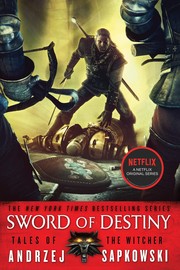
Sword of Destiny
2,256-word summary 10 min read 393 pages in the book
- First published
- 1992
- Publisher
- Orbit
- Pages
- 393
- ISBN
- 9780316389709
- Original title
- Miecz przeznaczenia
- Series
- The Witcher (#2)
Reading options
What's inside (8 sections)
I picked up Sword of Destiny the week after finishing The Last Wish, mostly because the ending of that book felt unfinished. Geralt had claimed a child by the Law of Surprise and then walked away from her. I wanted to know when the bill came due. This book is the answer. It is the second collection in Andrzej Sapkowski's Witcher series, published in Polish in 1992 as Miecz przeznaczenia by superNOWA, and translated into English by David French for Gollancz and Orbit in 2015. The Orbit US paperback runs 393 pages. Six stories, arranged in order, carry Geralt from a dragon hunt to the moment Ciri finally stands in front of him. Nothing here works without The Last Wish behind it, and nothing after it, starting with Blood of Elves, works without this.
What struck me first is how much sadder this collection is than the previous one. The Last Wish had jokes about pay and princesses with curses. This one keeps circling the same question: what do you owe people you never asked to be tied to. Geralt spends the whole book insisting he wants no part of destiny, while every story tightens the knot. By the last page I understood the title. The sword has two edges, and Geralt gets cut whichever way he swings.
The Bounds of Reason: Hunting a Golden Dragon
The opening story throws Geralt into a dragon hunt, and it is the most fun thing in the book. Word has spread of a dragon in the area, and every armed hopeful in the district shows up: knights hungry for glory, a pious fanatic named Eyck of Denesle who sees the beast as evil incarnate, mercenaries, and a mage named Dorregaray who would rather study the creature than see it killed. Geralt signs on with his usual sour attitude about the fee. Dandelion tags along, as always, half for the ballad and half because he cannot stand to miss a spectacle.
The surprise of the party is Borch Three Jackdaws, a cheerful, well-spoken man traveling with two Zerrikanian warrior women, Tea and Vea, who guard him with total devotion. Borch hires Geralt as much for company as for protection, and their fireside talks give the story its spine. Borch argues that dragons are thinking beings, not vermin, and that the hunt says more about the hunters than the hunted. Meanwhile Yennefer arrives with plans of her own for the dragon, and her reunion with Geralt is all sparks. They parted badly before this book, and being thrown together on a muddy hunt does not make either of them gentler.
The hunt itself goes wrong in the way these things always go wrong. There turns out to be more than one dragon involved, including a green that the hunters manage to bring down, and behind it all stands Villentretenmerth, a golden dragon, the rarest kind. When the moment comes, Geralt refuses to strike. He puts himself between the hunters and the dragon, which is either brave or stupid, and the story does not pretend it is good business. He earns no coin from it.
Then comes the reveal that reframes everything. Borch is Villentretenmerth himself, traveling in human shape to watch how humans behave around his kind. He thanks Geralt in his own fashion and leaves. Yennefer and Geralt reconcile partway, or at least stop wounding each other for a while, and the story closes with them together but not settled. I liked this one best of the six. It has action, a genuine moral question, and a monster who turns out to be the most civilized person present. If someone asked me for one story to test whether they like Sapkowski, I would hand them this.
A Shard of Ice: A Triangle in Aedd Gynvael
The second story is the coldest in the book, in every sense. Geralt follows Yennefer to the town of Aedd Gynvael and finds her living with Istredd, a sorcerer and scholar. The two men circle each other for most of the story, polite the way cats are polite before a fight. Istredd is learned, settled, and everything Geralt is not. Geralt is a mutant swordsman who sleeps in ditches. Both of them love the same woman, and she seems in no hurry to simplify their lives.
Sapkowski is honest about how jealousy makes Geralt small. He broods. He picks quarrels. He takes a dirty monster-hunting job in the town midden, facing down a zeugl, a tentacled horror living in the refuse, partly because he needs the money and partly because killing something is easier than talking about his feelings. The zeugl fight is vivid and disgusting, one of the best creature scenes in the collection, and it feels like the book reminding you what Geralt is actually good at while his personal life falls apart.
The triangle resolves the way such things usually resolve in these books: badly for everyone. Geralt and Istredd agree to a duel at dawn, each planning to kill the other over a woman who never promised herself to either. Yennefer leaves town before it happens, declining to be the prize. Some readers find her cold here. I found her the only adult in the room. She refuses to watch two men bleed for her as though she were a trophy, and her departure forces Geralt to look at what he has become. He rides out of Aedd Gynvael alone, and the story leaves frost on everything. It is a strong piece of writing, though I admit the middle section, all sulking and arcane bickering, dragged for me on the first read.
Eternal Flame: A Doppler in Novigrad
After the ice, Novigrad is a relief. This is the comedy of the collection, or as close as Sapkowski gets to one. Dandelion's halfling friend, the merchant Dainty Biberveldt, appears to be behaving strangely, selling goods at absurd prices and giving money away. The explanation is that Dainty has been replaced by Dudu, a doppler, a shapeshifting creature who can copy the form of anyone he meets. Doppler panic follows. Novigrad is a city that burns nonhumans when it gets nervous, and the feared temple guard captain Chappelle is hunting the creature with professional enthusiasm.
Geralt is hired to find the doppler, with help from Vimme Vivaldi, a dwarven banker whose knowledge of the city's merchants proves more useful than any sword. The chase through Novigrad's markets and counting houses is entertaining, and Dandelion gets some of his best scenes, torn between loyalty to his friend and terror of being caught sheltering a monster. When Geralt finally corners Dudu, the creature turns out to be harmless, a gentle mimic who copies people out of a need to belong rather than any plan to harm.
The ending has a twist I did not see coming the first time. The feared Chappelle, the great hunter of dopplers, turns out to have his own secret of exactly the same kind, and Dudu ends up stepping into Chappelle's life and role. Geralt, who started the story expecting to kill a monster for pay, walks away having protected one instead. It is a neat mirror of the dragon story: once again the supposed monster behaves better than the humans. The story is lighter than the rest of the book, and I was grateful for it sitting exactly where it does, between the frozen misery of Aedd Gynvael and the ache of what follows.
A Little Sacrifice: The Mermaid of Bremervoord
The fourth story is the one I argued with most. Duke Agloval of Bremervoord loves the mermaid Sh'eenaz, who lives in the sea below his castle. She will not come ashore unless he makes a sacrifice he cannot bring himself to make, and he wants Geralt to solve the problem the witcher way, with a blade or a bargain that amounts to the same thing. Geralt refuses. He will not murder a thinking being to fix a prince's love life, and he tells Agloval so in terms that end the contract before it starts.
Running alongside this is Dandelion's romance with Essi Daven, a young poetess called Little Eye. Essi is talented, sharp, and clearly in love with the bard. Dandelion, who loves every woman in theory, fails this particular one in practice. He dithers. He performs affection instead of feeling it. Geralt watches his friend fumble the best thing that ever happened to him and says little, because there is nothing useful to say. Sapkowski tags a short note onto the story about what became of Essi afterward, and it stings far more than anything in the mermaid plot.
My complaint is that the mermaid half of the story meanders. There are long scenes of seaside negotiation and local color that feel like the author enjoying his setting while the point waits offstage. The point, when it lands, is worth it: love that demands someone carve pieces off themselves is not love but appetite, and Geralt's refusal is one of his finest moments. But I skimmed patches of Bremervoord to get there. Readers who love Sapkowski's worldbuilding will enjoy the texture. Readers waiting for the Ciri thread to resume will fidget. Both groups get paid off in the final two stories, which is where the book stops being a collection and starts being a single story told in two parts.
The Sword of Destiny: Brokilon and the Child of Surprise
This is the story the book is named for, and it carries the weight. Geralt takes work that leads him into Brokilon, the great forest ruled by the dryads, who kill or convert intruders as a matter of policy. The dryads are led by Eithne, called the Eyes of Brokilon, an ancient and formidable woman who does not negotiate. With her is Braenn, a girl taken by the forest young and raised as a dryad. Into this closed world comes Ciri, a small girl fleeing through the woods, the granddaughter of Queen Calanthe of Cintra, and the child Geralt claimed years ago by the Law of Surprise without ever laying eyes on her.
The heart of the story is Geralt trying to refuse what he is owed. He does not want the girl. He tells himself, and Eithne, that a witcher cannot raise a child, that destiny is a story people tell to excuse their choices. Eithne tests Ciri with Brokilon Water, the forest's draught that kills or transforms outsiders. Ciri drinks and survives, which marks her as one of the forest's own by its law. And Geralt, cornered by custom and by the girl herself, formally claims her as his surprise child. Then, in the choice that defines him for the rest of the series, he leaves her behind. He walks out of Brokilon alone, telling himself he has broken the chain.
Eithne warns him, in her own way, that this blade cuts both ways, and she is right. The whole story hums with dramatic irony, because the reader knows what Geralt will not admit: running from the girl is itself an answer to destiny, and not an escape from it. Ciri's scenes are excellent. She is fierce, frightened, and funny, already showing the stubbornness that will carry her through the saga. My only criticism is that Geralt's refusal can feel like stalling, a whole story built to postpone the reunion. But the postponement is the point. A Geralt who simply collected his promised child would be a different man, and a duller one.
Something More: Fire, a Merchant, and the Reunion
The closing story finally pays everything off. Geralt, traveling alone, falls in with Yurga, a merchant leading a wagon train through dangerous country during the fires of Belleteyn. When monsters attack the caravan, Geralt fights though he is already hurt, and takes wounds that should kill him. Yurga, an ordinary decent man, refuses to abandon the witcher. He loads Geralt onto his wagon and nurses him along the road, and the slow journey of the wounded killer and the stubborn merchant is some of the warmest writing in the book. Yurga expects nothing. He simply will not leave a man to die in a ditch.
Through war and chance, Ciri has come into Yurga's care. She is traveling with his household, displaced and grieving, a princess turned refugee. When Geralt, half dead, finally sees her, the recognition between them needs no explanation. She knows him though they have never truly met, and he knows her. Sapkowski frames it as something more than destiny, more than law or promise or magic. It is choice, arriving at last from both sides. The girl who was claimed by custom chooses him. The man who ran from custom chooses her.
I finished the book late at night and sat with the ending for a while. Taken as a whole, the collection earns its place as the hinge of the series. The first three stories show Geralt the professional, competent and lonely. The last three dismantle his loneliness piece by piece. My fair criticisms stand: the middle sags in places, Agloval's courtship goes on too long, and readers coming for monster fights will find long stretches of talk. But the talk is the story. A witcher who only kills monsters is a tradesman. A witcher who claims a child, refuses her, and then chooses her anyway is a father, and this is the book where Geralt becomes one. Read it second, as intended, and go straight on to Blood of Elves.
FAQ
Is Sword of Destiny book 2 of The Witcher?
Yes. It is the 1992 Miecz przeznaczenia collection, overall book 2 of The Witcher, between The Last Wish (book 1) and Blood of Elves (book 3). Read it second.
Do I need to read The Last Wish before Sword of Destiny?
You should. It continues Geralt and Yennefer from The Last Wish and ends with Ciri joining Geralt, which Blood of Elves assumes from the first page.
Is Sword of Destiny a novel or short stories?
It is six linked stories, not a novel: a dragon hunt, a jealous winter, a doppler case, a mermaid contract, the Brokilon meeting with Ciri, and the Yurga reunion.
Similar books
More from The Witcher first, then related titles.
The Last Wish
Geralt hunts strigas genies and golden dragons while Law of Surprise binds Ciri.
2,598-word summary · 12 min read
Blood of Elves
Geralt shelters Ciri at Kaer Morhen while Triss and Yennefer train her wild Source talent as Rience hunts her and Northern kings and Nilfgaard plot open war…
3,394-word summary · 15 min read
The Time of Contempt
Geralt and Yennefer shelter Ciri as mages split and war breaks over the Thanedd coup.
2,355-word summary · 10 min read
Baptism of Fire
Wounded Geralt crosses war country with odd allies to find Ciri after the Thanedd coup.
2,076-word summary · 9 min read
The Tower of the Swallow
Ciri flees as a bandit while Geralt gathers allies to find her.
2,580-word summary · 11 min read

The Bane Chronicles
Eleven stories across five centuries follow Magnus Bane from a ban in Peru to his first date with Alec in this illustrated Shadowhunter companion.
2,470-word summary · 11 min read
The Tales of Beedle the Bard
Five wizard fairy tales from Hermione book, with Dumbledore notes, including the Three Brothers and the Hallows.
2,663-word summary · 12 min read
The Blinding Knife
Kip trains to join the Blackguard while the Prism hides his true identity, loses his colors, and fights a war against a rogue drafter who wants to birth a god.
2,049-word summary · 9 min read

Inkdeath
The final Inkworld novel sends Mo into the land of the dead, leaves Meggie choosing between two boys, and ends the Adderhead's immortality with three written…
2,062-word summary · 9 min read
Hounded
A two-thousand-year-old druid runs a bookshop in Arizona, hides from an Irish god who wants his sword back, and talks to his dog.
2,159-word summary · 10 min read
Dawnshard
Rysn sails toward forbidden Akinah to save her dying larkin and finds a Dawnshard guarded by the Sleepless.
3,229-word summary · 14 min read

The Field Guide
Three siblings move into a creepy Maine estate, anger a brownie, and find a forbidden guide to the fairy world in the first Spiderwick book.
2,033-word summary · 9 min read

Magic Burns
A magic flare hits Atlanta, and mercenary Kate Daniels must recover stolen maps, find a missing witch, and keep a teenage girl alive while Celtic gods try to…
2,021-word summary · 9 min read
Year One
A plague released in Scotland kills most of humanity, and the survivors discover magic, build a town, and wait for a child who may save them.
2,029-word summary · 9 min read
The Once and Future Witches
Three estranged sisters bring witchcraft back to an 1893 city where magic hides in nursery rhymes and the fight for the vote is also a fight for power.
2,132-word summary · 9 min read
Secrets of the Dragon Sanctuary
Kendra is replaced by a plant copy and held by the Society, while Seth steals a unicorn horn so the family can enter a dragon sanctuary.
2,590-word summary · 12 min read

Lioness Rampant
Alanna searches for the Dominion Jewel with the Shang Dragon, then returns to Tortall to face Duke Roger at Jonathan's coronation.
2,478-word summary · 11 min read
Blood Bonds
Oleander is chained in a Resistance camp, and her five Bonds have to find her before Silas Davies finishes what he started in this third Bonds that Tie book.
2,018-word summary · 9 min read
Witches Abroad
Three Lancre witches fly to Genua to stop a fairy godmother from forcing a servant girl into a storybook marriage, and find a city arranged around a happy…
2,651-word summary · 12 min read
The Time Paradox
When his mother falls ill with a fairy disease, Artemis Fowl travels back in time to find the extinct lemur that can cure her and confronts his younger self.
2,601-word summary · 12 min read

The Siren
Saved from a shipwreck in 1930, Kahlen becomes a siren who sings men to their deaths for the Ocean, until a boy in a college library makes her want a life she…
2,369-word summary · 11 min read
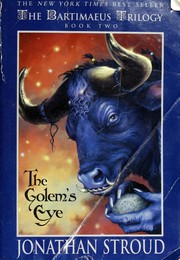
The Golem's Eye
Two years after The Amulet of Samarkand, Nathaniel is a rising bureaucrat, Bartimaeus is his unwilling servant again, and something made of clay is tearing…
2,299-word summary · 10 min read
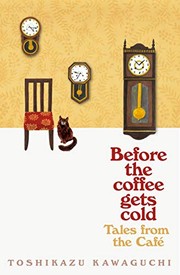
Tales from the Café
Four more visitors to a Tokyo café travel through time under strict rules, each hoping to say the thing they could not say before.
2,242-word summary · 10 min read
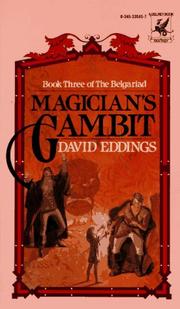
Magician's Gambit
Garion and his companions cross haunted Maragor and the caves beneath Rak Cthol to recover the Orb of Aldur.
2,391-word summary · 11 min read
Homeland
Drizzt Do'Urden is born into the cruel drow city of Menzoberranzan, where his father teaches him to fight and to doubt everything his family believes.
2,303-word summary · 10 min read
Enchanters' End Game
Garion marches toward Torak while Ce'Nedra leads the West's army in the final Belgariad volume, where prophecy and war meet.
2,557-word summary · 11 min read
Nettle & Bone
Marra, a princess in a convent, leaves to save her abused sister, but first she must finish three impossible tasks: a bone dog, a nettle cloak, moonlight in a…
2,061-word summary · 9 min read
Grip of the Shadow Plague
A plague turns Fablehaven's creatures of light into shadows while Kendra hunts an artifact in Arizona and Seth races to find the cause.
2,131-word summary · 9 min read

The Rose & the Dagger
Shahrzad is pulled from her Caliph husband and left in a desert camp of rebels, needing to break his curse and end a war before it ends her.
2,520-word summary · 11 min read
The Queen of the Tearling
Nineteen-year-old Kelsea leaves the woods to take her throne, ends a shipment of human captives, and draws the Red Queen's revenge.
2,357-word summary · 10 min read