
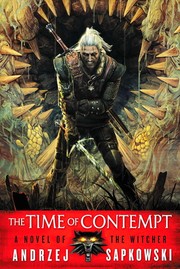
The Time of Contempt
2,355-word summary 10 min read 368 pages in the book
- First published
- 1995
- Publisher
- Orbit
- Pages
- 368
- ISBN
- 9780316452762
- Original title
- Czas pogardy
- Series
- The Witcher (#4)
Reading options
What's inside (7 sections)
I came to The Time of Contempt right after Blood of Elves, and the shift hit me on the first night. The earlier book had felt like winter quarters, all training yards and temple lessons. This one feels like a door kicked open. It is the second novel in the Witcher saga proper, fourth in reading order if you count the two story collections, first published in Polish in 1995 as Czas pogardy and available in English from Orbit in the Danusia Stok translation. My paperback runs 368 pages, and the last hundred move fast enough that I missed my stop reading them. Ciri trains with Yennefer, Geralt hunts a rogue mage, kings and sorceresses scheme toward war, and then a single night on Thanedd Island breaks everything apart.
The setup needs a quick recap, because Sapkowski assumes you know the players. Cintra has fallen to Nilfgaard. Ciri, heir to Cintra blood and carrier of the Elder Blood gift, is being sheltered and schooled by Yennefer after her winter with Geralt and Triss. Geralt is on the trail of Rience, the fire mage who tortured Dandelion and keeps hunting Ciri for unseen masters. The North simmers. Emhyr var Emreis rebuilds Nilfgaard roads and fleets. Northern kings meet in corners with spies. The Brotherhood of Sorcerers calls a conclave on Thanedd Island, at the school of Aretuza, to settle loyalty before war forces the choice. Everyone agrees Ciri matters. No one agrees what to do with a fourteen year old girl who screams prophecy in her sleep.
What surprised me is how much of the book is talk before the break. Councils, letters, dinners, lessons, spy reports. Then Thanedd happens, Geralt takes a wound that nearly kills him, Ciri runs through an unstable portal into desert, and the rest of the novel is scattered flight. I liked that shape more than I expected. It made the war feel earned rather than staged. But readers who want steady monster contracts should know this is not that book. This is mages, kings, and children caught between them.
Ciri with Yennefer and Geralt on the trail
The early chapters split between two kinds of schooling. Ciri lives with Yennefer near Ellander and later on the road to Thanedd, learning control of the Power. Lessons are strict and tender by turns. Yennefer wakes her before dawn, corrects her posture, drills Elder Speech verbs, teaches her to draw from water and earth with respect and to let go before the force burns her. Ciri hates the repetition, loves the praise when it comes, and tests Yennefer the way teenagers test any mother figure. Brush my hair. Tell me about Geralt. Tell me why I cannot see him. Yennefer answers some questions and deflects others, and Sapkowski writes their bond in small touches. Shared meals. Mended clothes. A look held too long when Ciri has a nightmare about black knights and white frost.
Geralt, meanwhile, works the other end. With Dandelion complaining beside him and the lawyer detectives Codringher and Fenn feeding him names by letter, he traces Rience money and movements through towns, inns, and back rooms. The poet is good company here. He sings the wrong verses, flirts with the wrong wives, and refuses to give up Ciri location even when threatened. Codringher and Fenn are colder and funnier, two sharp minds in a dusty office who can read a tax stamp and find a spy. Their memos explain Nilfgaard gold, forged papers, and mage rivalries in plain words, which helps because the politics get thick. Geralt pays, rides, asks, fights when he must. He is trying to cut the hound loose from the hunters before the conclave meets.
I liked how Sapkowski keeps Geralt and Yennefer apart for most of this stretch and lets Ciri carry messages between them in her head. She writes unsent letters to Geralt. She repeats Yennefer sayings in his voice. When the three finally meet on the road to Thanedd, the reunion is awkward in a true way. Geralt and Yennefer love each other and irritate each other within minutes. Ciri watches them like a child watching parents after a separation, hopeful and braced. There is a night of talk, a shared watch, a brief sense that skill and love might hold the hunters off. It does not last, and knowing war is coming made those calm pages ache more on reread.
Kings, spies, and sorceresses before the storm
The middle of the book widens to the map, and this is where some readers stall. Dijkstra, the huge Redanian spymaster, trades threats and jokes with Philippa Eilhart, the sorceress who guides Redania policy from behind Vizimir throne. Francesca Findabair, the elven sorceress called Daisy of the Valleys, bargains for a future homeland in Dol Blathanna while young elves join the Scoia'tael bands in the woods. Keira Metz, Sabrina Glevissig, Fercart, Radcliffe, and other mages take sides in letters and dinners. Nilfgaard agents move gold. Scoia'tael arrows find convoys. Everyone prepares for a war they claim to dread.
Thanedd is meant to settle this. The Brotherhood calls mages to Garstang Palace above Aretuza for a formal conclave, with a banquet first and a vote after. Geralt is invited as Yennefer guest, which tells you how tense things are, since witchers are usually kept outside such doors. Ciri comes too, restless in a new dress, furious about being shown like a prize. Yennefer wants to present her as a student under protection. Dijkstra wants to seize Ciri for Redania. Philippa wants mage control of the girl and the coming vote. Vilgefortz of Roggeveen, hero of Sodden and rising power in the Brotherhood, smiles through it all and says little. Sapkowski stages the arrivals well. Boats, gowns, guards, hairdos, old insults revived over wine. You can smell the sea and the perfume and the fear.
My honest note is that these chapters demand patience. Names pile fast, and motives hide behind courtesy. One dinner covers three treaties, two betrayals, and a marriage plan for Ciri that treats her as a seal on a document. I kept a list of who served whom, and I still mixed up minor mages. The payoff is real if you stay with it, because every polite line at the banquet becomes a blade at the coup. But if you loved the short story snap of The Last Wish, this stretch will feel heavy. Read it slow, in daylight, with the map from Blood of Elves nearby. The talk is the fuse.
The coup on Thanedd Island
The coup itself is the best set piece Sapkowski had written to this point, and it earns the slow build. In the night after the banquet, Dijkstra moves first with Redanian soldiers, accusing Philippa allies and Nilfgaard sympathizers of treason and trying to take Ciri by force. Philippa answers with magic and backup of her own. Then Vilgefortz drops his mask and turns the hall into a slaughterhouse, backed by Nilfgaard agents, Scoia'tael helpers, and mages who had planned for this hour. Spells tear through stone. Portals open and snap shut. Terranova dies. Others fall through floors or vanish screaming. Geralt, unarmed among mages by custom, grabs what he can and fights to reach Ciri and Yennefer.
Geralt choice here defines him. He could run. Witchers are neutral by code, and both sides tell him to stand aside. He refuses, because Ciri is not a contract but his child by destiny. He cuts through hired swords to reach her, takes on mages with a blade in close rooms where spells need space, and finally faces Vilgefortz himself. The fight is short and terrible. Vilgefortz, who looks like a courtier, fights like something made for war, with speed and a staff that breaks guard. He shatters Geralt thigh and leaves him broken on the floor, blinded in one reckoning and barely breathing. I winced reading it. After three books of Geralt talking his way out or cutting clean, watching him lose so fully felt like the saga growing up.
Yennefer has her own brutal night. In the chaos she is accused of helping the other side, partly because she brought Geralt and Ciri into the hall and partly because old rivals see a chance. She fights hard, shields Ciri when she can, and is finally taken by force with other loyalists. Francesca choices cut deepest for me. She votes with cold math for elven survival, and that vote helps doom friends she dined with hours earlier. Dijkstra escapes by wit and luck, bleeding and swearing. Philippa escapes too, changed. The Brotherhood that ruled magic for centuries breaks in one night into hunted loyalists and crowned traitors. By dawn Thanedd, which looked like marble order, looks like a battlefield hospital.
Ciri through the portal into the Korath desert
Ciri flight is the heart of the book for me, and Sapkowski writes it with unusual care. Separated from Geralt and Yennefer in the Garstang chaos, chased by soldiers and mages who want her alive for different thrones, Ciri runs into Tor Lara, the ruined tower called the Gull, and throws herself through an unstable portal rather than be taken. She steps out over the Korath desert, a waste of sand and salt and white sun, with no food, no water, no horse, and a dress torn to rags. What follows is many pages with almost no dialogue, just heat, thirst, and will.
The desert sequence works because Sapkowski stays physical. Ciri learns to walk at night and hide by day. She sucks moisture from cloth at dawn. She follows birds that may mean water. She talks to herself to stay awake. Her shoes fail. Her feet bleed. She finds a dead soldier and takes his waterskin with shaking hands. She nearly gives herself to despair and then gets angry instead, which feels true for her age and pride. When she finds a wounded unicorn trapped in a ravine, the scene could have turned sweet and false. Instead it stays wary. The unicorn, later named Ihuarraquax, is a wild old being, hurt and distrustful. Ciri frees it, shares what little she has, and the two limp together without master or pet talk. I believed every step of it.
The unicorn matters for more than company. Through him Ciri touches the Power in a raw place, far from Yennefer rules, and it nearly kills her. She draws too deep, burns, refuses to pay the price the force asks, and then refuses help in a way that will shape her later. Readers argue about what exactly she gives up here. I read it as Ciri closing a door inside herself to survive the hour, trading easy magic for life. Whether that holds will matter in later books. For now the point is survival. She crosses the waste half dead, finds the unicorn herd at the edge, and is carried as far as living legs can take her before human hands grab her again. The desert does not make her wise. It makes her hard, and Sapkowski does not hide the cost.
The Rats and a war with no center
Ciri stumbles out of the desert into the hands of the Rats, and the tone turns feral. The Rats are a gang of young outlaws riding the border lands, robbing Nilfgaard tax trains and local lords with equal cheer. Giselher leads with cool head. Mistle is sharp and quick to touch. Kayleigh, Reef, Iskra, and Asse fill out the band with knives and jokes. They take Ciri at first as prey, then as stray, then as one of them when she proves she can ride, lie, and fight. They rename her Falka, after a bloody queen of legend, and she takes the name because Ciri of Cintra would get her sold to the highest throne.
Life with the Rats is fast, cruel, and warm by turns. They share food and coats. They teach Ciri to rob without hesitation. They drink, swear, couple, and mourn quickly when jobs go wrong. Ciri learns to use a sword on humans rather than straw sacks, and the first kill changes her face in a way Geralt training never did. Mistle closeness with Ciri is written directly, with affection and pressure mixed, and it will divide readers. I read it as two war orphans grabbing comfort where they can, with power tilted older. Sapkowski does not frame it as romance alone. He shows a child reshaped by a gang that loves her after its own fashion and uses her all the same.
Meanwhile Geralt lies broken far away, carried from Thanedd by Dandelion help and left to heal under dryad care in Brokilon, his leg a ruin that may never mend straight. Yennefer is prisoner, or worse, depending on which rumor you trust. Dijkstra licks wounds and plots. Philippa plots finer. Emhyr moves armies while the North argues about who betrayed whom first. The book ends scattered on purpose. No throne won. No family reunited. Ciri rides with outlaws under a false name. Geralt cannot walk. Yennefer cannot write. The Thanedd coup broke the old order, and Sapkowski leaves the pieces on the floor for the next book to sort.
That scattered close is fair to criticize if you want clean arcs. Threads dangle everywhere. Rience still lives. Vilgefortz still smiles. Cahir fate blurs. Francesca bargain sits unpaid. But I admired the nerve. Most middle fantasy books fake a win to close. Sapkowski lets the loss stand. Ciri alive in the wrong company is not victory. It is luck with teeth.
For series order, read this fourth after The Last Wish, Sword of Destiny, and Blood of Elves, and do not start here. The banquet needs the Kaer Morhen winter behind it to sting. Give the council chapters time, forgive the name pile, and push to Thanedd. The night battle, the desert walk with Ihuarraquax, and the hard turn into the Rats are worth the slow fuse. This is the book where the Witcher stops being Geralt jobs and becomes Ciri story, and the change holds through the saga after.
FAQ
Is The Time of Contempt book 4 of The Witcher?
Yes. It is the 1995 Czas pogardy second saga novel, fourth in reading order after The Last Wish, Sword of Destiny, and Blood of Elves.
Do I need to read Blood of Elves first?
You should. Ciri schooling with Yennefer and Geralt hunt for Rience continue straight from that book into the Thanedd meeting.
What happens to Ciri at the end?
She escapes Thanedd through a portal, crosses the Korath desert with the unicorn Ihuarraquax, and joins the outlaw Rats under the name Falka.
Similar books
More from The Witcher first, then related titles.
The Last Wish
Geralt hunts strigas genies and golden dragons while Law of Surprise binds Ciri.
2,598-word summary · 12 min read

Sword of Destiny
Geralt hunts a golden dragon, faces a doppler in Novigrad, and meets Ciri in Brokilon as old promises close around him.
2,256-word summary · 10 min read
Blood of Elves
Geralt shelters Ciri at Kaer Morhen while Triss and Yennefer train her wild Source talent as Rience hunts her and Northern kings and Nilfgaard plot open war…
3,394-word summary · 15 min read
Baptism of Fire
Wounded Geralt crosses war country with odd allies to find Ciri after the Thanedd coup.
2,076-word summary · 9 min read
The Tower of the Swallow
Ciri flees as a bandit while Geralt gathers allies to find her.
2,580-word summary · 11 min read
Winter's Heart
Trapped in Far Madding without the Power, Rand baits his betrayers while Mat plots escape from Ebou Dar and Elayne fights for Caemlyn.
2,906-word summary · 13 min read
The Path of Daggers
Rand wields Callandor against Seanchan while Elayne and Egwene maneuver.
2,492-word summary · 11 min read
Knife of Dreams
Rand sets a Seanchan trap while Mat weds Tuon, Perrin storms Malden, Elayne takes Caemlyn, and Egwene defies Elaida.
2,988-word summary · 13 min read
A Memory of Light
Rand faces the Dark One at Shayol Ghul as all armies join the Last Battle.
2,165-word summary · 10 min read
Towers of Midnight
Perrin faces Whitecloak judgment and the wolf dream while Mat enters the Finns' tower for Moiraine.
2,099-word summary · 9 min read

The Blinding Knife
Kip trains to join the Blackguard while the Prism hides his true identity, loses his colors, and fights a war against a rogue drafter who wants to birth a god.
2,049-word summary · 9 min read
Magician's Gambit
Garion and his companions cross haunted Maragor and the caves beneath Rak Cthol to recover the Orb of Aldur.
2,391-word summary · 11 min read
Lirael
A Sightless Clayr girl and a prince afraid of Death join the Dog and Mogget to stop necromancers from waking the Destroyer Orannis at the Red Lake while old…
2,692-word summary · 12 min read
The Black Prism
Dying Prism Gavin Guile hides a secret son while war brews over color magic in the Seven Satrapies.
2,169-word summary · 10 min read
Gardens of the Moon
Empire, gods, and mages collide over Darujhistan as Bridgeburners bleed for Empress Laseen.
2,188-word summary · 10 min read
Crossroads of Twilight
Rand cleansed saidin and the whole world felt it. Book ten follows each faction as they react, stall, and choose sides.
2,264-word summary · 10 min read
The Dragon Republic
Rin survives the last war only to join the Dragon Warlord against the Empress, trading one brutal fight for another.
2,810-word summary · 12 min read
The Gathering Storm
Rand hardens toward breaking the world while Egwene holds the White Tower from a cell in the twelfth Wheel of Time book.
2,176-word summary · 10 min read
Rule of Wolves
A strained king, storm general, and spy witch face invasion, saints, and old shadows in finale.
2,372-word summary · 11 min read

Rhythm of War
Kaladin breaks, Navani holds Urithiru, and Shallan faces the honorspren as war turns inward.
3,095-word summary · 14 min read
Lord of Chaos
Rand offers amnesty to men who can channel while Egwene is raised Amyrlin in exile. Book six of The Wheel of Time builds toward rescue and reckoning at Dumai's…
2,255-word summary · 10 min read
A Crown of Swords
After Dumai's Wells, Rand holds Cairhien while Egwene besieges Tar Valon and Elayne and Nynaeve hunt relief in Ebou Dar. Book seven crowns kings and queens at…
2,828-word summary · 13 min read
The Fires of Heaven
Rand leads the Aiel to war over Cairhien while the White Tower splits, in book five of The Wheel of Time.
2,287-word summary · 10 min read
The Shadow Rising
Rand the Dragon heads for Rhuidean with the Aiel, while Perrin defends the Two Rivers and Elayne and Nynaeve hunt trouble in Tanchico.
3,194-word summary · 14 min read
The Poppy War
A war orphan wins a place at Sinegard academy, bonds with a fire god, and faces invasion.
2,977-word summary · 13 min read
The Great Hunt
Rand hunts the stolen Horn of Valere across the land while Egwene and Nynaeve face the Seanchan and the White Tower.
2,516-word summary · 11 min read
The Dragon Reborn
Rand flees to Tear to claim Callandor while Perrin, Mat, and Egwene are drawn after him to the fallen Stone.
2,644-word summary · 12 min read
Oathbringer
Dalinar chases unity in Urithiru while Kholinar falls and an old oath demands payment.
3,513-word summary · 16 min read
Inheritance
Eragon and Saphira march on Uru'baen to end Galbatorix, with hidden hearts and hard goodbyes.
3,160-word summary · 14 min read
Words of Radiance
Kaladin guards Dalinar, Shallan hunts Urithiru, and the Everstorm gathers.
2,754-word summary · 12 min read