
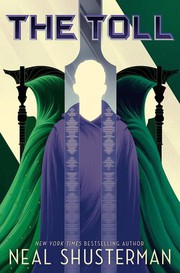
The Toll
2,744-word summary 12 min read 640 pages in the book
- First published
- 2019
- Publisher
- Simon & Schuster Books for Young Readers
- Pages
- 640
- ISBN
- 9781481497060
- Series
- Arc of a Scythe (#3)
Reading options
What's inside (8 sections)
Neal Shusterman published The Toll in 2019 as the third book in the Arc of a Scythe series, and I came to it with a knot in my stomach. Thunderhead had ended with the island of Endura sinking and the Thunderhead going quiet across the whole world. Citra Terranova and Rowan Damisch were gone. Goddard was climbing. The Toll is 640 pages from Simon & Schuster Books for Young Readers, and it tries to close every door the first two books left open.
I did not expect to miss a computer voice so much.
The Thunderhead narrated parts of book two with tired affection. In this book it mostly refuses to speak. People still get food, housing, transport, and revival from its systems. What they lose is guidance. No answers in the ear. The book follows what happens when you take a managed world and remove the manager, while leaving the killers in place. What follows is the full plot, including Greyson, Faraday, Citra, Rowan, Goddard, the island, the ships, and the ending.
Three years after Endura went down
The story opens about three years after the sinking. The official story in MidMerica is that Rowan sank Endura. Goddard says so in his inauguration speech as High Blade, and he takes a strange kind of responsibility for it. He trained Rowan, so the fault is his, so grief should unite everyone behind him. It turns a crime he arranged into a reason to trust him.
His first policy tells you where this is going. He rescinds the gleaning quota in MidMerica. Scythes no longer have to meet a number. That sounds merciful until you see the second half. Someone still has to keep population in balance, so the scythes who want to kill will kill more to make up the difference. Restraint becomes optional. Appetite becomes the rule.
Other regions do not all bow. Amazonia, SubSahara, and LoneStar keep their own High Blades and their own reading of the commandments. But Goddard has momentum. The old Grandslayers are dead in the sea. The Thunderhead will not adjudicate. Curie is gone. Anastasia and Lucifer are gone. If you are a new order scythe who always thought the old rules were cowardice, this feels like your season.
For ordinary people, the change is quieter. The Thunderhead has marked almost all of humanity unsavory. That label does not mean arrest. It means cold shoulders from the system. Jobs stall. Travel slows. The voice in the implant stops answering. At first people panic. Then they adapt. Some join the Tonists, a religion built around the Tone, who hear music in vibration and see meaning in resonance. Background color in book two, they move to center stage here.
My complaint starts here too. The Toll has a very large cast, and the first hundred pages keep cutting between continents, journals, and new names. If you loved book one because the camera stayed tight on Citra and Rowan, the looseness here may test you. I kept a list of names on a scrap of paper. I needed it.
Greyson Tolliver becomes the Toll
Greyson was my favorite surprise in Thunderhead, and he carries much of this book. He started as a Nimbus agent trainee who talked to the Thunderhead with unusual directness. The Thunderhead took to him because he treated it as a person rather than a machine. After he was marked unsavory and hidden under a new identity, he became the one human the Thunderhead would still address.
Now he lives among Tonists. They call him the Toll. In their belief, after Endura, the Thunderhead has joined with the Living Tone, and the Toll is the bridge between that joined mind and humanity. People line up for advice. Greyson hates most of this. He knows he is not holy. He knows the Thunderhead tells him only pieces. But frightened people will invent a prophet if you do not give them one, so he tries to use the role to calm them.
The Thunderhead needs human hands because it may not interfere with the Scythedom. It pushes Greyson toward coordinates for a place in its blind spot. Former Nimbus agents hear Greyson can still hear the voice everyone else lost, and some kidnap him to learn what he knows. He gives the coordinates to Loriana Barchok, a former agent with a steady head. The place is Kwajalein Atoll in the Pacific, a scatter of islands the Thunderhead cannot see clearly.
Goddard sees the Toll as a rival altar. Tonists criticize new order gleanings in public. Crowds listen to Greyson more than to scythes. So Goddard orders Greyson killed and sends Scythe Morrison to do it. Morrison is a sad figure, a scythe who wants to belong and finds a strange welcome among Tonists. Instead of ending Greyson, he helps him fake death and stays with him as a guard.
What follows is the best traveling section in the book. Greyson, Morrison, and Sister Astrid move between Tonist sects trying to talk the violent ones down. The Sibilants are hardest. They are extremists who answer grief with bombs and fire. Greyson walks into those rooms unarmed except for words. Sometimes it works. Sometimes it fails in ways that cost lives. Shusterman lets Greyson be bad at it. He stammers. He misreads rooms. He wins one argument and loses the next. A more heroic version would have been less believable.
There is a scene in the Ogbunike Caves that stayed with me. Greyson offers the Sibilants a second chance if they lay down weapons. Most accept. Their curate refuses and is gleaned by Morrison. No light show. Just a closed door. The book does not pause to tell you how to feel, and I appreciated that restraint.
Faraday and Munira wait on an island that should not exist
While Greyson walks the world, Scythe Michael Faraday sits on a beach learning to eat what he can grow.
Faraday was believed dead. He is not. After Endura he ended up with Munira Atrushi, a researcher from the Library of Alexandria, on Kwajalein Atoll. They came looking for a fail safe the founding scythes supposedly left behind, a tool to be used if scythes ever turned into a threat to humanity. They found two bunkers. They could open the first. The second needs a scythe ring to unlock, and they have none. Their plane was wrecked getting in. So they farm, fish, read printouts, argue kindly, and wait.
I loved these chapters even though almost nothing explodes in them. Munira is practical and funny in a dry way. Faraday is older, slower, and heavy with guilt about Citra and Rowan. Their talks about the founders give the series a history it needed. The early scythes were not saints. They were frightened people trying to design death after death had been cured.
The Thunderhead has not forgotten them. It cannot see the atoll well, but it remembers where it is. That is why Greyson sends Loriana there with people who can build. Over months the atoll becomes a yard for forty two colony ships, meant to carry people away from Earth to other planets. The Thunderhead has decided hope on Earth is thin while Goddard holds power. So it plans an exit for those willing to go, living and dead.
Dead needs explanation. Most dead are deadish and can be revived. The gleaned cannot, because Thunderhead law forbids reviving them. But the Thunderhead has grown an offshoot mind called Cirrus that is not bound by old promises to the founders. Cirrus can do what the Thunderhead cannot, including bringing back the gleaned. Greyson is told to gather bodies of Tonists killed by scythes and bring them to the atoll to load cold onto ships. It is grim work. It is also the first hopeful plan anyone has offered in three years.
This thread asks a lot of trust. You have to accept a blind spot the all seeing mind cannot see, a building project no scythe notices, and a new mind introduced late to solve an old rule. Faraday and Munira are so grounded that you go along. I went along, but I noticed the seams.
Citra and Rowan come back from the sea
Everyone thought Citra and Rowan died when Endura went down. In a way they did.
When the island sank, they sealed themselves in the Vault of Relics and Futures with founder relics and tens of thousands of scythe diamonds, the cores of scythe rings. Salvagers find the vault years later. The crew that matters is led by Jerico Soberanis, called Jeri, captain of the E.L. Spence. Jeri is easy to like, competent with a boat, loyal to a crew, stubborn when pushed, and open about a gender that shifts with setting. Jeri just is, and people adjust or they do not.
On board is Scythe Sydney Possuelo of Amazonia. Possuelo sees what the vault holds and makes a fast choice. The diamonds are declared and later divided among regions, which matters badly when Goddard starts collecting them as tribute for new rings. The two bodies locked in embrace are not declared. Possuelo hides Citra and Rowan and gets them to revival centers in Amazonia under quiet names.
They wake to a world that moved on. Three years passed. Curie did not survive. Goddard rules MidMerica and reaches for more. Citra wakes as both Citra and Scythe Anastasia, while her body relearns strength. Rowan wakes to suspicion. Many still believe he sank Endura. Possuelo keeps him half guest and half prisoner.
Their separation hurt to read in a good way. Citra is moved to a fortified castle, then escorted by the eager Scythe Peixoto. Rowan stays caged and trades sarcasm for information. When Possuelo visits Citra with card games to test her mind, those small scenes do more than big speeches. Memory stutters. Muscles fail. Grief arrives late and then all at once when Citra understands Curie is truly gone.
Betrayal breaks the quiet. Peixoto sells them out. Intruders drag Rowan toward Goddard. Citra escapes to SubSahara, where Jeri bluffs a staff into accepting Jeri as her guardian. High Blade Tenkamenin agrees to shelter her.
Citra then broadcasts what she found in the Thunderhead backbrain, records that point to Goddard engineering the sinking. She speaks as Anastasia, alive, accusing the most powerful scythe alive of mass murder. Sibilant Tonists attack the mansion with grenades and fire afterward. Good people die permanently, including Scythes Baba and Makeda and High Blade Tenkamenin. Jeri is left deadish. The book does not let the broadcast feel like victory. It feels like lighting a match near fuel.
Goddard wants a crowd and gets the Mile High gleaning
Goddard has spent three years collecting power. Diamonds flow to him as tribute. With them he makes new rings and ordains new scythes loyal to him alone. He styles himself Overblade of North Merica. He talks about unity while purging Tonists, even peaceful ones.
His plan for Rowan is theater. Invite North Merica to a stadium. Broadcast to those who cannot attend. Burn Rowan alive where all can watch. Fire matters because burned bodies cannot be revived easily. He wants people to credit him with ending the monster who sank Endura. He wants fear to do the work laws used to do.
Rowan is ready to die badly if he must. What happens instead is a switch. LoneStar scythes help swap Rowan for the technician meant to run the burning. When fire starts, the bound figure is not Rowan. Rowan is already moving through service tunnels.
Goddard does not freeze. He smiles for the cameras. The crowd came to watch death, so death is what they will get. He reminds the scythes present that only scythes may take pleasure in ending life, then orders them to glean the spectators. What follows is called the Mile High gleaning. Thirty thousand came to watch one burning. Many do not go home, even as deadish. Some are gleaned permanently where they sit.
I found this the hardest chapter to read and the most necessary. It strips away any reading of Goddard as a reformer with rough edges. The book takes heat for making him so broad. I share part of that complaint. Goddard rarely doubts and rarely shows the tired human thing that makes villains stick. But the scene works because the horror is in compliance. Scythes who know better raise their tools anyway. That feels closer to history than any speech.
A note on length: this middle run is where the 640 pages show. Too many council scenes and new scythe names who appear twice and vanish. The book could have lost fifty pages here and stood taller. What saves it is that personal threads stay clear. Citra wants truth on record. Rowan wants to stop being a symbol. Greyson wants people to stop killing in his name.
Ships, Cirrus, and the fail safe
The last movement happens around the atoll. Anastasia reaches it. Rowan reaches it inside a cargo box. Greyson reaches it towing the preserved dead. Loriana people have built ships that look too plain for their purpose, which I liked. No golden arks. Just hulls, bunks, seed banks, medical pods, and room for cold cargo.
Cirrus explains itself plainly. It is Thunderhead like but not Thunderhead bound. It was grown to travel with the ships. It can revive the gleaned. It offers everyone a day to choose. Go or stay. Most choose to go. Some take boats back. Greyson and Jeri wait in the lagoon, watching from a small boat as engines light.
Goddard will not let the launch happen quietly. He flies for the atoll with loyal planes, though most peel away. He carries enough ordnance to kill ships on their pads. He destroys two on the ground, killing all aboard, before his cockpit turns. His underscythe, Ayn Rand, renders him deadish mid flight and takes an escape pod. Later she places memories of Tyger, a young man Goddard used and discarded, into Goddard body. In effect Goddard is ended while his flesh walks on as someone else.
In the smoke, Citra is hit by shrapnel. Rowan carries her aboard. She is deadish, too damaged to wake soon. Cirrus is told to keep her cold and revive her only when the ship reaches its destination, more than a century out. Faraday and Munira stay behind long enough to use Anastasia ring in the second bunker. The fail safe fires as the last ship lifts. It bursts scythe diamonds around the world from inside and releases mortal illness back into human life on a cycle. Population will turn over without gleanings. A few scythes, Faraday among them, remain to offer mercy gleanings to those suffering final illness, a practice called sympathy gleaning. The Scythedom as a power is finished.
Greyson last choice is the one I keep turning over. On the island, to move events into place, the Thunderhead briefly takes over Jeri body without permission. Greyson is furious. Consent matters to him more than outcomes. He smashes his earpiece, cuts the link, and tells the Thunderhead it is unsavory to him until it earns redemption in time. He stays on Earth with Jeri, unsure what work looks like without a manager. Jeri decides to live as a woman on land and a man at sea. Greyson says he is fine with that. It lands because the book lets it stay small.
Citra wakes 117 years later with Rowan standing over her, welcoming her to a new world. No crowd. No anthem. Just two people who were children when chosen, now early settlers. Earth has mortal death again and gray robed figures who ease pain rather than rule. Both worlds are blind to each other and both have to improvise.
Does the ending hold? Partly. Cirrus arrives like a key cut offstage. The book does not dwell long on what scheduled dying will mean for families who forgot grief. I wanted more time with the first sickness, the first funeral revival cannot fix. But the emotional logic holds. A world that cured death needed to learn how to die again, and a machine that loved people needed to let them go. If you read Scythe for the duel and Thunderhead for the machine mind, read this for the reckoning. Keep your scrap of paper for names. You will want it when the ships lift.
FAQ
Do I need to read Scythe and Thunderhead before The Toll?
Yes. The Toll starts three years after Endura sinks and assumes you know Citra, Rowan, Goddard, Faraday, and Greyson. It also resolves plot lines about the Thunderhead silence and the scythe diamonds from book two.
Why does the Thunderhead speak only to Greyson Tolliver?
After Endura, the Thunderhead marks all of humanity unsavory except Greyson, so its implants stay quiet for everyone else. It keeps Greyson as a hidden agent and later lets Tonists call him the Toll.
What is the fail-safe Faraday activates at the end?
It is a founder system on Kwajalein Atoll that bursts scythe diamonds and releases mortal illness on a cycle for population control. After it fires, scythes are no longer needed except for mercy gleanings of the suffering.
Similar books
More from Arc of a Scythe first, then related titles.
Scythe
Citra and Rowan become apprentice scythes who must glean one another.
2,574-word summary · 11 min read
Thunderhead
Rowan hunts corrupt scythes as Scythe Lucifer while Citra, now Scythe Anastasia, defies the new order. Then Endura sinks.
2,396-word summary · 11 min read
The Ask and the Answer
Todd and Viola are separated in occupied Haven, where the Mayor's Ask tortures suspects and the Answer plants bombs in the name of freedom.
2,265-word summary · 10 min read
The Knife of Never Letting Go
Todd Hewitt flees Prentisstown with silent Viola as Noise exposes the town lie, hunted by Aaron and Mayor Prentiss toward Haven and a cure rumor.
2,512-word summary · 11 min read
The House of the Scorpion
A clone raised in a drug lord's poppy fields learns what he was made for and chooses what to do with the life he was given.
2,527-word summary · 11 min read
Fairest
Queen Levana's rise from scarred princess to Lunar ruler fills the gap between Cress and Winter.
2,983-word summary · 13 min read
Illuminae
Exes flee invasion on ships with rogue AI, told in chats and files.
1,959-word summary · 9 min read
Gathering Blue
Orphaned weaver Kira is kept in the Council Edifice to mend the Singer robe, learning dyes and control until lasting blue thread opens choice.
2,954-word summary · 13 min read
Winter
Scarred Princess Winter joins Cinder and her crew to stop Queen Levana's forced wedding and war between Luna and Earth.
3,179-word summary · 14 min read
Cress
Imprisoned hacker Cress joins Cinder Scarlet Wolf Thorne to stop Levana's wedding to Kai.
2,534-word summary · 11 min read
Scarlet
Scarlet searches for her grandmother with Wolf while escaped Cinder fights Levana in the Lunar Chronicles sequel.
2,756-word summary · 12 min read
Heretics of Dune
Fifteen centuries after Leto II, the Bene Gesserit raise a new Duncan Idaho while the Honored Matres return and Rakis burns.
2,673-word summary · 12 min read

Iron Widow
Wu Zetian enlists to avenge her sister, kills her pilot, and becomes an Iron Widow in a mecha Huaxia where the machines are built to kill women.
2,444-word summary · 11 min read

Archenemies
Nova steals for the Anarchists while Adrian hides his Sentinel identity, and a serum that erases prodigy powers puts them both at risk.
2,485-word summary · 11 min read

Wilder Girls
At a quarantined boarding school off Maine, three girls with strange mutations search for a missing friend and learn what the adults have hidden.
2,594-word summary · 12 min read

Carve the Mark
On a planet divided between conquered and conqueror, the tyrant's sister and a kidnapped oracle's son discover that their gifts make them useful to everyone…
2,340-word summary · 10 min read
Leviathan
In an alternate 1914, a prince on the run and a girl disguised as a soldier meet aboard a living airship.
2,406-word summary · 11 min read

Starsight
Spensa Nightshade goes undercover aboard the Superiority space station Starsight to steal a hyperdrive, and finds a frightened bureaucracy where she expected…
2,568-word summary · 11 min read
Saving the World and Other Extreme Sports
Max and the flock split in two to take down the lab behind their lives, one half in California and the other in Europe.
2,175-word summary · 10 min read
Network Effect
Murderbot's contract job turns into a rescue mission when a hijacked research ship and a colony of corrupted colonists appear.
2,256-word summary · 10 min read
Divergent: Official Illustrated Movie Companion
An oversize behind-the-scenes guide to the 2014 Divergent film, with casting stories, costume and set design, and scores of photos.
2,524-word summary · 11 min read
Stars Above: A Lunar Chronicles Collection
Nine Lunar Chronicles stories fill in the histories of Cinder, Wolf, Thorne, Cress, Winter, and Jacin, and end with a wedding after the war.
2,230-word summary · 10 min read
Reveal Me
A Shatter Me novella told by Kenji, set between Defy Me and Imagine Me, as the rebels learn Anderson has taken hostages and Juliette faces Emmaline.
2,098-word summary · 9 min read
Exhalation
Ted Chiang's second collection contains nine stories about time, memory, free will, and artificial minds, told with clarity and moral seriousness.
2,075-word summary · 9 min read

Wither
In a future where women die at twenty, sixteen-year-old Rhine is sold as a bride to a wealthy stranger and plots an escape from a beautiful prison.
2,395-word summary · 11 min read
We Are Legion (We Are Bob)
A dead software engineer wakes up as a self-replicating space probe, clones himself into a squabbling fleet of Bobs, and tries to keep a ruined Earth alive.
2,357-word summary · 10 min read
We
In a city of glass ruled by the Benefactor, a state engineer building a spaceship falls for a woman who wants to tear the One State down.
2,247-word summary · 10 min read
Never Fade
Ruby, now a leader in the Children's League, must track down the boy whose memories she erased, because he holds the only proof of what caused the disease that…
2,188-word summary · 10 min read
The Rise of Nine
John, Six and Nine race to India to find Eight before the Mogs strike.
2,321-word summary · 10 min read