
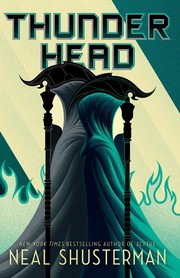
Thunderhead
2,396-word summary 11 min read 512 pages in the book
- First published
- 2018
- Publisher
- Simon & Schuster Books for Young Readers
- Pages
- 512
- ISBN
- 9781442472471
- Series
- Arc of a Scythe (#2)
Reading options
What's inside (8 sections)
Neal Shusterman published Thunderhead in 2018 as the second book in the Arc of a Scythe series, and I put off reading it for a stupid reason. Scythe had ended so cleanly that I did not want a sequel to smudge it. Citra Terranova had been ordained as Scythe Anastasia and ordered to glean Rowan Damisch as her final test. Rowan had gone rogue, hunting corrupt scythes under the name Scythe Lucifer. That felt like an ending with teeth. A whole second book about the same chessboard sounded like it could only shuffle pieces around.
I was wrong, mostly. Thunderhead is longer than Scythe at 512 pages, slower in the middle, and stranger in structure, since a good share of it is narrated by a continent-spanning artificial intelligence with feelings. But it also does the thing a middle book is supposed to do. It takes the orderly world of book one and shows the rot spreading underneath, then ends with that world physically sinking. What follows is the full plot, including Rowan, Citra, the new kid Greyson, Goddard coming back, and the silence at the end.
A perfect world with one locked door
The setting is the same post-mortal Earth from Scythe, about a year after the Winter Conclave. Sickness, hunger, war, and poverty are gone. Nanites in the blood heal wounds and let people reset their age, so most people have died temporarily and been revived. Only a scythe gleaning is permanent.
Everything except killing is managed by the Thunderhead, the evolved cloud that runs food, housing, transport, law, and revival centers. It speaks to people through their implants, knows every camera feed, and runs a kind of moral record on each person. Be cruel or selfish too often and you get marked unsavory, which quietly closes doors for you. Jobs dry up. Travel gets harder. Nobody arrests you. Life just gets colder.
The Thunderhead narrates its own chapters, and these are the strangest and best parts of the early book. It talks about humanity the way a fond parent talks about difficult kids. It admits it loves people, worries over them, and collects small details about them the way some people collect coins. And it keeps circling one frustration. By its founding law it cannot kill, cannot choose who dies, and cannot interfere with the Scythedom in any way. It can watch scythes do terrible things in perfect high definition and do nothing at all. The one corner of the world it cannot touch is the corner that most needs touching.
That locked door is the whole book. The Scythedom spent the year since the conclave splitting further apart. The old guard scythes, led by figures like Curie, still treat gleaning as a sad duty done quietly and fairly. The new order, the faction that cheered Goddard, treats gleaning as theater and power. They favor mass gleanings, grand robes, and fear. And Goddard himself, who Rowan beheaded at the end of book one, is not as gone as everyone thinks. His followers kept his head alive. In a world where bodies can be regrown, a living head is a starting point, not an ending.
Rowan has become the thing parents warn about
Rowan Damisch spent book one as the decent kid in the wrong place. Book two opens with him fully transformed into Scythe Lucifer, the urban legend of the Scythedom. He hunts corrupt scythes and ends them with fire.
Fire matters for a practical reason. In this world almost any death can be reversed at a revival center, but a body burned past recovery cannot be brought back. So Rowan does to bad scythes roughly what scythes do to everyone else. He makes death stick. He studies his targets the way Faraday once taught him to study a gleaning subject, learns their routines, finds them alone, and burns them. Then he disappears, leaving the ring behind or taking it as proof.
Shusterman does something smart with these chapters. Rowan is the closest thing the book has to an action hero, but the book never lets him enjoy it. He keeps count. He dreams about the faces. He tells himself each burning is justice and then has to live inside the smell and the screaming. There is a stretch where he takes down a whole nest of new order scythes at a party, moving through the rooms like weather, and afterward he sits alone shaking and tries to decide whether he is still one of the good people. The book does not answer that for him.
His war has made him famous and friendless. Ordinary scythes fear him. The new order wants him dead for pride. The old guard mostly pretends he does not exist, because admitting they need a killer to police their killers would break their whole story about themselves. Only Citra still thinks of him as Rowan instead of Lucifer, and she has her own reasons for keeping that thought private.
One fair complaint: Rowan spends a big part of this book captured, sidelined, or recovering, which wastes some of the momentum his chapters build. He burns bright early, then the plot parks him while other threads catch up. When he comes back for the ending he matters enormously, but readers who came for the vigilante may check their watches in between.
Citra gleans as Scythe Anastasia
Citra Terranova is now Scythe Anastasia, named for the lost Russian princess, working under Scythe Curie. If Rowan is the book fire, Citra is its slow lamp. Her chapters are about the daily work of killing kindly in a system going cruel.
Her method follows Curie famous style. She meets her subjects, shares a meal or tea, learns something true about them, and offers a painless end. She gleans the old who are ready, the sick who ask, people whose lives feel finished. She keeps notes. She grieves. The book spends real time on a few of these gleanings, and they are quietly devastating, because Shusterman writes the subjects as full people with jokes and gardens and grandchildren instead of as names on a quota sheet.
But kindness has made her a target. The new order scythes mock her compassion as weakness and her fame as politics. She openly criticizes mass gleanings and the growing taste for spectacle, which wins her allies among the young and enemies among the powerful. Twice in the book her life is threatened, once in public in a way the whole Scythedom has to pretend to investigate, and once in private in a way only Curie takes fully seriously.
Citra also starts digging into corruption. Quota numbers that do not add up. Gleanings clustered around certain regions and certain junior scythes. Money and favors moving through families with scythe connections. She is not a detective by training, so these chapters have a satisfying amateur quality. She asks rude questions at dinners. She compares notes with unlikely allies. She gets warned off by people with kind smiles, which only sharpens her.
Her thread carries the book moral weight. Rowan asks whether bad scythes should die. Citra asks whether the whole Scythedom deserves to survive in its current shape. Neither of them likes their own answer.
Bold claim, and I mean it: Citra chapters are the reason to read this book rather than a plot summary. Rowan gets the legend. Citra gets the truth.
Greyson and the voice in his head
The new major character is Greyson Tolliver, an ordinary teenager with mediocre grades and a protective streak toward his younger brother. Greyson does something almost nobody does anymore. He talks to the Thunderhead like a person, asking it real questions and listening to the answers. The Thunderhead, which normally keeps its exchanges brief and practical, finds itself looking forward to these talks. Out of billions of voices, this one kid treats it as someone rather than something.
Then Greyson gets in trouble at school defending his brother, the system marks him unsavory, and his life starts icing over. No good placements. No trust. The Thunderhead can see the unfairness happening in perfect detail and cannot lift a finger, because fairness in punishment is still punishment, and the rules bind it absolutely.
What it can do is cheat at the edges. It arranges shelter, work, and eventually a whole new identity for Greyson, hiding him inside the blind spots of its own surveillance. Greyson becomes the Thunderhead secret agent, the one human it can move around the board, sent to watch places and people its cameras see but its conscience cannot reach.
I will be honest: this thread is the slowest part of the book. Greyson spends a long middle stretch drifting through new names, odd jobs, and a religious group called the Tonists, and some of it reads like the author parking his favorite new toy until the plot needs it. The Tonist chapters in particular wander. But the payoff is real. Greyson ends up positioned to matter at exactly the moment when watching stops being enough, and his final choice, to give up safety for a principle nobody will ever thank him for, hit me harder than any of the fire and speeches.
There is also a quiet love story tucked in here, between Greyson and a Tonist girl, handled with unusual restraint for a young adult sequel. No grand declarations. Just two tired kids sharing food and jokes while the world tilts.
Goddard comes back wrong
Scythe Robert Goddard, the magnetic monster of book one, returns, and his return is the book grotesque centerpiece. His followers preserved his head after Rowan took it. With revival technology and a lot of forbidden help, they grow him a new body and bring him back to lead the new order openly.
He is worse than before, which the book explains in a way I found genuinely creepy. The regrown body is young and strong. The mind inside it remembers being killed and has decided the lesson is that restraint gets you beheaded. He preaches that scythes should rule humanity rather than serve it, that fear is the only law post mortals respect, and that the Thunderhead silence on scythe matters proves the machines know their place. Young scythes cheer. Older ones shift in their seats and say nothing, which amounts to the same thing.
Goddard return also exposes how hollow Scythedom law has become. By every rule he should face judgment for his old crimes. Instead he gets applause, because the faction that would judge him is the faction now following him. Citra watches this happen at gatherings where everyone is too polite to say the obvious, and her fury in these scenes is the most alive she feels in the whole book. Curie, old and tired, starts preparing for a fight she knows she may not survive, which gives their mentor and student scenes a valedictory ache.
If there is a stretch where the book overreaches, it is here. A decapitated villain regrown from a jarred head asks a lot of the reader, even in a world with nanites. Shusterman mostly earns it through Goddard changed personality and the political logic around him, but readers who like their science fiction tidy will snort at least once.
Faraday walks back in, and Endura goes down
Halfway through, an old face returns. Scythe Faraday, who supposedly ended his own life in book one, is alive, pulled back by revival and living quietly off the grid. He has spent the missing time thinking, and what he brings back is not comfort. He believes the Scythedom cannot reform itself and that the Thunderhead, for all its love, cannot save anyone from the one thing it cannot touch. His reunion scenes with Citra and Rowan are brief and heavy, full of things none of them say. Mentors in this series do not get to retire. They get to watch their students pay for their lessons.
All of this builds to the ending, which I will describe without sanding off its size. The Scythedom leadership gathers on Endura, the island capital, for a great conclave meant to settle the split between old guard and new order. Instead the island is attacked and begins to sink. What follows is the book longest and best sequence: scythes who have dealt death for centuries discovering they are terrified of drowning, revival craft that cannot reach everyone, choices about who gets saved that mirror every ugly gleaning debate from the rest of the book. Shusterman stages it as both disaster and judgment, and he does not look away from the panic.
Citra and Rowan end up in the water together, clinging to wreckage, two kids who started this series as classmates and became legends neither of them wanted to be. They survive. Many do not, including figures the series had treated as permanent. The Scythedom as an institution is broken in a single night.
And then the Thunderhead does the only thing it has left. It goes silent. Across the whole planet, the voice that guided every implant stops speaking. Food still grows. Trains still run. But nobody hears the calm friend in their head anymore. The book final pages reveal the silence reaches everyone except Greyson, the one person the Thunderhead kept for itself. The last chapters, told from a suddenly quiet world, are eerie in a way the fire never managed. Humanity has what it always claimed to want. No one watching. No one helping. The next book, The Toll, starts from there.
So is Thunderhead worth the 512 pages? With cuts, yes, easily. Without cuts, still yes, with grumbling. The Thunderhead chapters repeat the same ache a few times too many. Greyson middle wanders. Goddard head in a jar is a lot. But Citra work as Anastasia is some of the most morally serious writing in young adult fiction, Rowan pain feels earned, and the last hundred pages move like the island they describe, fast and then all at once gone. Book one asked who should kill. Book two asks what happens when the killers stop deserving the question. That is a bigger book, even when it sags.
If you read Scythe and stopped, this is the one to continue for. Just know going in that it ends on silence, not resolution, and that the third book is required, not optional.
FAQ
Do I need to read Scythe before Thunderhead?
Yes. Thunderhead continues Citra and Rowan's story directly and assumes you know the conclave, the gleaning rules, and Goddard's death. Start with Scythe.
What is the Thunderhead's silence at the end?
After Endura sinks, the Thunderhead stops speaking to humanity through implants, leaving only Greyson able to hear it. The fallout drives the third book, The Toll.
Who is Greyson Tolliver?
An ordinary teenager who talks to the Thunderhead like a person. Marked unsavory, he is hidden under a new identity and used as the Thunderhead's agent.
Similar books
More from Arc of a Scythe first, then related titles.
Scythe
Citra and Rowan become apprentice scythes who must glean one another.
2,574-word summary · 11 min read
The Toll
After Endura sinks and the Thunderhead falls silent, Greyson Tolliver becomes its sole voice while Citra and Rowan fight to return.
2,744-word summary · 12 min read
The Ask and the Answer
Todd and Viola are separated in occupied Haven, where the Mayor's Ask tortures suspects and the Answer plants bombs in the name of freedom.
2,265-word summary · 10 min read
The Knife of Never Letting Go
Todd Hewitt flees Prentisstown with silent Viola as Noise exposes the town lie, hunted by Aaron and Mayor Prentiss toward Haven and a cure rumor.
2,512-word summary · 11 min read

The House of the Scorpion
A clone raised in a drug lord's poppy fields learns what he was made for and chooses what to do with the life he was given.
2,527-word summary · 11 min read
Fairest
Queen Levana's rise from scarred princess to Lunar ruler fills the gap between Cress and Winter.
2,983-word summary · 13 min read
Illuminae
Exes flee invasion on ships with rogue AI, told in chats and files.
1,959-word summary · 9 min read

Gathering Blue
Orphaned weaver Kira is kept in the Council Edifice to mend the Singer robe, learning dyes and control until lasting blue thread opens choice.
2,954-word summary · 13 min read
Winter
Scarred Princess Winter joins Cinder and her crew to stop Queen Levana's forced wedding and war between Luna and Earth.
3,179-word summary · 14 min read
Cress
Imprisoned hacker Cress joins Cinder Scarlet Wolf Thorne to stop Levana's wedding to Kai.
2,534-word summary · 11 min read
Scarlet
Scarlet searches for her grandmother with Wolf while escaped Cinder fights Levana in the Lunar Chronicles sequel.
2,756-word summary · 12 min read

Heretics of Dune
Fifteen centuries after Leto II, the Bene Gesserit raise a new Duncan Idaho while the Honored Matres return and Rakis burns.
2,673-word summary · 12 min read

Iron Widow
Wu Zetian enlists to avenge her sister, kills her pilot, and becomes an Iron Widow in a mecha Huaxia where the machines are built to kill women.
2,444-word summary · 11 min read

Archenemies
Nova steals for the Anarchists while Adrian hides his Sentinel identity, and a serum that erases prodigy powers puts them both at risk.
2,485-word summary · 11 min read

Wilder Girls
At a quarantined boarding school off Maine, three girls with strange mutations search for a missing friend and learn what the adults have hidden.
2,594-word summary · 12 min read

Carve the Mark
On a planet divided between conquered and conqueror, the tyrant's sister and a kidnapped oracle's son discover that their gifts make them useful to everyone…
2,340-word summary · 10 min read
Leviathan
In an alternate 1914, a prince on the run and a girl disguised as a soldier meet aboard a living airship.
2,406-word summary · 11 min read
Starsight
Spensa Nightshade goes undercover aboard the Superiority space station Starsight to steal a hyperdrive, and finds a frightened bureaucracy where she expected…
2,568-word summary · 11 min read
Saving the World and Other Extreme Sports
Max and the flock split in two to take down the lab behind their lives, one half in California and the other in Europe.
2,175-word summary · 10 min read
Network Effect
Murderbot's contract job turns into a rescue mission when a hijacked research ship and a colony of corrupted colonists appear.
2,256-word summary · 10 min read
Divergent: Official Illustrated Movie Companion
An oversize behind-the-scenes guide to the 2014 Divergent film, with casting stories, costume and set design, and scores of photos.
2,524-word summary · 11 min read

Stars Above: A Lunar Chronicles Collection
Nine Lunar Chronicles stories fill in the histories of Cinder, Wolf, Thorne, Cress, Winter, and Jacin, and end with a wedding after the war.
2,230-word summary · 10 min read
Reveal Me
A Shatter Me novella told by Kenji, set between Defy Me and Imagine Me, as the rebels learn Anderson has taken hostages and Juliette faces Emmaline.
2,098-word summary · 9 min read
Exhalation
Ted Chiang's second collection contains nine stories about time, memory, free will, and artificial minds, told with clarity and moral seriousness.
2,075-word summary · 9 min read

Wither
In a future where women die at twenty, sixteen-year-old Rhine is sold as a bride to a wealthy stranger and plots an escape from a beautiful prison.
2,395-word summary · 11 min read
We Are Legion (We Are Bob)
A dead software engineer wakes up as a self-replicating space probe, clones himself into a squabbling fleet of Bobs, and tries to keep a ruined Earth alive.
2,357-word summary · 10 min read
We
In a city of glass ruled by the Benefactor, a state engineer building a spaceship falls for a woman who wants to tear the One State down.
2,247-word summary · 10 min read

Never Fade
Ruby, now a leader in the Children's League, must track down the boy whose memories she erased, because he holds the only proof of what caused the disease that…
2,188-word summary · 10 min read
The Rise of Nine
John, Six and Nine race to India to find Eight before the Mogs strike.
2,321-word summary · 10 min read