
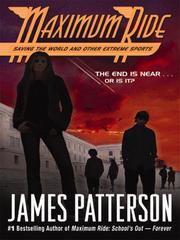
Saving the World and Other Extreme Sports
2,175-word summary 10 min read 416 pages in the book
- First published
- 2007
- Publisher
- Little, Brown and Company
- Pages
- 416
- ISBN
- 9780316005494
- Series
- Maximum Ride (#3)
Reading options
What's inside (9 sections)
I picked up Saving the World and Other Extreme Sports right after School's Out - Forever, when I still believed Patterson could not lose me. James Patterson published it on 29 May 2007 with Little, Brown and Company in the US and Headline in the UK. My copy is the 416 page hardcover, ISBN 9780316005494, third book of Maximum Ride and third of the loose trilogy Patterson calls the Fugitives.
The title is a joke, and a good one. There is no extreme sport in here. There are wingbeats, chases, a robot fight in Los Angeles and a brawl in a German basement, and the joke lands because Max treats all of it as a sport she is losing.
"Basically, I have two speeds ... Hostile or smart-aleck. Your choice." That is Max on page one, and it is also the whole method of the book. Patterson writes her as a fourteen-year-old who narrates her own life like a play-by-play, and the jokes come fast enough to hide the seams.
Between book two and book three the flock has lost its safety net. The FBI house in Virginia is gone, the attempt at a normal school ended in a gymnasium full of armed teachers, and the six of them plus a dog are scattered across hiding places trying not to be found by a corporation that has spent their entire lives studying them. Max has a chip in her arm put there by the lab, a father figure who keeps handing them half truths, and no settled answer to whether she is a person or a product. Patterson picks the book up in that mess and keeps the pedal down from the first page, which is either a fair way to resume a series or a way of avoiding the slower thinking that book two had room for.
The chip in Max's arm
The book opens with the flock on the run and Max carrying a piece of hardware the lab put in her arm. Getting it out means surgery, and surgery means Dr. Yvette Martinez, the woman who ran the lab that made them and who Max has been carrying two books of grief and suspicion about.
Fang does not want to go near Martinez. He wants to fly to some empty place and stop. So they hide in a cave for a night, and Fang makes his case: they have been hunted since they were infants, they have no childhood, they have no school, and no lab is going to give that back. He kisses her. Later, sedated for the operation, Max tells Fang she loves him, and when she wakes up she cannot move her left hand.
That confession is the part I keep thinking about, because it is a device and it reads like one. The Valium is doing the emotional labor. Patterson needs Max to say something she would never say sober, and instead of earning the moment he pharmacologically arranges it.
The hand matters more, though, because it is plot. When the hand stays paralyzed, Max has evidence for what comes next.
Everything was a simulation
While Max and Fang are off, the rest of the flock is grabbed. The old enemies are gone. The Erasers, the wolf-human hybrids that have hunted these kids since book one, have been replaced by machines: robotic Erasers with rotors, which the flock starts calling Flyboys. Then comes the lie that structures the whole middle.
Jeb Batchelder, the closest thing the flock has to a father, tells them it was all a simulation. They never went to New York. They never went to Washington. Total, the talking dog, never existed. And the proof appears to arrive when Max's hand starts working again, because if her memories are fake then the damage from the surgery is fake too.
They are about to be retired, which in the vocabulary of the books means executed, when the whole thing turns. Angel was not a traitor. She was running a double agent operation the entire time, and the escape comes off without her having to say a word about it. Ari, the last of the Erasers, helps them out and hands Total back like a returning library book.
The lie itself is good. What the book does with it afterward is not.
The flock breaks in two
Max decides to bring Ari along, partly out of pity and partly because he is the only living Eraser and therefore the only proof that what they have been fighting is a category and not a race. Fang says no and leaves, and that single disagreement splits the flock in half: Max, Nudge, Angel, Total and Ari against Fang, Iggy and Gazzy.
I have seen plenty of series do this, and it usually reads like a plot device, two teams so the book can cut between two sets of scenes. Here it works better than I expected, because the two halves are different kinds of stories. Max's group is a captivity story that keeps failing and changing shape. Fang's group is a road movie with a purpose. Splitting the flock gives Patterson two different tempos to alternate, and the contrast keeps a fast book from turning into one long chase.
It also hands him the material to dole out. Ari belongs with Max. Nudge and Total belong with Max. Iggy and Gazzy belong with Fang. And Fang gets his own scenes with people who are not Max, which is the only stretch where he is allowed to be a character instead of a mood.
Lendeheim
Max's team goes to Europe, because every trail leads to Itex, the corporation behind the School. The headquarters is in Lendeheim, Germany, and the European half of this book is the strangest and most fun part of it. There is a Director running the place, a floor where the failed experiments are kept, and a board that calls the whole operation Re-evolution.
The Director is the villain who claims to be Max's mother. She is also, apparently, not the only woman in the book who wants that job. The reveal that Jeb is Max's father and Dr. Martinez her mother has been set up across three books, and when Jeb visits her in the dungeon and says so, it lands with real weight.
In the dungeon Max, Nudge and Angel are chained up and then dragged out to the killing grounds, where the genetic mistakes are paraded. There are clones of Max, of Nudge, of Angel, which is a genuinely horrible image and the most frightening thing in the book. Max is made to fight an experiment called Omega. It is short, brutal, and mostly a way of showing that the Director runs the room.
California and the blog
Fang's group goes the other way. They travel the United States in the back of a van, get into a fight with Flyboys in Los Angeles that ends with the Hollywood sign ruined, and are picked up by a street gang called the Ghosts, led by Keez. That section is the most Patterson thing in the book: a bunch of teenage delinquents with a van, a plan, and absolutely no supervision.
The engine of the half is Fang's blog. He writes it, he is good at it, and it turns into a mass of teenagers who read about what is being done to them and decide to do something about it. By the end, kids are showing up at Itex facilities all over the world.
It is also the part where the book becomes sentimental in a way it has not been before. A protest movement organized through a teen blog is optimistic in a register that Maximum Ride is not usually. I did not hate it. I also did not fully believe it.
The Ghosts are a good invention. Keez is not a mentor. Keez knows how to get a van across the country without paying for gas, and Patterson gives the gang the same energy she gives Max. What they add to the California half is an absence of supervision, and these kids have been parented by laboratories and federal agents, so a street gang is closer to normal than either of them.
Then Fang, Iggy and Gazzy try to get to Germany by hiding on a plane, and the Flyboys find them, because of course they do.
The doors come down
Max fights Omega and survives. Angel does the thing she was born for and reaches into the heads of the other mutants and tells them to riot. The laboratory becomes a battle between the flock, the machines, and the experiments, which is a good ten pages of exactly the chaos a Patterson climax wants.
Ari reaches the end of his expiration date in the middle of it and dies in Max's arms. He was the Eraser who became their ally, and he gets very little room. The scene of him dying does not get the space it needs.
Outside, the people who read Fang's blog break down the doors of the Lendeheim building with a car. That is the moment the book earns its last thirty pages: a group of teenagers and a vehicle against a corporation.
Max takes the Director up into the air and keeps her there until she tells the truth about who Max's mother is, and the truth is Dr. Martinez. Then Max, Nudge and Angel get out, and at a computer cafe they find Fang and the others on a screen and all start talking at once. The epilogue has the whole flock back together with Martinez and Ella the cat, ready to fly off to the next thing.
What works and what does not
The voice is the reason to stay. Max thinks out loud, gets things wrong, tells jokes nobody else finds funny, and is at her best when she is frightened and pretending she is not. Total the dog still works as a pressure valve. Nudge still talks at a speed that requires attention. Angel at six, the most dangerous person in the room and the most useful, is a great character to hand scenes to.
The two-team structure is the structural idea that pays. The Europe half is the tense one, with captivity and a plan and a rescue. The California half is the sunny one, with a van and a gang and a blog. Alternating them means the reader never sits in one gear.
The plotting is where it frays. This is a serial book and it is built like one, which means it is stapled together from three threads that were not always the same length. The Director's plan changes shape every few chapters: first re-evolution into a master race, then killing off every recombinant life form, then halving the planet's population, then forcing the world's vampires into a killing spree. The motive is never pinned down, and it is hard to be scared of an enemy whose goal is still being decided.
The simulation lie is dropped too fast. It is set up as a gut punch, the hand heals as proof, and then it is a lie, and the book moves on without ever paying for the weeks when Max believed she had no family and no childhood.
The science is thin, as it has been throughout the series. Brain chips, engineered birds, robot Erasers, genetic master races and mass murder plots are all named and none of them are explained well enough to picture. Kids will not mind. Adults who like hard science fiction will sigh.
And the emotional beats keep arriving at speed. Max tells Fang she loves him under sedation. Ari dies in a fight between robots. A global student uprising happens in a few paragraphs. None of it is badly done, but none of it is given room to land, and the book keeps pulling you forward before you have finished feeling anything.
Content notes. Violence against children, including fights with robotic Erasers built to hunt them. Scientist characters killed by the protagonist, and a creature fight that Max ends with her bare hands. Drug use in the surgery scene, with sedation. No sexual content.
Who it is for. If you want a book that hands you a reason to keep reading, this one does it better than most, because the chapters are short and the sentences are short and the jokes land at the right time. If you want the plot to make sense on a second pass, pick something else. If you read the first two and want Max and Fang to have a conversation about love that is not interrupted by a robot, you will want to read the later books instead. I read this one for the flight, the voice, and the moment a car hits the doors of a German laboratory because a boy with a blog asked people to show up.
FAQ
When was Saving the World and Other Extreme Sports published?
Little, Brown and Company published it on 29 May 2007 in the US, with Headline in the UK. The hardcover runs 416 pages and the ISBN is 9780316005494.
Is this the third book in the Maximum Ride series?
Yes. It is book three, after The Angel Experiment and School's Out - Forever, and the third of the trilogy Patterson calls the Fugitives.
Does the title mean there are extreme sports in it?
Not really. It is Patterson's joke about the flock treating flight, chases and fights as a competitive sport. There is no surfing or skydiving contest.
Similar books
More from Maximum Ride first, then related titles.
The Angel Experiment
Six winged kids escape the lab that made them and fly cross country to rescue their youngest from wolf hybrids.
2,037-word summary · 9 min read
School's Out - Forever
The bird kids try normal school under FBI guard until hunters crash class and chase them to Itex in Florida.
2,584-word summary · 11 min read
Starsight
Spensa Nightshade goes undercover aboard the Superiority space station Starsight to steal a hyperdrive, and finds a frightened bureaucracy where she expected…
2,568-word summary · 11 min read

Archenemies
Nova steals for the Anarchists while Adrian hides his Sentinel identity, and a serum that erases prodigy powers puts them both at risk.
2,485-word summary · 11 min read

Wilder Girls
At a quarantined boarding school off Maine, three girls with strange mutations search for a missing friend and learn what the adults have hidden.
2,594-word summary · 12 min read
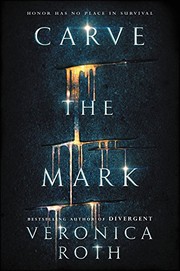
Carve the Mark
On a planet divided between conquered and conqueror, the tyrant's sister and a kidnapped oracle's son discover that their gifts make them useful to everyone…
2,340-word summary · 10 min read
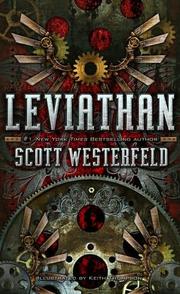
Leviathan
In an alternate 1914, a prince on the run and a girl disguised as a soldier meet aboard a living airship.
2,406-word summary · 11 min read

Heist Society
A teenage art thief gets expelled from boarding school, then has two weeks to steal five paintings back from a London museum and clear her father.
2,781-word summary · 12 min read
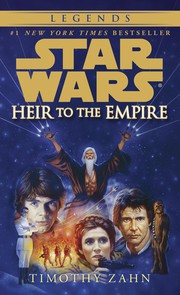
Heir to the Empire
Grand Admiral Thrawn returns from the Unknown Regions and outmaneuvers the New Republic while Luke, Leia, Han and smuggler Talon Karrde race him toward…
2,323-word summary · 10 min read
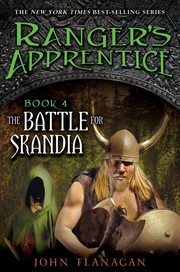
The Battle for Skandia
Will and Evanlyn are still hiding in the Skandian mountains when Halt and Horace arrive with word of a Temujai invasion that could roll on to Araluen next.
2,248-word summary · 10 min read
Never Fade
Ruby, now a leader in the Children's League, must track down the boy whose memories she erased, because he holds the only proof of what caused the disease that…
2,188-word summary · 10 min read

Stormbreaker
A fourteen-year-old boy loses his uncle, then his ordinary life, when MI6 sends him undercover to a Cornish computer plant where the giveaway machines hide a…
2,822-word summary · 13 min read
The Rise of Nine
John, Six and Nine race to India to find Eight before the Mogs strike.
2,321-word summary · 10 min read
Under the Never Sky
Exiled from her Pod, Aria crosses a storm-scarred wilderness with Outsider Perry to find family and the fabled Still Blue.
2,572-word summary · 11 min read
Cibola Burn
Settlers and a company fight over a new world while Holden tries to stop a war.
2,011-word summary · 9 min read
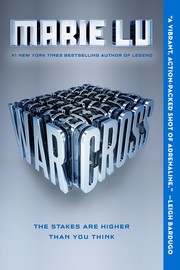
Warcross
Emika Chen glitches into the Warcross Tokyo championship, joins the Phoenix Riders to hunt the masked Zero, and must face Hideo Tanaka's plan to read minds for…
2,826-word summary · 13 min read

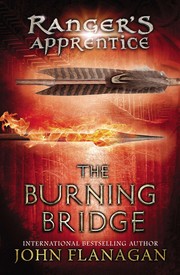
The Burning Bridge
Will and Horace burn Morgarath's secret bridge, meet Evanlyn, and face capture and a duel that decides a war.
2,412-word summary · 11 min read
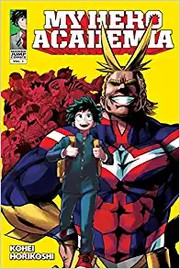
My Hero Academia, Vol. 1
Quirkless Izuku inherits All Might's power, trains ten months, and breaks bones to save Ochaco at the U.A. exam.
2,705-word summary · 12 min read
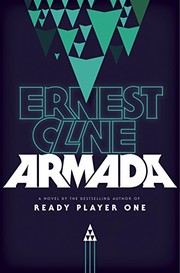
Armada
Gamer Zack learns Armada game trains real defense against alien Europans.
2,004-word summary · 9 min read
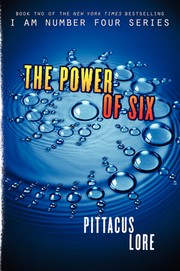
The Power of Six
John and Six run from the FBI and Mogs while Marina plots escape from a Spanish convent.
2,904-word summary · 13 min read
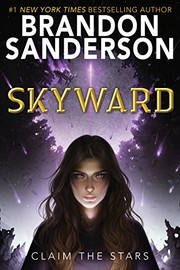
Skyward
Spensa dreams of flying for Detritus though her father was branded a coward, until a crashed ship, a talking AI, and flight school force out the truth.
2,865-word summary · 13 min read
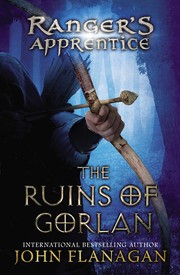
The Ruins of Gorlan
Small orphan Will becomes Ranger Halt's apprentice and helps hunt the Kalkara at Gorlan.
2,109-word summary · 9 min read
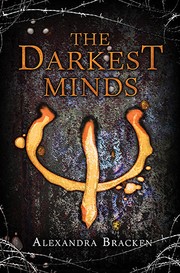
The Darkest Minds
A teen with mind powers escapes a government camp and joins three runaways in Bracken's 2012 dystopia, first in The Darkest Minds series.
2,038-word summary · 9 min read

The City of Ember
Two twelve-year-olds trade jobs and chase a chewed-up note to save their fading underground city before its lights fail.
2,998-word summary · 13 min read

The Blood of Olympus
Seven demigods stop Gaia waking while Reyna brings Athena statue.
2,196-word summary · 10 min read
I Am Number Four
Alien teen Four hides in Ohio and develops Legacies with Sam and Sarah.
2,335-word summary · 10 min read
The Death Cure
Thomas refuses WICKED's final test, remembers too much, and runs with the Gladers toward a last cure and a ship north.
2,955-word summary · 13 min read
The Hunger Games
Suzanne Collins's The Hunger Games explained: the reaping, Rue, the tracker jackers, the nightlock berry standoff, and what the arena is really for.
2,295-word summary · 10 min read
Mockingjay
Suzanne Collins's Mockingjay explained: Katniss as the symbol, District 13, Coin and Snow, and the speech that ruins victory for her.
2,474-word summary · 11 min read