
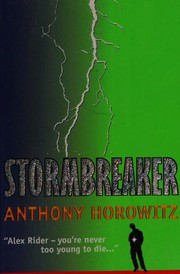
Stormbreaker
2,822-word summary 13 min read 240 pages in the book
- First published
- 2000
- Publisher
- Walker Books
- Pages
- 240
- ISBN
- 9780744559439
- Series
- Alex Rider (#1)
Reading options
What's inside (10 sections)
When the doorbell rings at three in the morning, it's never good news.
That is the first line of Stormbreaker, and the book keeps the promise. Anthony Horowitz published it with Walker Books on 4 September 2000. The first paperback edition ran 240 pages (ISBN 9780744559439), and it does not waste a chapter getting to the point. I came to it years after the 2006 film, expecting a children's spy story with the edges sanded off. What I found instead was leaner and meaner: a fourteen-year-old boy dropped into a real intelligence operation, run by adults who are happy to use him, hunted by a killer who is very good at his job.
A doorbell at three in the morning
Alex Rider is fourteen and lives in Chelsea, west London, with his uncle Ian and Jack Starbright, an American student who looks after the house. Alex's parents died in a plane crash, and after that Ian raised him. Ian works at a bank called Royal and General. He travels often. He seems, by every visible measure, a careful and unremarkable man.
Then the police arrive at three in the morning. There has been a crash, they say. Ian is dead. He was not wearing his seatbelt.
Alex does not believe a word of it, and the seatbelt is the reason. Ian was the kind of man who checked things twice, and he never drove without belting in. At the funeral, a black Rolls-Royce delivers Ian's boss, a grey man named Blunt, and two assistants; Alex notices the shape of a pistol under one of their jackets, which is a strange accessory for a banker. When Alex and Jack get home, the study that was always locked stands open and stripped bare, and a van marked "J.B. Stryker and Son, Auto Wreckers" accelerates away from the house.
So Alex does what a bored, bright kid with a taste for puzzles would do. He finds the wrecking yard and breaks in after dark. Ian's car is there, and it has not been in a collision at all: it is riddled with bullet holes. Then the crane lifts the BMW toward the crusher with Alex hiding inside it. He claws out of the window as the roof folds down on the seat where he had been sitting, and when a man blocks his escape, Alex kicks him hard enough to be surprised by his own nerve.
The bank that isn't a bank
Crawley, Ian's colleague, calls Alex into the office to discuss paperwork. Something in his voice sounds faintly like a threat, and Alex's answer is to climb out of Crawley's window, cross a ledge, grab a flagpole and swing into Ian's office. In the filing cabinet there is a folder labelled Stormbreaker. Before Alex can read more than a page, a man walks in and shoots him with something that is not a bullet. He drops.
He wakes the next day in a comfortable room, where Alan Blunt and a woman named Mrs Jones are waiting for him with dinner and the truth. Royal and General is a front. Ian Rider was an MI6 field officer embedded in a bank that exists to give spies day jobs. The folder title belongs to a computer. Herod Sayle, a British businessman born poor in Cairo, adopted by a British couple after he saved their lives, educated at a grand school beside the current Prime Minister, has built a machine called the Stormbreaker, and it is fast, friendly and cheap enough that he plans to give one to every secondary school in England. The Prime Minister will press a button at the Science Museum in London and bring the whole network online at once.
MI6 has two reasons to worry. Sayle does business with countries Britain does not like, and Ian was investigating him when he died. Meanwhile a boy named Felix Lester has won a competition: a week at Sayle's facility and the honour of being the first child to use a Stormbreaker. The plan is for Alex to take his place.
Alex refuses. Blunt does not argue. He simply explains the alternative: with Ian dead, the money, the house and Alex's guardian arrangement can all disappear into a court file, and Alex will be moved into care. The choice is not really a choice, which is exactly the point. Alex takes the mission.
Boot camp, code names and a Game Boy
Before the cover story there is the SAS, and Horowitz does not soften it. Alex is dealt into K-Unit under the code name Cub, alongside men called Wolf, Fox, Eagle and Snake. Wolf resents the boy from day one. In the Killing House, a booby-trapped building used for hostage drills, Wolf shoves Alex into a tripwire and a stun grenade goes off in his face. When the sergeant demands to know who caused it, Alex says nothing. The silence costs the squad a thirty-mile hike, and it buys Alex the sergeant's respect.
The parachute jump comes later. Wolf freezes at the open door, and Alex kicks him out of the plane, which is either the best or the worst act of friendship in the book. Wolf thanks him afterward. The manners of teenage soldiers are strange.
Then the gadgets, delivered by a cheerful wizard of a man named Smithers. A yo-yo that conceals a wire and grapple strong enough to hold Alex's weight. A tube of spot cream that will eat through steel in seconds. A Game Boy whose cartridges are not games at all: a scanner and fax, an X-ray device, a bug finder and a smoke grenade. The equipment is absurd, and the book is honest about how much fun that is.
Mrs Jones uses the handover to tell him the name of the man who shot Ian: Yassen Gregorovich. A contract killer, seen near Sayle's facility in Cornwall. If Alex so much as sees him, he is to call in, and MI6 will pull him out. Alex is fourteen. They send him in anyway.
Port Tallon and a very large jellyfish
Alex arrives in Cornwall as Felix Lester. Sayle's factory sits behind barbed wire and electric fencing, near a fishing village called Port Tallon. The first thing Alex sees inside the building is an aquarium containing a Portuguese man o' war, a jellyfish the size of a beach umbrella. Sayle, arriving behind him, says he caught it himself. Sayle is theatrical, charming and watchful, with a showman's way of filling a room. His assistant, Mr Grin, cannot speak, and his face is locked in a scarred grin that makes him look delighted about things that are not funny.
Within a minute of meeting Sayle, Alex trips over his own cover name. He recovers, barely. Then, worse, he is shown to his room and realises it is the room his uncle used to sleep in. On the ceiling above the bed, someone has pinned a hand-drawn map. Alex photographs it with the Game Boy and sends it to MI6, who cannot read it either.
He gets his first session with the Stormbreaker the next day, and here is the surprising part: the machine is good. Four hours pass like a dull afternoon in the best sense, and Alex understands why schools would want one. Just this once, the technology is exactly as advertised.
At night, he snoops. The X-ray cartridge shows a corridor busy at an hour when it should not be, and he overhears a shipment due at two in the morning. Alex stows away in a truck, and from the edge of an old slipway he watches a submarine unload dozens of metal crates onto the beach. A worker drops one and is shot where he stands. The man giving the orders moves like an athlete, and Alex knows, without needing to be told, that he is looking at Yassen Gregorovich.
The next afternoon, Nadia Vole, Sayle's assistant, suggests a walk to the village. The path leads him into an empty field, where two quad bikes roar out of nowhere, both fitted with flamethrowers. Alex gets one rider off his machine, takes the bike, wins a game of chicken with the second, and watches him go over the cliff. Then he walks the rest of the way into Port Tallon, because there is nowhere else to go.
The village library turns out to be the best lead he has found. The librarian remembers Ian, who spent hours with books about viruses and kept returning to one section. Alex checks the ceiling map again and sees it: Ian wrote library reference numbers along the route. Following them leads to a local history book about the flooded Dozmary mine, and a map showing tunnels that run underneath the fenced compound. Ian's last message to his nephew is a way in.
What was in the boxes
The mine is exactly as pleasant as it sounds. Alex climbs down a ladder into the dark, follows Ian's map through tunnels that get narrower and wetter, and reaches a pool of black water where his uncle left a wetsuit and a rope. He swims through, blind and freezing, and comes up inside the machine, crawling out through an air grille into a white, sterile laboratory. Metal crates stand around, empty. Whatever they carried has already been unpacked.
Then he watches workers loading small test tubes into the Stormbreakers at the end of the production line, and the whole thing clicks into place. Ian was not chasing a computer virus. The machines are being armed. Each Stormbreaker is a sealed container for a weaponised form of smallpox, and when the network goes live at the Science Museum, every computer in the giveaway will release its payload into a school. Sayle is not giving away computers. He is distributing a biological weapon to kill hundreds of thousands of children and their teachers on the same afternoon.
Alex is spotted, and the escape that follows is one of the book's better set pieces: a chase through corridors, a guard put down with a kick, a mad scramble back to his room, and Mr Grin waiting outside his door with a fist like a wrecking ball. Alex wakes handcuffed to a radiator. It is 1 April, the shipment is already airborne, and the launch is tonight.
Sayle comes to gloat, and his monologue is where we get the motive. He grew up an orphan in Cairo and arrived in Britain as a grateful boy, only to be treated as a foreigner, with the worst of the bullying led by a schoolmate who is now the Prime Minister. The plan is designed so that the Prime Minister himself will press the button and kill the country's children. The grievance is real; the revenge is monstrous, and the book is careful to separate the two.
Then Nadia Vole appears, apparently to rescue him. She claims she worked with Ian, unlocks the cuffs and leads him upstairs, then triggers a trapdoor and drops him into a tank beside the man o' war. The tank has an automatic current, and she sets the jellyfish drifting toward him before walking away. Alex remembers the spot cream in his back pocket. He smears it on the steel supports, and the tank tears itself apart. The water carries him out. The jellyfish lands on Nadia Vole's face, which is the kind of ending Horowitz gives henchmen. There is one hour until the launch.
One hour to the Science Museum
What follows is a chase with a clock attached. Alex takes a harpoon gun and a jeep, hitches a ride on a cargo plane using the yo-yo and the harpoon, and climbs in to find Mr Grin at the controls of an empty hold. He holds the gun on him and orders him to fly to London. Then he grabs the parachute, leaves the smoke grenade in the cockpit, and jumps. The plane veers away and goes down on empty dock land.
Alex is still thousands of feet up with minutes to spare. He steers for the museum, misjudges the roof, and crashes through the glass ceiling at something close to thirty miles an hour. The parachute snags, and he ends up dangling above three hundred invited guests, with a clear view of exactly what the book has been building toward: the Prime Minister on stage, a hand over the button.
Alex empties the pistol into the ignition device, wrecking it and putting a few rounds into Sayle while he is at it. The police, already warned by Mrs Jones, do not shoot the boy hanging from the ceiling. In the confusion Sayle slips away, but the countdown stops with a room full of confused, living children. The doomsday plot ends the way these plots end: with seconds on the clock and a teenager's nerve.
The man in the helicopter
The next day, Blunt and Mrs Jones debrief Alex and confirm the deal. The house stays his, Jack stays in the country, and the whole affair is buried, including the bit where a fourteen-year-old saved a large part of the country's school population. Mrs Jones mentions, almost warmly, that MI6 will know where to find him. That is not a joke. Nothing with these people is.
On the way home, the taxi driver is Herod Sayle, holding a gun. He drives Alex to the roof of a tower block, where a helicopter waits to carry him out of the country, and he intends to shoot the boy who spoiled his plan before he leaves. Then Sayle drops dead. Yassen Gregorovich, standing beside the helicopter, is holding the gun. He says he had instructions to kill Sayle, and none at all regarding Alex, which is presumably why Alex is still breathing. Alex promises to make him pay for Ian. Yassen laughs and gets in the helicopter. Alex is left on the roof with nothing to do but go home.
What has aged well, and what has not
Honest accounting. Stormbreaker is a formula book, and it knows it. Boy discovers his guardian was a spy, gets two weeks of training, receives the gadgets, goes undercover in the villain's base, uncovers the doomsday plan, escapes, and stops the countdown with seconds to spare. Anyone who has read a couple of Bond novels can see the joints. Horowitz has said he wrote it as an adult thriller that happened to have a fourteen-year-old hero, and the seams show in the adult logic: MI6's willingness to send a child into a bunker is treated as practical rather than monstrous, and the whole infiltration rests on one boy taking another boy's place with a cover story that should fall apart on day one.
The villains are thin. Sayle gets one scene of genuine hate, and the rest of his time is evil-lair theatre, complete with a jellyfish and a lecture. Mr Grin is a scarred grin and a knife. Nadia Vole exists to turn the plot one more time on her way to being killed by her employer's pet. Contemporary reviews said as much. Kirkus called the plot preposterous and predicted that readers would not care. Publishers Weekly thought the final mystery was a letdown, and Common Sense Media praised the action while knocking the dialogue. Those verdicts seem right to me, and they also miss why the book still works.
What keeps it alive is Alex. He is clever without being a prodigy, frightened at credible moments, and consistently more decent than the adults managing him. Horowitz writes action the way a screenwriter does, in short scenes that end on a hook, and the chapters with Yassen and the submarine are genuinely tense. The gadgets are absurd, and the book never pretends otherwise.
The technology dates it. A Game Boy cartridge that scans through walls now reads as period charm, and readers raised on smartphones will find the 2000 world amusing. The last act is also very quick after the slow build, and the epilogue raises a question it cannot yet answer: why a professional like Yassen leaves a witness alive on a rooftop. The sequels get years to work on that.
Stormbreaker came out in 2000 and started something much larger. Point Blanc followed in 2001, the series has sold in the millions, the film arrived in 2006 with Alex Pettyfer, and a television series brought the character to a new generation. The book picked up young reader awards across the United States in the years after publication, and it is easy to see why teenagers kept pressing it on each other. Grab the first book and you are holding a door that opens onto fourteen of them.
Hand it to a reader who claims not to like books. The first line is bait, and the rest of it lands.
FAQ
Is Stormbreaker the first Alex Rider book?
Yes. It was published on 4 September 2000 by Walker Books and is the first of fourteen Alex Rider novels; Point Blanc followed in 2001.
What is the Stormbreaker, and why is it dangerous?
It is Herod Sayle's cheap and fast home computer, promised free to every secondary school in England. Each machine secretly carries a weaponised smallpox virus that is released when the computers are switched on.
Who killed Alex Rider's uncle Ian?
Yassen Gregorovich, a contract killer, shot Ian while Ian was investigating Sayle's operation. Yassen later shoots Sayle on a rooftop and spares Alex, saying he had no instructions about him.
Similar books
More from Alex Rider first, then related titles.
American Assassin
Before he became the CIA's most feared counterterrorist, Mitch Rapp was a Syracuse student mourning his girlfriend, killed on Pan Am Flight 103. Then came…
2,114-word summary · 9 min read

Cross My Heart and Hope to Spy
Cammie Morgan returns to Gallagher Academy for a second year of spy training, only to fall for a boy from a rival spy school and hunt a mole in her own school.
2,567-word summary · 11 min read
The Chemist
A former government interrogator on the run takes one last job, then learns the case she was handed was built to pit her against him.
2,249-word summary · 10 min read

Starsight
Spensa Nightshade goes undercover aboard the Superiority space station Starsight to steal a hyperdrive, and finds a frightened bureaucracy where she expected…
2,568-word summary · 11 min read
Saving the World and Other Extreme Sports
Max and the flock split in two to take down the lab behind their lives, one half in California and the other in Europe.
2,175-word summary · 10 min read
School's Out - Forever
The bird kids try normal school under FBI guard until hunters crash class and chase them to Itex in Florida.
2,584-word summary · 11 min read
The Bourne Supremacy
David Webb is pulled back into Jason Bourne when an impostor kills in his name in Hong Kong and Marie is kidnapped. Ludlum's dense 1986 sequel stretches…
3,266-word summary · 15 min read
The Bourne Identity
An amnesiac pulled from the sea hunts his identity as Jason Bourne while assassins and the CIA close in.
2,994-word summary · 13 min read
The Thief
A boastful young thief is pulled from a prison to steal a legendary stone for the king's magus, and the story he tells about himself is not the whole story.
2,514-word summary · 11 min read

Inkdeath
The final Inkworld novel sends Mo into the land of the dead, leaves Meggie choosing between two boys, and ends the Adderhead's immortality with three written…
2,062-word summary · 9 min read

Vow of Thieves
Kazi and Jase return to Tor's Watch to find it occupied, and their marriage is tested by captivity, betrayal, and a war for the town of Hell's Mouth.
2,059-word summary · 9 min read
The Icebound Land
Captured and enslaved in Skandia, Will fights a drug that erases him while Halt and Horace cut a bloody road through Gallica to bring him home.
2,088-word summary · 9 min read

Ace of Spades
Two Black seniors at an elite academy are celebrated by day and hunted by an anonymous texter in this YA thriller about institutional racism.
2,066-word summary · 9 min read

Lioness Rampant
Alanna searches for the Dominion Jewel with the Shang Dragon, then returns to Tortall to face Duke Roger at Jonathan's coronation.
2,478-word summary · 11 min read

Archenemies
Nova steals for the Anarchists while Adrian hides his Sentinel identity, and a serum that erases prodigy powers puts them both at risk.
2,485-word summary · 11 min read
Dealing with Dragons
A princess who hates embroidery runs away to become the cook and librarian for a dragon, then has to outthink wizards, knights, and a plot against the dragon…
2,563-word summary · 11 min read

Carve the Mark
On a planet divided between conquered and conqueror, the tyrant's sister and a kidnapped oracle's son discover that their gifts make them useful to everyone…
2,340-word summary · 10 min read

The Golem's Eye
Two years after The Amulet of Samarkand, Nathaniel is a rising bureaucrat, Bartimaeus is his unwilling servant again, and something made of clay is tearing…
2,299-word summary · 10 min read
Persuader
Reacher goes undercover in a Maine crime family to find a missing DEA agent and the man he once failed to kill, and Lee Child keeps the whole thing tight,…
2,278-word summary · 10 min read
Leviathan
In an alternate 1914, a prince on the run and a girl disguised as a soldier meet aboard a living airship.
2,406-word summary · 11 min read

Heist Society
A teenage art thief gets expelled from boarding school, then has two weeks to steal five paintings back from a London museum and clear her father.
2,781-word summary · 12 min read

61 Hours
A bus crash strands Jack Reacher in a snowbound South Dakota town where a drug gang, a corrupt police force, and a single witness are on a collision course.
2,227-word summary · 10 min read
The Chalice of the Gods
Percy needs three recommendation letters from three gods to apply to college, so his first quest is recovering a stolen chalice from the god of old age.
2,106-word summary · 9 min read
The Ship of the Dead
Magnus and his crew sail to the edges of the Norse worlds to stop Loki from launching Naglfar, the ship of the dead.
2,426-word summary · 11 min read

The Rose & the Dagger
Shahrzad is pulled from her Caliph husband and left in a desert camp of rebels, needing to break his curse and end a war before it ends her.
2,520-word summary · 11 min read

The Queen of the Tearling
Nineteen-year-old Kelsea leaves the woods to take her throne, ends a shipment of human captives, and draws the Red Queen's revenge.
2,357-word summary · 10 min read
Heir to the Empire
Grand Admiral Thrawn returns from the Unknown Regions and outmaneuvers the New Republic while Luke, Leia, Han and smuggler Talon Karrde race him toward…
2,323-word summary · 10 min read

Bad Luck and Trouble
A deposit of $1,030 summons Jack Reacher back to his old army unit, which is being picked off one name at a time.
2,366-word summary · 11 min read

Worth Dying For
Reacher stops for one night in rural Nebraska and finds a family that runs the county, a missing girl and a shipment worth killing for.
2,021-word summary · 9 min read

We Hunt the Flame
In a fractured Arabia-inspired world, a disguised huntress and a prince-assassin race to find a magic-restoring book and confront an ancient evil.
2,195-word summary · 10 min read