

Heist Society
2,781-word summary 12 min read 287 pages in the book
- First published
- 2010
- Publisher
- Disney/Hyperion
- Pages
- 287
- ISBN
- 9781423116394
- Series
- Heist Society (#1)
Reading options
What's inside (8 sections)
The scene I keep coming back to is not the break-in. It is the meeting before the break-in, when Katarina Bishop stands in a rich boy's living room and tries to sell a room full of teenagers on a job that pays nothing. She has a map, a deadline, and a family name that opens certain doors and closes others. Everyone in the room is better at something than she is. She is the one who has to make the plan.
That is the charm of Ally Carter's 2010 novel, the first in the Heist Society series. The Disney/Hyperion hardcover runs 287 pages and moves like a caper film with the volume up: short chapters, hard cuts between cities, a hook at the end of nearly every scene. Kat is fifteen, a gifted thief, and desperate to be ordinary. The book is about how badly that goes.
The Porsche in the fountain
Colgan School is old, expensive, and proud of its waiting list. Kat talks her way in with a fabricated past as the daughter of a European businessman, keeps her grades up, and lasts three months. Then the headmaster's Porsche turns up on top of the fountain.
The evidence is neat. Security footage shows someone at the dorm doors, and Kat's ID card was used. She points out that a real thief would not leave her own card behind. The headmaster asks how she would have done it, and she nearly answers. That is the first sign of the book's central joke: Kat is too good at being a thief to pass as a normal girl.
She is expelled and picked up by a limo. The passenger is W. W. Hale the Fifth, sixteen, a billionaire, and the person who arranged the prank in the first place. Hale has a job for her. Kat says she is out of the family business. He asks whether she is out of the family. The line is cheap, and it works.
Five paintings have disappeared from Arturo Taccone, a man with money, lawyers, and a reputation for hurting people who cost him money. Kat's father, Bobby Bishop, is the only suspect. He has an alibi, but the alibi is another theft, which is not the kind of thing you can bring to the police. Taccone gives Kat two weeks to return the paintings. The alternative is her father's life.
So Kat does the only thing she knows how to do. She decides to steal the paintings back.
The name that stops conversation
The first stop is Paris, where Kat finds her father near a fountain and tries to talk him into facing Taccone. Bobby is calm in the way of a man who has been in worse rooms. He asks her to get Interpol off his trail instead. She does it by telling the French police that the agents harassed her, which is a small lie with a large effect. Then a car pulls up and takes her away.
Taccone is less a character than a pressure system. He is polite and entirely willing to describe what he will do to Kat's father. He gives her the two weeks and a stack of surveillance footage. The footage is the first real clue. It shows a small submarine moving through the moat around his estate, then a hole cut through the roof of the room where the paintings were kept.
The trail leads to Uncle Eddie, who holds court in a New York brownstone, makes soup, and treats the whole thing as a family embarrassment. Eddie is the closest thing the Bishops have to a patriarch. He also knows the name that will keep coming up: Visily Romani.
That name changes the temperature of the book. Romani is not a man. He is a Chelovek Pseudonima, an alias passed down through the great thieving families, and the name is used for a particular kind of job: returning art that was stolen during the Holocaust. The alias is a license and a warning at once. Whoever is using it has taken on a legacy, and Uncle Eddie wants no part of it. He tells Kat that any job done in Romani's name will not be undone by children. The line lands because the children go ahead anyway.
Kat's breakthrough comes over hot chocolate. Taccone never went to the police, which makes no sense for a man with a stolen collection and a team of lawyers. The reason is simple: the paintings were not his. He bought or stole them from someone else, and the someone else has a better claim. Kat goes to Warsaw to see Abiram Stein, an art expert who knew her mother. Stein identifies the paintings as looted work, passed through terrible hands in terrible times. He tells her that the Henley, a London museum, had been broken into as well, and that the police were looking for Visily Romani.
This is where the book finds its conscience. The heist is still a heist, and Kat is still a thief, but the object has changed. She is not recovering Taccone's property. She is taking stolen art away from a man who has no right to it. Carter does not pretend this makes Kat a hero. It makes her a thief with a better argument.
A crew of cousins, hackers, and one stranger
Kat needs a team, and Carter clearly enjoys assembling it. Gabrielle is her cousin, a distraction in human form, and the source of most of the book's best insults. Simon is a tech genius Kat tracks down at a mathematics conference in Las Vegas. Angus and Hamish Bagshaw are brothers who specialize in disguises, explosions, and showing up uninvited. Marcus is Hale's butler, older, unflappable, and useful in ways that only become clear later. Nick is the stranger, a pickpocket Kat meets on a Paris street after her father's arrest.
The crew meeting is the emotional center of the first half. Kat has no money to offer, so she offers fame. She tells them they will be the teenagers who robbed the Henley, and the room responds like she has announced a concert. Carter sells it. These kids have grown up in a world where the best thief is a kind of celebrity, and an impossible job is the only way to prove you belong.
Hale is the most complicated piece. He is rich enough to buy almost anything, including access, and he uses that access like a tool. He is also in love with Kat, which he expresses by getting her expelled, following her across Europe, and occasionally acting like a jealous boyfriend. His money makes the crew's travel and disguises possible, and his feelings make him careless.
Nick is the wild card. He is charming, quick, and obviously hiding something. Hale dislikes him on sight, and the book uses that friction for both comedy and tension. Hale says Nick is not part of the family. Nick answers that neither is Hale. The line is good because it is true. Hale has been inside the Bishop world for years, but he is still the rich boy who can leave whenever he wants. Nick has no such exit.
The crew is fun. Thin, too. Simon exists to hack things and drop equipment at the wrong moment. The Bagshaws exist to blow things up and say something Scottish. Gabrielle exists to look good and make Kat feel ordinary. Carter gives each of them one trait and one good scene, and the book moves too fast to need more. Readers who want a found family with interior lives should adjust expectations. This is a caper, and the crew is a set of tools with jokes.
Casing the Henley
The Henley is a fictional London museum with a real reputation problem. A recent break-in has made it famous, and the museum has responded with metal detectors, new cameras, and a security system that Simon describes as close to unhackable. The paintings Kat wants are not on display. Hale's theory is that Romani hid them behind other paintings, which is either brilliant or insane.
The recon scenes are the most enjoyable stretch. Kat and Hale pretend to be tourists and photograph the exterior cameras. Simon drops his hacking device in the lobby, and a guard hands it back because he thinks it is a handheld game. Gabrielle touches a painting to trigger the alarms and watch the security response. It shows the museum's defenses without a lecture.
Then Taccone's men grab Kat outside. He has photographs of her father, Uncle Eddie, Hale, and Gabrielle. He does not threaten her directly. He does not have to. The message is that he can reach anyone she loves, and the two-week clock is not a suggestion. Kat goes back to the crew with less time and more fear.
The plan they settle on is called Smokey the Bear, which is a joke about fire. The idea is to make the Henley believe the building is burning. The Bagshaws pose as furnace repairmen and trigger a plume of smoke. The museum evacuates. Wainwright, the director, explains that the fire system removes oxygen from the rooms rather than soaking the art. That detail is the opening the crew needs.
The execution is a chain of small, satisfying cons. Hale keeps Wainwright busy by pretending he wants to donate a painting. Nick lifts the director's keycard. Gabrielle leads a group of schoolchildren through the galleries, and two of the children are the Bagshaws. Marcus arrives in a wheelchair, pretending to be Hale's difficult uncle, and causes a scene. The wheelchair is full of tools and oxygen tanks. Simon monitors the cameras from a bathroom stall. Kat and Nick end up in the Romani room, lifting one painting to find another underneath.
The set piece works because Carter understands that a heist is a machine. Every part has a job, every job has a failure point, and the pleasure is watching the failures get covered. The fire alarm does more than distract. It changes the rules of the building. The oxygen removal matters for a second reason. It gives Kat and Nick a reason to need the wheelchair. The plan is clever in the way the best caper plans are clever: you can follow it, and you can see where it could go wrong.
The guards are gullible. Wainwright is vain and easy to distract. Simon's device is returned by a man who has never seen a video game. The museum's security, described as nearly impossible, opens like a door once the crew is inside. None of this ruined the book for me, but it does mean the tension is more theatrical than real. Nobody in Heist Society is ever in danger for long.
The fifth painting
The heist succeeds, mostly. Four of the five paintings are behind their decoys. The fifth is missing, and in its place is a small card with the name Visily Romani. Someone else was in the museum that night, and that someone was not working for Taccone.
Nick's secret comes out in the same sequence. He is the son of Amelia Bennett, the Interpol agent who has been chasing Bobby Bishop. He was planted in the crew as a mole. Kat figures it out while they are escaping through the vents. She asks why he helped her. He says he did it because he likes her. She tells him that is the wrong answer, and leaves him for the guards.
The ending is harsh for a character the book has spent chapters making charming, and it is the right one. Kat's father is in custody, her crew has been lied to, and she has just learned that the boy who flirted with her was reporting to the woman who arrested her father. The book does not ask her to forgive him. It lets her be angry, and it lets Nick be sorry without being redeemed.
The aftermath is a satisfying series of reversals. Kat tips off Interpol, Taccone walks into a trap at the address she gave him, and the paintings go back to the families they were taken from. Bobby is released because he cooperates. The museum's prized da Vinci is gone too, replaced by another Romani card, which means the mysterious thief used Kat's heist as cover for a job of his own. The book does not explain how. The point is that Kat has been playing in someone else's game.
The final chapter is Christmas at Uncle Eddie's. Abiram Stein arrives to thank Kat and to explain what she has actually done. The paintings were looted during the Holocaust, and now they can go home. Then a parcel arrives. Inside is Girl Praying to Saint Nicholas, the fifth painting, the one Kat could not find. The woman in the painting is Kat's great-great-grandmother. Kat's mother, Nadia, spent years trying to recover it before she died. The note is signed Visily Romani, and it says the da Vinci is safe.
That is a lot of revelation for the last few pages, and the book earns most of it. Kat's mother has been an absence throughout the story, a dead woman whose reputation hangs over the family. The painting gives her a motive and a history. It also gives Kat a choice. She thinks about going back to Colgan for about a paragraph, then decides she could be the next Visily Romani. The normal life she spent three months building is already behind her.
What holds up and what doesn't
The best thing about Heist Society is its pace. Carter writes short chapters that end on a question or a joke, and she trusts the reader to keep up with the jumps from New York to Paris to Vienna to Warsaw to London. The narration is dry, self-aware, and occasionally insecure in a way that feels true to fifteen.
The worst thing is how little the book is willing to slow down. Taccone is a threatening idea more than a person. He has one great scene in the car and then becomes a deadline with a face. The crew is a collection of talents and catchphrases. Even Hale, who gets the most page time, is defined mostly by his money and his crush. The book keeps Kat at the center, but it rarely shows her learning anything about her crew that is not useful to the plot.
There is also a gender problem. Kat and Gabrielle are the only women with substantial page time, and most of their conversations are about boys or about how Kat looks. The Interpol agent Amelia Bennett is promising, but she exists mainly to arrest Bobby and to be Nick's mother. For a book about a girl who wants to be taken seriously as a thief, it is odd how often the story measures her against her cousin's beauty. That is worth saying before handing the book to a young reader.
The ethics are clever but convenient. Carter makes the paintings Nazi loot, which turns Kat's crime into restitution and lets the reader enjoy the heist without feeling bad about it. The solution is neat, and a little too neat. The book knows this, since Stein talks about art traded for favors in terrible times, but it mostly uses the history as a moral permission slip. The result is a caper with a clean conscience and very little doubt.
None of that stopped me from enjoying it. Heist Society is not trying to be a rigorous mystery or a deep character study. The book is trying to be the one you read in two sittings when you want a plan, a crew, and a city full of unlocked doors. On that level it works. The Henley sequence is genuinely clever, the banter is sharp, and the last parcel is a perfect hook. I finished it wanting the next one, which is exactly what a series opener should do.
The question I keep coming back to is not whether Kat gets away with it. What matters is what the book thinks she has won. She has her father, her crew, and a painting of an ancestor she never knew. She has also lost the ordinary life she wanted, and the book treats that loss as a victory. Maybe the point is that Kat was never going to be ordinary, and the only honest thing she can do is be extraordinary on her own terms. That is a more interesting idea than the heist, and Carter leaves it sitting there, waiting for the next book to pick it up.
FAQ
Is Heist Society the first book in a series?
Yes. It is book one of the Heist Society series, followed by Uncommon Criminals and Perfect Scoundrels. Disney/Hyperion published it in 2010.
How old is Kat Bishop in Heist Society?
Kat is fifteen. She has been trained as a thief since childhood and has just spent three months at the Colgan School when the story begins.
Who is Visily Romani?
Visily Romani is not one person. It is an alias passed down through generations of thieves, often used for jobs that return art stolen during the Holocaust.
Similar books
More from Heist Society first, then related titles.

Holes
Stanley Yelnats digs holes at Camp Green Lake while a broken promise, a buried outlaw, and a boy named Zero close in around him.
2,456-word summary · 11 min read

I'd Tell You I Love You, But Then I'd Have to Kill You
Cammie Morgan trains at a secret spy school and falls for a town boy she can never tell the truth.
2,179-word summary · 10 min read
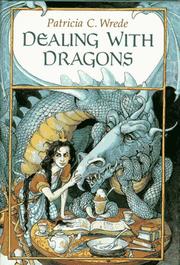
Dealing with Dragons
A princess who hates embroidery runs away to become the cook and librarian for a dragon, then has to outthink wizards, knights, and a plot against the dragon…
2,563-word summary · 11 min read

Saving the World and Other Extreme Sports
Max and the flock split in two to take down the lab behind their lives, one half in California and the other in Europe.
2,175-word summary · 10 min read
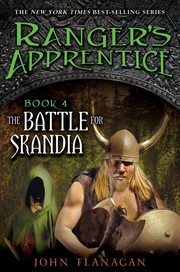
The Battle for Skandia
Will and Evanlyn are still hiding in the Skandian mountains when Halt and Horace arrive with word of a Temujai invasion that could roll on to Araluen next.
2,248-word summary · 10 min read
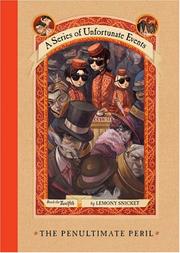
The Penultimate Peril
Baudelaires as concierges in a hotel sort friends from foes before the end.
2,234-word summary · 10 min read
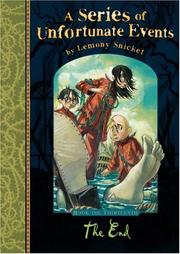
The End
Baudelaires wash on an island where others decide what safe means.
2,320-word summary · 10 min read
The Hammer of Thor
Magnus and Sam chase Thor's stolen hammer to a giant wedding heist, with Alex Fierro joining Floor Nineteen as Loki bargains and Ragnarok stirs.
3,068-word summary · 14 min read

School's Out - Forever
The bird kids try normal school under FBI guard until hunters crash class and chase them to Itex in Florida.
2,584-word summary · 11 min read

An Absolutely Remarkable Thing
Hank Green's An Absolutely Remarkable Thing follows artist April May after she and Andy film a giant Carl robot in New York that appears in cities worldwide…
2,699-word summary · 12 min read

The Slippery Slope
Violet and Klaus climb icy peaks to rescue Sunny while Quigley and V.F.D. ruins change what they know.
2,678-word summary · 12 min read

The Dark Prophecy
Mortal Apollo and Leo cross America to free the Oracle as Commodus hunts them.
2,368-word summary · 11 min read

The Carnivorous Carnival
Baudelaires hide as carnival freaks to find V.F.D. clues, facing lions, Olaf, and a fateful cliff split.
2,027-word summary · 9 min read
The Burning Bridge
Will and Horace burn Morgarath's secret bridge, meet Evanlyn, and face capture and a duel that decides a war.
2,412-word summary · 11 min read

The Raven King
Gansey's fated death nears as Glendower wakes and the ley wakes hungry.
2,477-word summary · 11 min read

Me and Earl and the Dying Girl
A self-protective Pittsburgh senior is pushed to befriend a classmate with leukemia, and a clumsy film with Earl changes all three.
2,773-word summary · 12 min read
The Ruins of Gorlan
Small orphan Will becomes Ranger Halt's apprentice and helps hunt the Kalkara at Gorlan.
2,109-word summary · 9 min read
The Mysterious Benedict Society
Four gifted children pass strange tests and go undercover at a school hiding a mind control machine.
2,130-word summary · 9 min read

I Am the Messenger
Nineteen year old Ed stops a robbery, then gets playing cards sending him to help strangers.
2,124-word summary · 9 min read

Blue Lily, Lily Blue
Blue searches for her missing mother while the Raven Boys wake a sleeper in the caves who is not the king they sought.
2,983-word summary · 13 min read
Pippi Longstocking
A super-strong nine-year-old lives alone in Villa Villekulla, upending school, circus and town rules with neighbors Tommy and Annika.
3,115-word summary · 14 min read
The Hidden Oracle
Apollo lands as a teen in New York with no powers and must earn his way back with Meg and demigods.
1,933-word summary · 9 min read

Pretty Little Liars
Four girls get texts from dead Alison a year after she vanished, and secrets start leaking.
1,922-word summary · 9 min read

The City of Ember
Two twelve-year-olds trade jobs and chase a chewed-up note to save their fading underground city before its lights fail.
2,998-word summary · 13 min read

The Raven Boys
Blue Sargent joins four Aglionby boys hunting a Welsh king on a Virginia ley line.
2,537-word summary · 11 min read

The Blood of Olympus
Seven demigods stop Gaia waking while Reyna brings Athena statue.
2,196-word summary · 10 min read
Turtles All the Way Down
Aza Holmes lives with intrusive thoughts while chasing a missing billionaire with Daisy.
2,007-word summary · 9 min read

Paper Towns
Quentin chases clues after Margo vanishes, learning the girl he imagined was never the whole story.
2,198-word summary · 10 min read

Cross My Heart and Hope to Spy
Cammie Morgan returns to Gallagher Academy for a second year of spy training, only to fall for a boy from a rival spy school and hunt a mole in her own school.
2,567-word summary · 11 min read
The Thief
A boastful young thief is pulled from a prison to steal a legendary stone for the king's magus, and the story he tells about himself is not the whole story.
2,514-word summary · 11 min read