
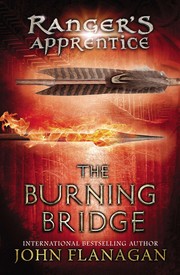
The Burning Bridge
2,412-word summary 11 min read 256 pages in the book
- First published
- 2005
- Publisher
- Philomel Books
- Pages
- 256
- ISBN
- 9780399244551
- Series
- Ranger's Apprentice (#2)
Reading options
What's inside (8 sections)
I picked up The Burning Bridge the night after I finished The Ruins of Gorlan because the first book ends with war clearly coming and I wanted to see what Flanagan does with it. John Flanagan published it in 2005, first in Australia with Random House Australia and then in the United States with Philomel Books. My reading follows the 256 page US hardcover. It is the second book in Ranger's Apprentice, after The Ruins of Gorlan and before The Icebound Land. Will and Horace are back, Halt and Gilan are back, and a girl called Evanlyn walks into the story and changes its shape.
The setup is simple and scary. Morgarath, the exiled lord in the Mountains of Rain and Night, is ready to move against King Duncan and Araluen. His Wargals are gathering. His plans were partly seized. Will, Horace, and Gilan get sent on a Ranger errand that looks small and turns out to be the hinge of the war. What I like is how fast the book shifts from training tale to road story to prison story to battle story without losing its humor.
This is still a book for tens and up, plainly told, funny in dialogue, serious about work and friendship. If you liked the apprenticeship parts of book one, you get more of that here, plus a bridge, a fire, a capture at sea, and a duel you will remember.
The captured plan and the road to Celtica
The book opens with Halt and Will catching one of Morgarath's old men, Dirk Reacher, and pulling battle plans off him. Those papers say Morgarath means to attack through a certain pass and meet the King's army on ground of his choosing. Halt reads them the way a Ranger reads tracks, which is to say with suspicion. He does not trust paper just because it was hidden in a coat.
Then comes the mission. Gilan, Will, and Horace ride toward Celtica, the small country to the southwest, to ask for help or at least to check that the mountain passes are watched. Celtica matters because its miners and hill folk know those trails, and because Araluen cannot guard every gap alone.
What they find is empty. Villages with cold hearths. Doors open. No people, no animals, no bodies. Just pots left on tables and fields going rough. Flanagan writes these chapters well. Will listens for dogs and hears none. Horace checks a forge and finds the coals long dead. Gilan goes quiet in the way adults go quiet when they are doing math nobody likes.
Gilan decides someone has to warn King Duncan that the Celtican line has failed, whatever that means. He rides hard for Araluen, leaving the two boys to shadow a ragged Wargal party and learn what they can. It is a classic Flanagan move. The adults trust the boys with real work but not with the whole war. The boys accept it because they want to prove the trust was earned.
I liked this stretch for its procedure. Will reads sign. Horace watches his back. They argue about food, about horses, about whether to get closer. Tug, Will's small Ranger horse, keeps showing sense. The lessons from book one pay off here without a recap speech. You see the training in how Will crosses open ground and how Horace holds a position without fidgeting.
One small criticism, since this book invites it. The empty villages are creepy but the explanation leans on Wargal fear and forced labor in ways that younger readers may need an adult to unpack. People did not vanish by magic. They fled or were taken. Flanagan keeps it at arm's length, which suits the age range, but I wanted one scene where a left behind Celtican says plainly what happened.
Evanlyn and the bridge across the Fissure
On the trail Will and Horace meet Evanlyn, a girl about their age hiding in the woods. She says she was maid to a lady of the Araluen court and got separated when Celtica fell apart. She is thin, sharp tongued, quick to argue with Will, and good at staying hidden. Will likes her and distrusts her in turns. Horace, kind as ever, shares food without a lecture.
The three follow the Wargals to the edge of a great crack in the earth called the Fissure, a gorge so wide and deep that no army was supposed to cross it. Morgarath's engineers are solving that problem with timber and rope. They are building a bridge. If it holds, his force can swing around the King's expected line and trap Duncan's army on the Plains of Uthal. The captured plans were bait. The real stroke is a flank march over a bridge nobody thought possible.
This is the best part of the book for me. Flanagan makes engineering tense. Will counts trestles. He watches how the Wargals haul beams. He notes guards, shifts, wind. Evanlyn asks the practical questions Will forgets when he gets fixed on Ranger craft, like where the tar is kept and how fast fire would take in dry wood. Horace studies approaches and escape paths the way Battleschool taught him.
Their plan is desperate and small, which fits the series. No army will come in time. No wizard will knock the bridge down. Two kids and a girl with flint, oil, and nerve will have to burn it. They wait for the right watch change, slip close, set the fire where the timbers are thinnest and the wind will help, then run.
The fire scene works because it is clumsy. Hands shake. A guard turns at the wrong moment. Smoke gets in eyes. The flames take faster than Will hoped and then slower, then all at once. The bridge goes with a crack and a lean and a fall into dark. I could see it. I could hear Tug stamping somewhere behind them, wanting to bolt.
It costs them. Burning the bridge saves the army for now but leaves Will and Evanlyn exposed. Horace gets away on orders, hating every step. The other two are taken. And here Flanagan drops the reveal that rereads everything Evanlyn said. She is not a maid. She is Princess Cassandra, King Duncan's daughter, traveling in disguise. Her sharp manners make sense now. So does her fear. If Morgarath learns who she is, she becomes a hostage who could bend a kingdom.
Taken by the Skandians
The captors are Skandians, sea raiders from across the water, led by Jarl Erak. They are in these waters for plunder and slaves, not for Morgarath's cause. To them Will and Cassandra are cargo with strong backs. Flanagan has written Skandians before as rumors and now brings them on stage, broad, loud, practical, cruel in the way raiders are cruel, but bound by their own codes about courage and oars.
Life in their hands is hard. Ropes, cold, short rations, rowing, threats. Will tries Ranger tricks and learns their limits against men who watch prisoners for a living. Cassandra drops the maid act in private and shows grief and anger and stubbornness. Their friendship deepens because there is nothing to perform for. She apologizes for lying. He tells her he understands why she did it. They promise to watch each other, and the book honors that promise in small ways, sharing a blanket, saving bread, keeping awake in turns.
Erak himself is the surprise. He is not a cartoon pirate. He respects grit, hates waste, and runs a tight ship in both senses. He sees Will is no ordinary boy and Cassandra is no ordinary girl, though he does not yet know she is a princess. His man Svengal and the crew get distinct voices. Some mock. Some share a joke. All obey Erak because he has earned it.
I found these chapters slower than the bridge chapters, but in a good way. The sea air changes the series. After two books of forest and castle, salt and oars feel new. Young readers who found Ranger craft fun will find ship craft fun too, knots, watches, how to move on a deck without falling, how to steal a little extra water without getting caught.
A fair note for parents. Slavery is named and shown as ugly. Nobody softens it. Flanagan does not dwell on worst harms, but he does not pretend capture is adventure. Will and Cassandra are inventory to the Skandians, and that fear sits on every page until the sail turns toward Skandia at the end. If your reader is sensitive to confinement, read these parts together.
Horace and the duel with Morgarath
While Will is in chains, Horace makes his run. Alone, hungry, scared, he carries word back toward the King's army. Flanagan gives him a lean, hard road section that mirrors Will's woods work from book one. Horace navigates by sun and ridge, avoids patrols, talks his way past suspicious farmers, and keeps moving when his feet blister. Battleschool taught him to march. Friendship teaches him why the message matters more than his pride.
He reaches Duncan's host as the armies shape for battle on ground Morgarath chose. Halt is there, trying to hold the King back from a trap. Gilan is there, reporting what he saw. The mood is grim. Everyone knows Morgarath wants a set fight where numbers and Wargal obedience will grind Araluen down.
Then Morgarath calls a pause and challenges Halt to single combat. It is a power move. Halt is the most feared Ranger, and beating him in front of both armies would break Araluen's heart. King Duncan forbids Halt to accept, because kings cannot afford to lose such men on pride.
What happens next is the scene this series will be remembered for. Horace, the Battleschool boy, steps forward and challenges Morgarath himself. The field goes still. Morgarath laughs. His officers laugh. Halt wants to shout and cannot. Horace is not the best swordsman on that field. He is maybe fourth or fifth. But he understands something the others miss in that moment. Morgarath fights from a horse, with reach and weight, and expects fear. Horace has a plan built on nerve and one odd skill Gilan once showed Will, the double knife defence, a close in trick with two blades that can turn a horseman's cut.
I will not spoil each exchange, because the pleasure is in the beats. Horace takes punishment. He stays up. He throws himself at Morgarath's horse in a move that looks like panic and is actually aim, unseating the rhythm of the attack. Wounded, on foot, with the field shouting, he blocks a killing cut with the double knives and drives his point home.
Morgarath dies. The Wargals, who were held by his will, go slack and harmless. The battle that was supposed to slaughter Araluen breaks apart. Flanagan stages this without gore show. It is about footing, breath, and choice. Horace wins because he trained, because he watched, and because he cared more about his friends than his fear.
It earns its emotion. Horace does not strut after. He shakes. He looks for Will in the crowd and Will is not there. Victory and loss sit side by side, which is honest.
What holds up and what creaks
What holds up, for me, is the triangle at the center. Will learns to act without Halt beside him. Horace learns to stand without an instructor behind him. Cassandra learns to trust without rank to shield her. The book gives each a test that fits their training and then takes the supports away. That is good teaching in story form.
Halt and Gilan are used well in smaller doses. Halt's dry lines cut tension at the right times. Gilan's warmth toward Will shows what a Ranger can be when he is not hiding worry. King Duncan reads as decent and tired, a father as well as a king, which makes Cassandra's danger land harder.
The craft details still please. How to move unseen. How to count a work gang. How to fire timber in wind. How to march, row, and keep watch. Flanagan respects young readers enough to show work. He also respects their humor. The boys bicker about food in the middle of danger in ways that felt true to every school trip I ever took.
What creaks. The middle sea section sags a little before Erak sharpens. Some Wargal behavior bends to plot need, mindless when the story wants them dull, clever when it wants a scare. Morgarath himself is more idea than person, which works for myth but leaves his motives thin beyond hate and pride. Readers who want politics with their war will find Araluen's council scenes brief.
None of that spoiled the book for me. The bridge burning and the duel are set pieces young readers will retell to friends. The capture ending stings in the right way. Will and Cassandra sail for Skandia as slaves while Halt searches the shore too late. You close the book angry on their behalf and glad book three exists.
If you are reading with a kid, talk about Evanlyn's lie. She had reason. Talk about Horace volunteering. He had choice. Talk about burning the bridge. It was destruction that protected. Those are rich talks without easy answers.
I came to this one for plot and stayed for character. Will is braver and less showy. Horace is kinder and harder. Cassandra arrives as a person, not a prize. The series now has its heart. I started The Icebound Land the same week.
Reading notes for series order
A quick word on place in series, since Ranger's Apprentice can confuse new readers with prequels and spin offs. The Burning Bridge is book two of the main run, straight after The Ruins of Gorlan. Read those in order. The Icebound Land follows directly from the capture that ends this book. Later books widen the world to Skandia, the north, and new apprentices, but this bridge and this duel are the hinge everything swings on.
My copy notes for collectors. First Australian publication was 5 May 2005 through Random House Australia in paperback at 276 pages. The US hardcover from Philomel Books runs 256 pages. The ISBN on my cited US edition is 9780399244551. Covers vary by country, with the US showing the burning arrow and the Australian showing its own art, but the text is the same story.
FAQ
When was The Burning Bridge published?
It was first published in Australia on 5 May 2005 by Random House Australia. The US hardcover from Philomel Books runs 256 pages with ISBN 9780399244551.
Is The Burning Bridge part of a series?
Yes. It is book two of Ranger's Apprentice, after The Ruins of Gorlan and before The Icebound Land.
Who is Evanlyn really?
She is Princess Cassandra, King Duncan's daughter, traveling in disguise after Celtica falls apart.
Similar books
More from Ranger's Apprentice first, then related titles.
The Ruins of Gorlan
Small orphan Will becomes Ranger Halt's apprentice and helps hunt the Kalkara at Gorlan.
2,109-word summary · 9 min read
The Icebound Land
Captured and enslaved in Skandia, Will fights a drug that erases him while Halt and Horace cut a bloody road through Gallica to bring him home.
2,088-word summary · 9 min read
The Battle for Skandia
Will and Evanlyn are still hiding in the Skandian mountains when Halt and Horace arrive with word of a Temujai invasion that could roll on to Araluen next.
2,248-word summary · 10 min read

The Blood of Olympus
Seven demigods stop Gaia waking while Reyna brings Athena statue.
2,196-word summary · 10 min read
The Thief
A boastful young thief is pulled from a prison to steal a legendary stone for the king's magus, and the story he tells about himself is not the whole story.
2,514-word summary · 11 min read

Inkdeath
The final Inkworld novel sends Mo into the land of the dead, leaves Meggie choosing between two boys, and ends the Adderhead's immortality with three written…
2,062-word summary · 9 min read

Vow of Thieves
Kazi and Jase return to Tor's Watch to find it occupied, and their marriage is tested by captivity, betrayal, and a war for the town of Hell's Mouth.
2,059-word summary · 9 min read

Lioness Rampant
Alanna searches for the Dominion Jewel with the Shang Dragon, then returns to Tortall to face Duke Roger at Jonathan's coronation.
2,478-word summary · 11 min read

Archenemies
Nova steals for the Anarchists while Adrian hides his Sentinel identity, and a serum that erases prodigy powers puts them both at risk.
2,485-word summary · 11 min read
Dealing with Dragons
A princess who hates embroidery runs away to become the cook and librarian for a dragon, then has to outthink wizards, knights, and a plot against the dragon…
2,563-word summary · 11 min read
The Golem's Eye
Two years after The Amulet of Samarkand, Nathaniel is a rising bureaucrat, Bartimaeus is his unwilling servant again, and something made of clay is tearing…
2,299-word summary · 10 min read

Heist Society
A teenage art thief gets expelled from boarding school, then has two weeks to steal five paintings back from a London museum and clear her father.
2,781-word summary · 12 min read
The Chalice of the Gods
Percy needs three recommendation letters from three gods to apply to college, so his first quest is recovering a stolen chalice from the god of old age.
2,106-word summary · 9 min read
Grip of the Shadow Plague
A plague turns Fablehaven's creatures of light into shadows while Kendra hunts an artifact in Arizona and Seth races to find the cause.
2,131-word summary · 9 min read
The Ship of the Dead
Magnus and his crew sail to the edges of the Norse worlds to stop Loki from launching Naglfar, the ship of the dead.
2,426-word summary · 11 min read

The Rose & the Dagger
Shahrzad is pulled from her Caliph husband and left in a desert camp of rebels, needing to break his curse and end a war before it ends her.
2,520-word summary · 11 min read

The Queen of the Tearling
Nineteen-year-old Kelsea leaves the woods to take her throne, ends a shipment of human captives, and draws the Red Queen's revenge.
2,357-word summary · 10 min read
Saving the World and Other Extreme Sports
Max and the flock split in two to take down the lab behind their lives, one half in California and the other in Europe.
2,175-word summary · 10 min read

We Hunt the Flame
In a fractured Arabia-inspired world, a disguised huntress and a prince-assassin race to find a magic-restoring book and confront an ancient evil.
2,195-word summary · 10 min read
The Magician
Sophie and Josh flee to Paris with Nicholas Flamel, where John Dee, Machiavelli, and an awakened god close in on the missing pages of the Codex.
2,162-word summary · 10 min read
The Burning Maze
Apollo, still trapped in a mortal teenager's body, follows a dangerous prophecy through the Labyrinth with Meg and Grover as the Triumvirate's grip tightens.
2,248-word summary · 10 min read

Lore
Lore Perseous, the last of a hunted bloodline, is pulled back into the Agon when a wounded Athena offers her revenge against the god who killed her family.
2,188-word summary · 10 min read
In the Hand of the Goddess
Alanna, still disguised as a boy, survives war, court plots, and a death duel as the Goddess's chosen warrior in the second Song of the Lioness book.
2,018-word summary · 9 min read
A Knight of the Seven Kingdoms
Three novellas follow Ser Duncan the Tall and his squire, Egg, through tourneys, feuds, and conspiracies in Westeros ninety years before A Game of Thrones.
2,059-word summary · 9 min read
The False Prince
A nobleman buys four orphans and tells them only one will survive to impersonate the missing prince. The narrator, a defiant thief named Sage, has other plans.
2,044-word summary · 9 min read
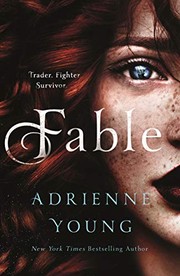
Fable
Abandoned on a lawless island at fourteen, Fable spends four years diving for gems to buy passage off it, straight into the cutthroat trade of the Narrows.
2,320-word summary · 10 min read
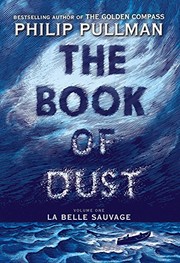
La Belle Sauvage
Philip Pullman's prequel to His Dark Materials follows eleven-year-old Malcolm Polstead as a secret message, a hunted baby, and the flood of the century carry…
2,530-word summary · 11 min read
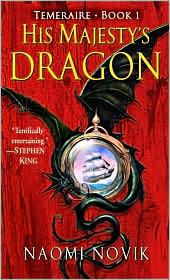
His Majesty's Dragon
When Captain Will Laurence's crew captures a French frigate carrying a dragon egg, the hatchling chooses him, and he trades the Navy for Britain's Aerial Corps.
2,405-word summary · 11 min read
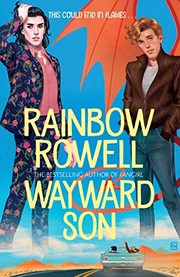
Wayward Son
Simon and Baz road trip America after the war to decide what normal means.
2,505-word summary · 11 min read

The Winner's Curse
An aristocratic girl buys a slave who is secretly a prince plotting rebellion.
2,124-word summary · 9 min read