
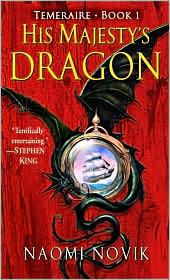
His Majesty's Dragon
2,405-word summary 11 min read 356 pages in the book
- First published
- 2006
- Publisher
- Del Rey
- Pages
- 356
- ISBN
- 9780345481283
- Series
- Temeraire (#1)
Reading options
What's inside (10 sections)
I avoided the Temeraire books for years, mostly out of snobbery. A Napoleonic war story with talking dragons sounded like the kind of thing that only works if you already love both halves, and I was not sure I did. Then I read Uprooted and A Deadly Education and realized Novik can make just about any premise feel lived in, so I went back to her debut. His Majesty's Dragon came out from Del Rey in 2006, runs 356 pages in the mass market paperback, and was published in the UK under the title Temeraire. It won the Compton Crook Award for best first novel and was nominated for a Hugo. It is also, and this surprised me, less a war story than a book about two colleagues slowly becoming family.
A prize egg and a captain who loses his ship
The novel opens at sea in 1804, early in the wars against Napoleon. Captain William Laurence commands HMS Reliant, a frigate cruising for French prizes. In a small action he captures a French ship called Amitie, and in her hold his crew finds cargo that changes everything: a dragon egg, nearly ready to hatch. Everyone aboard knows roughly what that means. A hatching dragonet will accept one human as its handler, and whoever it chooses becomes its captain for life. In the Royal Navy, that man becomes an aviator, and aviators are a strange, half-respected caste that no sensible officer aspires to join.
Laurence, being a thorough man, has his officers take turns presenting themselves to the egg with the proper equipment. The dragonet hatches black and long and quiet, studies the line of hopeful men, and walks past all of them to Laurence. That is the hinge of the whole novel, and Novik stages it plainly, without prophecy or ceremony. Laurence names the dragon Temeraire after the captured French ship whose name the Royal Navy had taken for itself, and then he begins arranging his affairs to hand the creature over to the Corps, because that is the correct procedure. Temeraire declines to cooperate with correct procedure.
Sailing to Madeira to await orders, Laurence and his crew raise the hatchling like an enormous, opinionated baby. Temeraire eats startling amounts, learns to fly in short hops off the deck, and talks. That last part is not treated as a wonder in this history. Dragons talk wherever Novik's dragons exist, and what matters is temperament. Temeraire is curious, formal, and literal in a way that reads as either solemnity or comedy depending on the moment, and he is stubbornly attached to Laurence. When the Aerial Corps sends word that the dragon is too valuable to belong to an amateur, and an experienced officer named Dayes is sent to take him over, Temeraire simply refuses the man. Loudly. It is the first of several scenes where the dragon's blunt honesty cuts through the Navy's polite assumptions, and it is where I started to grin.
The least respectable branch of the service
Back in England, Laurence does the honorable and ruinous thing. He resigns his naval command, gives up his prospects, and joins the Aerial Corps as Temeraire's captain. His father, Lord Allendale, takes it about as well as a man of his class can, which is to say he is icily polite and quietly appalled. The Corps is where the book does its best social work. Aviators live in coveys, marry their work, speak plainly, lodge their dragons in barracks and their children wherever they fit, and the rest of society treats them like an embarrassing relative who keeps a tiger. Laurence, who has spent thirty years caring what people think of him, spends the rest of the book learning not to.
A naturalist named Sir Edward Howe studies the reports and measurements coming back from the covert and pronounces that Temeraire is almost certainly a Chinese breed, a so-called Imperial, which nobody in Britain has seen outside of a museum or a legend. British dragons are bred for war the way ships are built for it: broad Regal Coppers, acid-spitting Longwings, quick Parnassians and Winchesters. A Chinese dragon is a different order of creature, and everyone from the Corps command to the Admiralty starts speculating about what Britain might do with one. Laurence mostly wants to keep his dragon fed and out of trouble. Good luck with that.
Loch Laggan and the long education
Training happens at Loch Laggan in Scotland, under a dragon called Celeritas, who has been teaching young officers and young dragons for longer than most of them have been alive. This middle stretch is where some readers get impatient, and I understand why, but it is also where the novel puts in the work that makes the ending land. Novik fills the covert with personalities. Catherine Harcourt, barely older than her teenage crew, commands the Longwing Lily, because Longwings only accept women as captains. Berkley, easygoing and enormous, rides the Regal Copper Maximus. A nobleman named Rankin owns a small Winchester called Levitas and treats him less like a partner than like a horse he is tired of paying for. And at the center of the crew is Lieutenant John Granby, who begins the book resenting Laurence on behalf of Dayes and ends it as the man Laurence would trust with anything.
Temeraire soaks up training and everything else. He learns formation maneuvers, signals, and the elaborate choreography of carrying a dozen armed men into the air on straps and carabiners. He also learns to read, or rather to be read to, and then to demand books of his own. His questions are the moral spine of the book. Why do dragons fight for prizes they never see? Why are captains and dragons both paid, but only captains get to spend? Why does the Corps hide itself from the country it defends? Laurence, a conservative man in a conservative age, spends the novel being quietly educated by his own dragon, which never once feels like a lecture, because Temeraire is less outraged than puzzled, and his puzzlement is so reasonable that the reader's assumptions wobble along with Laurence's.
The first real action comes when a Parnassian named Victoriatus is mauled by a French patrol and Temeraire helps haul him home, which earns Granby's respect and teaches Temeraire that combat hurts. Then comes Choiseul, a French officer who ostensibly defects to the British with his dragon Praecursoris. Temeraire, who does not care for rivals, dislikes him on sight, and is right to. Choiseul is a double agent. Once he is caught and questioned, his real mission turns out to be the question everyone has been circling: he was sent to steal the Chinese dragon back. The egg aboard the Amitie had been a gift from the Chinese emperor to Napoleon himself, and the French would very much like him returned.
Trafalgar, and the news from the coast
The war gives the aviators their first great engagement in October 1805, over the Battle of Trafalgar. Novik plays the history with a straight face and a light touch. In this version dragons circle above the fleets and rake decks with fire and acid, and Nelson, wounded by a Spanish dragon, survives to fight another day. The French and Spanish navies still break. The victory lifts everyone at the covert and quiets, for a season, the worry that Napoleon might manage an invasion of Britain.
Then the real news arrives, carried by the wrong messenger. Rankin has been flying Levitas as a courier on long, brutal rotations, and the little Winchester comes back to Dover torn up and dying. Laurence finds him alone and untended, and has to drag Rankin out of the officers' club to face the creature he has used up. Levitas does not get a heroic death scene. He gets a small, bleak one, which is exactly the point Novik has been building toward through every earlier mention of his ill treatment. The intelligence he was carrying is enormous, though. Napoleon is not coming by sea. A fleet of heavy transports, built to carry whole battalions and hauled by teams of dragons, is waiting across the Channel, and the invasion road runs through the sky.
The Dover captains know they are badly outnumbered, and the difference is not close. Celeritas reorganizes everyone into fighting formations, and the former Navy captain who once fretted about dinner seating order finds himself in a war council, counting enemy dragons on a map.
The battle at Dover
The engagement itself is the novel's big set piece. The British take to the air at dawn and meet a French armada of dragons escorting heavy transports, and for a while it goes the way the numbers say it should. The British are outflown, some transports reach the ground, and the defenders start losing dragons they cannot replace. Then Temeraire, who has been told more or less since hatching that his breed shows no signs of a breath weapon, opens his mouth and roars.
What comes out is neither fire nor acid. It is a shockwave that hits a transport like a physical blow and tears it apart, and the battlefield goes quiet in the way that only a sudden impossibility can produce. The French pull back, the invasion fails, and the book lets itself have one good night of celebration before the other shoe drops.
At the party afterward, Sir Edward Howe finds Laurence and tells him what he has finally confirmed. Temeraire is not merely a Chinese breed. He is a Celestial, the rarest and most guarded line in existence, reserved by Chinese law for the emperor and his family. The roar, which the Chinese call the divine wind, belongs to that breed alone. That means the egg Britain seized from the French, and the French from a Chinese diplomatic mission, was intended for Napoleon personally. It means China will come asking questions. It means Temeraire is no longer just a dragon but a diplomatic incident with wings.
I loved this ending for how little it cares about glory. The book refuses a triumphal final note. Temeraire learns what he is, and the knowledge mainly creates problems, while Laurence understands that the pair of them have just become interesting to emperors. They choose each other again anyway, this time with full knowledge of the complications, and that choice lands as the real climax of the story.
What Novik gets right
The best thing in the book is the friendship, and Novik knows it. Laurence and Temeraire do not have a mystical bond that replaces conversation. They talk, negotiate, misunderstand each other, and adjust. Laurence brings duty and seamanship and a sincere, limited decency. Temeraire brings directness, an alarmingly good memory, and the perspective of a creature who never agreed to the rules everyone else lives by. Their scenes have the rhythm of a good marriage in a novel about a bad war.
Around that center, Novik builds a world that feels administratively real. The dragons are bred by nation, and the breeding shows in their temperaments and their equipment. Longwings need women captains. Regal Coppers are too big for some coverts. Crews train to cling to their dragons in wind and gunfire, and a captain's authority comes with the weight of every man strapped to his dragon's side. Jane Roland, the long-serving captain of the Longwing Excidium, drifts through the story as both a professional and a personal interest for Laurence, and I appreciated that the romance stays adult, understated, and never allowed to take over the plot.
The book is also quietly angry in a way I did not expect from a debut adventure novel. Levitas is the argument, and so are Temeraire's questions, and so is the Corps itself, a whole branch of the service kept shabby and secret because the country that relies on it would rather not think about it. The anger never turns into a speech. It is folded into scenes about pay, blankets, and who gets to eat at which table.
Where it wobbles
The aerial battles are the weakest part, at least for me. Novik writes them with energy, but the geometry of dragon combat is hard to hold in your head: how big is a dragon next to a transport, where is the crew standing, how does a boarding actually work at three thousand feet. In the big Dover sequence I found myself rereading paragraphs to figure out who was where, and the confusion flattens some of the tension. A clearer scheme of the sky would have helped.
The villains are thin as well. Dayes is a snob, Choiseul is a plot device with a French accent, and the French commanders are mostly offstage. Novik is much better at showing how a system mistreats the people it should value than she is at drawing malice, so the human antagonists register as obstacles rather than characters. The one exception, Rankin, works precisely because his cruelty is lazy and ordinary.
There are also threads that simply get dropped. Laurence's family appears once, delivers its social verdict, and exits. The woman everyone once expected him to marry is mentioned and then quietly vanishes, and the book never goes back to her. Nor does the middle section always justify its length. The training chapters repeat their beats of formation practice, mess politics, and dragon feeding, and a reader who came for the war may find the first hundred pages better mannered than the cover promised.
Should you start here
Yes, and this is the right place to start, because His Majesty's Dragon is self-contained in a way that first volumes of nine-book series rarely are. The Dover invasion resolves, the friendship is established, and the China question is set up as a promise rather than a cliff. Awards and blurbs aside, the reason the book still gets handed around twenty years on is simple: it is warm, it moves, and it never condescends to either of its audiences, the readers who love ships and the readers who love dragons. If you can picture Patrick O'Brian writing with a teenager's enthusiasm for flying monsters and an adult's interest in how institutions fail the people inside them, you have the book roughly right. I finished it on a Sunday and immediately ordered the sequel, which is the most honest recommendation I can give.
FAQ
Is His Majesty's Dragon the same novel as Temeraire?
Yes. Naomi Novik's 2006 debut was published as Temeraire in the UK and His Majesty's Dragon in the US. It is the first book of the nine novel Temeraire series.
Does His Majesty's Dragon work as a standalone, or should the whole series be read first?
It works alone, since the Dover invasion resolves inside this book. It does end by opening the political problem with China that drives the second book, Throne of Jade.
How does the book treat the dragons?
Dragons speak, reason, and choose their own captains, and the plot keeps asking how they should be paid, housed, and respected. Temeraire's questions about dragon rights matter as much as the battles.
Similar books
More from Temeraire first, then related titles.

Grip of the Shadow Plague
A plague turns Fablehaven's creatures of light into shadows while Kendra hunts an artifact in Arizona and Seth races to find the cause.
2,131-word summary · 9 min read

Secrets of the Dragon Sanctuary
Kendra is replaced by a plant copy and held by the Society, while Seth steals a unicorn horn so the family can enter a dragon sanctuary.
2,590-word summary · 12 min read
Dealing with Dragons
A princess who hates embroidery runs away to become the cook and librarian for a dragon, then has to outthink wizards, knights, and a plot against the dragon…
2,563-word summary · 11 min read
Leviathan
In an alternate 1914, a prince on the run and a girl disguised as a soldier meet aboard a living airship.
2,406-word summary · 11 min read
The Ship of the Dead
Magnus and his crew sail to the edges of the Norse worlds to stop Loki from launching Naglfar, the ship of the dead.
2,426-word summary · 11 min read
The Battle for Skandia
Will and Evanlyn are still hiding in the Skandian mountains when Halt and Horace arrive with word of a Temujai invasion that could roll on to Araluen next.
2,248-word summary · 10 min read

When the Moon Hatched
An assassin who hears air takes a job that throws her to dragons and a hunter.
2,083-word summary · 9 min read
The Republic of Thieves
Locke and Jean rig an election while Locke faces Sabetha, his lost love and rival.
2,433-word summary · 11 min read
The Farthest Shore
Archmage Ged and Prince Arren sail to the far west to stop Cob, whose bid for endless life drains magic across Earthsea in Le Guin's sad 1972 third volume.
2,800-word summary · 12 min read
Redwall
A novice mouse hunts for Martin the Warrior's lost sword while Cluny the Scourge besieges Redwall Abbey.
2,727-word summary · 12 min read
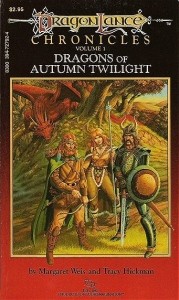
Dragons of Autumn Twilight
Old friends reunite at the Inn of the Last Home, guard a glowing Blue Crystal Staff, face black dragon Khisanth, and free slaves at Pax Tharkas in this 1984…
2,803-word summary · 12 min read
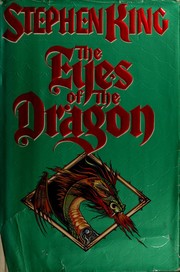
The Eyes of the Dragon
In the kingdom of Delain, a jailed prince and his younger brother face a magician whose long plot for the throne turns on a napkin clue.
2,018-word summary · 9 min read
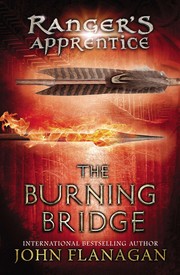
The Burning Bridge
Will and Horace burn Morgarath's secret bridge, meet Evanlyn, and face capture and a duel that decides a war.
2,412-word summary · 11 min read
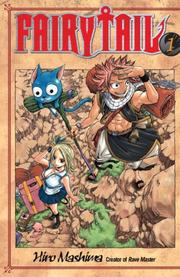
Fairy Tail, Vol. 1
Lucy joins rowdy Fairy Tail guild with fire boy Natsu and cat Happy.
2,049-word summary · 9 min read
Red Seas Under Red Skies
Locke and Jean flee to Tal Verrar for Sinspire job and pirate press.
2,106-word summary · 9 min read
Dragonflight
A kitchen drudge with hidden mind talent Impresses a golden queen and must unite a starved dragon Weyr against Thread. First of Pern.
2,821-word summary · 13 min read
The Ruins of Gorlan
Small orphan Will becomes Ranger Halt's apprentice and helps hunt the Kalkara at Gorlan.
2,109-word summary · 9 min read
One Piece, Volume 1: Romance Dawn
Rubber boy Luffy gathers Zoro and Nami to punch tyrants and share meat.
2,216-word summary · 10 min read
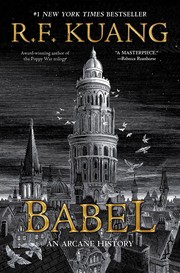
Babel
A Chinese orphan trained in translation magic at Oxford must choose between empire and resistance as Britain drives toward war with China.
3,696-word summary · 16 min read
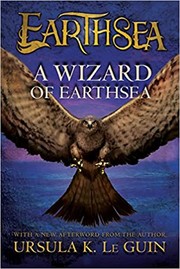
A Wizard of Earthsea
A proud goatherd becomes the wizard Ged, looses a shadow at Roke, and must hunt it across Earthsea to name it. Le Guin's lean 1968 series opener.
2,972-word summary · 13 min read

The Blood of Olympus
Seven demigods stop Gaia waking while Reyna brings Athena statue.
2,196-word summary · 10 min read

Watership Down
Hazel leads a small band of rabbits from a doomed warren to Watership Down, where survival means facing snares, farms and General Woundwort.
2,550-word summary · 11 min read
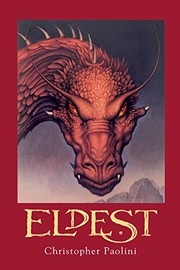
Eldest
Eragon trains with Oromis in Ellesmera while Roran defends Carvahall and Nasuada leads the Varden toward war.
2,652-word summary · 12 min read
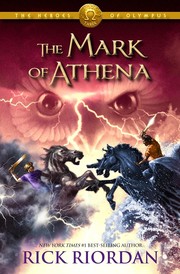
The Mark of Athena
Seven demigods sail for Rome where Annabeth must follow the Mark to the Athena Parthenos alone.
2,031-word summary · 9 min read
Eragon
Paolini's Eragon retold: a farm boy, a blue stone, Saphira the dragon, and the road to the Varden.
1,996-word summary · 9 min read
A Game of Thrones
Martin's A Game of Thrones retold: Starks, Lannisters, Dany's dragons, and why Ned's mercy costs him.
2,565-word summary · 11 min read
A Deadly Education
El can level mountains with a word, but surviving magic school takes allies, control, and a hard choice about power.
2,959-word summary · 13 min read
The Thief
A boastful young thief is pulled from a prison to steal a legendary stone for the king's magus, and the story he tells about himself is not the whole story.
2,514-word summary · 11 min read

The Blinding Knife
Kip trains to join the Blackguard while the Prism hides his true identity, loses his colors, and fights a war against a rogue drafter who wants to birth a god.
2,049-word summary · 9 min read
Ship of Magic
A sentient ship wakes when her captain dies, and the family that owns her starts to come apart over who gets to sail her.
2,026-word summary · 9 min read