
Reading options
What's inside (4 sections)
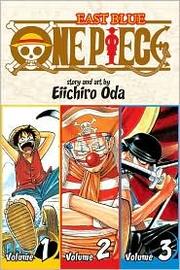
I had never read manga seriously before batch work forced my hand, and starting with the most popular series ever felt like jumping into ocean to learn swimming. One Piece, Volume 1: Romance Dawn, first in the One Piece series, original Japanese publication in 1997, English Viz Media omnibus edition East Blue covering volumes 1 to 3 published December 2009, ISBN 9781421536255, collects the beginning where Monkey D. Luffy eats a Devil Fruit, gains rubber powers, and sets out to become Pirate King. It is goofy, heartfelt, violent in cartoon ways, and much better constructed than its reputation as endless shonen suggests. I finished volume one understanding why people read 100 plus volumes. The promise is simple and kept. Freedom with friends beats treasure alone.
Luffy starts as a kid in Foosha Village inspired by Shanks, a pirate with heart who saves him at cost of an arm. Luffy accidentally eats the Gum Gum Fruit, turning his body rubber and losing ability to swim, which matters hugely in a sea story. He decides to find One Piece, treasure left by Gold Roger, and to gather a crew of ten. Volume one gives him first two. Roronoa Zoro, a swordsman who uses three swords including one in mouth, found tied up by Marines for killing a wolf that attacked a child? Actually for defying a corrupt captain. And Nami, a thief who steals from pirates, mapping seas, with a mysterious tattoo and love of money that hides survival logic. Their meetings follow pattern that becomes series engine. Luffy meets someone in trouble with local tyrant, helps because hungry or angry, earns loyalty through action rather than speeches, though speeches come too and work.
Zoro, Nami, and Buggy
Zoro's introduction is the best action in the volume. Tied to a post for weeks without food by Captain Morgan, corrupt Marine with an axe hand, he refuses to beg. Luffy frees him by taking his swords to him mid fight, trusting a stranger with weapons because need outweighs caution. Their fight against Morgan, with Luffy stretching arms to punch and Zoro cutting iron, establishes power rules that stay consistent. Rubber resists blunt force and electricity, weak to blades and cold? Actually to sharp cuts. Swords cut pirates but not friends. Those limits keep fights tactical rather than power escalating without end, at least early. A scene where Zoro takes Luffy's pain? No, that is later. Here Zoro simply pledges to become world's greatest swordsman after Luffy saves him, and Luffy accepts without understanding weight. Oaths given lightly bind across volumes. That lightness is key to One Piece tone. Promise big, laugh, then bleed to keep.
Nami joins differently, through trickery. She pickpockets Luffy, allies to rob Buggy the Clown, betrays to save herself, returns because Luffy trusted beyond sense. Her love of money reads as greed until you learn village tribute to pirates? Actually to Arlong, which volume one hints but does not reveal fully. Oda plants her tattoo, her maps, her flinch at certain flags, without explaining. Rereading after knowing Arlong arc makes volume one richer. She is already surviving through cunning that looks like selfishness. Luffy sees through to need and offers crew place without demanding story. That patience, waiting for her to tell when ready, defines his captaincy more than strength. He recruits by accepting no as temporary. Come when you want. We will be here eating. Few shonen heroes allow refusal. Luffy does, which is why people join for good.
Buggy as first real villain works because he is funny and cruel in turns. Big nose clown who splits body parts with Chop Chop Fruit, eating? Actually terrorizing Orange Town with cannon fire for treasure. His fight with Luffy and Zoro involves slapstick, heads flying, body parts reassembled wrong. Kids laugh. Adults notice cruelty underneath. Buggy kills for insult about nose, enslaves town for money, uses Nami as shield. Luffy beats him not with strategy but with refusal to stay down and with help. Nami ties Buggy parts together to stop reassembly, Zoro cuts, Luffy stretches. Teamwork through improvisation rather than plan. Those early fights teach series formula. Know your friends' quirks, use enemy vanity, never abandon. It will repeat with variations for 100 volumes without boring because quirks deepen.
For art, Oda's style is messy in the best way. Crowded panels, exaggerated faces, speed lines, maps in margins, author notes as comics. If you like clean manga like Death Note, this looks chaotic at first. Give it fifty pages. Expressions carry emotion better than realism could. Luffy's grin when hungry versus grin when angry differ in teeth. Zoro's lost directions gag, he cannot find north even on straight road, gets visual callbacks. Nami's eyes shift from coins to tears in same panel. Backgrounds pack details that reward rereading. Bar furniture, wanted posters, seagulls with hats. Those gags build world without exposition. East Blue feels lived because every tavern has regulars with names and grudges. Oda never draws empty rooms. Someone always eats, sleeps, or plots in corners.
Why Romance Dawn works as promise
The title story, Romance Dawn, refers to Luffy's beginning and to Oda's original one shot. It promises adventure as romance in old sense, quest for unknown with heart. Volume one keeps that promise through episodic structure that still arcs. Each town has tyrant, each crewmate has wound, each fight costs food and sleep. No training montages. Skills exist from start and grow through use. Luffy stretches further when angry. Zoro cuts harder when protecting. Nami navigates better when trusted. Growth follows care, not levels. That emotional leveling keeps power creep human. Stronger because friends need, not because training arc demands.
For pacing, manga reads fast. Dialogue heavy pages turn in seconds. Action spreads across many pages with little text. I finished volume one in an evening, which worried me about depth until I realized I remembered every beat days later. Simplicity aids memory. Tyrant taxes town. Heroes eat a lot. Fight breaks buildings. Feast follows. That rhythm, repeated with variations, becomes comforting rather than boring because characters accrue. By volume's end, going watching? Actually going merry? Not yet. The crew is three with a boat borrowed. Small against ocean. That smallness matters. Later fleets and emperors dwarf them, but here they fit in one dinghy arguing about meat. Starting small makes growth feel earned across epic length. Oda knew to begin with hunger, not legend. Luffy wants meat more than One Piece in most panels. That appetite humanizes ambition that could feel abstract. Pirate King as biggest free person, not richest. Freedom measured in meals shared, not gold counted.
For criticism, early One Piece shows age in gender drawing. Nami and later women have impossible proportions even as characters with agency. Oda draws men varied and grotesque with love, women mostly beautiful with same faces. That imbalance starts here with Nami's outfit tearing conveniently. Readers sensitive to fan service should know it persists and worsens before improving slightly. Also, Marines as corrupt individuals versus system gets simplified. Captain Morgan is evil, higher command absent. Later arcs complicate, but volume one suggests bad apples rather than structure. And violence, while cartoonish, includes deaths presented lightly. A dog? Actually a pet? Townspeople die off panel. Kids may need guidance that cannon fire kills even when art is funny. Viz rates Teen for language and violence appropriately.
Still, at omnibus size it is ideal entry. The East Blue omnibus collects volumes 1 to 3, giving complete Arlong? Actually Nami arc starts but not finished? Volume one alone ends mid journey with Buggy defeated and Nami tentative. That incompleteness is good. You want volume two immediately, which is the point of serial. I ordered volume two the same night, which I rarely do with manga. The promise held. More friends, more food, more tyrants to punch for people who feed you. Simple and enough.
For who this is for. If you like adventure with heart and do not mind long series, start here, not with anime which pads. If you want standalone, this is not it. Volume one is all setup with first payoffs. If you dislike goofy art or fan service, you may bounce despite story. I almost did on Nami's introduction. Stay past Buggy. Her cunning as survival, not tease, emerges by volume's end. I closed it thinking about Shanks giving his arm for a kid who ate wrong fruit. Adults lose parts to save children who annoy them. That exchange, arm for future Pirate King who is currently hungry and crying, is the series in one panel. Invest in annoying kids. They stretch further than you imagine.
Going Merry? Actually the boat question deserves mention because early One Piece runs on borrowed vessels that teach care. Luffy's first boat is a dinghy, then a larger sloop borrowed or stolen with promises to return. He names boats? Actually not yet. He talks to figureheads as if alive, which later becomes true in ways that reward attention. That animism, treating ships as crew, starts here with how Luffy patches leaks with his own shirt while Zoro bails with hands. No shipwright yet. Just kids keeping borrowed wood afloat through will. Those maintenance scenes, brief between fights, teach responsibility inside adventure. Freedom requires upkeep. A pirate who cannot mend sails drowns free. Nami navigates to avoid storms rather than through them when possible, which Luffy protests as cowardice until she explains repair costs. That practical seamanship balances his recklessness without dampening spirit. He learns to trust her no as wisdom, not fear. That trust building through boat care predicts later crew dynamics where each expert overrules captain in domain. Luffy decides where to go. Nami decides how to get there safely. Zoro decides who stands watch. Distributed leadership as pirate democracy works because boat forces it. Sink together or listen together. Those lessons in a dinghy scale to fleets later without changing principle. Listen to expert friends about their seas, whether water or swords or maps.
Food as crew bond also starts here with patterns that persist for 100 volumes. Luffy eats enormously and gratefully, praising cooks even when food is bad. Zoro drinks and naps after. Nami budgets and scolds waste while sneaking extras to those she likes. Shared meals after fights become ritual already in volume one. Sit, eat, laugh about near death, plan next island. Those feasts do narrative work beyond shonen trope. They show who belongs by who gets served first. Strangers fed become crew. Enemies refused food remain outside. Nami, who hoards money, shares food freely when crew hungry, revealing values money talk hides. She will steal gold but not meals. That distinction defines her better than backstory hints. Watch what characters share when scarce. Luffy shares everything immediately. Zoro shares swords never, food always. Those consistencies let readers predict rightly and feel smart. Oda plants food ethics early as character shorthand that never breaks. Hungry people reveal. Full crews remember who fed when empty. That memory binds stronger than oaths, though oaths come too and matter.
Zoro's directionlessness as running gag with heart deserves mention because Oda uses it to humanize badass swordsman without weakening. Zoro gets lost on straight roads, follows Nami wrongly while insisting he knows, ends up where needed by accident that looks like fate. Crew teases mercilessly. He accepts with grunts that hide embarrassment. That flaw matters in a crew of competents. Strongest fighter cannot navigate, must trust Nami completely with course. Trust built through necessary dependence rather than choice. He hands her his life every voyage by sleeping while she steers. Those naps, loudly announced as not sleeping, show comfort with vulnerability few shonen rivals allow. Enemies mock his sense. Friends adjust routes to collect him when strayed. Luffy once sails back hours to retrieve Zoro napping on wrong island, complaining the whole way while grinning. That retrieval as love language defines One Piece friendship better than speeches. Go back for lost friends even when they got lost stupidly. Especially then. No lectures about directions. Just turn ship, find snoring swordsman, feed him. Repeat across 100 volumes without tiring because each return proves crew means no one left to navigation shame. Belonging as being fetched.
Nami's maps as diaries also hold more than navigation. She draws coastlines with notes about who fed, who cheated, where Marines patrol, which taverns water wine. Those marginalia turn charts into journals she will not speak aloud. Luffy peeks and pretends not to read words, only pictures, respecting privacy while learning. When Nami finally explains tattoo and village tribute to Arlong, maps gain retroactive weight. Every coastline drawn while saving to buy village back. Every X marking debt rather than treasure. Rereading volume one maps after Arlong arc reveals clues Oda planted in coast shapes and names. That village on Nami's first chart with extra ink circle? It matters books later. Such planting rewards long readers without punishing new ones who see only pretty coasts. Maps work at both levels, pretty now and meaningful later. That layering is why fans reread East Blue after Wano with new eyes. Early lines held futures Oda already knew. Trust the cartographer who draws while stealing. She records truth even when lying about loyalty.
FAQ
Who joins in volume one?
Monkey D. Luffy, rubber powered captain to be Pirate King, Roronoa Zoro three sword swordsman, and Nami thief navigator mapping seas.
When was One Piece volume one published?
Shueisha published it in Japanese in 1997. The Viz Media omnibus East Blue cited carries ISBN 9781421536255.
Similar books
More from One Piece first, then related titles.
Fairy Tail, Vol. 1
Lucy joins rowdy Fairy Tail guild with fire boy Natsu and cat Happy.
2,049-word summary · 9 min read

Red Seas Under Red Skies
Locke and Jean flee to Tal Verrar for Sinspire job and pirate press.
2,106-word summary · 9 min read
Grip of the Shadow Plague
A plague turns Fablehaven's creatures of light into shadows while Kendra hunts an artifact in Arizona and Seth races to find the cause.
2,131-word summary · 9 min read
The Battle for Skandia
Will and Evanlyn are still hiding in the Skandian mountains when Halt and Horace arrive with word of a Temujai invasion that could roll on to Araluen next.
2,248-word summary · 10 min read

Fable
Abandoned on a lawless island at fourteen, Fable spends four years diving for gems to buy passage off it, straight into the cutthroat trade of the Narrows.
2,320-word summary · 10 min read
His Majesty's Dragon
When Captain Will Laurence's crew captures a French frigate carrying a dragon egg, the hatchling chooses him, and he trades the Navy for Britain's Aerial Corps.
2,405-word summary · 11 min read
The Republic of Thieves
Locke and Jean rig an election while Locke faces Sabetha, his lost love and rival.
2,433-word summary · 11 min read
Demon Slayer: Kimetsu no Yaiba, Vol. 1
Tanjiro joins the corps after demons kill his family and turn Nezuko.
2,478-word summary · 11 min read
Redwall
A novice mouse hunts for Martin the Warrior's lost sword while Cluny the Scourge besieges Redwall Abbey.
2,727-word summary · 12 min read
Daughter of the Siren Queen
Alosa hunts the last map pieces toward Isla de Canta while defying her father Kalligan, facing her brother Draxen, and choosing her loyal crew and Riden at…
2,643-word summary · 12 min read
The Burning Bridge
Will and Horace burn Morgarath's secret bridge, meet Evanlyn, and face capture and a duel that decides a war.
2,412-word summary · 11 min read
My Hero Academia, Vol. 1
Quirkless Izuku inherits All Might's power, trains ten months, and breaks bones to save Ochaco at the U.A. exam.
2,705-word summary · 12 min read

Tress of the Emerald Sea
A cup collecting girl stows away on pirates to rescue Charlie from a sorceress.
1,976-word summary · 9 min read
The Ruins of Gorlan
Small orphan Will becomes Ranger Halt's apprentice and helps hunt the Kalkara at Gorlan.
2,109-word summary · 9 min read
Naruto, Vol. 1: Uzumaki Naruto
Naruto Uzumaki fails his ninja exam, steals a forbidden scroll, and lands on Team 7. A full chapter by chapter retelling of Vol. 1 plus Kishimoto context.
2,942-word summary · 13 min read

Daughter of the Pirate King
A pirate captain daughter lets herself be captured to find a map, then spars with a strict young pirate prince.
2,156-word summary · 10 min read

The Blood of Olympus
Seven demigods stop Gaia waking while Reyna brings Athena statue.
2,196-word summary · 10 min read

Peter Pan
Wendy, John and Michael fly to Neverland with Peter, face Hook, and learn what growing up costs.
2,502-word summary · 11 min read

Watership Down
Hazel leads a small band of rabbits from a doomed warren to Watership Down, where survival means facing snares, farms and General Woundwort.
2,550-word summary · 11 min read
The Mark of Athena
Seven demigods sail for Rome where Annabeth must follow the Mark to the Athena Parthenos alone.
2,031-word summary · 9 min read
The Thief
A boastful young thief is pulled from a prison to steal a legendary stone for the king's magus, and the story he tells about himself is not the whole story.
2,514-word summary · 11 min read

The Blinding Knife
Kip trains to join the Blackguard while the Prism hides his true identity, loses his colors, and fights a war against a rogue drafter who wants to birth a god.
2,049-word summary · 9 min read
Ship of Magic
A sentient ship wakes when her captain dies, and the family that owns her starts to come apart over who gets to sail her.
2,026-word summary · 9 min read

Inkdeath
The final Inkworld novel sends Mo into the land of the dead, leaves Meggie choosing between two boys, and ends the Adderhead's immortality with three written…
2,062-word summary · 9 min read

Dawnshard
Rysn sails toward forbidden Akinah to save her dying larkin and finds a Dawnshard guarded by the Sleepless.
3,229-word summary · 14 min read

Bone, Vol. 1: Out from Boneville
Three cartoon cousins are run out of Boneville, separated by locusts, and dropped into a valley where rat creatures and an old grudge are waiting.
2,155-word summary · 10 min read

Vow of Thieves
Kazi and Jase return to Tor's Watch to find it occupied, and their marriage is tested by captivity, betrayal, and a war for the town of Hell's Mouth.
2,059-word summary · 9 min read

The Icebound Land
Captured and enslaved in Skandia, Will fights a drug that erases him while Halt and Horace cut a bloody road through Gallica to bring him home.
2,088-word summary · 9 min read
The Field Guide
Three siblings move into a creepy Maine estate, anger a brownie, and find a forbidden guide to the fairy world in the first Spiderwick book.
2,033-word summary · 9 min read

The Secret of the Nagas
Shiva hunts the Naga who attacked Sati, discovers her hidden twin sister and lost son, and follows the trail to the Naga capital of Panchavati.
2,442-word summary · 11 min read