

The Blinding Knife
2,049-word summary 9 min read 671 pages in the book
- First published
- 2012
- Publisher
- Orbit
- Pages
- 671
- ISBN
- 9780316079914
- Series
- Lightbringer (#2)
Reading options
What's inside (9 sections)
The Blinding Knife is the second book in Brent Weeks's Lightbringer series, and it has the confidence of a middle volume that knows exactly where it is going. The first book, The Black Prism, introduced a world where magic is drafted from colors, a Prism who can use all of them, and a young man named Kip who turns out to be the Prism's son. It ended with a battle, a betrayal, and the revelation that the man everyone calls Gavin Guile is actually his brother Dazen, wearing Gavin's face and living Gavin's life. The Blinding Knife picks up four days later and starts tightening the screws.
The novel was published by Orbit in 2012 and runs to 671 pages in hardcover. It is epic fantasy in the familiar sense: a large cast, a map, a war, a chosen boy, and a magic system with rules that the author clearly enjoys explaining. What makes it more than competent is the way Weeks uses the magic to talk about power, addiction, and family. Drafting luxin is not just a superpower. It is a physical dependency with a cost, and the people who are best at it are usually the most damaged.
The Prism's double life
The central lie of the series is that Gavin Guile is not Gavin Guile. He is Dazen Guile, Gavin's younger brother, who fought a civil war against Gavin, killed him (or so he thought), and took his place as Prism. The real Gavin has been imprisoned for years in a series of luxin cells, kept alive by Dazen's magic and hidden from everyone. Only a handful of people know the truth, and most of them are not happy about it.
Dazen is a fascinating protagonist because he is not a good man. He is charming, brilliant, and capable of terrible things. He has spent years pretending to be his brother, and the performance has become a kind of prison. He loves Karris, who was once engaged to the real Gavin, and he cannot tell her the truth without destroying everything. He is also losing his powers. The Prism's ability to draft all colors is supposed to last seven years, and Dazen's time is running out.
The Blinding Knife makes that countdown literal. Dazen has lost blue and green by the end of the book, and he knows that the rest will follow. The question is not whether he will lose his power, but what he will do with the time he has left. That gives the political maneuvering a personal edge. Every alliance he makes is temporary, because everyone knows the Prism is dying.
Kip at the Chromeria
Kip Guile is Dazen's son, or at least that is what everyone believes. He is overweight, insecure, and angry, and he has spent most of his life being told he is worthless. At the end of The Black Prism, Dazen sends him back to the Chromeria with Ironfist, the commander of the Blackguard, and tells him to become a Blackguard himself. The Blackguard are the Prism's bodyguards, an elite force of drafters who protect the most important person in the world.
Kip's training is the heart of the book's coming-of-age plot. He is not a natural athlete. He is not popular. He is surrounded by rich, confident students who have been preparing for this their whole lives. He also discovers that he can draft multiple colors, which makes him rare and valuable, and which puts a target on his back.
The Chromeria sections are where Weeks does his best worldbuilding. The school is a combination of military academy, political arena, and pressure cooker. The students compete for spots in the Blackguard, and the competition is not friendly. Kip makes a few friends, including Teia, a former slave who is training to be a Blackguard, and he makes enemies among the wealthy students who see him as an outsider.
Kip's relationship with his grandfather, Andross Guile, is one of the book's best threads. Andross is the head of the Guile family, a political operator of terrifying skill, and a man who may be more dangerous than any of the external enemies. He forces Kip to play a card game called Nine Kings, and he beats him repeatedly. Each loss comes with a punishment, and it is never clear whether Andross is trying to teach Kip or break him. The answer, by the end, is both.
Nine Kings
The card game is more than a game. In this world, mirrors create decks of cards that depict real people and events, and the cards have magical properties. A card can let a drafter experience the event it depicts. The original decks are artifacts, and the cards are scattered across the world. Kip becomes obsessed with the game because it is a way to understand his family and his history. Andross uses it to manipulate him.
The Nine Kings material is a lot of fun. Weeks clearly enjoys designing the game, and the scenes where Kip learns to play are some of the most entertaining in the book. They also serve a plot function. The cards are clues, and the game is a way for Kip to learn things that the adults will not tell him. The card that transports Kip to a ship, where an old man writes a treasonous letter about the red God, is a piece of the larger puzzle.
Seer's Island and the bane
While Kip is at school, Dazen travels to Seer's Island with Karris. Officially, he is looking for a place to settle the refugees from Garriston, which was destroyed in the previous book. Actually, he is looking for a woman who can see the future, and he is looking for the blue bane.
The bane are islands of unbalanced luxin, created when a Prism loses control of a color. They are dangerous because they attract wights, drafters who have been consumed by their color, and because they can give birth to gods. Each color has a god, and each god wants to be reborn in a physical body. The blue bane is Dazen's fault, a consequence of his own loss of control, and he wants to destroy it before it becomes a bigger problem.
The Seer's Island sequence is strange and atmospheric. Weeks is good at writing places that feel ancient and slightly wrong, and the future-teller is one of his more unsettling creations. The sequence also gives Dazen and Karris time alone, which is important because their relationship is the emotional core of the series. Karris is a soldier, not a damsel, and she has her own history with the Guile family. The fact that she was engaged to the real Gavin, and that she does not know she is traveling with Dazen, makes every scene between them tense.
War and the green bane
The second half of the book is about politics and war. Dazen returns to the Chromeria having lost green and blue. He has to convince the spectrum, the council of color leaders, to fight the Color Prince, a rogue drafter who is building an army and promising a new order. The spectrum is divided, and the various color leaders have their own agendas. Dazen has to trade favors, make threats, and use his reputation as the Prism to hold the alliance together.
He also marries Karris. It is a political move as much as a romantic one, and it infuriates Andross, who wanted Dazen to marry the green spectrum leader. The wedding is one of those scenes where personal desire and political calculation collide, and Weeks handles it well. Dazen finally gets something he wants, and it immediately makes his life more complicated.
The Color Prince is a good villain because he is not wrong about everything. He argues that the Chromeria is corrupt, that the color hierarchy is unjust, and that the old order needs to be torn down. He is also willing to use gods and monsters to do it. His lieutenant, Liv Danavis, is a former friend of Kip's, and her defection gives the war a personal dimension. Liv is brilliant and angry, and she has reasons to hate the Chromeria. Watching her choose the Color Prince is one of the book's more interesting moral arcs.
The climax is a battle at the site of the green bane. The Color Prince wants to use the bane to birth a new god. Dazen and the Blackguard want to stop him. Kip ends up in the middle of it, and he kills the green bane with a cannon shell. He also kills several giants with his dagger, which turns out to be a weapon that can drain luxin from a drafter. The dagger is the Blinding Knife of the title, and it is more important than anyone realizes.
The knife and the brothers
The Blinding Knife is a weapon that can cut a drafter off from their color. It is also a key to the series' larger mythology, and The Blinding Knife only begins to explain it. What matters in this book is what the knife does to Andross. During the final confrontation, Kip stabs Andross with it, draining some of his luxin. Andross's halos, which were broken, are no longer broken. He is sane again, and he has room to draft without going mad.
That is a terrifying development. Andross was already the most dangerous man in the room when he was unstable. Now he is stable, and he has a new lease on power. The book ends with Dazen stabbing himself with the knife and diving off a ship, Kip jumping after him, and the Color Prince declaring the Prism dead. Then a pirate named Gunner rescues them, takes the knife, keeps Dazen, and throws Kip into the ocean. Kip is captured by Zymun Whiteoak, who turns out to be his half-brother, the son of Karris and the real Gavin.
That final revelation is a lot to process. It means Kip's father is the real Gavin, not Dazen. It means Zymun is family. It means Karris has a son she did not know about, or did not tell anyone about. Weeks drops these bombs at the end of the book and then cuts to Dazen waking up colorblind on a pirate ship, which is a hell of a cliffhanger.
What works, what doesn't
The Blinding Knife is a better book than The Black Prism in almost every way. The prose is tighter, the pacing is more confident, and the characters are more fully realized. Kip's training arc is engaging, Dazen's political problems are genuinely difficult, and the war has stakes that feel real. The magic system is still complicated, but Weeks has gotten better at explaining it without stopping the story.
The weaknesses are the usual ones for epic fantasy. The cast is large, and some of the supporting characters are hard to keep straight. The book assumes you remember a lot from the first volume, and it does not spend much time recapping. The ending is crowded, with several major revelations arriving in quick succession. And the treatment of women is uneven. Karris is a strong character, but she spends a lot of the book reacting to the men around her. Liv's defection is interesting, but she is not given enough page time to make the choice fully convincing.
Still, this is one of the better second books in modern epic fantasy. It avoids the middle-volume problem by escalating the stakes and deepening the characters rather than just moving pieces around the board. It also has a clear theme: power is a debt, and the people who seek it are usually the least equipped to handle it. Dazen, Andross, the Color Prince, and Kip are all trying to control forces that are bigger than they are. The difference is what they are willing to sacrifice.
If you liked The Black Prism, you will like this one more. If you are new to the series, start at the beginning. The Blinding Knife is not a standalone, and it does not pretend to be. It is the middle of a long story, and it ends on a cliff that makes the next book feel necessary.
FAQ
Do I need to read The Black Prism before The Blinding Knife?
Yes. The Blinding Knife begins four days after The Black Prism and assumes you know the Guile family secret, the magic system, and the characters from the first book.
Who is Kip's real father in the Lightbringer series?
Kip's biological father is the real Gavin Guile, not Dazen, who has been impersonating Gavin. The ending of The Blinding Knife reveals that Zymun is Kip's half-brother through Gavin and Karris.
What is the Blinding Knife?
It is a magical weapon that can drain luxin from a drafter, cutting them off from their color. Kip uses it on Andross Guile during the battle at the green bane.
Similar books
More from Lightbringer first, then related titles.
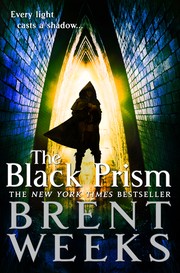
The Black Prism
Dying Prism Gavin Guile hides a secret son while war brews over color magic in the Seven Satrapies.
2,169-word summary · 10 min read
The Tower of the Swallow
Ciri flees as a bandit while Geralt gathers allies to find her.
2,580-word summary · 11 min read
Gardens of the Moon
Empire, gods, and mages collide over Darujhistan as Bridgeburners bleed for Empress Laseen.
2,188-word summary · 10 min read
Shadow's Edge
Kylar fakes death as a king killer while Vi hunts him for the Godking.
2,245-word summary · 10 min read

Magician's Gambit
Garion and his companions cross haunted Maragor and the caves beneath Rak Cthol to recover the Orb of Aldur.
2,391-word summary · 11 min read

Homeland
Drizzt Do'Urden is born into the cruel drow city of Menzoberranzan, where his father teaches him to fight and to doubt everything his family believes.
2,303-word summary · 10 min read
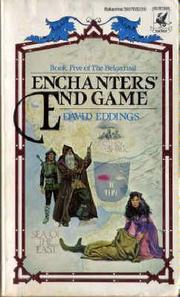
Enchanters' End Game
Garion marches toward Torak while Ce'Nedra leads the West's army in the final Belgariad volume, where prophecy and war meet.
2,557-word summary · 11 min read

The Queen of the Tearling
Nineteen-year-old Kelsea leaves the woods to take her throne, ends a shipment of human captives, and draws the Red Queen's revenge.
2,357-word summary · 10 min read
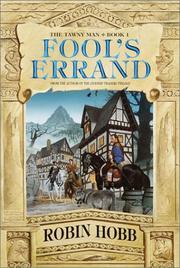
Fool's Errand
FitzChivalry Farseer has lived in exile for fifteen years. When Prince Dutiful vanishes before his betrothal, Fitz returns to Buckkeep to find him, with a wolf…
2,606-word summary · 12 min read
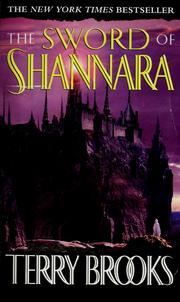
The Sword of Shannara
A young half-Elf and a company of companions set out to recover a magic sword before the Warlock Lord destroys the Four Lands.
2,474-word summary · 11 min read
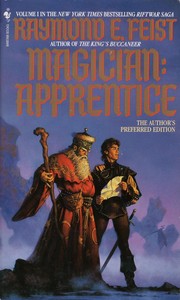
Magician: Apprentice
An orphan kitchen boy and a smith's son grow up in a frontier castle just as invaders from another world open a rift and begin a war that will change both of…
2,114-word summary · 9 min read
The Emperor's Soul
Forger Shai must stamp a new soul for the dying emperor in 100 days.
2,313-word summary · 10 min read
Pawn of Prophecy
Farm boy Garion learns sorcerers watch him as an old Orb wakes.
2,331-word summary · 10 min read
New Spring
Moiraine and Lan hunt the newborn Dragon before the Black Ajah finds him.
2,475-word summary · 11 min read
Furies of Calderon
Furyless Tavi defends Calderon Valley when the Marat return and lords scheme.
2,587-word summary · 11 min read
Stone of Tears
After the veil tears, Richard seeks training from the Sisters while Kahlan holds a fracturing Midlands and Zedd hunts the missing Stone.
2,483-word summary · 11 min read
The Farthest Shore
Archmage Ged and Prince Arren sail to the far west to stop Cob, whose bid for endless life drains magic across Earthsea in Le Guin's sad 1972 third volume.
2,800-word summary · 12 min read
Edgedancer
Hungry street thief Lift and her vine-like friend Wyndle cross the Herald Nale in Tashikk when a child emperor shows Radiant signs and she refuses to step…
2,328-word summary · 10 min read
Dragons of Autumn Twilight
Old friends reunite at the Inn of the Last Home, guard a glowing Blue Crystal Staff, face black dragon Khisanth, and free slaves at Pax Tharkas in this 1984…
2,803-word summary · 12 min read
The Eyes of the Dragon
In the kingdom of Delain, a jailed prince and his younger brother face a magician whose long plot for the throne turns on a napkin clue.
2,018-word summary · 9 min read
The City of Brass
Cairo con artist Nahri summons djinn Dara and is drawn to Daevabad where Ali questions pureblood rule.
1,993-word summary · 9 min read
Crossroads of Twilight
Rand cleansed saidin and the whole world felt it. Book ten follows each faction as they react, stall, and choose sides.
2,264-word summary · 10 min read
Baptism of Fire
Wounded Geralt crosses war country with odd allies to find Ciri after the Thanedd coup.
2,076-word summary · 9 min read
Winter's Heart
Trapped in Far Madding without the Power, Rand baits his betrayers while Mat plots escape from Ebou Dar and Elayne fights for Caemlyn.
2,906-word summary · 13 min read
The Path of Daggers
Rand wields Callandor against Seanchan while Elayne and Egwene maneuver.
2,492-word summary · 11 min read
Knife of Dreams
Rand sets a Seanchan trap while Mat weds Tuon, Perrin storms Malden, Elayne takes Caemlyn, and Egwene defies Elaida.
2,988-word summary · 13 min read
A Memory of Light
Rand faces the Dark One at Shayol Ghul as all armies join the Last Battle.
2,165-word summary · 10 min read
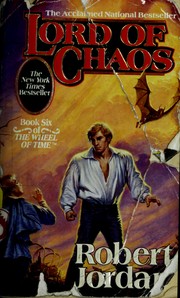
Lord of Chaos
Rand offers amnesty to men who can channel while Egwene is raised Amyrlin in exile. Book six of The Wheel of Time builds toward rescue and reckoning at Dumai's…
2,255-word summary · 10 min read
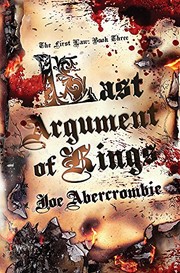
Last Argument of Kings
Jezal takes the crown, Glokta serves two masters, and Logen faces Bethod as the Gurkish close on Adua.
2,479-word summary · 11 min read
A Crown of Swords
After Dumai's Wells, Rand holds Cairhien while Egwene besieges Tar Valon and Elayne and Nynaeve hunt relief in Ebou Dar. Book seven crowns kings and queens at…
2,828-word summary · 13 min read