

The Crying of Lot 49
2,003-word summary 9 min read 183 pages in the book
- First published
- 1966
- Publisher
- Lippincott
- Pages
- 183
- ISBN
- 9780397004188
Reading options
What's inside (8 sections)
The Crying of Lot 49 is a short book about a woman who may or may not be uncovering a centuries-old postal conspiracy. It is 183 pages long, it was published by J. B. Lippincott in 1966, and it is the most approachable thing Thomas Pynchon ever wrote. That does not mean it is simple. It means the sentences are shorter than in Gravity's Rainbow and the plot is easier to follow, at least on a first read. The confusion is still there, but it is the point.
The novel opens with Oedipa Maas, a woman in her late twenties living in a northern California town called Kinneret. She is married to Mucho Maas, a radio DJ, and she is seeing a psychiatrist named Dr. Hilarius. Her life is comfortable and a little empty. Then she gets a letter telling her that her ex-lover, Pierce Inverarity, has died, and that she has been named co-executor of his estate.
Pierce was a wealthy real estate mogul with connections to the Mafia, the military, and just about everything else. Oedipa barely knew him when they were together, and she knows even less about his business. She goes to meet his lawyer, a former child actor named Metzger, and they begin an affair. A local teenage rock band called the Paranoids follows them around, and Oedipa starts noticing things.
The symbol
At a bar, Oedipa sees a symbol: a muted post horn with the letters W.A.S.T.E. underneath it. She asks about it and meets Mike Fallopian, a right-wing historian who claims to use a secret postal service. Fallopian is one of those Pynchon characters who explains a lot and clarifies nothing. He talks about the history of mail, the Thurn and Taxis postal monopoly, and a rival service called Trystero that was supposedly crushed but may have survived underground.
Oedipa starts seeing the muted horn everywhere. It is scrawled on walls, stamped on letters, and hidden in the watermarks of Pierce's stamp collection. She learns that Pierce had a stamp collection, and that the collection contains stamps with the muted horn symbol. She also learns that Pierce was involved in some shady dealings, including an attempt to sell the bones of forgotten American soldiers as charcoal to a cigarette company.
The symbol becomes an obsession. Oedipa cannot tell whether she is discovering a real conspiracy or connecting dots that are not there. Every time she finds a new piece of evidence, it leads to another piece, and another, and the pattern gets bigger without getting clearer. That is the engine of the novel. It is a detective story where the detective never gets to the bottom of anything.
The play
The trail leads to a Jacobean revenge play called The Courier's Tragedy. Oedipa sees a production of it and hears the name Tristero. After the show, she asks the director, Randolph Driblette, about the line, and he refuses to explain. Later, she finds an older, censored edition of the play and discovers that the Tristero reference was not in the original text. Driblette added it.
That detail is important. It means the conspiracy may be a literary invention, a joke, or a deliberate clue planted by someone who wanted Oedipa to follow it. Pynchon is playing with the idea that stories create reality. A name in a play can become a secret society. A symbol on a wall can become a movement. The line between fiction and history is one of the novel's main subjects. Pynchon never tells us whether Driblette was making a point, playing a joke, or obeying an instruction from someone else. The ambiguity is the clue, and Oedipa has no way to tell which explanation is true.
Oedipa also visits a scientist named John Nefastis, who claims to have built a machine that can communicate with the dead. The machine is based on Maxwell's demon, a thought experiment in physics. The scene is funny and unsettling. Nefastis is convinced his machine works, and Oedipa wants it to work, but nothing happens. The novel keeps offering her ways to make sense of the world, and then showing that they do not quite function.
The conspiracy
The middle of the book is a tour of California's underground. Oedipa meets a group of people who use the W.A.S.T.E. mailboxes, which are disguised as ordinary trash bins. She learns that W.A.S.T.E. may stand for "We Await Silent Tristero's Empire." She meets a nameless man in a gay bar who tells her that the muted horn is just a symbol for an anonymous support group for people with broken hearts. She hears stories about a secret postal service that connects people who have been left out of the official systems.
That is the novel's most interesting idea. The conspiracy is not just a shadowy organization. It is a network of the excluded: the poor, the queer, the forgotten, the people who do not fit into the official story of America. The muted horn is a sign that you are not alone, even if you are also not sure what you are part of. Pynchon is satirizing conspiracy thinking, but he is also taking seriously the loneliness that makes conspiracy thinking attractive.
The history behind the symbol is real enough to be unsettling. Thurn and Taxis was an actual private postal monopoly that operated in Europe for centuries, and it did suppress competitors. Pynchon takes that fact and invents Trystero, a rival service that was defeated but supposedly went underground. The novel never confirms whether Trystero survived, but the historical grounding makes the invented part feel plausible. That is how conspiracy theories work: they start with a real institution and add a secret. Pynchon is showing us the mechanism while also using it to tell a story.
Oedipa's personal life falls apart while she investigates. Her husband becomes addicted to LSD. Her psychiatrist goes insane. Dr. Hilarius turns out to have been a Nazi medical intern at Buchenwald, and he barricades himself in his office and starts shooting. The revelation is absurd and horrifying, and it fits the novel's logic. The people who are supposed to help Oedipa understand her mind are themselves part of the chaos.
The ending
The novel ends at an auction. Oedipa goes to the auction of Pierce's possessions and waits for lot 49, which contains the stamp collection with the muted horn. She has learned that a particular bidder is interested in the stamps, and she hopes that the bidder will turn out to be a representative of Tristero. The auctioneer begins to cry the lot. The book ends before we find out what happens.
That ending is famous, and it is the reason people either love or hate the novel. Pynchon refuses to resolve the mystery. We never learn whether Tristero is real, whether Pierce arranged the whole thing as a joke, whether Oedipa is paranoid, or whether the conspiracy is a metaphor for something larger. The book stops at the moment of revelation, and the revelation never comes.
I think the ending is the right one. The novel is not about solving a mystery. It is about the experience of looking for meaning in a world that may not have any. Oedipa spends the book trying to impose order on random events, and the auction is the final test. If the bidder is Tristero, then the conspiracy is real. If not, then Oedipa has wasted her time. Pynchon does not let us know, because the uncertainty is the truth he wants to leave us with.
The title itself is a clue to how the book works. "Crying" is the auctioneer's call, the moment when a lot is offered and the bidding begins. Lot 49 is the stamp collection, and the novel ends just as its value is about to be determined. The whole book is an auction of meanings. Every reader bids on a different interpretation, and Pynchon refuses to close the sale. That is not a failure of plotting. It is a formal joke about the way we assign value to stories.
What the book is doing
The Crying of Lot 49 is often described as postmodern, and that label is useful if you understand it as a set of techniques rather than a philosophy. Pynchon mixes high and low culture, jumps between genres, and refuses to give the reader a stable narrative voice. The book is a detective story, a satire, a paranoid thriller, and a meditation on communication. It is also very funny, in a dry, deadpan way.
The prose is dense with puns, allusions, and wordplay. Pynchon loves names that mean something: Oedipa (Oedipus), Mucho (much), Metzger (butcher in German), Fallopian (fallopian tubes), Nefastis (nefarious). The names are jokes, but they are also clues. The novel is asking you to read it actively, to notice patterns, and to be suspicious of the patterns you notice.
The book's attitude toward conspiracy is complicated. On one hand, it mocks the paranoia of people who see connections everywhere. On the other hand, it shows that the world really is full of hidden systems: the postal service, the military, the Mafia, the government, the corporations. The question is not whether power operates in secret. It does. The question is whether the secrets add up to a single meaning, and Pynchon suggests they probably do not.
Why it lasts
The Crying of Lot 49 has aged well because its subject is still with us. We live in a world of information overload, where every event can be connected to every other event, and where it is easy to mistake a pattern for a plot. The novel captures that feeling better than almost anything written since. Oedipa's experience of noticing a symbol everywhere is the experience of reading the internet.
It is also a very American book. The estate, the auction, the real estate, the military contracts, the mail: these are institutions, and Pynchon is interested in how institutions shape the stories people tell about themselves. The muted horn is a counter-symbol, a sign of the people who have been left out of the official narrative. That tension between the official and the underground is still the central tension of American life.
The 1960s setting matters too. This is California at the end of the postwar boom, a place of freeways, tract homes, defense contractors, and new religions. The novel is full of the era's paranoia and its optimism, its sense that the old order is crumbling and something else might be emerging. Pynchon captures the feeling of a society that is simultaneously more connected and more fragmented than ever before. The postal service is a perfect metaphor for that. Mail is supposed to bring people together, but it can also be intercepted, misdirected, or used to control them.
The novel is not for everyone. Some readers find the ending frustrating, the characters thin, and the prose too clever. Oedipa is the only character with real interiority, and even she is more of a consciousness than a person. The book is short, but it is not quick. It demands attention, and it rewards rereading.
I read it first in college and thought it was a puzzle I was supposed to solve. I read it again years later and realized the puzzle is the point. Oedipa does not need to know whether Tristero is real. She needs to keep looking, and the looking is what changes her. The novel ends before the answer, but the question has already done its work.
If you want a book that explains everything, this is not it. If you want a book that makes you feel the vertigo of a world full of signals, it is hard to do better. It is 183 pages, and it will stay in your head longer than books twice its size. That is a rare kind of efficiency. It is worth the effort. Really.
FAQ
What does W.A.S.T.E. stand for in The Crying of Lot 49?
It is suggested to stand for 'We Await Silent Tristero's Empire,' the secret postal network Oedipa believes she has discovered.
Does The Crying of Lot 49 explain the conspiracy?
No. The novel ends at the auction of lot 49 before the bidder is identified, so readers never learn whether Tristero is real, a hoax, or a product of Oedipa's paranoia.
Why is the book called The Crying of Lot 49?
The title refers to the auctioneer's call for lot 49, the stamp collection that may contain proof of the Tristero conspiracy. The novel stops just as the bidding is about to begin.
Similar books
Naked Lunch
Burroughs's banned 1959 collage novel follows Bill Lee through addiction, Tangier, and the nightmare bureaucracy of the Interzone.
2,082-word summary · 9 min read
If on a Winter's Night a Traveler
You, the Reader, chase a defective novel through bookshops and translators while ten other novels keep interrupting. Calvino's famous puzzle about the act of…
2,173-word summary · 10 min read
Bleak House
Jarndyce and Jarndyce grinds through Chancery while Esther finds her family.
2,480-word summary · 11 min read
Post Office
Chinaski drifts through postal shifts, cheap rooms, horse tracks and rough love in Bukowski's 1971 debut about work, drink and survival.
2,444-word summary · 11 min read
Chronicle of a Death Foretold
A town knows brothers will kill Santiago and no one stops it, retold to find why.
1,950-word summary · 9 min read
Sophie's World
Sophie gets philosophy lessons by mail, then finds she is fiction in a father birthday book for Hilde.
2,013-word summary · 9 min read
Breakfast of Champions
A Pontiac dealer breaks down while a broke sci-fi writer brings the book that tells him others are robots.
2,013-word summary · 9 min read
A Confederacy of Dunces
Ignatius J. Reilly, jobless and full of opinions in New Orleans, meets work, his mother, and the law in Toole's posthumous Pulitzer winner.
3,089-word summary · 14 min read
The Master and Margarita
Devil Woland visits 1930s Moscow while Master writes Pilate and Margarita bargains.
2,535-word summary · 11 min read
Silas Marner
A falsely accused weaver hoards gold in Raveloe until a stolen hoard and an abandoned child remake his narrow life.
2,699-word summary · 12 min read

Revolutionary Road
A Connecticut couple who believe they are too good for the suburbs plan to move to Paris, and the plan slowly exposes everything they cannot say to each other.
2,085-word summary · 9 min read

Lisey's Story
Two years after her novelist husband dies, Lisey Landon follows a trail of clues into his childhood and the other world that made him a writer.
1,998-word summary · 9 min read
Authority
The new director of the Southern Reach takes over an agency that is hiding the truth about Area X, and the building starts to change around him.
2,029-word summary · 9 min read

Howards End
Forster's 1910 novel follows two families, a house in Hertfordshire, and a burned note, asking whether money and feeling can ever be connected.
2,187-word summary · 10 min read

Sophie's Choice
A young Southern writer in 1947 Brooklyn befriends a brilliant, unstable couple and slowly learns the story of the Polish Catholic woman at the center of their…
2,798-word summary · 12 min read
Once There Were Wolves
A biologist reintroduces fourteen wolves to the Scottish Highlands while protecting her traumatized twin sister, then finds a body in the snow that could…
2,682-word summary · 12 min read
James
Percival Everett retells Huckleberry Finn from Jim's side, giving him a library, a hidden school, and a voice the novel lets loose.
2,211-word summary · 10 min read

Fathers and Sons
Arkady brings the nihilist Bazarov home to his father's estate, and a generational argument turns into love, a duel, and an early death.
2,192-word summary · 10 min read
The Moonstone
A cursed yellow diamond vanishes on the night of a birthday party, and eight witnesses tell what they saw.
2,603-word summary · 12 min read

The Chosen
A shattered pair of glasses in a 1944 Brooklyn softball game starts a friendship between a Hasidic boy and his Orthodox neighbor, and their fathers pull them…
2,443-word summary · 11 min read
Infinite Jest
A film that kills its viewers, a tennis academy, a halfway house for addicts, and a future America where corporations name the years, all tangled together.
2,084-word summary · 9 min read
The Dharma Bums
Ray Smith rides freight trains, climbs Matterhorn Peak and argues about Zen with the poet Japhy Ryder in Kerouac's 1958 road novel.
2,729-word summary · 12 min read

Ivanhoe
A disinherited Saxon knight, a great tournament, a besieged castle and a trial by combat. Scott's most famous novel, set in England in 1194.
2,834-word summary · 13 min read

Wide Sargasso Sea
Jean Rhys gives the first Mrs. Rochester a Caribbean childhood, a marriage built on money and suspicion, and a voice that Charlotte Bronte left in the attic.
2,021-word summary · 9 min read
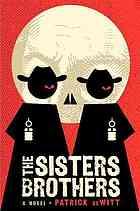
The Sisters Brothers
Two hired killers ride from Oregon to Gold Rush California to murder a prospector, and find their trade, their brotherhood, and the frontier myth coming apart.
2,095-word summary · 9 min read
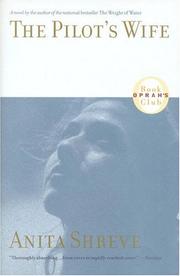
The Pilot's Wife
Kathryn Lyons's husband dies in a plane crash, and the investigation reveals a secret life that forces her to rethink their marriage.
2,006-word summary · 9 min read
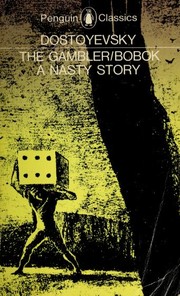
The Gambler
Dostoevsky's roulette novella: Alexei loses Polina, wins a fortune, loses everything, and promises himself one more bet tomorrow.
2,022-word summary · 9 min read
Orlando
A young Elizabethan nobleman becomes a woman and lives for centuries, moving through English history while writing a single poem about an oak tree.
2,030-word summary · 9 min read
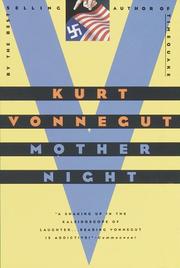
Mother Night
Howard W. Campbell Jr., a Nazi propagandist and American spy, tells the story of his double life from an Israeli prison cell while waiting to be tried for war…
1,988-word summary · 9 min read
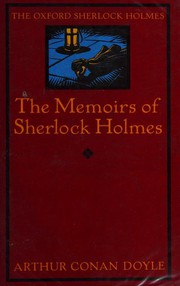
The Memoirs of Sherlock Holmes
Doyle's second Holmes collection gathers twelve Strand stories, including the early case of the Gloria Scott and the confrontation with Moriarty at Reichenbach…
2,390-word summary · 11 min read