
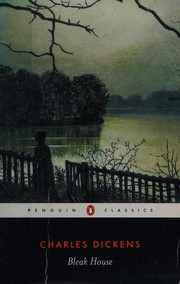
Bleak House
2,480-word summary 11 min read 1088 pages in the book
- First published
- 1853
- Publisher
- Bradbury and Evans
- Pages
- 1088
- ISBN
- 9780141439723
Reading options
What's inside (8 sections)
I picked up Bleak House because I kept hearing it named as the Dickens novel for people who think they do not like Dickens. That sounded like a trick. The book is long, about 1088 pages in the Penguin edition tied to the 1853 Bradbury and Evans serial, and the first chapters are full of fog and lawyers. I expected to stall. Instead the fog chapters pulled me in, then Esther Summerson started talking, and I settled into the back and forth between those two voices for weeks.
What surprised me early was how modern the setup seems. A court case that never ends. A group of young people waiting for money that never arrives. A woman with a past she cannot speak about. Dickens moves between a cold present-tense narrator who watches London from above and Esther, who tells her part looking back. The two styles do not sound alike at all. One is sharp and crowded. The other is plain and careful, almost too careful at first.
The story is built around Jarndyce and Jarndyce, a Chancery suit over a will that has gone on so long that few people remember what the original dispute was about. Costs eat the estate year by year. Clerks copy papers. Lawyers find new reasons to delay. Miss Flite, an older woman who comes to court every day with her birds, keeps saying there will be a judgment soon. Nobody serious believes her.
Fog and the court
The opening follows the Lord Chancellor in Lincoln's Inn Hall on a foggy November afternoon. Fog is everywhere in these pages, in the streets, in the river, in the courtroom talk. Dickens uses it to show how little anyone can see clearly when Chancery is involved.
We meet the lawyers and hangers on quickly. Mr. Tangle, Mr. Kenge of Kenge and Carboy, and the clerks who live off copying. We meet Miss Flite, who expects a judgment, and a crowd of small suitors. The case has wards in court, Richard Carstone and Ada Clare, cousins with an interest in the estate, and their guardian to be, John Jarndyce of Bleak House.
John Jarndyce is a wealthy man who has himself been worn by the suit. He wants no part of it if he can help it. He invites Richard and Ada to live under his care and asks Esther Summerson to join as companion to Ada. He warns them all against hoping for anything from Chancery. It is good advice. Almost no one takes it.
This part can read slowly if you want plot right away. There are names to sort, family trees to hold, and legal terms that Dickens explains by showing rather than defining. I kept a short list on paper for the first hundred pages: who was a ward, who was a lawyer, who lived at Chesney Wold. After that the names stayed put.
The court chapters also introduce Krook, the rag and bottle dealer near Chancery Lane, and his lodger Captain Hawdon, known as Nemo, who copies law writing for a living. Krook cannot read, yet he hoards papers. Smallweed and the moneylenders circle nearby. Inspector Bucket has not arrived yet, but the sense that papers matter, that a signature or a bundle of letters can change a life, is already strong.
Esther and Bleak House
Esther tells her story from childhood. She was raised by a severe godmother, Miss Barbary, who told her that her mother was dead and that Esther herself was marked by shame. No details were given, only coldness. Esther learned to be useful, to sew, to keep accounts, to make herself small in a house that offered little warmth.
After Miss Barbary dies, John Jarndyce pays for Esther to train at Greenleaf school and then brings her to Bleak House as companion to Ada. Esther accepts with gratitude that sometimes tries my patience as a reader. She apologizes for herself on almost every page at first. She calls her own account uninteresting. She praises others and excuses their faults.
Still, Esther notices a great deal. Her housekeeping at Bleak House gives Dickens a way to show daily life: the keys, the stores, the servants, the poor boy Jo who sweeps a crossing, the lodgers in London. Ada is gentle and loving, quick to attach herself to Esther and later to Richard. Richard is bright and restless, training first for medicine, then law, then the army, never settling. John Jarndyce is kind in a nervous way, always watching the weather, the east wind, as a sign of his mood. Mr. Skimpole, a guest who lives off others while calling himself a child, talks about money as if it were poetry.
Allan Woodcourt, a young surgeon, enters here. He treats the poor without pay when he can and earns Esther's respect by steady conduct rather than speeches. His mother later objects to Esther because of the unknown birth. That objection matters for the plot, and it shows how birth and reputation worked as a wall even for decent people.
Esther falls ill with smallpox after nursing a sick boy connected to Jo. She survives but her face is scarred. Dickens handles this without turning it into a lesson speech. People react in small ways. Ada stays loving. Jarndyce stays kind. Guppy, a law clerk who once proposed to Esther, pulls back. Woodcourt does not pull back. The illness changes how Esther sees herself more than it changes the facts of her position, if that makes sense. She had thought of herself as useful rather than admired. Afterward she thinks so even more.
Lady Dedlock and Tulkinghorn
While Esther learns housekeeping, the other narrator follows Sir Leicester and Lady Dedlock at Chesney Wold in Lincolnshire. Sir Leicester is an old baronet, proud of family and station, slow to see what happens under his roof. Lady Dedlock is younger, beautiful, bored, and tired of London seasons. She has a secret.
The secret comes out through papers. Tulkinghorn, the Dedlock family lawyer, notices Lady Dedlock's reaction to handwriting on a legal document copied by Nemo, the lodger who later dies of opium in Krook's house. Tulkinghorn is patient and silent. He collects. He pays Jo to show where Nemo lived. He questions the innkeepers. He traces letters. Step by step he learns that before her marriage Lady Dedlock had a child with Captain Hawdon, then believed the child died.
That child is Esther. Miss Barbary, who was really Lady Dedlock's sister, raised Esther harshly and hid the truth. Lady Dedlock had been told her baby did not live. She married well and kept her place. Now Tulkinghorn holds the thread and pulls it tighter, not to help anyone but to keep power over her.
Lady Dedlock walks at night in cheap clothes to see where Hawdon died and where Jo swept. Jo, told to move on by constables and ministers, catches her attention because he knew Nemo. Esther meets her mother once on the street without knowing who she is, then later in full knowledge during a short meeting arranged with care. Those scenes are written with restraint. No long speeches. Lady Dedlock tells Esther they must not meet again, for the sake of all involved.
Tulkinghorn presses harder. He brings in Hortense, Lady Dedlock's former maid, who hates her mistress and wants money. He uses Guppy, who has found Esther's connection on his own and tries to trade it. The lawyer seems in control until he is shot dead in his chambers. Suspicion falls first on Lady Dedlock because she had quarreled with him and had reason to want him silent.
Here Inspector Bucket takes charge. Bucket is polite, watchful, fond of talking his way into rooms. He follows timing, footprints, dresses, and train schedules rather than theories. He arrests Hortense after showing how she borrowed Lady Dedlock's dress and used the pistol. It is one of the few places where Dickens lets detection carry a long stretch, and it reads quickly after so much Chancery paper.
Richard and the suit
Richard Carstone is the clearest warning in the book about waiting for Chancery. He is not weak at first. He is open, generous, fond of Ada, willing to work. But the suit sits in his mind as a promise. If Jarndyce and Jarndyce ends in his favor, all choices become easy. So he does not choose. He studies medicine half heartedly, then tries law under Kenge and then Vholes, then takes a commission. Each move costs money. Vholes, his legal adviser, feeds the hope while drawing fees. John Jarndyce urges him to break free and make a life with Ada on plain earnings. Richard hears it as interference.
Ada loves Richard and marries him against Jarndyce's quiet wish that they wait. She stays loyal while money runs out and Richard grows thin and bitter. They have a child. Esther helps where she can. Woodcourt helps with medical care. Nothing helps Richard while he checks the court lists each term and reads meaning into every delay.
The end of the suit is famous and I will state it plainly because this is a summary. After years of costs, the estate is found to have been eaten by fees. There is nothing left to divide. Richard, already ill, hears the result and sinks. He dies soon after, leaving Ada a widow with a baby. Jarndyce, who had always feared this, takes them in without reproach. The scene at the deathbed is painful because Dickens does not soften Richard into a saint. He shows a young man who wasted good qualities on a false hope.
Miss Flite, who kept birds named after hopes, frees them when the case ends. It is a small gesture that stays in mind longer than the legal language. The court moves on to other suits. No one in power is punished for the waste. That absence of punishment is part of the point.
Jo, Bucket, and London streets
Jo the crossing sweeper ties the high houses to the low streets. He cannot read. He is moved on by police for being dirty and in the way. He knew Nemo because Nemo spoke kindly to him. He shows Lady Dedlock the burial ground. He is taken to Bleak House when ill, then sent away for fear of infection, then sheltered briefly by Woodcourt and others. He dies of disease and neglect, with Woodcourt and Esther near.
People quote Jo's last words from the book, and I will not repeat them here because they read stronger in place. What matters is how Dickens uses him to link Esther's illness, Lady Dedlock's guilt, Tulkinghorn's inquiry, and Bucket's search. Jo is not a symbol only. He is a boy who is cold and hungry and told to move along. The chapters about him made me pause more than the court satire.
Bucket's work gives the last third its motion. He manages Sir Leicester, who suffers a stroke when the truth about Lady Dedlock reaches him, with surprising care. Sir Leicester, for all his pride, stands by his wife when Tulkinghorn's papers are read. He sends Bucket to find her after she leaves Chesney Wold in fear and shame. Esther goes with Bucket through snow to track her mother from place to place, to the river, to the railway, to the burial ground where Hawdon lies.
Lady Dedlock dies at that gate, in the clothes of another woman, of cold and grief. It is a hard ending and Dickens does not excuse her nor damn her. Sir Leicester lives on, aged and quiet, with his household around him. The chase chapters have coincidence in them, missed meetings by minutes, and I admit those stretches tested my patience. They also carry real dread because Esther knows she may be close yet too late.
Krook's death belongs here too. He dies by spontaneous combustion, a strange choice that readers have argued about since publication. Dickens insisted he had cases to cite. On the page it reads as grotesque comedy turning grim, with Smallweed fighting over the papers Krook left behind. Those papers include Hawdon's letters and help settle who Esther is. I did not buy the science, and most readers will not. I did accept its use in the story, since it clears the way for Bucket and for Jarndyce to act.
What drags and what holds
No honest account should skip the drag. The book repeats itself about Chancery. Skimpole's speeches about being a child go on past the point where his parasitism is clear. Some minor quarrels among clerks and moneylenders take pages that could have gone to Ada, who stays thin as a character for long stretches. Esther apologizes too often in the first third. Readers who want a tight mystery may tire before Tulkinghorn starts his hunt.
Coincidence also piles high. People meet on foggy streets who should not meet. Letters fall into the right hands. Bucket arrives at useful moments. If you need every link to be probable, this novel will annoy you. Dickens is after connection rather than probability, showing how high and low London touch through law, money, disease, and paper.
What holds, for me, is the pairing of the two narrators once you accept it. The present-tense chapters see the city as a system. Esther sees rooms and faces. Together they catch both the fog outside and the kitchen talk inside. John Jarndyce stays with me as a portrait of kindness that is not simple. He loves Esther in his way, then steps back when he sees Woodcourt would make her happier. That release, handled without speeches, is one of the few scenes of generosity in older fiction that did not strike me as staged.
Woodcourt and Esther marry and move to a second Bleak House in Yorkshire, a smaller house Jarndyce gives them. Ada and her child live near. Sir Leicester keeps Chesney Wold with quiet loyalty to his wife's memory. The suit is gone. The living arrange what they can.
I closed the book thinking less about law than about waiting. Richard waits. Miss Flite waits. Lady Dedlock waits to be exposed. Jo waits to be moved on. Esther waits to learn who she is. Chancery feeds on that waiting. The final chapters do not claim the system was fixed. They claim a few people learned to stop feeding it. That seemed true enough to carry the length.
If you try it, pace yourself. Read the court chapters slowly and let Esther's part move faster. Keep track of Hawdon, Nemo, and the handwriting, because that thread ties the mystery. And allow for the Dickens habit of naming a moral by showing a room: the foggy court, the cold Chesney Wold, the warm kitchen at Bleak House. Those rooms tell much of the story before anyone speaks.
FAQ
Is Bleak House hard to start?
The opening moves slowly through fog and court papers, then Esther and the wards arrive and the pace steadies. Give it a hundred pages before judging.
Do I need to like both narrators?
No. Many readers prefer the present-tense court chapters and tolerate Esther, or the reverse. The two halves meet late through Jo and Lady Dedlock.
Does Jarndyce and Jarndyce ever end?
Yes, it collapses when costs swallow the estate, leaving Richard with nothing. The close is bleak on purpose.
Similar books
The Crying of Lot 49
A California woman named executor of her ex-lover's estate follows a muted post horn into a possible centuries-old postal conspiracy, and Pynchon refuses to…
2,003-word summary · 9 min read
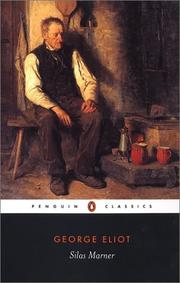
Silas Marner
A falsely accused weaver hoards gold in Raveloe until a stolen hoard and an abandoned child remake his narrow life.
2,699-word summary · 12 min read

Sophie's Choice
A young Southern writer in 1947 Brooklyn befriends a brilliant, unstable couple and slowly learns the story of the Polish Catholic woman at the center of their…
2,798-word summary · 12 min read
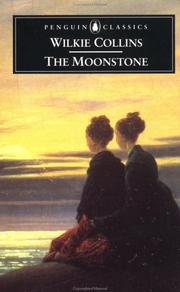
The Moonstone
A cursed yellow diamond vanishes on the night of a birthday party, and eight witnesses tell what they saw.
2,603-word summary · 12 min read

Ivanhoe
A disinherited Saxon knight, a great tournament, a besieged castle and a trial by combat. Scott's most famous novel, set in England in 1194.
2,834-word summary · 13 min read

Wide Sargasso Sea
Jean Rhys gives the first Mrs. Rochester a Caribbean childhood, a marriage built on money and suspicion, and a voice that Charlotte Bronte left in the attic.
2,021-word summary · 9 min read
Mother Night
Howard W. Campbell Jr., a Nazi propagandist and American spy, tells the story of his double life from an Israeli prison cell while waiting to be tried for war…
1,988-word summary · 9 min read
The Memoirs of Sherlock Holmes
Doyle's second Holmes collection gathers twelve Strand stories, including the early case of the Gloria Scott and the confrontation with Moriarty at Reichenbach…
2,390-word summary · 11 min read
The Clockmaker's Daughter
A London archivist finds a Victorian satchel holding a photograph, a sketchbook and a letter, then follows them to Birchwood Manor, where a young woman died in…
2,886-word summary · 13 min read
The Prisoner of Heaven
Fermin Christmas past returns with a stranger and a prison debt.
2,388-word summary · 11 min read
Fingersmith
A thief plots to cheat an heiress, then the scheme flips twice in Victorian London.
2,532-word summary · 11 min read

Song of Solomon
Milkman Dead leaves Michigan to hunt for family gold and finds instead the old song of his ancestor Solomon.
2,465-word summary · 11 min read
All the Pretty Horses
John Grady and Rawlins ride to Mexico for ranch work, finding love, prison, and a code that costs all.
2,677-word summary · 12 min read
Alias Grace
A teenage maid convicted of a double murder in 1843 tells her story to a young doctor hired to decide whether she deserves a pardon.
2,788-word summary · 12 min read
The Woman in White
A drawing teacher and Marian Halcombe fight a forged register to prove Laura is alive.
1,915-word summary · 9 min read
Middlemarch
Idealistic Dorothea marries dry scholar Casaubon while ambitious doctor Lydgate marries Rosamond, and a Midlands town watches both marriages strain.
2,883-word summary · 13 min read

Snow Falling on Cedars
A Japanese American fisherman stands trial for murder on a snowy island, while a reporter faces lost love and wartime prejudice.
2,224-word summary · 10 min read

Chronicle of a Death Foretold
A town knows brothers will kill Santiago and no one stops it, retold to find why.
1,950-word summary · 9 min read
Sophie's World
Sophie gets philosophy lessons by mail, then finds she is fiction in a father birthday book for Hilde.
2,013-word summary · 9 min read
The Wind-Up Bird Chronicle
An unemployed Tokyo man hunts a lost cat, then his missing wife, and slips from quiet suburbs into wells and wartime memory.
3,344-word summary · 15 min read
Things Fall Apart
Proud Igbo wrestler Okonkwo rises in 1890s Umuofia, then loses standing through hard exile, a son's conversion, and British missionaries and courts remaking…
2,518-word summary · 11 min read
The Name of the Rose
Friar William and Adso investigate 1327 abbey deaths amid library labyrinth.
2,580-word summary · 11 min read
Beloved
Sethe lives with the memory of killing her child to save her from slavery until a young woman named Beloved arrives.
2,586-word summary · 11 min read

All Quiet on the Western Front
Paul Bäumer enlists at nineteen and faces the trenches of World War I in Remarque's 1929 classic, told from the German side of the wire.
2,543-word summary · 11 min read
The Strange Case of Dr. Jekyll and Mr. Hyde
A London lawyer traces a violent stranger to his respectable friend in Stevenson's 1886 tale of two selves.
2,286-word summary · 10 min read
Oliver Twist
An orphan flees the workhouse for London's thieves, and Dickens indicts a cruel society.
2,763-word summary · 12 min read
Great Expectations
Orphan Pip chases wealth and Estella through London fog and prison ships.
2,117-word summary · 9 min read

Violeta
A woman born in 1920 writes her life story to her grandson, from one pandemic to another, through wealth, ruin, passion, and dictatorship in South America.
2,555-word summary · 11 min read

The Long Winter
Dakota Territory, 1880: seven months of blizzards cut a town off from the railroad, and a family survives on twisted hay, ground wheat, and a dangerous wheat…
2,210-word summary · 10 min read
The Art Forger
A disgraced Boston painter agrees to copy a Degas stolen from the Gardner Museum, then begins to suspect the original she is copying is itself a forgery.
2,117-word summary · 9 min read