
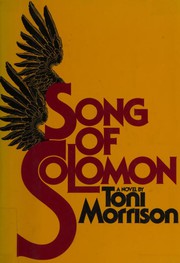
Song of Solomon
2,465-word summary 11 min read 337 pages in the book
- First published
- 1977
- Publisher
- Alfred A. Knopf
- Pages
- 337
- ISBN
- 9780394497846
Reading options
What's inside (8 sections)
I came to Song of Solomon sideways. I had read Beloved first and loved it in the way you love a book that bruises you, and a friend told me this earlier one was warmer and stranger. I did not believe the warmer part. I picked up a library copy on a rainy weekend and read the first page standing in the kitchen. A man in blue wings trying to fly off a hospital roof while a crowd waits below. That was enough. I sat down and stayed there for hours.
Morrison published it in 1977 with Alfred A. Knopf, and it runs 337 pages in that first hardcover. The sentences sing more than in her first two novels, and the jokes land harder. Grief is still in every chapter, but so is mischief.
An honest note before I walk through it. Milkman, the main character, is hard to like for the first hundred pages. He is selfish the way a sheltered son can be. Some women around him get badly hurt so he can learn things, and that bothered me while I read and still bothers me now. The middle travel section also slows down. Names repeat. People talk in circles. I think the payoff earns it, but this is not a book that hurries to please you.
The insurance man and No Mercy Hospital
The novel opens in 1931 in a Michigan city that reads like Kalamazoo. Robert Smith, a Black insurance agent, climbs to the roof of Mercy Hospital with blue silk wings tied to his back. He leaves a note saying he will fly to the other side of Lake Superior. A crowd gathers to watch. Among them is Ruth Foster Dead, pregnant and frightened, standing near the hospital steps.
Smith jumps and falls. The next morning Ruth gives birth to a son.
That pairing sets the pattern. Flight and falling. The hospital carries its own bitter joke. Black residents call it No Mercy Hospital because they are admitted late, through the back, if at all. Ruth is the daughter of Dr. Foster, the town's first Black doctor. She married Macon Dead Jr., a hard landlord who owns houses across Southside. Their home sits on Not Doctor Street, named because the town refused to honor Dr. Foster with a Doctor Street sign.
Macon Jr. is the son of a Pennsylvania farmer. Ruth is lonely, still visiting her father's grave to lie on the stone and feel close to him. Their marriage is airless. Their son is legally Macon Dead III, but no one calls him that. As a toddler he nurses from Ruth long past the usual age. Freddie, a janitor and town gossip who works for Macon, sees it and spreads the story. The boy gets the nickname Milkman. It sticks for life.
Milkman grows up with one leg slightly shorter than the other, so his walk tilts. He has two older sisters. Magdalena, called Lena, keeps the house together and sees more than she says. First Corinthians, proud of her college manners, loves a man her parents would never accept. White bankers respect his father for owning property. Black neighbors resent the family for the same reason.
Freddie keeps drifting through these early scenes with news and rumors. Those fragments matter because Milkman starts out knowing almost nothing about his own people. He knows the rent book. He does not know the songs.
Pilate and the wine house
Pilate Dead is Macon Jr.'s younger sister and the moral center of the book. She was born after her mother died in childbirth on a farm in Pennsylvania. She came into the world without a navel, smooth across the belly, and the midwife fled shouting. Pilate grew up half wild. She can barely read. She makes wine and sells it from a cluttered house she shares with her daughter Reba and her granddaughter Hagar. She wears her name in her ear, written on a scrap by her father and kept in a long brass earring that pulls at the lobe.
Her father was the first Macon Dead, born Jake, who copied shapes from the Bible when a Union soldier asked his name. After their father was shot by white men over his farm, a place called Lincoln's Heaven, the brother and sister hid together and then split over something in a cave. Macon says Pilate stole gold. Pilate says there was no gold, only bones.
Milkman finds Pilate's house as a boy and keeps returning for wine and singing. Reba, broad and calm, once spent contest winnings on a huge car. Hagar, Reba's daughter, is young and restless. The house smells of pine and fermenting fruit. Pilate tells stories that do not match Macon's version. She says her dead father visits her and tells her to sing. She keeps a green sack hanging from the ceiling that Milkman assumes holds money.
Macon warns his son to stay away. Lena warns him more gently. Milkman goes anyway because Pilate's kitchen feels alive in a way his father's brick house never does.
I loved these scenes best in the first half. There is a small hour where Pilate shows Milkman and his friend Guitar how to make wine right, laughing with her whole body, and the fear lifts. Then Macon pulls Milkman back into rent collecting, keys and ledgers and threats. You see the split Milkman will carry. One house teaches him how to own. The other teaches him how to live.
Still, Pilate can feel too bright next to Ruth and Lena, who wait thinly drawn in the margins. Morrison gives Pilate the best lines and the magic. I felt that imbalance. It serves the theme, since Milkman ignores women until he cannot, but it makes the first third lopsided.
Guitar, the Seven Days, and Hagar
Guitar Bains is Milkman's best friend and the fire of the book. They meet as boys. Guitar is poor, quick, funny in a way that can turn fast. His father died in a sawmill accident where the boss shrugged and the blame fell on the worker. His grandmother fed him sweets to keep him calm after. He grew up tasting sugar with grief.
As a young man Guitar joins a secret group called the Seven Days. Each member takes a day of the week. When a Black person is killed and the law does nothing, the man whose day matches the murder kills a white person in return. They argue it out for years in cars and at Tommy's barbershop. Railroad Tommy and Hospital Tommy joke and change the subject when it gets too close. Porter, Corinthians' secret lover, drifts at the edge.
Morrison lets Guitar make his case without turning him into a villain or a hero. Guitar says love does not feed children. Milkman says killing strangers changes nothing. Neither wins clean, which is why those talks stay with you.
At the same time Milkman slides into a long affair with Hagar. At first it is sweet. They meet at Pilate's, they laugh, they use his father's empty apartments. Then Milkman tires of her. He ends it with a short thank you note and some money. It is one of the cruelest pages Morrison wrote because it is so casual. He thinks he is being decent.
Hagar does not accept it. She loves him with a hunger that turns ill. She buys clothes she cannot afford, a yellow dress and patent shoes, trying to remake herself into someone he will keep. She comes at him with a knife in markets and at night, shaking so hard she cannot finish it. Reba even sells a huge diamond to buy Hagar what she begs for. Nothing steadies her. She dies of grief and fever in Pilate's house while Milkman is far away and barely thinking of her.
This stretch hurt to read. Morrison shows how Milkman's carelessness looks from inside a woman with little else. Some readers will say Hagar exists only to push Milkman into growth. There is truth in that. Her death changes him more than her life was allowed to. I wish she had one more scene of joy before the end.
Gold in Danville and the road south
At thirty two Milkman is stuck. He collects rents for Macon, drives a car his father bought, sleeps with women he does not respect. Then Macon tells the old story straight. After Jake was killed in Pennsylvania, Macon and Pilate hid with Circe, the Black midwife who served the white Butlers who took their farm. The Butlers were later killed. Macon believes gold was hidden in the house or in a nearby cave. He believes Pilate took it. He sends Milkman to find it.
Guitar goes along because he wants money for the Seven Days. Two friends hunting treasure for opposite reasons. They fly east, then drive to Danville, Pennsylvania, where Circe still lives alone in the ruined Butler mansion with dogs.
Circe is ancient and thin, keeping the empty house as if the white family might return. She tells Milkman she hid the children after the murder. She saw what they did in the cave. There was no gold the way Macon tells it. Milkman barely listens. He wants the cave. He finds it, hauls out sacks, drags them back, and finds only bones and rocks. Guitar watches and grows colder. He starts to believe Milkman means to cheat him.
Milkman leaves Guitar in Pennsylvania and pushes on to Shalimar, Virginia, because Circe let slip names that match Macon's childhood stories. He carries the green sack he stole from Pilate years earlier, still thinking it held money. He does not yet know whose bones are inside.
This road section drags in places. Buses stop. Rides fail. Local men beat him for acting rich and strange. He cannot hunt. His city clothes mark him. I got impatient here. Then I saw what Morrison was doing. Every skill Milkman relied on in Michigan means nothing here. He has to ask for help and listen.
In Danville an old man remembers Jake as a strong farmer. In Michigan Jake was only a threat Macon used on tenants. That cracks something open in Milkman. He starts to want the family story for more than cash.
Shalimar and the children's song
Shalimar sits in the Virginia hills, small and watchful. The Black families there share names Milkman half remembers. Solomon. Ryna. Jake. Sing. He asks about his people and gets songs instead of answers.
Children play a ring game and sing about Solomon and Ryna and a man who flew. Milkman heard Pilate sing pieces of it as a child and thought it was nonsense. In Shalimar he hears the fuller shape. Solomon, an African held in slavery, flew back to Africa, leaving behind his wife Ryna and many children. One child, Jake, was pulled down and dropped. That dropped child became Milkman's grandfather, the first Macon Dead, truly named Jake Solomon. His wife was Sing, short for Singing Bird.
Susan Byrd helps Milkman link the names through her Bible records. Sweet, a woman he stays with for a few nights, bathes him and tells him plain truths about how he treats people. Men from Solomon's store test him, then take him hunting. He gets lost in the woods and learns to find direction without a map.
The song keeps returning with small changes. Solomon went across the sky. Ryna screamed on a rock. That rock is real. People point to Solomon's Leap, a cliff where Solomon took off, and Ryna's Gulch nearby. Pilate's earring, her singing, her talk of her father telling her to sing, all lock into place. Pilate had carried the history without knowing she carried it. Milkman had ignored it because he wanted gold.
Morrison does not dump a family tree. She lets Milkman hear the same lines from a child, then an old hunter, then Susan Byrd. Each hearing adds a name. By the time he stands at the Leap, he can recite it. I read those pages twice. The pleasure is not solving a puzzle. It is watching a man who never listened learn how.
There is a hard edge too. Guitar has followed him to Shalimar and believes Milkman stole the gold. Guitar, who once loved him like a brother, now stalks him with a gun. Milkman tries to explain about bones and songs. Guitar hears excuses. The Seven Days logic has narrowed him to one thought. Milkman finally sees what that narrowing costs because he stands on the other end of it.
Pilate's burial and Milkman's leap
Milkman returns north changed, though not finished. He goes back to Michigan, faces Macon and Ruth and Lena with new eyes, then asks Pilate to come south with him. He brings her to Shalimar to lay the bones to rest. The bones in the green sack are her father Jake, killed in Pennsylvania and left unburied while his children ran. Pilate carried them for decades, thinking she carried guilt for a man killed in that cave. Milkman can now tell her where they belong.
Pilate asks to be buried without a coffin, in the earth. Milkman carries her to Solomon's Leap. She dies there quietly after singing and talking and asking him to sing for her. He lays her down. He puts her earring in the dirt. A bird takes it. That small plain image hit me harder than any speech.
Guitar waits in the trees. He shoots. The bullet strikes Pilate as her heart gives out. Morrison leaves the mechanics soft. What matters is that Pilate is gone and the two friends face each other with nothing left to trade. Guitar has lost his cause and his friend. Milkman has lost his guide and his excuse.
Then Milkman leaps.
He calls Guitar's name and jumps toward him off the rock, arms out. The book ends in midair. Morrison writes that the leap could hold him, that if he fell it was a fall that could keep him. She does not say he flies like Solomon. She does not say he dies like Robert Smith. She leaves him suspended.
I argued with that ending for days. On one reading it is triumph. Milkman gives himself to another person without counting return. He learned the song, buried his grandfather, honored Pilate, faced Guitar without a weapon. On another reading it is death. Two tired men on a cliff, one with a gun, one empty handed, cannot survive impact.
I hold both readings at once. Morrison spent the whole novel rhyming flights. Smith's failed wings. Solomon's escape that left Ryna screaming. Pilate's first plane ride, where she looks out the window and laughs. Milkman's jump gathers all of them.
FAQ
When was Song of Solomon published and by whom?
Toni Morrison published Song of Solomon in 1977 with Alfred A. Knopf. It runs 337 pages in the first hardcover.
Who is Milkman Dead?
He is Macon Dead III, son of landlord Macon Jr. and Ruth Foster Dead. A childhood nursing story gives him the nickname Milkman.
What is the song in Shalimar about?
Children in Shalimar sing of Solomon, an enslaved African who flew home, leaving Ryna and the child Jake. Milkman traces his line to that Jake.
Similar books

Wide Sargasso Sea
Jean Rhys gives the first Mrs. Rochester a Caribbean childhood, a marriage built on money and suspicion, and a voice that Charlotte Bronte left in the attic.
2,021-word summary · 9 min read
Roll of Thunder, Hear My Cry
In Depression-era Mississippi, nine-year-old Cassie Logan learns what her Black family's land costs and why they keep it.
2,273-word summary · 10 min read
The Bluest Eye
Pecola prays for blue eyes while her parents repeat the racism that broke them, and the town looks away.
2,024-word summary · 9 min read
Beloved
Sethe lives with the memory of killing her child to save her from slavery until a young woman named Beloved arrives.
2,586-word summary · 11 min read

The Long Winter
Dakota Territory, 1880: seven months of blizzards cut a town off from the railroad, and a family survives on twisted hay, ground wheat, and a dangerous wheat…
2,210-word summary · 10 min read

Little Town on the Prairie
In the spring after the Long Winter, fifteen-year-old Laura sews shirts, studies for a teaching certificate, and helps send her blind sister Mary to college.
2,071-word summary · 9 min read

Howards End
Forster's 1910 novel follows two families, a house in Hertfordshire, and a burned note, asking whether money and feeling can ever be connected.
2,187-word summary · 10 min read

Sophie's Choice
A young Southern writer in 1947 Brooklyn befriends a brilliant, unstable couple and slowly learns the story of the Polish Catholic woman at the center of their…
2,798-word summary · 12 min read

Fathers and Sons
Arkady brings the nihilist Bazarov home to his father's estate, and a generational argument turns into love, a duel, and an early death.
2,192-word summary · 10 min read

The Chosen
A shattered pair of glasses in a 1944 Brooklyn softball game starts a friendship between a Hasidic boy and his Orthodox neighbor, and their fathers pull them…
2,443-word summary · 11 min read

Ivanhoe
A disinherited Saxon knight, a great tournament, a besieged castle and a trial by combat. Scott's most famous novel, set in England in 1194.
2,834-word summary · 13 min read

This Is How You Lose Her
Yunior cycles through love affairs and betrayals in nine linked stories, tracing the damage he does and the family history behind it.
2,195-word summary · 10 min read
Mother Night
Howard W. Campbell Jr., a Nazi propagandist and American spy, tells the story of his double life from an Israeli prison cell while waiting to be tried for war…
1,988-word summary · 9 min read
A Raisin in the Sun
Lorraine Hansberry's 1959 play follows the Younger family as a $10,000 insurance check, a house in a hostile neighborhood, and a stolen investment test their…
2,444-word summary · 11 min read
On the Banks of Plum Creek
The Ingalls family trades their horses for a dugout on Plum Creek and bets a single wheat harvest on a house above ground, in Wilder's fourth Little House book.
2,090-word summary · 9 min read
The Book of Lost Friends
Three women trace Lost Friends ads from 1875 to find stolen sons.
2,368-word summary · 11 min read

Bleak House
Jarndyce and Jarndyce grinds through Chancery while Esther finds her family.
2,480-word summary · 11 min read
Anne's House of Dreams
Newlyweds Anne and Gilbert start in a seaside house with kind neighbors.
2,465-word summary · 11 min read
The Signature of All Things
Botanist Alma Whittaker grows up in Philadelphia trade wealth, studies mosses, marries distant Ambrose Pike, and sails to Tahiti seeking how species change.
2,535-word summary · 11 min read

The Island of Missing Trees
A talking fig links 1970s Cyprus lovers Kostas and Defne with their grieving London daughter Ada years later.
3,172-word summary · 14 min read
The Mothers
Nadia hides abortion from church Mothers while Luke and Aubrey circle for years.
2,078-word summary · 9 min read

The Bonesetter's Daughter
A ghostwriter translates her mother's hidden Chinese memoir and learns the truth about Immortal Heart, Precious Auntie, and a family curse.
2,720-word summary · 12 min read

All We Ever Wanted
A Nashville photo of a drunk boy over a passed out girl splits three families along money and race lines.
2,278-word summary · 10 min read
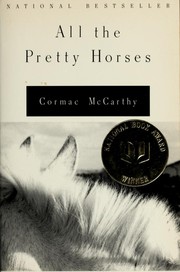
All the Pretty Horses
John Grady and Rawlins ride to Mexico for ranch work, finding love, prison, and a code that costs all.
2,677-word summary · 12 min read

Sing, Unburied, Sing
A Mississippi family drives to Parchman prison while ghosts press close, and a dying grandmother holds the house together.
2,871-word summary · 13 min read
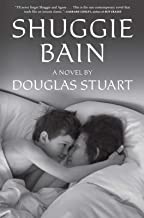
Shuggie Bain
Sweet Shuggie loves his alcoholic mother Agnes through 1980s Glasgow poverty and pride.
2,081-word summary · 9 min read
Middlemarch
Idealistic Dorothea marries dry scholar Casaubon while ambitious doctor Lydgate marries Rosamond, and a Midlands town watches both marriages strain.
2,883-word summary · 13 min read
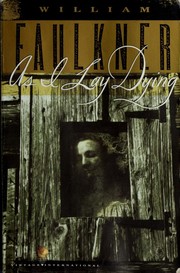
As I Lay Dying
A poor Mississippi family hauls Addie Bundren's coffin to Jefferson through flood and fire, told by fifteen voices. Faulkner's 1930 novel is strange, bleak,…
3,544-word summary · 16 min read
The Cider House Rules
Homer Wells grows up in a Maine orphanage under Dr. Larch, who delivers babies and performs illegal abortions.
2,985-word summary · 13 min read