
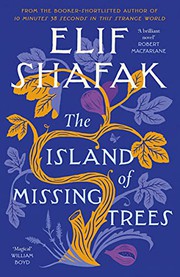
The Island of Missing Trees
3,172-word summary 14 min read 368 pages in the book
- First published
- 2021
- Publisher
- Bloomsbury USA
- Pages
- 368
- ISBN
- 9781635579796
Reading options
What's inside (9 sections)
I picked this up because a friend said, you will never look at a fig the same way again, and she was right. The Island of Missing Trees was first published in 2021, and the US edition I read runs 368 pages from Bloomsbury USA, ISBN 9781635579796, author Elif Shafak. It moves between Cyprus in the 1970s and London in the late 2010s. In Cyprus, a Greek Cypriot boy named Kostas and a Turkish Cypriot girl named Defne fall in love while their island splits apart. In London, their sixteen year old daughter Ada tries to live through grief after Defne dies, with only her quiet botanist father and, for a while, a visiting aunt to guide her. And over both times, a fig tree talks. Not as decoration. As narrator, witness, memory keeper, gossip, lecturer on botany, and mourner for what people do to each other.
That talking tree sounds like a trick, and partly it is. Shafak commits to it all the way. The fig tells you how roots speak through chemicals, how leaves read light, how a cutting can travel in a suitcase and keep living. The fig also tells you what the humans will not say out loud. I went in braced for cute and came out moved, though I had complaints along the way that I will get to.
A tree that talks
The fig introduces herself early. She is Ficus carica, a common fig with a long life behind her, first rooted in Cyprus and later buried, in a fashion, in a London back garden. She has opinions. She corrects people about trees. She loves gossip. She remembers insects, rain, smoke, blood, songs, prayers.
Her voice is warm and a little bossy. She explains that trees sense pain in neighbors through underground networks of roots and fungi, that they warn each other, that they share sugars with the weak. She talks about how figs need wasps and wasps need figs, a closed loop of need that has lasted millions of years. She lists other trees when she can, chestnut, olive, pine, and what they do in heat or drought. Some of this reads like a nature documentary slipped into a love story. I often liked it. A few times I wanted her to stop lecturing and get back to the people hiding under her branches.
What she gives the book, more than facts, is a way to hold time. People die, move, lie, forget. The tree stays and records. She saw Kostas and Defne as teenagers meeting in secret. She saw soldiers and checkpoints and empty houses. She felt herself cut and packed and flown to England. She now watches Ada from soil in a strange cold garden, trying to root where frost bites. When Ada cannot ask her father what happened, the tree can tell us. When Kostas cannot speak about Defne, the tree speaks around him.
Shafak also uses the tree to bring in myth and ritual without making a character say it in dialogue. The fig remembers stories Cypriots told about trees that grant wishes, trees hung with rags, trees that mark graves. She remembers how women tied cloth to branches and whispered for children, for returns, for forgiveness. That layer gives Cyprus a texture beyond politics. It is not only barricades. It is kitchens, weddings, songs, superstitions that cross the Greek and Turkish sides even when people cannot cross.
If you hate personified narrators, this opening will test you. The fig breaks in often, sometimes for a paragraph, sometimes for pages. She knows things no tree could know, like what someone thought in London while she was still in Cyprus soil. Shafak does not try to make that logical. The tree is memory itself, allowed to wander. I decided to accept the rule early. Once I did, her sections became the ones I marked most.
The Happy Fig in 1974
The human story starts in Nicosia in the early 1970s. Kostas Kazantzakis is Greek Cypriot, a lanky young man who loves plants and wants to study them. Defne is Turkish Cypriot, sharp tongued, bookish, angry at limits placed on girls. They should not meet, or not often, or not alone. Nicosia is already tense, with separate neighborhoods, separate schools, separate fears, and nationalist talk getting louder in cafes.
They meet at a taverna called the Happy Fig, run jointly by a Greek Cypriot named Yiorgos and a Turkish Cypriot named Yusuf. The place is rare ground. In the courtyard grows a big fig tree, the same tree who will later narrate. Under that tree, people drink, argue, play music, fall in love. Kostas comes for the food and the shade and the chance to see Defne. Defne comes because her family knows the owners and because the taverna feels freer than home. They pass notes. They stay late. They learn each other's histories in pieces.
Shafak fills these chapters with small physical detail that I liked. The taste of halloumi grilled till it squeaks. The smell of jasmine and cigarette smoke. The sound of glasses knocked over when an argument starts at another table. Kostas bringing Defne a leaf and naming its veins. Defne lending Kostas a novel with passages marked. Yusuf polishing glasses while listening for trouble outside. Yiorgos cooking with loud opinions about olive oil. The fig above them dropping fruit that splits open, wasps drunk inside.
Around them, the island darkens. Young men join militias. Walls get slogans. Friends stop visiting across the line. Defne's brother and parents fear for her. Kostas's mother fears for him. Both families carry older wounds from intercommunal fighting in the 1960s, houses lost, relatives missing, stories told at night that make children afraid of the other side. The lovers tell themselves love will be enough. Shafak does not mock them for that. She shows how youth can be clear eyed and blind at once.
Their meetings grow riskier. They use back streets. They lie about where they were. They meet in the taverna cellar when the courtyard feels exposed. The fig watches and worries in her tree way, about pruning, about smoke, about boots crushing roots. I found these early love chapters the most alive in the book. They have appetite. Food, touch, talk. You can feel why these two would risk so much.
Coup, invasion, and separation
Then July 1974 arrives, and the book turns. In Cyprus, a coup backed by the Greek junta overthrows the president. Days later, Turkey invades, citing protection of Turkish Cypriots. Fighting spreads. People flee. Nicosia is cut by a buffer zone, the Green Line, that still divides the city today. Shafak does not write a battle history. She writes what Kostas and Defne see and lose.
Kostas loses contact in the chaos. Phones fail. Roads close. Rumors fly about deaths, arrests, missing men. The Happy Fig empties. Yiorgos and Yusuf try to keep it open, then cannot. The fig tree is hit by debris, burned in part, left with scars she will describe for the rest of the book. Kostas searches for Defne through checkpoints and hospitals. Defne searches for Kostas through relatives and neighbors. Each hears the other is dead, or gone, or married, or fled.
What separates them finally is not one big scene but a pile of small impossibilities. A bus that no longer runs. A street now patrolled. A father who locks a door. A mother who begs a daughter not to shame the family by chasing a Greek boy while Turkish families mourn. Shafak is good on this kind of pressure, how politics enters the kitchen. Defne's mother wants safety and respectability. Kostas's family wants him to leave before he is conscripted or killed. Love becomes a luxury neither family thinks they can afford.
They do get one more meeting, brief and frantic, near the fig. No long speeches. They promise to write. They argue about leaving. Kostas wants them to go together. Defne will not abandon her mother and sister. That disagreement, ordinary and painful, matters more than any speech about nations. Two good people want different loyalties at the same time.
After, exile. Kostas ends up in London, studying botany, working odd jobs, living in damp flats with other migrants. Defne stays longer in Cyprus, then also leaves, after loss and illness in the family. They reunite years later in England, marry, have Ada. Shafak skips much of the reunion mechanics and focuses on what they carry. Nightmares. Silences. A habit of not naming Cyprus. A fig cutting from the Happy Fig, smuggled in a suitcase wrapped in damp cloth, which Kostas buries in the garden of their London house to keep it alive through winter. That buried tree is both hope and secret.
My complaint here is that the history stays thin. If you know little about Cyprus, you will get the shape, coup, invasion, division, displacement, missing persons, but not the depth. Shafak keeps blame balanced and grief shared, which feels humane, but also smooths over harder questions about who did what. Readers wanting a full political account will need another book alongside. This is a love story set inside history, not a history with love added.
London: Ada, grief, and silence
The London chapters belong to Ada Kazantzakis, sixteen, sharp, lonely, furious with grief. When the book opens in the late 2010s, Defne has been dead about a year. The official story is vague at first. Ada knows her mother died suddenly. She does not know how, or why no one says the word suicide out loud. Kostas, now a botanist who studies trees and climate, loves his daughter but talks to plants more easily than to her. Their house is quiet except for the garden.
Ada's school life is fraying. She is bright at science but checks out in class. She gets into fights about climate change with a teacher who wants optimism. In one scene that classmates film and share, Ada screams in the classroom, a raw animal sound that shocks even her. She cannot explain it. Shafak writes adolescence well here, the swing between sarcasm and tears, the need to be seen and the wish to vanish. Ada tries alcohol, tries skipping, tries caring for a boy who is kind but cannot reach her. Nothing touches the core ache, which is that her mother chose to leave and no one will tell her why.
Kostas tries in his limited way. He cooks Cypriot food that Ada picks at. He tends the garden where the fig sleeps underground in winter wrapping. He answers questions about photosynthesis at length and questions about Defne with short deflections. He sleeps badly. He keeps Defne's books and scarves as they were. He writes letters he does not send. Ada reads his silence as lack of love, which it is not, but Shafak lets her feel it fully. Grief makes good people misread each other.
The fig narrates these London sections with worry and comic asides. She does not understand central heating. She hates frost. She loves earthworms. She listens to Ada crying at night and wants to reach through soil. She also remembers Defne as a girl under her branches and compares that girl to this silent house. That comparison does a lot of work. We feel what was lost without Shafak having to state it.
These chapters move slowly by design. Days repeat. School, garden, kitchen, bed. I found the slowness mostly right for grief, but the middle sags. Scenes of Ada scrolling, Ada arguing, Kostas watering, fig explaining root talk, repeat with small changes. The dual timeline means we cut away to young love just as Ada's pain peaks, which relieves tension but also breaks it. Twice I wanted to stay in London longer and let a scene breathe instead of jumping back to Cyprus for another botany lesson.
Meryem arrives and the past opens
Change comes with Meryem, Defne's younger sister, Ada's aunt, who flies from Cyprus to help. Meryem is traditional, devout in her way, fond of proverbs, fond of food as medicine, shocked by London cold and by how little Ada knows about her own family. She brings suitcases of spices, photographs, and opinions. She prays. She cleans. She tells stories that Kostas never told.
Meryem is the book's best human creation after Ada. She is funny without being a caricature. She argues with Kostas about how to raise a grieving teen. She tells Ada about Defne as a wild girl who smoked in secret, who read everything, who fought with their mother, who loved Kostas with a stubbornness that scared the family. She tells Ada about Cyprus, about the house they grew up in, about the missing, about the taverna and the fig. She also brings judgment. She thinks Defne drank too much. She thinks Kostas let Defne drift. She thinks England makes people lonely. Some of her views sting. Shafak lets them stand without fully endorsing or dismissing them.
Through Meryem, secrets come out in stages. Ada learns that her parents came from opposite sides of a divided island. She learns that the fig in the garden is not just a tree but a cutting from the Happy Fig, buried each winter to survive. She learns that Defne struggled with depression for years, tied to exile, to her mother's death, to guilt about leaving Cyprus, to the feeling that she belonged nowhere. She learns, finally, how Defne died, and that Kostas and Meryem hid details to protect her. The reveal is handled with care, no sensational scene, mostly talk in kitchen and garden. Ada reacts with rage first, then numbness, then questions that have no clean answers.
Meryem also pushes Kostas. She accuses him of hiding in work. He accuses her of hiding in ritual. Both are partly right. One strong scene has them cooking together while arguing about whether to tell Ada everything. The food detail carries the feeling. They chop, stir, taste, adjust salt, while talking around the thing they fear. Cypriot dishes become a language for people who cannot say I am afraid.
I liked that Shafak does not make Meryem a simple healer. She helps and she harms. She comforts Ada, then says something sharp about Defne that sets Ada back. She prays for the dead, then gossips about neighbors. That mix felt true to family visits after a death, when love and friction share the same small house.
Digging up the fig and letting light in
The last movement belongs to the garden. As spring comes, Kostas decides to dig up the fig cutting that has wintered underground. Shafak describes the process with botanist patience. How he wrapped it, where he buried it, how he checks buds, how he unwraps like a parent unwrapping a child. Ada watches, then helps. Meryem watches and mutters prayers and advice. The fig narrates her own unearthing with joy and fear, light too bright, air too cold, hands gentle.
That digging becomes the book's central image for everything else. Things buried to survive must be uncovered to grow. Kostas has buried his Cyprus past, his guilt about not saving Defne, his fear that botany is escape. Ada has buried questions about her mother. Meryem has buried anger at her sister for leaving. The fig has literally been buried. Unearthing is messy. Roots tear. Hands get dirty. But after, growth can start.
Shafak stages several quiet payoffs here. Kostas shows Ada letters Defne wrote but never sent, about Cyprus, about motherhood, about feeling split between languages. Ada reads them slowly, not all at once. Kostas tells Ada about the Happy Fig and the night he lost Defne, without heroic editing. Ada visits school and faces the classmates who filmed her scream, not with triumph but with steadier boundaries. Meryem prepares to return to Cyprus, leaving behind recipes and a scarf that smelled of her sister. The fig, now planted more openly, starts to leaf.
The ending does not pretend that grief ends or that Cyprus is healed. The Green Line still cuts Nicosia. The missing are still missing. Ada still misses her mother with a physical ache. What changes is that silence loosens. Ada can ask. Kostas can answer. Meryem can bless and go. The fig can grow in two places at once, Cyprus in memory, London in soil, and belong in both after a fashion. Shafak's point about migrants lands here without speechmaking. Belonging is not one soil. It is carrying cuttings and learning new frosts.
What creaks and what holds
I should name what bothered me, because this is not a book to love blindly. The fig narrator, delightful as she is, sometimes hijacks the story. Whole pages on wasps, on mycorrhizal networks, on how oaks talk, arrive just when a human scene needs room. I love trees, but I skimmed two botany lectures. Shafak clearly researched with joy and could not bear to cut. A firmer edit would have kept the wonder and trimmed the classroom.
The dual timeline also drags in the middle third. Cyprus love story and London grief story each pause at the wrong moment. Just as Kostas and Defne face the invasion, we cut to Ada arguing about homework. Just as Ada learns how her mother died, we cut to a fig memory about rain in 1973. The structure wants to show echoes, but the effect is stop start. I kept checking how many pages were left, not because I was bored exactly, but because momentum kept resetting.
And the history, as I said, stays light. Shafak names the coup and the invasion, the displacement, the missing, the buffer zone. She shows suffering on both sides. She does not dig into political responsibility or the long failures that keep the island divided. For some readers that balance will feel fair. For others it will feel safe. I landed between. I appreciated that she centers ordinary lovers and taverna keepers rather than generals, but I wanted more bite about power.
What holds outweighs that for me. The love story has heat and specific detail. Ada's grief feels lived, not plotted. Meryem is a gift. The fig, when not lecturing, breaks your heart with simple observations about roots seeking each other in the dark. Shafak writes about exile in a way that avoids pity. Kostas and Defne are not symbols. They are a man who talks to leaves and a woman who could not find home in any country, who made a child who must now make her own.
Facts held while reading: first published in 2021, US edition 368 pages from Bloomsbury USA, ISBN 9781635579796, author Elif Shafak. The summary above follows that edition's text and shape. If you want a book that mixes family pain, island history, botany, myth, and a talking tree that mostly earns its voice, this is a rich, flawed, generous choice. Bring tissues for the garden scenes. Stay for Meryem's cooking. Forgive the lectures. The roots reach each other in the end.
FAQ
When was The Island of Missing Trees published?
It was first published in 2021, with the US edition at 368 pages from Bloomsbury USA and ISBN 9781635579796.
Who narrates parts of the story?
A fig tree, Ficus carica, rooted first at the Happy Fig taverna and later kept in a London garden. She records love, war and grief.
Does Ada learn how her mother died?
Ada learns through Meryem and Kostas letters that Defne struggled with depression tied to exile. The reveal comes through kitchen talk, not a shock scene.
Similar books

The Tiger's Wife
A young doctor in a war-scarred Balkan country chases the stories her grandfather left behind, including a deathless man and a deaf girl who loved an escaped…
2,232-word summary · 10 min read
Life After Life
Ursula Todd dies and restarts through wars, flus, and bad marriages.
2,060-word summary · 9 min read

Sophie's Choice
A young Southern writer in 1947 Brooklyn befriends a brilliant, unstable couple and slowly learns the story of the Polish Catholic woman at the center of their…
2,798-word summary · 12 min read
The Silence of the Girls
Briseis, queen of Lyrnessus, is captured by Achilles and narrates the Trojan War from inside the Greek camp, where women are prizes and survival is its own…
2,098-word summary · 9 min read

Song of Solomon
Milkman Dead leaves Michigan to hunt for family gold and finds instead the old song of his ancestor Solomon.
2,465-word summary · 11 min read

The Signature of All Things
Botanist Alma Whittaker grows up in Philadelphia trade wealth, studies mosses, marries distant Ambrose Pike, and sails to Tahiti seeking how species change.
2,535-word summary · 11 min read
The Sympathizer
Double agent captain spies in Saigon fall and LA exile while confessing to commandant.
2,169-word summary · 10 min read
The English Patient
In a ruined Italian villa in 1945, a burned man, a nurse, a thief, and a sapper trade pasts shaped by desert love and war.
2,006-word summary · 9 min read
The Bonesetter's Daughter
A ghostwriter translates her mother's hidden Chinese memoir and learns the truth about Immortal Heart, Precious Auntie, and a family curse.
2,720-word summary · 12 min read
Midnight's Children
Saleem Sinai, born at India's independence midnight, narrates his family's saga as his life mirrors the new nation's history.
2,734-word summary · 12 min read

Shuggie Bain
Sweet Shuggie loves his alcoholic mother Agnes through 1980s Glasgow poverty and pride.
2,081-word summary · 9 min read

The Girl You Left Behind
Two women a century apart fight for what they love, joined by a portrait painted in wartime France and claimed in modern London.
2,613-word summary · 12 min read
Half of a Yellow Sun
Ugwu, Olanna and Richard are pulled from Nsukka comfort into the Biafran war, where love and hunger test every loyalty.
2,973-word summary · 13 min read
The Cider House Rules
Homer Wells grows up in a Maine orphanage under Dr. Larch, who delivers babies and performs illegal abortions.
2,985-word summary · 13 min read

Snow Falling on Cedars
A Japanese American fisherman stands trial for murder on a snowy island, while a reporter faces lost love and wartime prejudice.
2,224-word summary · 10 min read
Small Things Like These
A coal merchant in 1985 Ireland finds a girl locked in a convent and must act.
2,799-word summary · 12 min read
Between Shades of Gray
In 1941, fifteen-year-old Lina is deported from Lithuania to Siberia and uses her drawings to survive and send word to her father.
2,263-word summary · 10 min read
The Wind-Up Bird Chronicle
An unemployed Tokyo man hunts a lost cat, then his missing wife, and slips from quiet suburbs into wells and wartime memory.
3,344-word summary · 15 min read
Hamnet
Agnes Hathaway holds her Stratford family together while her husband works in London, until plague takes eleven-year-old Hamnet in 1596.
3,164-word summary · 14 min read
Homegoing
Half sisters Effia and Esi lines span Ghana to America across centuries.
2,552-word summary · 11 min read
All Quiet on the Western Front
Paul Bäumer enlists at nineteen and faces the trenches of World War I in Remarque's 1929 classic, told from the German side of the wire.
2,543-word summary · 11 min read
All the Light We Cannot See
Doerr's All the Light We Cannot See retold: blind Marie-Laure, Werner the radio boy, and Saint-Malo.
1,962-word summary · 9 min read
A Thousand Splendid Suns
Splendid Suns retold: Mariam and Laila share Kabul house, war, Rasheed, escape and return.
1,957-word summary · 9 min read

Violeta
A woman born in 1920 writes her life story to her grandson, from one pandemic to another, through wealth, ruin, passion, and dictatorship in South America.
2,555-word summary · 11 min read
The Orphan's Tale
A Dutch teenager rescues a Jewish baby from a death train and joins a German circus, where a Jewish aerialist teaches her to fly.
2,943-word summary · 13 min read
The Long Winter
Dakota Territory, 1880: seven months of blizzards cut a town off from the railroad, and a family survives on twisted hay, ground wheat, and a dangerous wheat…
2,210-word summary · 10 min read

The Japanese Lover
A Polish refugee and the son of a Japanese gardener fall in love in San Francisco in 1939, then keep the affair secret for nearly seventy years.
2,286-word summary · 10 min read

The Shadow Sister
Star D'Apliese steps out of her sister's shadow and follows a bookshop clue into the Edwardian life of Flora MacNichol, a woman who gave up love for duty.
2,260-word summary · 10 min read

Little Town on the Prairie
In the spring after the Long Winter, fifteen-year-old Laura sews shirts, studies for a teaching certificate, and helps send her blind sister Mary to college.
2,071-word summary · 9 min read

Mrs. Everything
Two Jewish sisters in Detroit grow up, apart and together, across seven decades of American life, from the 1950s to the 2016 election.
2,362-word summary · 10 min read