

The Shadow Sister
2,260-word summary 10 min read 512 pages in the book
- First published
- 2016
- Publisher
- Atria Books
- Pages
- 512
- ISBN
- 9781476789156
- Series
- The Seven Sisters (#3)
Reading options
What's inside (9 sections)
The Seven Sisters series has a formula, and by the third book you can feel it working. A sister receives a clue from her adoptive father, follows it to a place she has never been, uncovers a historical woman whose life mirrors her own, and comes out the other side with a clearer sense of who she is. The formula could easily become mechanical. What saves The Shadow Sister is that its heroine, Star, is the least likely person to carry a book. She is quiet, withdrawn, and so fused with her sister CeCe that she barely has a separate outline. Watching her become visible is the real plot.
Star is twenty-seven when Pa Salt dies. She lives with CeCe in a cramped London flat, and CeCe's personality fills the space. CeCe is loud, demanding, and used to being the one who decides things. Star has spent years adjusting herself to her sister's needs, including turning down Cambridge to attend the University of Sussex with her. When CeCe buys a riverside apartment in Battersea with money from Pa Salt's lawyer, the move is presented as an upgrade, but it is also another decision Star did not make. She goes to Atlantis, the family estate on Lake Geneva, to see Marina, the sisters' guardian, and admits that she feels trapped.
Pa Salt's letter sends her to Arthur Morston Books, a London bookshop, and tells her to ask about a woman named Flora MacNichol. The envelope also contains a black onyx cat figurine on a silver base, engraved with the name Panther, and a quotation from Khalil Gibran: the oak tree and the cypress grow not in each other's shadow. Star recognizes the line immediately. It is a description of her relationship with CeCe, and it is the first hint that Pa Salt understood more about her than she realized.
The bookshop and the house
Arthur Morston Books is run by Orlando Forbes, an eccentric man who dresses like an Edwardian and seems to have stepped out of another century. When Star mentions Flora, he becomes guarded, then offers her a job. The bookshop is a lovely piece of staging. It gives Star a reason to stay in London, a place to work that suits her temperament, and a connection to the past that is not immediately explained. Orlando is charming, but he is also a gatekeeper, and the novel is honest about how much he enjoys knowing more than Star does.
The gate opens at High Weald, a Tudor manor in Kent, where Orlando's family lives. His cousin Marguerite is a painter raising a young son, Rory, who is deaf. His brother Mouse is cold and suspicious, and he clearly does not want Star there. Rory is the key to Star's introduction to the family. She connects with him through basic sign language, and the scenes between them are some of the warmest in the book. Star is good with children because she does not try to perform for them. She waits, watches, and lets them come to her.
High Weald is where the historical story begins. Orlando reveals that Flora MacNichol was the sister of their great-grandmother Aurelia. Then he gives Star Mouse's transcription of Flora's journals. The novel shifts into 1909, and for long stretches the historical strand is more alive than the contemporary one.
Flora at Esthwaite
Flora is nineteen, dark-haired, sharp-featured, and convinced that she is the plain sister. Aurelia is the golden one, the one everyone notices. They live at Esthwaite Hall in the Lake District, and Flora spends her time rescuing animals, including a black kitten she names Panther. When Archie Vaughan, the young Lord Vaughan from High Weald, comes to visit, Flora resists him. They share a love of botany, and they climb Scafell Pike together. He kisses her and tells her he loves her, but he also says he has a complicated situation to resolve.
The complication is Aurelia. She is falling in love with Archie too, and Flora, out of duty and guilt, orders him to propose to her sister. It is a decision that costs her everything, and Riley makes it believable. Flora is not a martyr in a simple sense. She is a young woman who has been taught that her wants matter less than her sister's happiness, and she acts on that lesson before she has a chance to question it.
Then the family sells Esthwaite, and Flora is sent to London to join the household of Alice Keppel, the socialite and mistress of King Edward VII. Mrs. Keppel turns her from a supposed tutor into a society figure, dressing her, introducing her, and giving her a place in a world she never expected to enter. Flora meets the King, who is warm and fond of her, and she has no idea that he is her biological father. The revelation comes later, after the King's death, when Sir Ernest Cassel tells her the truth about her mother's affair with the then-Prince of Wales.
The London section is the novel's most seductive. The clothes, the houses, the rituals of Edwardian society, the sense of a world that is about to end, all of it is rendered with care. Riley is good at this kind of historical set dressing. She is less good at knowing when to stop. Some scenes linger on details that do not advance the story, and the pacing sags in the middle.
The cat and the wedding
The Fabergé cat is the novel's central object. Mrs. Keppel gives it to Flora at Christmas, a gift the King commissioned. It is beautiful, expensive, and completely useless, which makes it a perfect symbol of the world Flora has entered. It is also a link to Panther, the kitten she left behind, and to the life she gave up. When the cat appears again in the present day, it carries all of that weight.
At Aurelia and Archie's wedding, Freddie Soames, a wealthy and empty-headed viscount, sees Archie kissing Flora under a yew tree. Flora accepts Freddie's proposal partly to buy his silence and partly as punishment. It is a bad decision, and the novel knows it. The engagement collapses when Aurelia learns the truth about Archie's visit to Esthwaite and the warning letter Flora wrote to him. Aurelia banishes her sister, and the break is brutal. The King dies on May 6, 1910. Freddie's family cancels the wedding. Flora is left with a secret, a small fortune, and no family.
She flees to the Lake District and lives as a recluse for nine years. Beatrix Potter, the children's author and naturalist, becomes her friend. When Panther dies, Beatrix brings Flora a foundling boy named Teddy, whose shepherd father died in the Great War. Flora adopts him. In 1919, Archie returns with news that Aurelia has died after childbirth. Her deathbed letter forgives Flora, asks her to raise baby Louise, and blesses a union with Archie. They marry. Archie registers Teddy on the same date as Louise and lists himself as the father, which makes the shepherd's son the heir to the Vaughan peerage.
That act of love is also an act of fraud, and the novel does not pretend otherwise. It sets up the inheritance that will matter later, and it raises the question of whether a kind lie is better than a cruel truth. Flora spends the rest of her life managing the consequences. When the grown Teddy impregnates Tessie Smith, a Land Girl, Flora pays Tessie to leave quietly. Archie dies in a bombing in 1944. Teddy inherits everything. Flora gives Arthur Morston Books to Louise and her husband Rupert Forbes as a wedding gift.
Star's own story
Orlando's research traces Tessie's descendants to Lucy Charlotte Brown, born on Star's birthday in Hackney. Star is not descended from royalty. She is almost certainly the great-granddaughter of Teddy, the adopted shepherd's son. Tessie's granddaughter changed her name to Sylvia Gray and is now a professor of Russian literature at Yale. Orlando finds this funny. Star does not. The joke is at her expense, and it confirms her fear that she is ordinary, that her origins are a series of accidents and cover-ups rather than a grand romance.
Mouse goes behind her back to find Sylvia and brings her to High Weald. Star is furious at the ambush, and the anger is justified. The novel has a habit of letting the men in Star's life decide what she is ready to know, and this is the clearest example. But Sylvia's story changes the emotional register. She was eighteen when Star was born. Her controlling mother, Patricia, forged a death certificate and told Sylvia the baby had died. Sylvia learned the truth only weeks earlier, when Patricia died and left a confessional letter. She gives Star a charm bracelet engraved with the name Lucy Charlotte, and Star finally accepts the embrace she has been denied for twenty-seven years.
The reunion is the book's emotional climax, and it works because Riley does not oversell it. Star does not instantly become a different person. She has a mother, a history, and a family she did not know about, and she has to decide what to do with all of it. The novel is careful to show that finding your origins does not solve your life. It gives you more material to work with.
Mouse's confession is the other half of the resolution. Rory is his biological son. His late wife Annie was deaf and chose to continue her pregnancy despite a cancer diagnosis, dying months after Rory was born. Mouse could not look at the child, so Marguerite raised him. Star urges him to make amends. The novel is not subtle about the parallel between Mouse's avoidance and Star's own habit of disappearing into other people's needs. Both of them have to stop hiding.
The romance between Star and Mouse is the weakest part of the book. It is not that they are incompatible. It is that the shift from suspicion to intimacy happens too quickly, and the revelation that Mouse's real name is Oenomaus, the mythological husband of the star-maiden Asterope, is too neat. Riley likes symbolic coincidences, and this one lands with a thud. The relationship is more convincing when it is quiet, when they are walking through the Lake District or sitting with Rory, than when it is being explained to the reader.
The shadow theme
The title works on several levels. Star lives in CeCe's shadow, Flora lives in Aurelia's, and Teddy lives in the shadow of a lie about his birth. The Gibran quotation is the thread that ties them together. The oak and the cypress can grow together without one diminishing the other, but only if they are planted far enough apart. Star's journey is about finding that distance. She does not stop loving CeCe. She stops letting CeCe define the shape of her life.
CeCe's epilogue at Heathrow is a small, sad grace note. She has left college and written Star a letter confessing her loneliness. She resolves to let Star go because she loves her. It is the first time in the novel that CeCe feels like a person rather than a force, and it makes the next book, which is hers, feel necessary.
What works and what does not
The historical strand is the stronger of the two. Flora's life has stakes, secrets, and a clear arc. The Edwardian setting is vivid, and the supporting characters, especially Mrs. Keppel and Beatrix Potter, are drawn with enough specificity to feel real. The contemporary strand is more uneven. Star's passivity is the point, but it can make the middle of the book feel slow. The supporting cast at High Weald is large, and some of them, especially Marguerite, deserve more space than they get.
The coincidences are another issue. The black cat, the Gibran quote, the name Oenomaus, the fact that Star's mother is a professor at Yale who happens to be found by Mouse, all of it strains credulity. Riley writes in a fairy-tale register, and fairy tales are allowed their coincidences, but the book sometimes asks the reader to accept too much.
The prose is functional rather than distinctive. It moves the story along, and it handles the dual timeline cleanly, but it rarely surprises. The pleasure is in the plotting and the atmosphere, not in the sentences.
Why it stays with you
For all its flaws, The Shadow Sister understands something true about families. The stories we tell about our origins are rarely accurate, and the people who love us are capable of both great kindness and great deception. Flora lies to protect Teddy, and the lie shapes generations. Patricia lies to protect herself, and the lie takes Star's mother away from her. The novel does not sort these lies into simple moral categories. It shows how they travel.
Star's quietness is also a welcome change from the usual heroine of this kind of series. She is not spunky. She does not banter. She watches, listens, and slowly learns to want things for herself. By the end, when she chooses to stay at High Weald with Mouse and Rory, the choice feels earned. She is not running away from CeCe. She is walking toward a life she chose. That is a modest ending, but it is the right one for a book about a woman who spent twenty-seven years being seen as someone's shadow.
FAQ
Do I need to read the first two Seven Sisters books first?
It helps. The Shadow Sister stands on its own as Star's story, but it refers to Pa Salt's death, the armillary sphere, and the other sisters' investigations, which are established in The Seven Sisters and The Storm Sister.
Who was Flora MacNichol?
Flora is Star's ancestor in the novel, the sister of Aurelia Vaughan and the adopted mother of Teddy. Her journals, transcribed by Mouse, provide the historical storyline set in Edwardian England.
Is The Shadow Sister based on a true story?
No. It is a novel. The Seven Sisters series is fictional, though it uses real historical figures such as Alice Keppel, King Edward VII, and Beatrix Potter as characters.
Similar books
More from The Seven Sisters first, then related titles.
The Seven Sisters
Maia follows Pa Salt clue from Geneva to Rio and Christ the Redeemer.
2,210-word summary · 10 min read
The Storm Sister
Ally D'Aplièse loses her father and her lover within weeks, then follows a brass frog and a Norwegian biography into Anna Landvik's music and the world of…
2,376-word summary · 11 min read

Mrs. Everything
Two Jewish sisters in Detroit grow up, apart and together, across seven decades of American life, from the 1950s to the 2016 election.
2,362-word summary · 10 min read
The Stationery Shop
Two teenagers fall in love in a Tehran stationery shop in 1953, are separated by the coup and a family deception, and meet again sixty years later.
2,024-word summary · 9 min read

The Japanese Lover
A Polish refugee and the son of a Japanese gardener fall in love in San Francisco in 1939, then keep the affair secret for nearly seventy years.
2,286-word summary · 10 min read

Little Town on the Prairie
In the spring after the Long Winter, fifteen-year-old Laura sews shirts, studies for a teaching certificate, and helps send her blind sister Mary to college.
2,071-word summary · 9 min read
Only Time Will Tell
A Bristol dockworker's son wins a scholarship, falls in love with the daughter of the family that owns the shipyard, and learns that his father's death was not…
2,082-word summary · 9 min read
The Lowland
Two brothers grow up beside a marshy lowland in Calcutta, and the choices of the younger one draw the older into a life of duty, distance, and quiet grief that…
2,213-word summary · 10 min read
Between Sisters
Estranged sisters Meghann and Claire reunite in Washington when Claire announces a rushed wedding, then face their mother's desertion and a medical crisis.
2,467-word summary · 11 min read
What the Wind Knows
Annie scatters her grandfather's ashes on Lough Gill and is pulled into 1921 Ireland, where she becomes the missing Anne Gallagher and falls for Dr. Thomas…
2,056-word summary · 9 min read
The War That Saved My Life
Ten-year-old Ada has never left her London flat, hidden away because of her clubfoot. Wartime evacuation sends her to Kent, where a reluctant guardian and a…
2,252-word summary · 10 min read
The Keeper of Happy Endings
Barbara Davis's 2021 standalone braids a Paris dressmaker's wartime losses with a grieving Boston artist who unlocks her family's secrets through an old row…
2,437-word summary · 11 min read
Garden Spells
Two sisters reunite in their family home in Bascom, North Carolina, where an apple tree shows anyone who eats from it the biggest event of their life.
2,030-word summary · 9 min read
True Colors
Three Grey sisters split over love and duty after their father judges them.
2,596-word summary · 12 min read
The Identicals
Twin sisters swap Nantucket and Martha Vineyard lives for a summer.
2,556-word summary · 11 min read
Anne's House of Dreams
Newlyweds Anne and Gilbert start in a seaside house with kind neighbors.
2,465-word summary · 11 min read
The Shell Seekers
Elderly Penelope Keeling must decide the fate of her father's treasured painting while her three children press her to sell.
2,592-word summary · 12 min read
The Rules of Magic
Franny, Jet, and Vincent Owens test strict family rules and a love curse in 1960s Manhattan and Massachusetts in Alice Hoffman's warm prequel about love, loss,…
2,686-word summary · 12 min read
The House at Riverton
In 1999, ninety eight year old maid Grace Bradley tapes the truth about a 1924 shooting at Riverton Manor, poet Robbie Hunter, two sisters and a lie held for…
2,433-word summary · 11 min read
The Evening and the Morning
Edgar, Ragna, and Aldred build a bridge town that becomes Kingsbridge around 997, facing Viking raids, harsh law, and a scheming bishop in Follett's prequel.
2,833-word summary · 13 min read
The Last Letter from Your Lover
A 1960s wife with lost memory and a modern journalist chase the same lost love letters across forty years.
2,506-word summary · 11 min read
The Starter Ex
A retired bad-girlfriend-for-hire takes one last job and falls for the mark.
2,092-word summary · 9 min read
Practical Magic
Orphaned sisters Sally and Gillian Owens flee magic and love, until Gillian returns with a dead boyfriend and Sally must face the family curse.
2,974-word summary · 13 min read
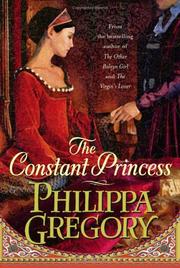
The Constant Princess
Catalina of Spain becomes Katherine, outlasts poverty and spies, and wins Flodden as Henry's queen.
2,065-word summary · 9 min read
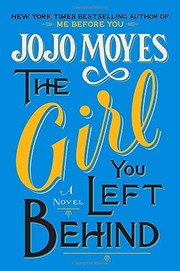
The Girl You Left Behind
Two women a century apart fight for what they love, joined by a portrait painted in wartime France and claimed in modern London.
2,613-word summary · 12 min read
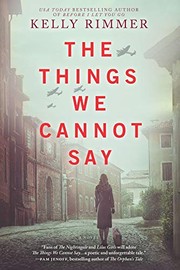
The Things We Cannot Say
A Florida mother travels to Poland to answer her silent grandmother's plea, uncovering a wartime love story and a decades-old identity swap.
2,365-word summary · 11 min read
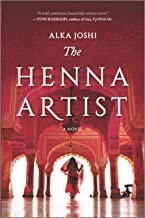
The Henna Artist
In 1950s Jaipur, a henna artist to rich women rebuilds her life until the sister she never knew arrives.
2,104-word summary · 9 min read
When He Was Wicked
Widowed Francesca Bridgerton falls for her late husband cousin Michael, who loved her silently for years.
2,055-word summary · 9 min read
The Things We Leave Unfinished
Georgia Stanton and Noah Harrison finish Scarlett's last novel while her WWII romance with pilot Jameson unfolds in letters. A dual timeline story of grief,…
2,565-word summary · 11 min read
The Fiery Cross
Jamie musters militia for Tryon while Brianna and Roger wed on the Ridge, ending at Alamance with a hanging that steals Rogers voice.
2,719-word summary · 12 min read