
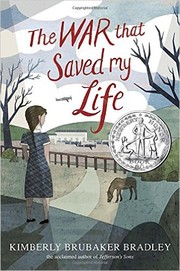
The War That Saved My Life
2,252-word summary 10 min read 320 pages in the book
- First published
- 2015
- Publisher
- Dial Books for Young Readers
- Pages
- 320
- ISBN
- 9780803740815
- Series
- The War That Saved My Life (#1)
Reading options
What's inside (9 sections)
The first thing this book does is put you inside a body. Ada is ten years old. She has a clubfoot, and her mother, called Mam, has decided that a daughter with a bad foot is something to hide. So Ada has never been outside. Not once, not that she can remember. She has spent her whole life in a one-room London flat on the top floor of a building, looking down at the street she is not allowed to touch. That is where the story starts, and it does not look away.
I had read a lot of World War II fiction before this one, and most of it is about soldiers or spies or families with more money than Ada's. This is a middle grade novel by Kimberly Brubaker Bradley, published in 2015 by Dial Books for Young Readers. It won a Newbery Honor the next year. It is short, it is fast, and it is much harder-edged than the cover suggests. It also turned out to be the first of two books, since a sequel called The War I Finally Won followed. You can read it alone, but knowing there is more softens some of the ending.
The cupboard under the sink
Let me be plain about what happens in the flat, because the book is plain about it. Mam does not just neglect Ada. She hits her. She locks her in a damp cabinet under the sink, where cockroaches live, sometimes for days at a time. She calls Ada stupid and useless and tells anyone who asks that the girl is simple in the head, as a way of explaining why the child never goes out. The real reason is shame. Mam is embarrassed by the foot, and Ada pays for that embarrassment with her childhood.
Ada does the cooking and cleaning and looks after her little brother Jamie, who is six. She loves him fiercely, and he is her whole world at the start. There is a line early on, or close to it, about how Ada knows her mother hates her but cannot afford to believe it, so she keeps inventing ways the punishment might be her own fault. Bradley lets Ada justify the abuse to herself, and that is the most painful part of the book. It reads like how a trapped child actually thinks.
What Ada does in secret is teach herself to walk. She has never had crutches or shoes that fit. All summer before the evacuation she works on it, holding the wall, standing, taking one step, crying, trying again. Bradley never makes this triumphant. She makes it slow and physical and exhausting. By the time the war comes and the children are being sent out of London, Ada can get around, badly, if she has to.
A train full of children
The evacuation of British cities in September 1939 is the hinge of the plot. The government is sending children from London to the countryside, away from the bombing everyone expects. Mam refuses to send Ada, saying nobody would want to take a girl like her. But Jamie is going. And Ada, who has finally gotten strong enough, decides she will not be left behind. She slips out of the flat and goes to the station with him, without permission, without telling Mam.
At the station is where we meet Stephen White, an older boy who notices Ada struggling and carries her onto the train. He is her first real friend, and one of the few people in the book who treats her foot as an inconvenience rather than a secret. The train ride, the crowding, the noise, the sheer novelty of being outside, all of it lands on the page through Ada's senses. She has never seen grass. She has never seen a horse. She watches the world from the window like someone reading about it.
They are taken to a coastal village in Kent. There is a committee waiting, led by Lady Eleanor Thorton, who is called the iron-faced lady behind her back, and the villagers pick through the arrivals to choose which children to take. Nobody chooses Ada and Jamie. They stand there while the other kids get claimed. It is one of the sharpest scenes in the novel, that feeling of being the ones left over.
Susan Smith says she is not nice
Then Susan Smith is made to take them. Susan is single, lives alone, and makes it clear from the start that she has no interest in children and no talent for them. Her opening move is to tell the kids she is not nice. That line has become the thing readers remember, partly because it is a lie and partly because it is almost true. Susan is blunt, unsentimental, grieving something of her own that the book reveals slowly, and she does not perform warmth. What she does instead is the real thing. She feeds them. She gets Ada crutches and shoes that fit. She reads to them, mends clothes, lets Jamie keep a stray cat he names Bovril even though she dislikes cats in general.
Ada does not trust it. For a long stretch she reads every kindness as a trap or a transaction, and she pushes Susan away even as she desperately wants to be wanted. Bradley is careful here. She does not turn Susan into a saint who saves a broken child. She gives Susan limits, temper, and a past that explains why she keeps people at arm's length. When Ada finally starts to let her in, it feels earned rather than engineered, and it takes most of the book.
The other thing I want to say about the village is that it is not a warm blur. Lady Thorton is harsh and class conscious and doing her duty. Her daughter Margaret, called Maggie, becomes Ada's best friend in a loose, kid-logic way. There is a colonel, a stable hand named Fred Grimes, a teacher, a vicar, gossips. Bradley gives the place enough small sting that it feels like a real English village in wartime rather than a storybook refuge.
Butter, and the business of learning
Susan owns a pony named Butter, and Butter is the second half of the book's engine. Ada grows obsessed with the animal, and Fred Grimes teaches her to ride. This is where the novel lets Ada be good at something. Not good in a magical way. Good the way you get good at anything, by falling off and getting back on and being sore the next day. Riding also does something the rest of her life has never done. It gives her a way of moving that does not depend on her ruined foot. She stops being the girl who cannot walk and becomes the girl who can ride.
In parallel she learns to read. This matters more than the pony, I think. Ada has been told her whole life that she is stupid, and learning letters dismantles that lie piece by piece. She learns from the adults around her, from signs and newspapers and patient help, and the pride she takes in it is quiet and specific. Bradley ties reading and riding together as two kinds of freedom, both of which were kept from Ada on purpose.
The war keeps intruding. In 1940 the soldiers are pulled off the beaches at Dunkirk, and the villagers take their little boats across the Channel to help bring men home. Ada is part of that effort in a small way. She also spots a man acting strangely along the coast and reports him, and he turns out to be an enemy spy who gets detained. That strand is one of the more conventional adventure beats in the book, and a younger reader will enjoy it more than an adult will. I found it the thinnest part, honestly, because the novel is so much better when it stays small and domestic.
There are medical stakes too. Susan learns that Ada's clubfoot could be corrected by an operation, though it would cost money and would need permission from Ada's mother. So Susan writes to Mam. And Mam does not answer.
Letters, a visitor, and a journey back
The middle of the book slows into this waiting. Susan writes. Ada waits. The war grinds on. I want to be fair and say that some of these chapters drift, and the pacing sags a little before the last act. But the drift is doing work, because it shows you what a stable life looks like for Ada, so that when it is threatened you actually feel the threat.
Then Mam comes to the village. She has been made to spend money on her children by the government, and she is furious about it. She badmouths Susan, mocks Ada for acting posh, and announces that she is taking both children back to London. She believes the capital will not be bombed. She is wrong, and everyone but her seems to know it. The book handles this without melodrama. Ada could have stayed with Susan if she wanted, but Jamie would have gone back to Mam, and Ada will not split from her brother under any circumstances. So she chooses the worse life to stay with him. I think that choice tells you exactly who Ada is.
They move into a new flat in London, and it is barely better than the old one. Mam takes Ada's crutches away. Ada is used as a servant again, though now she has a mind full of books and a memory of a pony and a woman who was kind to her, which makes the return that much crueler. She also starts to believe, and then confirms, that her mother never wanted children at all and only took them back for the money the government pays toward their upkeep. That confirmation is one of the darkest moments in the book, and Bradley does not soften it.
Bombs over London
The Blitz arrives. Mam goes off to work one day, and Ada and Jamie do not wait around. They run for an air raid shelter, and a bomb damages the area around them. Susan, who has been trying to reach them, comes to London and finds them in the middle of it. She brings them back to Kent, and there she learns that a bomb has destroyed her own house. Butter and Bovril both survived. The little family is broke and homeless, and somehow still together, which is the point.
Ada has a small revelation at the end about repayment. She decides that Susan choosing to come to London, instead of staying home where she might have been killed, is a way of settling the debt between them for Susan having rescued Ada from her mother. It is a child's accounting, and that is exactly why it works. Ada has spent the whole book keeping score, because that is how you survive when love has always come with a price.
The operation on her foot is left open in a way that the sequel picks up. The book ends with Ada believing she can be fixed, and more importantly believing she is worth fixing, which is the change the whole novel has been building toward.
What the war saves, and what it does not
Here is where I put the criticism. This is a bleak book. It is aimed at readers around nine to twelve, and it opens with a child locked in a cupboard and it stays heavy for a long stretch. The abuse is handled with care, but it is real abuse, and some sensitive kids will need a grown-up nearby. It is also, at times, a hard book for adults because the coincidences pile up. The evacuation, the pony, the spy, the surgery, the bomb that misses the cat. Bradley earns a lot of it, but not all of it.
The prose is spare and the voice is a real strength. Ada narrates in short, flat sentences that fit a child who has never been allowed to be soft, and the style never feels like the author showing off. If anything I wanted a little more texture in the middle, where the waiting drags, and a little less tidiness in the spy subplot. The book is at its best when it is small. A pair of shoes. A shared meal. The first time someone says Ada's name like it matters.
Who is it for. Middle grade readers who can handle sad stories, and adults who read children's historical fiction on purpose. It would work well read aloud, chapter by chapter, because the emotional beats are clear and the chapters are short. It pairs naturally with other wartime evacuation stories, but it stands on its own and does not need the sequel to feel complete, even if the sequel exists.
What stays with me is not the war. It is the quiet idea underneath the plot, that a person can be treated as an object for a decade and still find a way to become a person. Ada does not get saved by the bombs or the soldiers. She gets saved by a pony and a woman who said she was not nice and a set of letters she slowly learned to read. That is the part I keep turning over. The war is the setting. Ada is the story.
FAQ
What is The War That Saved My Life about?
It follows Ada, a ten-year-old with a clubfoot whose abusive mother keeps her hidden in their London flat. She escapes with her little brother Jamie during the 1939 child evacuation and is placed with a reluctant guardian in Kent.
Is The War That Saved My Life based on a true story?
It is fiction, not a memoir. It is set during the real British evacuation of children from London in September 1939 and the later Blitz, and its characters are invented.
Does The War That Saved My Life have a sequel?
Yes. The War I Finally Won continues Ada's story. The first book was published in 2015 by Dial Books for Young Readers and was a 2016 Newbery Honor Book.
Similar books
More from The War That Saved My Life first, then related titles.

Esperanza Rising
Esperanza trades ranch life for farm labor camps in California.
2,338-word summary · 10 min read

The Japanese Lover
A Polish refugee and the son of a Japanese gardener fall in love in San Francisco in 1939, then keep the affair secret for nearly seventy years.
2,286-word summary · 10 min read

The Shadow Sister
Star D'Apliese steps out of her sister's shadow and follows a bookshop clue into the Edwardian life of Flora MacNichol, a woman who gave up love for duty.
2,260-word summary · 10 min read

Little Town on the Prairie
In the spring after the Long Winter, fifteen-year-old Laura sews shirts, studies for a teaching certificate, and helps send her blind sister Mary to college.
2,071-word summary · 9 min read
Hard Luck
Rowley has a girlfriend, so Greg turns to a Magic 8 Ball, a family Easter hunt and the school yearbook for answers.
2,586-word summary · 11 min read
Stones from the River
Trudi Montag is born a dwarf in a small German river town in 1915 and grows up to keep the town's library and its secrets, from the First World War to the…
2,818-word summary · 13 min read
The Stonekeeper
After their father's death, Emily and Navin chase a monster into a hidden world to save their mother, and Emily's great-grandfather's amulet offers power at a…
2,753-word summary · 12 min read
Beezus and Ramona
Nine year old Beezus tries to be a good older sister while four year old Ramona turns every ordinary day into a disaster, until a tenth birthday forces honesty.
2,062-word summary · 9 min read
Bud, Not Buddy
A ten year old orphan in the Depression walks to find a jazzman he thinks is his father.
2,568-word summary · 11 min read
Flipped
Juli Baker and Bryce Loski retell second grade to eighth grade from opposite sides, through a sycamore sit, trashed eggs, a yard fix-up, and one tense family…
2,689-word summary · 12 min read
Roll of Thunder, Hear My Cry
In Depression-era Mississippi, nine-year-old Cassie Logan learns what her Black family's land costs and why they keep it.
2,273-word summary · 10 min read
We Were the Lucky Ones
Based on her own family, Hunter follows the Kurc family of Radom as war scatters five siblings from Siberia to Brazil and back toward reunion.
2,805-word summary · 12 min read
The Secret Keeper
A girl watches her mother kill a stranger in 1961; fifty years later she digs into her mother wartime London past.
2,262-word summary · 10 min read
Out of My Mind
Eleven-year-old Melody Brooks has cerebral palsy and cannot speak, but she remembers everything and fights to be heard in fifth grade.
2,298-word summary · 10 min read
The Things We Cannot Say
A Florida mother travels to Poland to answer her silent grandmother's plea, uncovering a wartime love story and a decades-old identity swap.
2,365-word summary · 11 min read
Winter Garden
Two sisters keep a deathbed promise: hear their cold mother's Russian fairy tale to the end, and find besieged Leningrad inside it.
2,983-word summary · 13 min read
Hotel on the Corner of Bitter and Sweet
A Chinese American boy befriends a Japanese American girl in wartime Seattle, then loses her to the internment camps.
2,973-word summary · 13 min read
The Orphan's Tale
A Dutch teenager rescues a Jewish baby from a death train and joins a German circus, where a Jewish aerialist teaches her to fly.
2,943-word summary · 13 min read

The Long Winter
Dakota Territory, 1880: seven months of blizzards cut a town off from the railroad, and a family survives on twisted hay, ground wheat, and a dangerous wheat…
2,210-word summary · 10 min read
Make Way for Ducklings
A pair of mallards raise eight ducklings on the Charles River and lead them across Boston to the Public Garden, with a little help from a friendly policeman.
2,044-word summary · 9 min read
The Only Woman in the Room
A novel about Hedy Lamarr's escape from an arms-dealer husband, her Hollywood career, and the frequency-hopping patent the Navy ignored.
2,067-word summary · 9 min read
The Field Guide
Three siblings move into a creepy Maine estate, anger a brownie, and find a forbidden guide to the fairy world in the first Spiderwick book.
2,033-word summary · 9 min read

Mrs. Everything
Two Jewish sisters in Detroit grow up, apart and together, across seven decades of American life, from the 1950s to the 2016 election.
2,362-word summary · 10 min read

Howards End
Forster's 1910 novel follows two families, a house in Hertfordshire, and a burned note, asking whether money and feeling can ever be connected.
2,187-word summary · 10 min read
The Boleyn Inheritance
Three women narrate Henry VIII's fourth and fifth marriages: a foreign bride who survives, a teenage queen who does not, and the widow who opens the door.
2,391-word summary · 11 min read
Only Time Will Tell
A Bristol dockworker's son wins a scholarship, falls in love with the daughter of the family that owns the shipyard, and learns that his father's death was not…
2,082-word summary · 9 min read
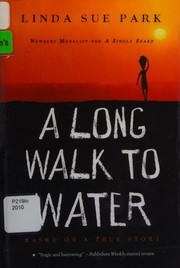
A Long Walk to Water
Two eleven-year-olds in southern Sudan, twenty-three years apart: a Dinka boy fleeing war and a Nuer girl walking hours for water, until their stories meet at…
2,217-word summary · 10 min read
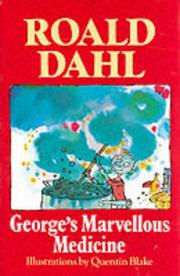
George's Marvellous Medicine
George stirs a brew of dozens of household chemicals and gives it to his grumpy grandmother, and the medicine works far better than anyone planned.
2,014-word summary · 9 min read
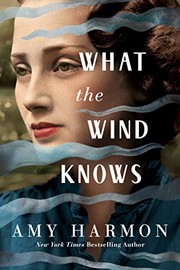
What the Wind Knows
Annie scatters her grandfather's ashes on Lough Gill and is pulled into 1921 Ireland, where she becomes the missing Anne Gallagher and falls for Dr. Thomas…
2,056-word summary · 9 min read
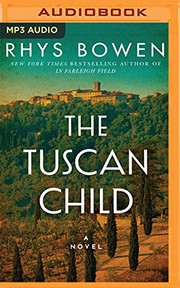
The Tuscan Child
After her father's death, Joanna follows a returned letter to Tuscany and uncovers his wartime love, a hidden painting and a village secret. A dual-timeline…
2,095-word summary · 9 min read