
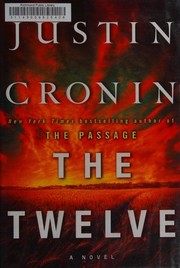
The Twelve
2,089-word summary 9 min read 592 pages in the book
- First published
- 2012
- Publisher
- Ballantine Books
- Pages
- 592
- ISBN
- 9780345504982
- Series
- The Passage (#2)
Reading options
What's inside (9 sections)
The Passage ended with a girl on a hill and a colony behind her and a story that felt complete in the way only the first book of a trilogy can feel complete. The Twelve arrived two years later, in 2012, and it does the opposite of what a sequel usually does. It does not narrow. It widens into three timelines and a cast the size of a small town, and it trusts you to keep up. I finished it with a headache and a lot of respect, and I understood immediately why readers split on it.
The structure is the argument. Cronin opens with survivors from the first book, then drops you into Year Zero, the year the virus escaped, when America was dying one town at a time. Then he jumps back seventy five years to a picnic that goes wrong, and then forward again to five years after the events of The Passage. The three strands braid slowly and meet in a city on the Iowa prairie. If you hated the time hopping, you hated the book, because the time hopping is the book.
That gamble is worth naming, because it is not what sequels usually do. The Passage was a linear epic with a century long jump and a small cast you could hold in your head. Its sequel deliberately splinters the narrative at the moment readers wanted consolidation, and it hands the reader a dramatis personae of about eighty names, most of them new. Cronin has said in interviews that he wanted the middle volume to feel like history rather than plot, and the book commits to that idea even when it costs momentum. Some of what follows reads like the ledger of a civilization being kept while the civilization dies, which is either the most interesting thing about it or the reason it sits unfinished on so many shelves.
Year Zero
The collapse chapters follow four people who never knew each other. Danny Chayes is an autistic school bus driver who takes his bus out for one last run because the routine is all he has, and picks up April Donadio, eighteen, and her little brother Tim. Bernard Kittridge is an ex military sniper holed up on a high floor of a Denver apartment building with a rifle and a grudge, killing virals one at a time and calling himself last stand in Denver. Lawrence Grey is a janitor from the Project Noah complex where the virus began, who wakes up in a hotel room inexplicably younger and slimmer, which is the first symptom of something that will take him a century to understand. Horace Guilder is a dying federal functionary who watches the country fold and chooses betrayal over death, because he has decided the future belongs to whoever is willing to serve it.
The set pieces in this strand are the best in the book. Danny's bus reaches a stadium designated as a rescue site and finds thousands of bodies instead. A FEMA trailer full of survivors goes quiet in a way polite people do not talk about. Grey helps Lila Kyle, the pregnant ex wife of Brad Wolgast from the first book, paint a nursery in an abandoned Home Depot because she has not accepted that the world ended, and their bond is the gentlest thing Cronin has written. Guilder's men collect them for a research center, and the government's plan for the refugees camped outside that center is a bomb. Danny and April drive out of the bombing run. Kittridge and Tim do not. Grey kills a medical examiner and a guard, takes Guilder hostage, and escapes in a helicopter that arrives in time to crash.
The Massacre of the Field
The book's second timeline is a single long day, decades before the first book, when the Vorhees and Lamont families hold a picnic in a field. There are steel shelters nearby called hardboxes, which tells you everything about how these people live. The men sweep the perimeter. The children play. Then a solar eclipse passes over, and the virals pour out of the hardboxes and kill everyone they can catch, including Dee Vorhees. A woman with a hypnotic voice walks through the slaughter and leads some of the children away. History will call it the Massacre of the Field.
Cronin then cuts to the childhood of the family men to explain the hate between Curtis Vorhees and Tifty Lamont. As boys they followed Tifty into an underground waterway to see the legendary Colonel Niles Coffee, and Curtis's brother Boz drowned in a tunnel drain when the water came. The grudge has been the engine of both families for decades, and the Massacre gets its own smaller ending when you realize what Tifty is atoning for.
Five years after
In the series present, Amy works at an orphanage inside the fortified military city they call the Homeland, and dreams of Wolgast telling her to go to him when the time is right. Peter Jaxon is a decorated veteran of the Expeditionary who has run out of wars to win. Satch Dodd, the youngest survivor of the Massacre, is still the youngest survivor of everything. Alicia Donadio leads a raid on the empty base of Julio Martinez, one of the Twelve master virals, and finds only Martinez's familiar, a janitor named Ignacio who has been waiting a hundred years for orders. Satch dies in a tunnel, killed by bats, and the expeditionary's five year hunt for the Twelve officially ends in failure.
Peter's convoy to guard an oil delivery runs into the hypnotic woman from the field, and Peter is the only man in the column she cannot bend. He escapes with Michael and Lore, and the woman lets him. Back in the city, Amy and Greer, the old colonel held prisoner for his diplomacy, break out and head north. Everyone is converging on the same place, and nobody in the military city knows it yet.
The city on the prairie
Alicia finds a working city in Iowa and walks into it as a spy. It is run by Guilder, still alive, still baldly bureaucratic, and still certain the new order is his to manage. Lila Kyle is there too, worse than Guilder, lost in a century of delusion, and so is Grey, chained in a basement as the city's blood supply. The ruling class call themselves redeyes, kept young by regular doses of Grey's blood, and the lower castes are cols, collaborators who do the work and take the blame. Sara Fisher, thought dead since the first book, is alive and laboring in the camps, and a resistance fronted by a mythical figure named Sergio exists mostly in the memories of a soldier named Eustace and a woman named Nina.
The resistance fakes Sara's death, renames her Dani, and installs her as an assistant to Lila, which is how she learns that the child she believed died in the first book is in the city, presented to the delusional Lila as her own. Amy and Greer reach Iowa. Peter, Michael, Lore, Hollis, and a black marketeer, and, yes, Tifty Lamont arrive behind them. They find Nina, and they make a plan around the one weapon Guilder cannot resist: a public execution, staged for the whole city, which Amy will attend as Sergio.
Alicia, for her part, refuses to sit still. She lets herself be captured and the city does what it does to prisoners, and she escapes with her hatred intact. That is where the book leaves her, sharpened.
The convergence
The execution is the trilogy's biggest staged battle so far. Guilder parades his prisoners, the remaining master virals gather to watch and to stay, and the resistance moves. Lila gets her moment of clarity, hands Sara's daughter to her, and goes down to the basement, not to free Grey but to set fire to the ether stores that feed the city, which takes the capitol building with it. In the square, Amy faces the Eleven, and it becomes clear that Carter, the viral who has haunted the series like a grief, has been somebody else all along. Carter is Brad Wolgast, remade badly, and he detonates a device that kills the assembled masters and himself.
Amy changes after that. The transformation that has been creeping through her since the first book completes, and she walks out of the city as something the others cannot follow, leaving Peter on a road with a question. Zero, the first viral and the patient zero of the whole plague, the man who was once Tim Fanning, calls to Alicia in the final pages, and she answers with the best closing line in the trilogy, which Janet Maslin quoted in her New York Times pan: you bastard, here I come. The coda between Amy and Carter, two beings waiting in the space where a mind should be, is the strangest and best piece of writing in the book, and it sets up a third volume in which the war is no longer between people at all.
What works and what strains
What works is ambition and the Year Zero strand. Danny and April on the bus, Grey and Lila and the paint, Kittridge on his high floor, Guilder signing the world away one memo at a time: these chapters have the momentum of the first book and the clearest stakes in the trilogy. The Massacre of the Field is a horror set piece that justifies the whole middle chunk, and Grey's century in the basement gives the Iowa section its emotional floor.
What strains is the ledger. The cast runs past eighty named characters, and Cronin loves an invented document, a scriptural prologue and a conference paper from the future, all of which slow a book that is already carrying three timelines. About two hundred pages pass before Peter Jaxon returns to the page, which frustrates readers who waited two years to follow the first book's hero. The title promises a hunt for the Twelve and the hunt never really happens, because the masters spend the book as guests of a bureaucrat. The Washington Post's review said the suspense drains away under the choppy structure, and the Times called it strictly a gap filler, which is the harshest version of a real complaint.
The review record is genuinely split, and it is worth looking at the split rather than picking a side. Aggregators counted one rave among the major reviews, from the Cleveland Plain Dealer, which called the book even better than The Passage, and four positive notices, including the Times Book Review's literary superthriller and the AV Club's compulsively readable. Then there were five mixed reviews and three pans. The Los Angeles Times faulted the weak characterizations and noted that two hundred pages pass before Peter returns, and the Guardian described a misstep into sentimental territory in the final act. Kirkus, meanwhile, called it very well written and far more literary than most apocalypse novels, and that is also true. All of it is true at once, which is what happens when a book chooses ambition over comfort and then refuses to apologize. George R.R. Martin fans will recognize the pattern: the middle volume where the board is being set, and the reader pays for the third book's payoff in advance.
Series note and who it is for
The trilogy ends with The City of Mirrors in 2016, and The Twelve does not stand alone. Read The Passage first. Reaching number four in Publishers Weekly's hardcover list in its first week with over thirty two thousand copies sold, it won the 2012 Goodreads Choice Award for horror, so the people who hung in there were not sorry. If you like your apocalypses with maps, ledgers and theology, this is a middle book that earns its place. If you want the lean thriller version, the first book is the one. Content notes: mass death, a child killed on the page, slavery and collaboration, and the cruelty of Guilder's city rendered without flinching.
If Book Two sits on your shelf unread because of its reputation, the case for reading it is simple. The City of Mirrors lands harder if you crossed the middle with the characters rather than skipping to the end, and a trilogy is only as good as the volume everyone wants to skip. The Twelve is the toll bridge between two better books, and it charges exactly what it is worth, no more and no less.
FAQ
Do I need to read The Passage before The Twelve?
Yes. The Twelve picks up characters and plots from The Passage midstream, and reading it cold makes both the massacres and the relationships hard to follow.
Is The Twelve about hunting the twelve virals?
Less than the title suggests. The hunt stalls early, and most of the book follows the survivors' separate paths toward Guilder's city in Iowa.
How does The Twelve end?
With Guilder's city burning, the master virals destroyed by Wolgast's bomb, Amy transformed and gone, and Alicia answering Zero's summons with a promise to kill him.
Similar books
More from The Passage first, then related titles.
The Passage
A failed Army experiment makes blood-hungry virals, and a quiet girl named Amy may hold the answer a century later.
2,755-word summary · 12 min read
The Day of the Triffids
Blinded survivors flee carnivorous plants after a meteor shower.
2,171-word summary · 10 min read
I Am Legend
Robert Neville holds one fortified house in empty Los Angeles by day, and faces what the plague left behind by night.
2,840-word summary · 13 min read
Bird Box
A mother and two small children risk a blindfolded river trip after sight itself turns deadly.
3,229-word summary · 14 min read
The Scorch Trials
Thomas and the Gladers cross a burned wasteland to reach haven while WICKED watches.
2,097-word summary · 9 min read
Year One
A plague released in Scotland kills most of humanity, and the survivors discover magic, build a town, and wait for a child who may save them.
2,029-word summary · 9 min read

Wilder Girls
At a quarantined boarding school off Maine, three girls with strange mutations search for a missing friend and learn what the adults have hidden.
2,594-word summary · 12 min read
The House of the Scorpion
A clone raised in a drug lord's poppy fields learns what he was made for and chooses what to do with the life he was given.
2,527-word summary · 11 min read
I Who Have Never Known Men
Forty women in a cage, one child who remembers nothing, and a nearly empty world above the bunker. Harpman's quiet, unexplained dystopia.
2,025-word summary · 9 min read

Wither
In a future where women die at twenty, sixteen-year-old Rhine is sold as a bride to a wealthy stranger and plots an escape from a beautiful prison.
2,395-word summary · 11 min read

Never Fade
Ruby, now a leader in the Children's League, must track down the boy whose memories she erased, because he holds the only proof of what caused the disease that…
2,188-word summary · 10 min read
The Year of the Flood
Toby and Ren live through the plague apart, guided by God's Gardeners, then join to find Amanda.
2,422-word summary · 11 min read
Life As We Knew It
Sixteen-year-old Miranda keeps a diary while an asteroid strike on the moon brings tsunamis, blackouts, and a frozen year of hunger to her Pennsylvania town.
2,485-word summary · 11 min read
Among the Hidden
Twelve-year-old Luke, an illegal third child, befriends Jen and faces the cost of stepping out of hiding.
2,923-word summary · 13 min read
The Running Man
Out of work in a broken 2025, Ben Richards enters a televised manhunt where each hour alive pays cash.
2,922-word summary · 13 min read
The Infinite Sea
Cassie and Squad 53 wait out winter in a hotel while Ringer is retaken and learns the truth behind the 5th Wave.
2,985-word summary · 13 min read
The Long Walk
One hundred boys walk until one remains, watched by soldiers and the Major, in Bachman's 1979 contest story.
3,056-word summary · 14 min read
Parable of the Sower
Lauren Olamina flees burning Robledo with her Earthseed verses and walks north to plant a new faith.
2,311-word summary · 10 min read
Wool Omnibus
In a buried silo, a sheriff asks to go outside, and a mechanic learns why no one returns from cleaning.
2,095-word summary · 9 min read

Cell
A cell signal turns callers into violent phoners, and a father walks north through ruins to find his son.
2,103-word summary · 9 min read
The Kill Order
Mark survives flares and Flare virus as WICKED forms thirteen years before maze.
2,129-word summary · 9 min read
Tender Is the Flesh
After a virus makes animal meat lethal, states legalize breeding humans for meat. Marcos Tejo grieves at a processing plant when he is given a live female…
2,372-word summary · 11 min read
Attack on Titan, Vol. 1
Humanity hides behind three walls until the Colossal Titan breaks Wall Maria and Eren Yeager vows to destroy every Titan.
2,357-word summary · 10 min read
Under the Dome
Chester's Mill is sealed under an invisible dome as cook Barbie and editor Julia face Big Jim Rennie's rule.
2,731-word summary · 12 min read
The Death Cure
Thomas refuses WICKED's final test, remembers too much, and runs with the Gladers toward a last cure and a ship north.
2,955-word summary · 13 min read
The 5th Wave
Cassie Sullivan crosses ruined Ohio to save Sammy after four alien waves, trusting Evan Walker while doubting him.
3,063-word summary · 14 min read