
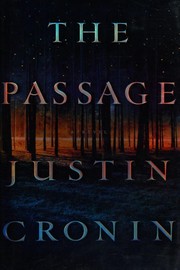
The Passage
2,755-word summary 12 min read 766 pages in the book
- First published
- 2010
- Publisher
- Ballantine Books
- Pages
- 766
- ISBN
- 9780345504968
- Series
- The Passage (#1)
Reading options
What's inside (8 sections)
- A girl left at a convent and a man sent to fetch her
- Project Noah and what the virus really does
- Collapse and the mountain winter with Wolgast and Amy
- Ninety three years later in the First Colony in California
- Leaving the lights for Haven and Babcock and Colorado
- Why the size both helps and hurts
- Key takeaways
- FAQ
I picked up The Passage because a friend kept calling it The Stand for readers tired of romantic vampires. That pitch stuck. I wanted something long and grim to carry around for a week. Justin Cronin published it in 2010 with Ballantine Books, and the first hardcover runs 766 pages. It is book 1 in The Passage trilogy. I read it across six nights with a lamp on. Some parts earned the lamp. Some parts kept me going because I wanted to get back to Amy.
Amy is the center, even when she leaves the page for a long stretch. Her full name is Amy Harper Bellafonte. She is six when we meet her. Her mother has left her at a convent. The woman who looks after her most is Sister Lacey. Amy is quiet in a way that makes adults lean in. She watches. She holds food like it might vanish. She stays close to walls in new rooms. Those small habits matter later, when the world gets loud and she stays still inside it.
The man sent to fetch her is Brad Wolgast. He is a Special Agent with the FBI, divorced and tired. His job in this program is procurement. He finds people and brings them in. He has done it with men from death row. This time the assignment is a child, to be delivered to Dr. Jonas Lear, head of the project. Wolgast tells himself it is medicine. Then he sees how small Amy looks in the car seat, and he starts asking one extra question, then another. I believed that slow turn because Cronin does not rush it.
A girl left at a convent and a man sent to fetch her
The early chapters move like a crime story. Wolgast tracks Amy through records and interviews. The convent is underfunded and tired, not holy or evil. Sister Lacey has a practical faith. She feeds children, washes sheets, locks doors at night. She knows Amy was abandoned at six and does not pretend that wound closes fast. She gives routine instead of speeches. Meals at set times. A clean cot. A hand on the shoulder when trucks pass.
Wolgast arrives with papers and a calm voice. He is to collect Amy for Project Noah at a secret military compound in Colorado. Colonel Sykes runs the military side. Richards handles logistics. Lear handles science. Wolgast has visited once before, riding west from Denver in a van with blacked out windows. He knows enough to feel uneasy and not enough to refuse. When he takes Amy, Lacey comes part of the way because Amy trusts her. That choice saves Amy later, though not as any of them plan.
Cronin writes government rooms well. Bad coffee. Fluorescent light. Men who say asset and protocol to avoid saying child and cell. Wolgast is not a hero yet. He is good at his job and starting to hate it. Amy notices when he leaves a light on for her in a motel. She eats slowly because she is unsure there will be more. Lacey prays in short lines under her breath while she works. What sticks is how ordinary the handover feels. Forms signed. A car seat that fits badly. Amy asking to bring a small bag. You know where they are headed and want to unbuckle the belt.
Project Noah and what the virus really does
Project Noah is sold as medicine. The public story is longer life and stronger immunity. The private goal is weaponized enhanced humans, described in files as the ultimate bunker busters. The science starts with a virus from an unnamed bat species in South America, found on a Bolivia expedition. Most people who caught it wild died with bleeding fever. Two expedition members survived. One was scientist Tim Fanning. He becomes patient zero, later called Zero.
Fanning blood leads to a serum. The Army tests it on death row inmates brought to Colorado. There are twelve. They are called The Twelve. Two matter most here. Babcock is the original test subject. He grows stronger than the rest and presses on guards and cleaners in dreams, coaxing doors open. Anthony Carter is the last recruited. He was convicted of a first degree murder he did not commit, and carries himself like a man done expecting fairness.
Amy gets a different dose. Lear theorizes that because her young immune system has not matured, the virus might live with her in symbiosis instead of taking her over. She receives a refined version of the serum. She keeps her mind. She gains fast healing and a slowness to age that will span decades. Lacey later receives a modified form as well, which gives longer life and a psychic tie to Amy and to the virals and to Babcock.
The virals are not charming. They are fast, strong, light sensitive predators with hunger for blood. They hunt at night and hate high wattage light. They share a hive mind, with Babcock loudest in this book and Zero behind them all. Colony patrols learn repeat hunters by habit and ground. Names pass around for return visitors, including Martinez and others tied to the original Twelve lines, plus strays made later. Babcock pushes thoughts from far off. Martinez types are direct. They rush fences. They test lights. They learn.
Control breaks fast. Zero and the Twelve take hold of guards and leave quarantine, killing as they go. The compound falls. Infection moves along roads, hospitals, bases. Cronin shows it through emails, shift notes, newspaper clips, short memos. A nurse charting. A soldier typing after action lines. Then silence. Europe closes borders and imposes quarantine, heard on radio fragments. America does not manage that. The government tries sterilization with a nuclear device in places. One blast near Wolgast and Amy leaves Wolgast with radiation sickness no mountain air can fix.
The science stays physical. Veins. Fever. Light rigs. Blood draws. Lear memos read like a decent man talking himself into a bad plan. Sykes talks force protection. Both believe they can steer what they made. They cannot.
Collapse and the mountain winter with Wolgast and Amy
Wolgast gets Amy out in the break. Lacey is with them at first, then is taken by Carter in the chaos while Wolgast and Amy slip away to a mountain retreat. They live there for months. This is the quietest part and, for me, the best written.
They chop wood. They boil snow. They nurse a battery radio that gives less each week. Wolgast catches fragments about American spread. A dark city. A closed highway. An overrun hospital. Amy learns to stay in at dusk and keep quiet at engines. Wolgast teaches small things. How to hold a flashlight steady. How to pour without waste. How to mark a trail without making it plain. Amy teaches without trying. How to sit still. How to wait out fear.
He was the lawman sent to track her down. He becomes the man who risks everything to save her, and the book earns it in daily acts. He cooks. He cleans scrapes. He watches while she sleeps. She learns to trust one adult, fragile and specific. She obeys his rules about lights because she saw what breaks when rules fail.
Then he sickens from the nearby blast. He weakens, sleeps more, hides it. Amy notices anyway. He plans for her to go on alone, across miles and decades, into a future dark with violence, carrying knowledge only she holds about what she is. When he dies, she walks alone. She does not age like others. Nearly a century later she will look fifteen. That image of a girl with old eyes walking out of woods toward a walled town stayed with me longer than any fight.
This stretch made me tear up once and skim once. Cronin lingers on storms and chores. If you like survival detail, you will love it. I skimmed part of the third storm, then a three line bulletin about a coastal city pulled me back.
Ninety three years later in the First Colony in California
The novel jumps about ninety three years to a walled town in California. The First Colony was set up by the military with FEMA soon after outbreak. It lives behind high wattage lights that repel virals. Power is life. Batteries are life. Technician Michael Fisher alone seems to grasp the margin. He hides work on spares and tries secret radio contact for parts. He catches faint signals from another military site in Colorado. That signal will pull the plot west.
Daily life is concrete. Time is counted in hands in casual talk. Kids under eight are raised together under a woman called Teacher. People farm, mend, stand watch. Phrases recur. All Eyes means keep watch, and means more between people who stood guard together. Gaps for trousers. Littles for small children. Flyers as a curse. I tripped on the slang, then stopped noticing. Isolation makes speech simple and close.
Key figures arrive with clear jobs. Peter Jaxon is steady but doubting, a senior figure among the young. His brother Theo is stronger and restless. Alicia Donadio, called Lish, volunteers for hard watches. Sara Fisher, Michael sister, is the medic. Mausami, called Maus, is young, pregnant, set on her own terms. Caleb is a boy in their orbit. Auntie holds memory. Hollis fills watches. I mixed up names at first and kept a scrap list. Peter the worrier. Theo the muscle. Lish the blade. Sara the healer. Michael the radio rat.
Amy reaches the gates during a night attack, having met Peter before on a foraging trip. She looks fifteen. A crossbow wounds her badly in the confusion, then she heals in days. Her bond with virals is plain. She senses them, calms them a little, dreams their dreams. Travelers are safer near her, never safe.
Her arrival breaks cover. Virals get inside and Teacher dies. Grief runs through families. Babcock presses from afar on weak points, stirring rations fights and watch feuds. Lights flicker. Batteries fail. Patrols report more testing at the fence. The council wants to conserve and wait. Peter and a small group choose to leave with Amy for the Colorado station.
I found this the slowest entry and hardest to leave. Farm, school, watch duty drag if you want plot. Details stack though. A Teacher lesson. A hidden battery log. A map Peter draws. When they go, you feel what they leave. Gardens and children behind dying lights is not nothing.
Leaving the lights for Haven and Babcock and Colorado
The road turns the book into a quest. Amy, Peter, Lish, Sara, Michael and others slip out with packs. Her cover helps them dodge worst packs. They cross empty towns and dry beds, argue about fire and noise and miles. Lish takes point when ground feels wrong. Sara handles blisters and bad water. Michael listens nightly for Colorado direction.
They find Haven, a settlement in a Las Vegas prison. It looks welcoming. Food. Walls. Order. It is Babcock lair. Many residents under his mind feed him blood sacrifices to be left alone by his horde, called The Many apart from The Twelve. Monthly ritual. Kept lists. Chosen people. Silence bought with blood. It is the most upsetting invention here, played straight.
Theo is held there. Taken months earlier, he resists Babcock slow push to make him a Familiar by holding to Maus and Peter and the coming baby. Peter finds him thin but unbroken. During a botched kill attempt at a ritual, sympathizers help the group flee by railroad to a farmstead. Theo and Maus stay for the birth. The rest meet a Texas military column. That column plans for Kerrville, but scouts report Babcock Many over the mountain, so the core friends with Major Greer veer to Colorado. The main column still goes to Kerrville.
The outpost is the same compound where outbreak began. Sister Lacey is alive there. Treated with modified serum, she has long life and a tie to Amy, virals, Babcock. She keeps files on The Twelve with hometowns, guessing each returned to known ground. She gives a case of twelve syringes with modified serum. As they wait for Babcock, whom Amy and Lacey confirm is coming, the group is hit and Lish is infected. Sara treats her fast with one syringe.
Lacey lures Babcock to a chamber and sets off a nuclear device meant long ago to sterilize the site. She dies with him. Much of the post goes too. The hive guess proves true in a strange way. With Babcock dead, Amy can know the virals lives and hand back memories, telling them who they were. Attackers collapse and wait for sunrise, most leaving dust.
Lish changes like Amy and Lacey but differently. Limited psychic range, full viral strength and endurance. Greer notes she would make a formidable soldier, the first true super soldier sought ninety three years back. Talk turns to using the rest to build fighters against Zero. Amy throws the remaining syringes in the fire. She will not share her curse to trade humanity for weapons. I argued in my head for a chapter, then thought she was right for this story.
They return to the farm where Caleb has been born. A strange tale follows about a viral with a shotgun blast no one remembers firing. Peter and Lish grasp the dead viral is Galen Strauss, Maus husband from the Colony, turned after she left. They stock food since Theo leg broke in the fight. Then walkers head for the First Colony while Theo family with Hollis and Sara in a Humvee make for Kerrville.
Home is empty. After months walking, Amy, Peter, Michael, Greer and Lish find the First Colony deserted. No clear battle signs. Two bodies. One by suicide. One is Auntie, dead of age. The quiet lands harder than Haven. They resolve to hunt the remaining Twelve by Lear files, with Lish as weapon. That night Amy meets the infected Wolgast outside. He lasts in altered form and knows her. The other thread closes through Sara diary. Her last entry at Roswell Base notes her pregnancy, hears gunshots, says she will check. Future notes place that entry at the Roswell Massacre site. Framing bits from a thousand years on, citing The Journal of Sara Fisher at a future University of New South Wales, remind you this is history pieced together. The novel ends without clean answers.
Why the size both helps and hurts
No honest note should skip flaws. The Passage feels long in two ways.
The split structure is the first. One third is a near future thriller about Noah. Two thirds is a colony tale ninety three years later with a road quest inside. They link through Amy, Lacey, files, but tone jumps. People you love vanish for hundreds of pages. Wolgast carries early pages, then lives only as memory and a late shock. If you came for FBI pace, farm chapters will test you. If you came for colony kids, Noah may feel too long.
Crowd is the second. Peter, Theo, Maus, Sara, Michael, Lish, Hollis, Auntie, Teacher, Greer, Caleb, plus Twelve names and Haven faces. I flipped back to track siblings and watch debts. Some get one trait. Theo is strength. Michael is radios. Quest jobs carry them, but deaths land softer than intended, save Teacher and one late loss I will leave unspoiled.
Prose can swell. The Los Angeles Times called parts nearly flawless and other narration portentous and slack, which matches my notes. Fights, light rigs, crossbows, rail escapes read clean. Grief scenes sometimes reach for large lines about passage from life to death, which Cronin has said the title means. A few float above the scene. Publishers Weekly flagged familiar tropes but praised sweeping epic style. You have seen quarantines, convoys, chosen children before. Scale and care carry it anyway.
Still, I would press it on the right reader. If you want fast vampires with rules on page ten, skip it. If you want a survival epic where light bills matter and a medic counts bandages and a radio kid solders at night while virals dream at the fence, try it. Read Noah straight through. Take the colony slower, a watch at a time. Keep batteries and Colorado files in mind across the jump. When the book stays with hands, bread, blood, light, 766 pages feel like room to live in rather than padding to endure.
FAQ
When was The Passage published and how long is it?
It was published on June 8, 2010 by Ballantine Books. The first hardcover runs 766 pages with ISBN 9780345504968.
Is The Passage part of a series?
Yes. It is book 1 in The Passage trilogy, followed by The Twelve in 2012 and The City of Mirrors in 2016.
Do I need to like vampire stories to read it?
No. The virals work more like infected predators in a survival epic, and much of the book follows the First Colony and a road quest a century after collapse.
Similar books
More from The Passage first, then related titles.
The Twelve
The middle volume of the Passage trilogy braids the year America died, a picnic massacre decades earlier, and the survivors' war against the twelve master…
2,089-word summary · 9 min read

Wilder Girls
At a quarantined boarding school off Maine, three girls with strange mutations search for a missing friend and learn what the adults have hidden.
2,594-word summary · 12 min read

The House of the Scorpion
A clone raised in a drug lord's poppy fields learns what he was made for and chooses what to do with the life he was given.
2,527-word summary · 11 min read
I Who Have Never Known Men
Forty women in a cage, one child who remembers nothing, and a nearly empty world above the bunker. Harpman's quiet, unexplained dystopia.
2,025-word summary · 9 min read

Wither
In a future where women die at twenty, sixteen-year-old Rhine is sold as a bride to a wealthy stranger and plots an escape from a beautiful prison.
2,395-word summary · 11 min read

Never Fade
Ruby, now a leader in the Children's League, must track down the boy whose memories she erased, because he holds the only proof of what caused the disease that…
2,188-word summary · 10 min read
The Day of the Triffids
Blinded survivors flee carnivorous plants after a meteor shower.
2,171-word summary · 10 min read
The Year of the Flood
Toby and Ren live through the plague apart, guided by God's Gardeners, then join to find Amanda.
2,422-word summary · 11 min read
Life As We Knew It
Sixteen-year-old Miranda keeps a diary while an asteroid strike on the moon brings tsunamis, blackouts, and a frozen year of hunger to her Pennsylvania town.
2,485-word summary · 11 min read
Among the Hidden
Twelve-year-old Luke, an illegal third child, befriends Jen and faces the cost of stepping out of hiding.
2,923-word summary · 13 min read
The Running Man
Out of work in a broken 2025, Ben Richards enters a televised manhunt where each hour alive pays cash.
2,922-word summary · 13 min read
The Infinite Sea
Cassie and Squad 53 wait out winter in a hotel while Ringer is retaken and learns the truth behind the 5th Wave.
2,985-word summary · 13 min read
I Am Legend
Robert Neville holds one fortified house in empty Los Angeles by day, and faces what the plague left behind by night.
2,840-word summary · 13 min read
The Long Walk
One hundred boys walk until one remains, watched by soldiers and the Major, in Bachman's 1979 contest story.
3,056-word summary · 14 min read
Parable of the Sower
Lauren Olamina flees burning Robledo with her Earthseed verses and walks north to plant a new faith.
2,311-word summary · 10 min read
Bird Box
A mother and two small children risk a blindfolded river trip after sight itself turns deadly.
3,229-word summary · 14 min read
Wool Omnibus
In a buried silo, a sheriff asks to go outside, and a mechanic learns why no one returns from cleaning.
2,095-word summary · 9 min read

Cell
A cell signal turns callers into violent phoners, and a father walks north through ruins to find his son.
2,103-word summary · 9 min read
The Kill Order
Mark survives flares and Flare virus as WICKED forms thirteen years before maze.
2,129-word summary · 9 min read

Tender Is the Flesh
After a virus makes animal meat lethal, states legalize breeding humans for meat. Marcos Tejo grieves at a processing plant when he is given a live female…
2,372-word summary · 11 min read
Attack on Titan, Vol. 1
Humanity hides behind three walls until the Colossal Titan breaks Wall Maria and Eren Yeager vows to destroy every Titan.
2,357-word summary · 10 min read
Under the Dome
Chester's Mill is sealed under an invisible dome as cook Barbie and editor Julia face Big Jim Rennie's rule.
2,731-word summary · 12 min read
The Death Cure
Thomas refuses WICKED's final test, remembers too much, and runs with the Gladers toward a last cure and a ship north.
2,955-word summary · 13 min read
The 5th Wave
Cassie Sullivan crosses ruined Ohio to save Sammy after four alien waves, trusting Evan Walker while doubting him.
3,063-word summary · 14 min read
The Scorch Trials
Thomas and the Gladers cross a burned wasteland to reach haven while WICKED watches.
2,097-word summary · 9 min read

The Maze Runner
Maze Runner retold: Thomas wakes in Glade, walls move, Grievers sting, Teresa triggers end.
1,907-word summary · 8 min read
The Hunger Games
Suzanne Collins's The Hunger Games explained: the reaping, Rue, the tracker jackers, the nightlock berry standoff, and what the arena is really for.
2,295-word summary · 10 min read