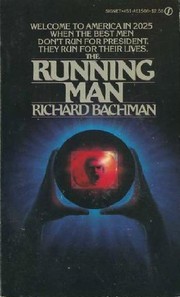
The Running Man
2,922-word summary 13 min read 219 pages in the book
- First published
- 1982
- Publisher
- Signet Books
- Pages
- 219
- ISBN
- 9780451115089
Reading options
What's inside (8 sections)
I came to The Running Man sideways, through The Long Walk. I had just finished that book and I could not shake the flat, cold voice Bachman uses for contests that kill people on television. A friend told me the other Bachman contest book was angrier and faster, and that it was set in 2025, which got my attention because we have now lived past the date King imagined. I wanted to see how close he got and how far off he was.
The edition I am citing is the original one. First published by Signet Books in the United States on May 4, 1982 as a paperback original, running 219 pages under ISBN 9780451115089. King wrote it as Richard Bachman, the pen name he used for Rage, The Long Walk, Roadwork, and Thinner before the connection came out. He has said he wrote the first draft in about a week. It was later collected in The Bachman Books in 1985. There are two films, a loose 1987 version with Arnold Schwarzenegger and a closer 2025 version with Glen Powell, but the novel is its own thing, shorter and meaner than either movie.
The hook is simple. In 2025 America the economy has collapsed, the air and water are poisoned, and the government runs a television Network that pays desperate people to risk their lives on game shows. Ben Richards, twenty eight, out of work and blacklisted, volunteers for the worst show of all. He will be hunted for thirty days for money.
Co-Op City and the Games
Ben lives with his wife Sheila and their eighteen month old daughter Cathy in Co-Op City, in the poor part of town. He cannot get steady work. The employment office has nothing for him. When Cathy gets sick with pneumonia, or something very close to it, the family cannot afford a doctor or the medicine she needs. Sheila has started turning tricks to bring in a little cash, which Ben knows and hates and cannot stop.
What makes the opening land is how tired everyone is. Ben is not a hero in the usual sense. He is tall and thin, already half sick himself from bad air and bad food, quick to anger, bad at hiding it. Sheila is exhausted and sharp with him because worry has nowhere else to go. The apartment is cold. The streets outside are full of people in the same shape. King does not spend pages explaining the economics. He shows a man walking from office to office, getting turned away, watching richer people on television talk about the poor as if they are a different species.
The Games Network sits in the middle of this like a bank and a church combined. It airs shows where people hurt themselves for cash. Treadmill to Bucks gives you money for physical punishment. Other shows pay for humiliation or pain. The crowds love it. The poor watch because someone from their block might win enough to eat for a month. The rich watch because it confirms what they already believe, that poor people will do anything if the price is right.
Ben goes to the Games building because he has no other plan. He expects to be rejected. Instead the staff put him through a long day of tests. Blood work. Lungs. Heart. Reflexes. Then aptitude and psychology games, mazes and word tests and reaction puzzles, with men in white coats watching through glass. He nearly fights another applicant in the waiting area. He talks back to an interviewer. Somehow that helps. The Network wants people with fight in them, up to a point. People who will run and argue and make good television before they break.
The rules of the Running Man
The interview with Dan Killian is the part I remembered best on a second read. Killian is the executive producer of the show, smooth and tired in a way that is worse than lying. He lays out the deal without dressing it up.
Ben will be declared an enemy of the state. He gets a twelve hour head start before the Hunters are sent after him. Hunters are the Network's own killers, led by Evan McCone, who the audience knows the way sports fans know a star player. Ben will earn one hundred dollars for each hour he stays alive. He will earn an extra one hundred for each Hunter or policeman he kills. If he survives thirty days, he wins one billion dollars. That number is so large it stops sounding like money and starts sounding like a rumor.
Viewers can earn money by reporting him. That is the clever trap. Ben cannot trust a crowd. Anyone with a phone or a postcard can turn him in for a reward, and many will. To get paid, Ben must mail two videotaped messages to the Network every day. If he misses the mail, he gets nothing and the Hunters keep coming. The Network provides him with forty eight hundred dollars in pocket money and a cheap camera at the start, plus a head start and a warning to run.
Killian tells him plainly that no one has won the big prize. The record at the time Ben starts is under two hundred hours, a little over eight days. Most contestants die in the first two or three days. Some die in the first afternoon. Ben listens and signs anyway because Cathy needs medicine now, not in a month, and because pride is part of it too. He wants to spit in the eye of the men who run the show, even while taking their cash.
There is a detail here that tells you what kind of book this is. Ben is allowed to go anywhere in the world, in theory. In practice he has no passport, no friends with money, no safe place to hide. Freedom on paper, nowhere to go in life. That gap runs through the whole novel.
Boston and the tapes
Ben uses the head start to get to Boston. He keeps moving, sleeps in bad hotels and doorways, changes clothes when he can. The Network airs his picture and his file. Strangers stare a second too long on the sidewalk. A kid points. An old woman pretends not to see him and then hurries to a pay phone. The paranoia builds fast because it is earned.
The YMCA basement sequence is short and ugly. Police corner him in a cheap lodging area, or close enough that he has to fight his way out, and an explosion follows that kills five officers. Ben does not walk away clean. He is shaken and deafened and bleeding a little, and the Network immediately paints him as a cop killer on the evening broadcast. From that point on ordinary people who might have helped him see him as dangerous first and desperate second. That shift matters. It closes doors he did not know were open.
He hides for a stretch in a Boston ghetto with the help of Bradley Throckmorton, a young Black man tied to a street gang, or more like a loose network of angry poor kids who know every tunnel and stairwell. Bradley is one of the few people in the book who talks plainly about why the world looks the way it does. He tells Ben the air in poor districts is worse by design, that filters and medicine go to rich zip codes first, that infant deaths get buried in statistics. Ben already suspects this. Hearing it said out loud, with addresses and examples, steadies him and makes him angrier.
Ben tries to put some of that into his mailed tapes. He rants about poisoned air and rigged medicine and the way the Games turn poverty into a show. The Network never airs those parts as he records them. They dub over him with swearing and threats, or cut him off with a host voiceover, so the audience at home sees a thug snarling instead of a father making an argument. I found those passages convincing in a way that surprised me. King wrote this in the early seventies and published it in 1982, long before reality television as we know it, yet the editing trick feels current. Control the tape and you control the man.
Bradley, Manchester, and Portland
Bradley gets Ben out of Boston and past a roadblock into Manchester, New Hampshire. The method is simple and nerve wracking. Papers, a ride, timing, luck. In Manchester, Bradley gives him what he can. A car. A pistol. A change of clothes. A set of mailing labels and envelopes so Ben can send his tapes from different drop points without giving away his location through postmarks.
Ben spends about three days in Manchester dressed as a half blind priest, dark glasses and a cane and a bent posture. It works because no one looks twice at a poor preacher. He rests. He eats. He mails his tapes. He watches the show when he dares, in bars and shop windows, and learns another contestant has been killed. He dreams badly. In one dream Bradley is caught and tortured into giving him up. He wakes up soaked and unsure whether to stay or run. He stays a little too long, which feels true to exhaustion. When you are that tired, even a bad hiding place can feel like a bed you do not want to leave.
Portland, Maine is next. Bradley has a contact there with a safe house. Ben drives up, careful and sore, hoping for one quiet night. The contact seems willing. The contact's mother is the problem. She recognizes him from television and calls the police, maybe for the reward, maybe from fear, maybe both. The book does not make her a villain. She is an old woman in a small house who sees a gun and a hunted man and chooses safety.
What follows is a running fight through streets and yards. Police and Hunters close in. Evan McCone is there in person now, professional and calm, the opposite of the television version of him. Ben is wounded, not badly enough to stop but badly enough that every step costs. He gets away by luck and stubbornness and spends the night in an abandoned construction site, cold concrete and plastic sheeting, listening for dogs and helicopters. It is one of the loneliest stretches in the book. No speeches. Just a man trying to keep pressure on a wound and stay awake until morning.
I should admit something here. I lost track of exact hours and payouts in this middle section on my first read. The show keeps a public clock, and Ben keeps his own count, and they do not always feel synced because days blur when you do not sleep. That blurring seems deliberate. Money that sounded huge in Killian's office starts to feel abstract when you are counting it in alleys.
Amelia, Derry, and the plane
By the time Ben reaches Derry, he is past hiding. He carjacks a woman named Amelia Williams and takes her hostage. Amelia is not poor. She is middle class, decent, frightened, the kind of viewer who has watched the show without ever imagining herself inside it. She cries. She argues. She tries to reason with him. Ben is rough with her at first because roughness is all he has left, but he does not hurt her for show. He needs her as a shield to get to the airport.
The airport standoff is the longest set piece in the novel and the best written. Police surround the building. McCone arrives with his team. Cameras arrive faster than ambulances. Ben bluffs that he is carrying a powerful explosive, enough to level the terminal, holding a paper bag and a wire and daring them to call it. They do not call it. He gets himself, Amelia, and McCone onto a small jet. The pilot and a few others come along because they have no choice.
In the air, with the plane flying low to avoid being shot down, Ben learns he has broken the show record. One hundred ninety seven hours. A little over eight days. On the ground, something unexpected happens. Poor viewers start rioting or refusing orders or simply blocking roads, because a man who was supposed to die on schedule is still alive and talking. The Network can censor tapes, but it cannot censor a plane circling overhead with a live hostage and a live Hunter aboard.
Killian calls the plane by radio. He is frank in a way that chills. He says he knows the explosive is fake. He offers Ben a job as the new lead Hunter, taking over from McCone, with money and safety and a script to read. Then he tells Ben that Sheila and Cathy have been dead for more than ten days, killed early in the game, and that the checks Ben thought were going home were going nowhere. Whether Killian is telling the truth in that moment, or using cruelty as a hiring tactic, is left for Ben to decide in seconds. Ben decides it is true enough.
What Ben does next is terrible and, inside the logic of the book, consistent. He kills the flight crew and McCone, though he takes a mortal wound himself in the fight. He gives Amelia a parachute and forces her to jump, saving the one person aboard who never chose the game. Then he takes the controls, overrides the autopilot, and points the plane at the Network's headquarters tower. The book ends with the crash and a sky lit up for blocks around. Ben dies. Killian dies. The tower burns.
I went back and forth on that ending. Part of me wanted Ben to live long enough to see whether the unrest meant anything. Another part thought survival would have been a lie. This is not a book about reform. It is a book about a man who runs out of road and decides where to stop.
What works and what creaks
The speed works. At 219 pages this moves like a chase should move. Short chapters. Little fat. Boston to Manchester to Portland to Derry in quick cuts, with tapes and newscasts breaking up the running. I read most of it in two sittings because stopping felt like losing the thread. If you like The Long Walk but found the middle miles repetitive, this is the fix. Same anger, less walking in circles.
Ben works as a character for me, though not always in a comfortable way. He is racist at moments, sexist at moments, cruel to Sheila in memory and to Amelia in person, then suddenly tender in a way that catches you off guard. King does not sand those edges. He lets Ben be a poor man raised in a poisoned city who absorbed plenty of poison himself. You can root for him to survive the Hunters while wishing someone would shake him. That tension kept me reading when the plot turned familiar.
The media satire holds up better than the tech. Tapes by mail, pay phones, broadcast schedules, paper tickets. All of it reads old now, and a younger reader may smile at the idea that mailing a video cassette twice a day is a matter of life and death. But the core idea, that a network can make a man look guilty by editing his words, feels newer than ever. Swap cassettes for livestreams and not much else needs changing.
Fair criticism belongs here too. The women get thin treatment. Sheila exists mostly as motive and memory, then as a shock reveal. Amelia gets more page time and a few sharp lines, but she functions as a mirror for Ben rather than a person with her own story. Bradley is vivid and then gone too fast. McCone is interesting as a professional killer who believes in rules, yet the book does not give him enough room to be more than a uniform. If you need a full cast, this will feel narrow.
The politics are also blunt. Rich areas get clean air, poor areas get smoke, the Network lies, the crowd believes the lie until a plane flies too low to ignore. There is truth in the bluntness, and I think that is why the book lasts, but there is not much surprise in it. You will not find the knotty moral arguments of later King books. This is early work, written fast, and it reads fast.
Who is this for. Readers who like survival stories with a clock on them will tear through it. Readers who know the 1987 film should expect a different Ben, scrawny and coughing instead of built for the camera, and a different tone, bleak instead of quippy. The newer film gets closer to the plot, from what I have seen described, but the novel remains shorter and colder. Pair it with The Long Walk and Rage if you want the full Bachman run from those years. It stands alone with no series ties, so you can start here without homework.
If you pick up the Signet paperback cited here, you get the text as it first appeared, 219 pages, plain and brutal. Later reprints and omnibuses run longer because they bundle other books or reset the type. The story does not need extra pages. A man runs, the cameras follow, and the city watches until watching stops being enough.
FAQ
When was The Running Man first published?
Signet Books published it on May 4, 1982 as a paperback original. The first edition runs 219 pages under ISBN 9780451115089.
Is Richard Bachman really Stephen King?
Yes. Bachman was the pen name King used for early novels including Rage, The Long Walk, Roadwork, and Thinner. The cover credits Bachman.
Is The Running Man part of a series?
No. It stands alone, though it was later collected with other Bachman novels in The Bachman Books in 1985.
Similar books

The House of the Scorpion
A clone raised in a drug lord's poppy fields learns what he was made for and chooses what to do with the life he was given.
2,527-word summary · 11 min read
I Who Have Never Known Men
Forty women in a cage, one child who remembers nothing, and a nearly empty world above the bunker. Harpman's quiet, unexplained dystopia.
2,025-word summary · 9 min read

Wither
In a future where women die at twenty, sixteen-year-old Rhine is sold as a bride to a wealthy stranger and plots an escape from a beautiful prison.
2,395-word summary · 11 min read

Never Fade
Ruby, now a leader in the Children's League, must track down the boy whose memories she erased, because he holds the only proof of what caused the disease that…
2,188-word summary · 10 min read
The Twelve
The middle volume of the Passage trilogy braids the year America died, a picnic massacre decades earlier, and the survivors' war against the twelve master…
2,089-word summary · 9 min read
Severance
Candace keeps office routine as fever empties New York, then joins survivors.
2,340-word summary · 10 min read
The Year of the Flood
Toby and Ren live through the plague apart, guided by God's Gardeners, then join to find Amanda.
2,422-word summary · 11 min read
Life As We Knew It
Sixteen-year-old Miranda keeps a diary while an asteroid strike on the moon brings tsunamis, blackouts, and a frozen year of hunger to her Pennsylvania town.
2,485-word summary · 11 min read
Among the Hidden
Twelve-year-old Luke, an illegal third child, befriends Jen and faces the cost of stepping out of hiding.
2,923-word summary · 13 min read
The Infinite Sea
Cassie and Squad 53 wait out winter in a hotel while Ringer is retaken and learns the truth behind the 5th Wave.
2,985-word summary · 13 min read
Pines
A Secret Service agent wakes hurt in Wayward Pines, Idaho, hunting two missing agents, and finds a town that will not let him leave.
2,452-word summary · 11 min read

The Lost World
Malcolm lives after all and returns to Site B where engineered herds eat themselves and Dodgson steals eggs.
2,075-word summary · 9 min read
The One
A DNA test promises perfect love, but five Matches face lies, murder and a hacked database.
2,856-word summary · 13 min read
Parable of the Sower
Lauren Olamina flees burning Robledo with her Earthseed verses and walks north to plant a new faith.
2,311-word summary · 10 min read
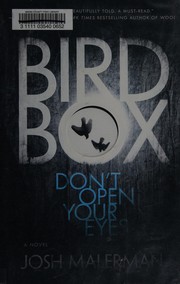
Bird Box
A mother and two small children risk a blindfolded river trip after sight itself turns deadly.
3,229-word summary · 14 min read
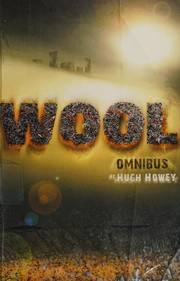
Wool Omnibus
In a buried silo, a sheriff asks to go outside, and a mechanic learns why no one returns from cleaning.
2,095-word summary · 9 min read
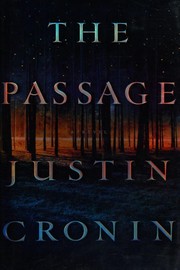
The Passage
A failed Army experiment makes blood-hungry virals, and a quiet girl named Amy may hold the answer a century later.
2,755-word summary · 12 min read

The Circle
Hired by the world most powerful internet firm, Mae trades privacy for praise until dissent turns fatal.
2,092-word summary · 9 min read
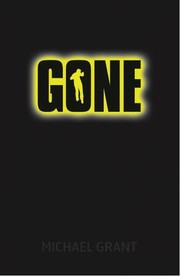
The Kill Order
Mark survives flares and Flare virus as WICKED forms thirteen years before maze.
2,129-word summary · 9 min read
Attack on Titan, Vol. 1
Humanity hides behind three walls until the Colossal Titan breaks Wall Maria and Eren Yeager vows to destroy every Titan.
2,357-word summary · 10 min read

Under the Dome
Chester's Mill is sealed under an invisible dome as cook Barbie and editor Julia face Big Jim Rennie's rule.
2,731-word summary · 12 min read
Snow Crash
A hacker and a teenage courier cross a fractured America and its virtual Metaverse to stop a virus that infects minds and machines.
3,293-word summary · 15 min read

Oryx and Crake
Snowman lives alone after the plague with Crake's green-eyed Children, remembering Jimmy, Crake and Oryx.
3,026-word summary · 13 min read
The Death Cure
Thomas refuses WICKED's final test, remembers too much, and runs with the Gladers toward a last cure and a ship north.
2,955-word summary · 13 min read
The 5th Wave
Cassie Sullivan crosses ruined Ohio to save Sammy after four alien waves, trusting Evan Walker while doubting him.
3,063-word summary · 14 min read
The Scorch Trials
Thomas and the Gladers cross a burned wasteland to reach haven while WICKED watches.
2,097-word summary · 9 min read