
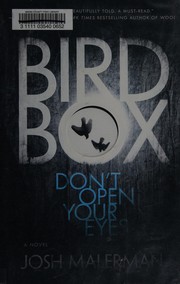
Bird Box
3,229-word summary 14 min read 272 pages in the book
- First published
- 2014
- Publisher
- Ecco
- Pages
- 272
- ISBN
- 9780062259653
- Series
- Bird Box (#1)
Reading options
What's inside (8 sections)
I came to this one backwards. I saw the film first on a winter night when everyone online seemed to be walking around blindfolded for a joke, then learned it started as a book. A friend who loves horror told me the book was shorter and stranger and meaner than the movie. She was right on all three counts. I expected a creature feature with a clear monster. What I got was a story about listening, about mothering under impossible pressure, and about how fast ordinary people turn on each other when they cannot see.
First published in 2014, in the United States by Ecco in a first hardcover of 272 pages, ISBN 9780062259653, with a UK edition the same year from Harper Voyager. It is the first volume in the Bird Box series, followed by Malorie in 2020. The later Netflix film from 2018 starring Sandra Bullock keeps the river trip and the blindfolds but changes a good deal around them. The book itself is told in alternating strands. One follows Malorie alone in a house with two small children she calls only Boy and Girl. The other rewinds to how she got there. Both strands move forward until they meet on the river.
When seeing kills
At the start of the past strand Malorie lives in Michigan with her older sister Shannon. Malorie is in her early twenties, pregnant after a brief relationship, unsure what she wants. Shannon is practical and dry and a little bossy, the kind of sister who buys the test and waits outside the bathroom door. Around them the news turns odd. Reports come from far away about sudden mass violence. People harm themselves and others after seeing something. No one can say what it is. Some call it creatures. Some call it visions. Some say it is all in the mind. The reports grow closer.
Malerman handles this spread well because he keeps it domestic. The sisters do not get a briefing from scientists. They get television clips, phone calls that do not connect, neighbors who stop answering doors. They cover their windows with blankets and cardboard. They argue about whether to go out for food. Shannon looks out once too long and pays for it in the bathroom with a pair of scissors. It is an awful scene and Malerman does not soften it. Malorie finds her, cleans what she can, and understands that the rule is simple now. Sight means death. If you see, you break. The only safety is to close your eyes or cover them.
Pregnant and alone, Malorie answers a newspaper ad placed by a man offering shelter in a house outside town. She drives there with her eyes mostly shut, counting turns, terrified of every sound. That drive is one of the best passages in the book because it shows how much we rely on glances without noticing. She has to park, find the door, and ask strangers to let her in while keeping her gaze down. The people inside pull her through the door and bolt it behind her. For the first time in weeks she sleeps without listening for her sister moving in the next room.
The house with covered windows
The house becomes the center of the book for a long stretch. It is an ordinary suburban place made strange by blacked out windows, buckets for water, canned food stacked in closets, and a strict routine for going outside blindfolded. The group inside is a mix that feels true to how such a house would actually fill up. Tom is the steady one, kind and quick with fixes, the sort of man who takes charge without making speeches. Jules is quieter, attached to his dog Victor. Felix is handy and nervous. Don is sour and tired from the start. Cheryl is older and careful with supplies. Olympia is young and pregnant like Malorie, open and warm where Malorie is guarded. George, the man who first owned the house, is already gone by the time Malorie arrives, but his story hangs over them.
George had tried to be clever about the threat. He believed you could watch it indirectly, through a camera, without harm. He had himself tied to a chair while the others watched him view a tape from outside. It went wrong in seconds. Tom tells this story early to set the rule. No lenses. No peeking through slats. No mirrors. The house lives by that.
Daily life is chores and fear. They fetch water from a well out back while blindfolded, feeling along ropes and wooden guides. They ration food. They call numbers from a phone book and leave messages on answering machines in case anyone else is out there. They try to train dogs to lead them outside, on the idea that animals might be spared. Jules will not risk Victor, so they look for other dogs. On one trip Tom and Jules find no dogs but bring back a box of birds. The birds turn out to be useful in a way no one planned. They grow loud and frantic when someone or something comes near. The box sits in the house like an alarm you cannot switch off. That is where the title comes from, and Malerman earns it. The birds are small and loud and always afraid, which is exactly how the people feel.
What I liked here is the texture. Malerman is good on sound when sight is gone. Floorboards, breath in a hallway, a branch scraping a covered window, water sloshing in a bucket. He is also good on the petty frictions that build in close quarters. Who used too much water. Who should risk going out. Whether to let in another mouth to feed. The group votes. They keep lists. They try to stay fair. It does not always work.
If there is a weakness in this middle part, it is that some housemates stay thin. Felix and Cheryl get a few traits and little else. Don is mostly gloom from his first scene, which makes his later choices feel less surprising than they should. I also found myself pausing at logistics. The power still works in places, the phone lines still work, but the internet is gone and no one watches old films even though a camera exists in the house. You can explain each point away, but together they wobble a bit. Still, the mood holds. The house feels damp and close and temporary, and you start to dread any knock.
Gary and the night everything breaks
The knock comes. His name is Gary. He says he walked away from another shelter where a man named Frank kept journals and insisted the whole crisis was hysteria. According to Gary, Frank opened doors and uncovered windows to prove people were only scaring themselves, and got people killed. Gary seems shaken and polite. The house debates. There is no room. There is barely food. Malorie, who has learned to distrust charm, votes to turn him away, but the group votes to let him stay after she breaks a tie in his favor. She regrets it almost at once.
Gary is patient and useful at first. He helps with chores. He listens. Then he starts spending long hours talking with Don, who is already half checked out. They talk about Frank and about whether fear itself is the real sickness. Don moves to the cellar. He stops eating with the group. Malorie sneaks a look in Gary's briefcase when she can and finds a journal in handwriting that sounds like the Frank stories Gary told. She brings it to Tom and the others. The feeling in the house shifts from tired to cold. After a hard argument they vote Gary out. Don takes it personally and sinks further away.
Meanwhile both pregnant women grow heavy. Olympia and Malorie go into labor on the same stormy night and are moved to the attic, which has the fewest windows and a door that locks. Downstairs the men argue. Malorie can hear raised voices through the floor but cannot leave the mattress. Then screaming starts. Gary is back inside. Whether Don let him in through the cellar or Gary forced his way, the result is the same. Gary tells Malorie plainly that there was no separate Frank. He is Frank, or Frank is him, a man who was already unwell before the world changed and who can look without breaking the way others break. He has been watching the house for a long time.
What follows is fast and brutal. Don tears down coverings downstairs. The others look, or are made to look, and turn violent at once. Up in the attic Gary cracks the door to let something in. Malorie keeps her eyes shut and pulls blankets over both newborns. Olympia looks. In her last clear moment she pushes her baby girl toward Malorie. Then she is gone the way Shannon went, sudden and total. Malorie is left alive with two infants, a dead house below, and Victor the dog locked in the cellar barking through the door.
I found this sequence both effective and hard to accept in one detail. Gary as a person who can see and stay calm is chilling because it suggests the danger is not only outside but in people who enjoy it. That lands. What strains a little is how quickly a house that survived months on rules falls in one night. It makes sense on paper, given betrayal from inside, but Malerman rushes the downstairs fight because Malorie cannot see it. We hear thuds and shouts and then silence. It is scary, yet also convenient. The book is stronger when it stays close to what Malorie can hear and feel, and this is one place where that limit shows.
Afterward the phone rings. It has been silent for so long that the sound itself feels unreal. A man named Rick says he got one of their old phone book messages. He lives with others in a former school further along the river. There is food and space if Malorie can get there by boat. She is in no state to go, with two newborns and a house full of bodies to bury. Rick says he will keep calling. She thanks him and hangs up and starts the grim work of cleaning and surviving.
Four years of listening
The next strand is the one that stayed with me longest. Malorie raises the two children alone in the same house for four years. She does not name them. They are Boy and Girl, because names feel like a luxury she cannot afford and because she fears love will make her soft. She trains them the way someone might train for a sport they hate. They practice keeping their eyes closed even when startled. They practice listening for direction, distance, movement. They learn to tell a dog from a deer by sound, water over stones from wind in leaves, a human step from an animal step. They wear blindfolds outside and sleep in a room with covered windows. The house is rigged with wires and amplifiers so outside noise carries inside.
Malorie is a hard mother in these years, sometimes too hard. She scolds them for asking about colors or clouds. She drills them until they cry. She withholds comfort because comfort feels dangerous. As a reader I swung between sympathy and frustration. Sympathy because every harsh rule comes from a real loss she carries in her body. Frustration because the children are four and curious and starved for play. Malerman does not excuse her. He shows the cost in small moments. The Girl hums and stops when Malorie looks over. The Boy asks a simple question about the sky and gets a lesson instead of an answer. You understand why she does it and you wish she would stop.
Two events push Malorie toward leaving. First, Victor proves that animals are not safe after all. On a supply walk the dog turns on them in the woods, mad in the same sudden way people go mad. Malorie is forced to kill a creature she loves while the children listen blindfolded. It shakes her trust in every shortcut Tom once hoped for. If dogs can break, listening is all they have. Second, Rick keeps his word and keeps calling. His place still stands. It was once a school for the blind, with supplies and a routine built for life without sight. Four years ago the trip felt impossible with infants. Now the children are four, sharp eared and obedient, and staying feels like its own slow risk as food thins and the house wears down.
I liked how Malerman shows time passing through objects rather than dates. Clothes cut down to fit small bodies. Chair legs whittled into toys with painted faces. Cupboards that echo. A well path marked with bits of wood so small shoes can find it blindfolded. These details do more work than any calendar. My complaint is that we get little sense of Malorie inner life beyond fear and drill. She thinks about Tom and about what he would say, she remembers Shannon, she aches for her old self, but whole months blur into routine. That may be the point. Grief plus routine can flatten a person. Still, I wanted one or two scenes where she lets herself remember something good at length, to balance the hardness.
Down the river blindfolded
The last third returns to the opening image. Malorie wakes on a cold October morning, decides today is the day, and tells the children they are taking the rowboat down the river twenty miles to Rick. She lays out rules with painful care. Boy in front, Girl in back, Malorie in the middle rowing. Blindfolds tight. Blankets on. Listen past the water and the woods and report anything. No talking across the boat unless it matters. Hold hands on the path to the well, then hold her coat through the woods to the dock. If hands slip, grab cloth and do not open eyes.
The trip itself is a chain of tests. The fog helps and hinders, hiding them but deadening sound. At one point they hear an engine and a man calls out from another boat. He sounds ordinary and kind. He says there is nothing to fear and asks them to take off their blindfolds. He claims he has looked and stayed well. Malorie refuses and rows on while the children shake. Later wolves come down to the bank, lean and bold, and one gets close enough to hurt her before she drives the boat clear with noise and frantic paddling. Birds rise in screaming clouds at odd moments, and she cannot tell if they warn of people or of something else. Near a fork she faces the worst choice. She must pick the right channel without sight. She lifts her blindfold for a breath to look at the water, then pulls it back down. It is a small act that feels huge after everything she has taught the children.
Malerman writes these pages in present tense throughout the book, and here it finally pays off fully. Every stroke and splash lands. You hear what she hears because there is nothing else to hold onto. The children prove their training without becoming miniature adults. Boy reports what he hears in plain words. Girl stays brave until she cannot, then steadies when Malorie talks her through it. When they reach the school, Malorie learns what Rick meant. Many residents are blind, some from birth, some by choice after the change, though they have stopped asking newcomers to do the same. There are gardens and chores and rules that make sense. For the first time Malorie lets herself do what she withheld for four years. She gives the children names. Boy becomes Tom, after the man who held the house together. Girl becomes Olympia, after the woman who gave her child to Malorie in the attic. Then she tells them to take off their blindfolds.
Does the ending fully satisfy? Partly. The relief is real. After so much withholding, those names land hard. The school feels plausible as a refuge because it was built for life without sight before anyone needed it for this reason. What still nags is how much remains unexplained, which will bother some readers and please others. We never learn what the entities are or why some minds resist. Gary hints at answers but he is not a reliable guide. The wolves and the man on the river suggest people and animals have adapted in scattered ways, yet the book does not map that wider world. I did not mind the mystery. I minded a little that Malorie courage, which the whole book builds toward, resolves so quickly once she arrives. One more chapter of settling in, of seeing how the school actually runs day to day, would have earned the calm.
Still, I would press this on readers who like horror that stays close to the body. It is short for its punch, plain in language, and honest about fear. It is also honest about parenting. Malorie starts as a young woman who can barely admit she is pregnant and ends as someone who can keep two children alive through drill and love mixed together badly and well. The training scenes upset me. The river scenes thrilled me. The final naming made me sit quiet for a bit. If you want lore and battles, look elsewhere. If you want dread that comes from a covered window and a box of birds going wild for no reason you can see, this delivers.
What worked and what did not
What worked best for me was sound as plot. Malerman trained as a musician, and you can feel it in how he spaces noise and silence. A bucket handle clinks. An amplifier hums. Birds panic all at once. That focus makes the blindness rule feel physical rather than clever. I also liked Tom as a center for the house chapters. He is decent without being saintly, practical without long speeches, and his absence later means something because the book showed his use.
What did not work as well was the thinness around some people and systems. Felix, Cheryl, and even Jules blur at times. Don reads as doomed from his first grumble. The wider collapse stays vague in a way that sometimes feels thin rather than mysterious, especially around power, phones, and why no one tries recorded stories or music for comfort. And Malorie harshness, while understandable, can make the middle four years feel repetitive. Drill, scold, forgive in silence, repeat.
Even with those gripes, the core holds. A woman who lost her sister learns to lead a house, loses that house to cruelty from inside, then teaches two children to hear the world so well they can cross it blind. The prose is plain, the scares come from what you cannot confirm, and the heart of it is not the unseen shapes but the very seen choice to keep going down a cold river with two small hands trusting yours. I closed it thinking about how loud my own house is at night, and how little I usually notice.
FAQ
Is Bird Box part of a series?
Yes. It is book one of the Bird Box series, followed by Malorie from 2020. The 2018 film with Sandra Bullock adapts this book with many changes.
Do we learn what the creatures are?
No. The cause stays unseen and unexplained. The book focuses on sound, house rules, and trust, and Gary claims insight but he is not reliable.
Similar books
More from Bird Box first, then related titles.
The Twelve
The middle volume of the Passage trilogy braids the year America died, a picnic massacre decades earlier, and the survivors' war against the twelve master…
2,089-word summary · 9 min read
Year One
A plague released in Scotland kills most of humanity, and the survivors discover magic, build a town, and wait for a child who may save them.
2,029-word summary · 9 min read
The Troop
A Boy Scout troop on a Canadian island takes in a stranger who cannot stop eating, and the worm inside him turns a camping trip into a war.
2,457-word summary · 11 min read

The Day of the Triffids
Blinded survivors flee carnivorous plants after a meteor shower.
2,171-word summary · 10 min read
The Running Man
Out of work in a broken 2025, Ben Richards enters a televised manhunt where each hour alive pays cash.
2,922-word summary · 13 min read
Nowhere Burning
Siblings flee to a burnt ranch commune in the Rockies where old fires still smolder.
2,232-word summary · 10 min read

The Long Walk
One hundred boys walk until one remains, watched by soldiers and the Major, in Bachman's 1979 contest story.
3,056-word summary · 14 min read
The Passage
A failed Army experiment makes blood-hungry virals, and a quiet girl named Amy may hold the answer a century later.
2,755-word summary · 12 min read

Final Girls
A survivor of a cabin massacre tries to live normally until another Final Girl dies and a second one shows up at her door.
2,176-word summary · 10 min read

Tender Is the Flesh
After a virus makes animal meat lethal, states legalize breeding humans for meat. Marcos Tejo grieves at a processing plant when he is given a live female…
2,372-word summary · 11 min read
Under the Dome
Chester's Mill is sealed under an invisible dome as cook Barbie and editor Julia face Big Jim Rennie's rule.
2,731-word summary · 12 min read
Cujo
A rabid St. Bernard traps a mother and her young son in a broken-down car at a lonely Maine garage.
2,910-word summary · 13 min read

The Scorch Trials
Thomas and the Gladers cross a burned wasteland to reach haven while WICKED watches.
2,097-word summary · 9 min read
The Stand
A superflu wipes out most people as good and evil gather in two towns.
1,959-word summary · 9 min read
The Road
A father and son walk through ash America with a cart and a pistol, repeating carry the fire.
3,243-word summary · 14 min read
Wilder Girls
At a quarantined boarding school off Maine, three girls with strange mutations search for a missing friend and learn what the adults have hidden.
2,594-word summary · 12 min read

Night Film
A disgraced journalist investigates the death of a reclusive horror director's daughter, following a red coat through hospitals, secret clubs, and a family…
2,690-word summary · 12 min read
The House of the Scorpion
A clone raised in a drug lord's poppy fields learns what he was made for and chooses what to do with the life he was given.
2,527-word summary · 11 min read

Still Missing
A realtor is abducted at a Vancouver Island open house and held for more than a year. Told through therapy sessions, the novel follows her escape and the hunt…
2,466-word summary · 11 min read

I Who Have Never Known Men
Forty women in a cage, one child who remembers nothing, and a nearly empty world above the bunker. Harpman's quiet, unexplained dystopia.
2,025-word summary · 9 min read

Wither
In a future where women die at twenty, sixteen-year-old Rhine is sold as a bride to a wealthy stranger and plots an escape from a beautiful prison.
2,395-word summary · 11 min read

Never Fade
Ruby, now a leader in the Children's League, must track down the boy whose memories she erased, because he holds the only proof of what caused the disease that…
2,188-word summary · 10 min read
Lullaby
A reporter discovers that a poem in a children's book kills anyone who hears it, and his attempt to destroy every copy turns into a road trip through grief,…
2,147-word summary · 10 min read
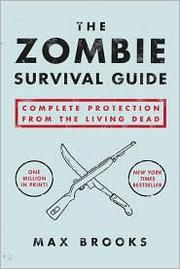
The Zombie Survival Guide: Complete Protection from the Living Dead
Max Brooks's deadpan survival manual explains the Solanum virus, the only ways to destroy the living dead, fortifying a home, and the outbreaks history quietly…
2,650-word summary · 12 min read
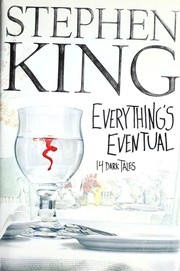
Everything's Eventual: 14 Dark Tales
Fourteen Stephen King stories shuffled by the deal of a card deck, from the haunted room of 1408 to quiet tales of grief that sting as much as the monsters.
2,000-word summary · 9 min read
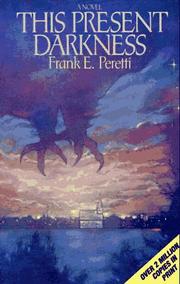
This Present Darkness
A pastor and reporter face demons over Ashton while angels answer prayer.
2,384-word summary · 11 min read
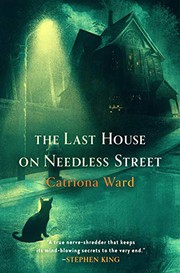
The Last House on Needless Street
A lonely man, a cat and a mysterious neighbor pull you into a house full of buried trauma.
2,627-word summary · 12 min read
The Chalk Man
Childhood chalk codes lead to a murder that follows friends thirty years later.
2,350-word summary · 10 min read