
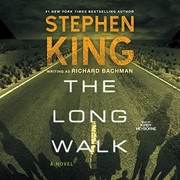
Reading options
What's inside (8 sections)
I picked up The Long Walk because I wanted to read the book Stephen King wrote first, even though it was not the first book he published. The cover of the edition I am citing credits Richard Bachman, which was King's pen name for several early novels. The facts I am using are these. First published by Signet Books in the United States on July 3, 1979, as a paperback original, running 384 pages under ISBN 9780451087546. King began writing it in 1966 and 1967 while he was a freshman at the University of Maine, years before Carrie appeared in 1974. It was later collected in The Bachman Books in 1985 and reprinted many times. A film version arrived in 2025. I read it as Bachman's book, because that is how it was sold and how the voice feels, leaner and colder than the King novels around it.
The premise is simple and cruel. In an alternate America ruled by a totalitarian government, one hundred teenage boys are chosen each year for the Long Walk. They gather on the Maine and Canada border on the first of May. They walk south along Route 1. They must keep a pace of four miles per hour. If a boy drops below the pace for thirty seconds, he gets a warning. If he keeps walking without another warning for an hour, one warning is erased. Three warnings and the next slip means he is shot dead on the roadside by soldiers riding in half tracks. No outside help is allowed. No sitting, no leaving the road, no slowing to rest. The Walk continues day and night until one boy remains. The winner is promised whatever he wants for the rest of his life.
That is the whole engine. No finish line. No teams. No second place. The Major, a tall man in sunglasses who rides in a dun colored jeep and speaks through a loudhailer, watches over the start and appears at intervals along the route. Crowds line the road in towns. People bring food they cannot share. Reporters ask questions the boys are too tired to answer well. The boys carry no packs. They are given water and tubes of food concentrates by soldiers at intervals, and they must eat while moving. Feet blister, legs cramp, minds fray.
The rules on Route 1
The book spends its first chapters making the rules feel physical rather than abstract.
Four miles per hour sounds easy for an hour. It is a normal walking speed. Over ten hours, with no sleep, with sun and then rain, with hills, it becomes a grind. Over three days, it becomes a form of torture. King, writing as Bachman, does not rush this lesson. He shows you what thirty seconds feels like when your calves are locked. He shows how fast a warning accumulates when you stop to tie a shoe or vomit or cry.
The boys are numbered. They wear paper numbers pinned to their shirts. They are searched before the start. Friends and family say goodbye behind barriers. The Major gives a short speech. A gun fires. They start walking.
Among the details that stay with me: the way warnings are called out by soldiers with flat voices, the way the crowd goes quiet when a boy is shot, the way the remaining boys force themselves to look away and then force themselves to look back. Death is immediate and public. There is no stretcher, no pause. The body is removed and the column keeps moving. The boys learn not to waste breath on screams. They learn to save energy for the next hill.
The bleak logic is that the contest needs watchers to feel normal, and Bachman shows townspeople treating it like a parade and a lottery at once. People bet on winners. Vendors sell drinks. Teenage girls call out names. Older men compare this year's field to past years. The boys hear the cheering as encouragement and as pressure. If they stop, they die in front of neighbors.
There is no explanation of how the government came to power or why the Walk exists beyond control and spectacle. The book does not pause for history lessons. A few references to Squads, to rationing, to a war in the past, sketch a country that has traded freedom for order. That thinness bothered some readers. It worked for me. The lack of context mirrors what the boys know. They know the road, the pace, and the guns.
Garraty and the early miles
The point of view stays with Ray Garraty, number 47, sixteen years old, from Pownal, Maine. He weighs about one hundred sixty pounds. He is not the strongest boy in the field, but he knows this stretch of road. He has watched a past Walk pass through his town. He felt pulled to enter without fully understanding why. His mother opposed it. His girlfriend Jan, who waits in Freeport, begged him not to go. His father is gone, taken by the Squads years earlier for speaking against the government. That loss shaped Ray's quiet anger and his need to prove he can endure.
Garraty's early companions form quickly. Peter McVries, number 61, sixteen, from New Jersey, tall and scarred along one cheek, becomes his closest friend within the first day. McVries is witty, generous, and tired in a way that has little to do with walking. Art Baker, number 3, seventeen, from Louisiana, soft spoken and thoughtful, joins them. Hank Olson, number 70, loud at first and fragile underneath, rounds out the small group. They call themselves the Musketeers for a while, half joking, half serious.
The first death comes fast. Curley, number 7, develops a charley horse in his leg and cannot keep pace despite Garraty shouting encouragement. He gets warnings, falls, tries to rise, and is shot. The sound resets the mood. Jokes stop. The boys space themselves out.
Gary Barkovitch, number 5, from Washington, becomes the figure everyone hates. He tells a reporter he wants to dance on the graves of the others. He taunts weaker walkers until one boy lunges at him and earns warnings that get him killed. After that the field turns cold toward Barkovitch. McVries in particular despises him. Barkovitch wants attention and gets isolation instead, and his decline starts early.
Garraty tries to be decent. He talks to a boy who is limping. He shares salt tablets in the approved way. He tells McVries about Jan and about his mother. At night, walking under lights, he admits he is scared that his motive for entering was vanity as much as rebellion. He wanted to be seen as brave. Now bravery looks like keeping one foot in front of the other while someone dies a few yards ahead.
A small mercy appears in these chapters. When McVries tries to fight the soldiers out of rage and grief, Garraty pulls him back. When Garraty gets leg cramps and collects warnings, McVries stays beside him and talks him through steady breathing until an hour passes and a warning clears. Their friendship is the warm thread in a cold book. It never feels forced. It feels like two tired boys deciding, without saying so, not to die alone if they can help it.
Musketeers and the middle stretch
By the second day the field has thinned and the remaining boys settle into routines.
Scramm, number 85, from Arizona, is the early favorite in the betting. He is big, broad, missing a few teeth, married to a pregnant seventeen year old named Cathy. He tells Garraty he is walking for her, to secure money and care for the child. The other boys respect him because he is straightforward and kind. When Scramm develops pneumonia and his fever spikes, he knows he cannot win. He asks the group to look after Cathy if one of them takes the prize. They agree. Scramm then sits down in defiance rather than wait for his body to fail step by step. His death lands hard because he chose its timing.
Olson fades in a different way. He starts with bluster about toughness and faith, then grows panicky and withdrawn. He stops eating properly. He stares at the road. McVries and Garraty try to keep him engaged with talk and games, but Olson slips past helping. One night he shouts at the guards and lunges, and they shoot him. There is no heroism in it. There is exhaustion and a broken filter.
Baker remains steady longer. He speaks little, moves with an easy stride that looks deceptively relaxed, and thinks about death more than he admits. He tells Garraty he once considered becoming a mortician. He is not morbid for effect. He is a poor boy from a large family who has seen relatives die without much ceremony. The Walk fits his expectation that life asks for endurance without explanation.
Abraham, number 2, seventeen, tall with reddish hair, provides dry humor. He entered on impulse and followed through out of spite after people laughed at his acceptance. Collie Parker, from Illinois, big and rowdy, starts as someone Garraty dislikes. Parker picks fights, mocks fear, and then surprises everyone by showing loyalty when it costs. He shares water discipline tips. He helps a boy with blisters by showing how to adjust stride without breaking pace. Later he attempts a brief revolt against the soldiers, shouting for others to join. No one joins. He is killed. Abraham, cold and sick after days in wet clothes, later removes his shirt, catches a chill, and dies after his body gives out.
Freeport is a milestone the boys talk about for miles. Jan promised to meet Garraty there. When the column reaches town, crowds thicken. Garraty sees Jan in the crowd. He is footsore, sleepless, and lightheaded. He stumbles toward her, wanting to collapse into her arms, wanting to quit and be held. McVries physically holds him up and keeps him moving. Garraty hates him for a minute and then thanks him. Jan disappears behind as the road clears. Garraty walks on with tears drying on his face. It is one of the few scenes where the book allows open sentiment, and it earns it.
By now Garraty has three warnings at one point after a charley horse seizes his leg. He manages to walk them off by sheer focus, counting steps, accepting McVries telling him a long shaggy story to keep his mind off pain. Pearson, a tall boy with glasses who keeps ninety nine pennies in one pocket and moves one to the other pocket for each death, walks nearby doing math to stay sane. Harkness, who carries a notebook to record names and numbers for a book he plans to write, stops writing when his hands shake too much to hold a pencil.
Stebbins at the back
Stebbins, number 88, walks alone at the rear for most of the contest. He is skinny and blond, wearing purple pants and a blue work shirt under an old green zip sweater. He smiles at odd times. He says little, but when he speaks he shows an unsettling ability to name what others are feeling before they admit it.
Garraty is wary of him. McVries is curious. Barkovitch tries to bait him and gets cool amusement in return. Stebbins watches everyone. He conserves energy. He never hurries to the front for crowds or cameras. He eats methodically. He sleeps in short upright naps while walking, a trick some boys learn and most cannot master.
On the morning of the fifth day, with only a handful of walkers left and the column crossing into Massachusetts, Stebbins tells Garraty and McVries the truth as he understands it. He is one of the Major's many illegitimate children. He believes he was entered into the Walk as a rabbit, a pacer meant to prolong the contest and push the others to last longer for the show. His prize, if he wins, would be acceptance into the Major's household. He says this without pride. He sounds like someone describing a trap he walked into with open eyes.
Whether the Major truly planned this or Stebbins needs a story to make sense of his parentage is left open. The book does not confirm it through another source. What matters is how the claim changes the air between the three survivors. If Stebbins is the house favorite in a rigged sense, then endurance is not enough. If he is inventing meaning to endure, then he is as lost as the rest. Garraty does not know what to do with pity for a boy who may have been raised to be sacrificed on television.
Stebbins also voices the book's darkest suggestion. He tells Garraty that everyone in the Walk has a death wish, that they volunteered because some part of them wanted an excuse to stop trying. Garraty rejects this angrily. McVries goes quiet, which frightens Garraty more than argument would. The conversation hangs over the final miles. Are they walking to live or walking to prove they deserve to die. Bachman does not answer. He lets the road answer with attrition.
The last three
Baker goes first among the final group.
Delirious from lack of sleep, feet raw, Baker tells Garraty he cannot go on. Garraty begs him to try, to take it one hour at a time, to think of food and beds and rest. Baker thanks him for friendship and says he is done. He falls, does not rise to pace, collects warnings, and is shot. Garraty walks past the spot with his jaw clenched, unable to look back for long.
Three remain. Garraty, McVries, Stebbins.
McVries, who has carried others for days, is empty. He has given away encouragement, jokes, and physical support. He has watched Barkovitch die by suicide after the field turned on him, watched boys die overnight without a sound, watched Abraham and Parker and the rest go. He tells Garraty he will sit down when he cannot walk further, not out of courage but out of refusal to be dragged. Garraty tells him a fairy tale to keep him awake, the way you talk to a driver falling asleep at the wheel. McVries smiles, half asleep, and veers toward the crowd. Garraty breaks his own rule about not helping and saves him once. McVries thanks him and then, clear eyed, sits down on the roadside and dies peacefully under the guns. It is the gentlest death in the book and the hardest to read.
Two remain. Garraty and Stebbins.
Garraty is beyond pain in the way the truly exhausted go numb. He hallucinates a dark figure ahead on the road, tall and beckoning. He believes it is another walker and decides he must catch up. He ignores the Major, who drives alongside and speaks to him. He ignores the crowds. Stebbins, who has paced himself perfectly, suddenly falters. He clutches at Garraty in horror and falls dead. Just like that, Garraty is the winner.
He does not understand winning. He keeps walking past the jeep, past the soldiers, toward the dark figure. When told he has won and can have anything he wants, he asks to keep walking. His last words in the novel are that there is still so far to walk. He even finds the strength to run a little, chasing something no one else sees. The book ends without explaining whether the figure is death, a breakdown, or a final burst of will. It ends on motion, not rest.
What holds and what wears thin
The Long Walk holds because the friendship holds.
Garraty and McVries feel like real teenage boys under impossible pressure. They tease, they sulk, they apologize without speeches. They share petty details about hometowns and girls and food to stay human. McVries hinting at attraction toward Garraty is handled without sensational turns. Garraty's confusion about his own response is shown as fatigue and youth rather than a thesis. Stebbins works as a counterweight, cool where they are warm, analytical where they are emotional. Barkovitch works as a warning about what cruelty costs when everyone is armed only with feet.
The horror works because it is procedural. Bachman does not rely on monsters. He relies on pace, warnings, blisters, diarrhea, hallucinations, rain. The repetition is the point and also the risk. You will read many pages of step after step, cramp after cramp, death after death. I found the middle stretch gripping for about a hundred pages and then wearying by design. That weariness mirrors the boys, but it asks a lot of a reader. If you need plot twists, this is not that book. The tension is not who will live. It is how each boy meets the moment when he cannot continue.
Fair criticisms belong here. The book has almost no women with interior life. Jan, Garraty's mother, Cathy, exist as motives rather than people. The politics are thin. The Major is more symbol than character. Some readers will find the ending frustrating because it refuses catharsis. Garraty wins and learns nothing he can state. He does not denounce the regime. He does not save anyone. He walks on. I read that as honest to the premise, but I understand why it leaves people cold.
Who is this for. Readers who like survival stories stripped to the bone will find it hard to shake. Readers who came from later King novels may miss the warmth and humor of his Maine ensembles. This is an early book, written before King learned to soften his bleakness with community. It pairs naturally with The Running Man and Rage from the same Bachman period, though it stands alone with no series ties. The 2025 film keeps the core contest and changes details like pace and field size, so the novel remains the fuller version of the idea.
If you choose the Signet paperback cited here, you get the 384 page text that matches the original publication facts. Later reprints vary, with some Signet mass markets at 370 pages and modern trade editions at 320 pages, so counts differ by printing. The story does not differ where it counts. One hundred boys, one road, four miles per hour, three warnings, and a friendship that makes the cruelty legible.
FAQ
When was The Long Walk first published?
Signet Books published it on July 3, 1979 as a paperback original. The first edition runs 384 pages under ISBN 9780451087546.
Is Richard Bachman really Stephen King?
Yes. Richard Bachman was the pen name Stephen King used for early novels including Rage, The Long Walk, and Thinner. The cover credits Bachman.
Is The Long Walk part of a series?
No. It stands alone, though it was later collected with other Bachman novels in The Bachman Books in 1985.
Similar books

Wilder Girls
At a quarantined boarding school off Maine, three girls with strange mutations search for a missing friend and learn what the adults have hidden.
2,594-word summary · 12 min read
The Troop
A Boy Scout troop on a Canadian island takes in a stranger who cannot stop eating, and the worm inside him turns a camping trip into a war.
2,457-word summary · 11 min read
The Twelve
The middle volume of the Passage trilogy braids the year America died, a picnic massacre decades earlier, and the survivors' war against the twelve master…
2,089-word summary · 9 min read

Bird Box
A mother and two small children risk a blindfolded river trip after sight itself turns deadly.
3,229-word summary · 14 min read
The Passage
A failed Army experiment makes blood-hungry virals, and a quiet girl named Amy may hold the answer a century later.
2,755-word summary · 12 min read

Tender Is the Flesh
After a virus makes animal meat lethal, states legalize breeding humans for meat. Marcos Tejo grieves at a processing plant when he is given a live female…
2,372-word summary · 11 min read
The Running Man
Out of work in a broken 2025, Ben Richards enters a televised manhunt where each hour alive pays cash.
2,922-word summary · 13 min read
The Power of One
A boy in apartheid South Africa decides to become welterweight champion of the world, and the novel follows every mentor, fight, and loss that gets him there.
2,145-word summary · 10 min read
Year One
A plague released in Scotland kills most of humanity, and the survivors discover magic, build a town, and wait for a child who may save them.
2,029-word summary · 9 min read
The House of the Scorpion
A clone raised in a drug lord's poppy fields learns what he was made for and chooses what to do with the life he was given.
2,527-word summary · 11 min read
I Who Have Never Known Men
Forty women in a cage, one child who remembers nothing, and a nearly empty world above the bunker. Harpman's quiet, unexplained dystopia.
2,025-word summary · 9 min read

Wither
In a future where women die at twenty, sixteen-year-old Rhine is sold as a bride to a wealthy stranger and plots an escape from a beautiful prison.
2,395-word summary · 11 min read

Never Fade
Ruby, now a leader in the Children's League, must track down the boy whose memories she erased, because he holds the only proof of what caused the disease that…
2,188-word summary · 10 min read
The Zombie Survival Guide: Complete Protection from the Living Dead
Max Brooks's deadpan survival manual explains the Solanum virus, the only ways to destroy the living dead, fortifying a home, and the outbreaks history quietly…
2,650-word summary · 12 min read
The Day of the Triffids
Blinded survivors flee carnivorous plants after a meteor shower.
2,171-word summary · 10 min read

The Year of the Flood
Toby and Ren live through the plague apart, guided by God's Gardeners, then join to find Amanda.
2,422-word summary · 11 min read

Skeleton Crew
King's 1985 collection pairs The Mist with The Jaunt, The Raft, and Survivor Type: 22 stories of Maine dread.
3,209-word summary · 14 min read

My Best Friend's Exorcism
Abby fights to save possessed best friend Gretchen in 1988 Charleston Satanic Panic horror.
2,115-word summary · 9 min read
Life As We Knew It
Sixteen-year-old Miranda keeps a diary while an asteroid strike on the moon brings tsunamis, blackouts, and a frozen year of hunger to her Pennsylvania town.
2,485-word summary · 11 min read
Among the Hidden
Twelve-year-old Luke, an illegal third child, befriends Jen and faces the cost of stepping out of hiding.
2,923-word summary · 13 min read

Tokyo Ghoul, Vol. 1
Student Ken Kaneki becomes half-ghoul after Rize attack and hides at Anteiku.
2,438-word summary · 11 min read
The Infinite Sea
Cassie and Squad 53 wait out winter in a hotel while Ringer is retaken and learns the truth behind the 5th Wave.
2,985-word summary · 13 min read
Nowhere Burning
Siblings flee to a burnt ranch commune in the Rockies where old fires still smolder.
2,232-word summary · 10 min read
Desperation
Travelers on Highway 50 are hauled into empty Desperation, Nevada, where a possessed deputy serves an old thing in the mine.
2,993-word summary · 13 min read
The Mist
Mist full of creatures traps a Maine supermarket while Mrs. Carmody builds a congregation inside.
2,104-word summary · 9 min read

The Final Girl Support Group
Aging final girls reunite when someone hunts them in order.
2,052-word summary · 9 min read
City of Thieves
Two boys cross siege Leningrad to find eggs for a colonel's cake.
1,985-word summary · 9 min read

The Grace Year
In Garner County, Tierney James faces her grace year exile, where girls are blamed for magic and must survive a year outside the fence before they can return…
2,817-word summary · 13 min read
The Girl Who Loved Tom Gordon
Nine-year-old Trisha McFarland strays off the Appalachian Trail and spends days lost in Maine woods with a Walkman and Tom Gordon on her mind.
2,957-word summary · 13 min read