
Shift
2,558-word summary 11 min read 576 pages in the book
- First published
- 2013
- Publisher
- Houghton Mifflin Harcourt
- Pages
- 576
- ISBN
- 9780544839618
- Series
- Silo (#2)
Reading options
What's inside (8 sections)
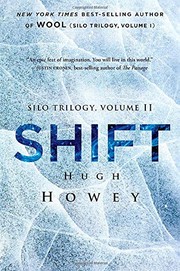
I came to Shift the way most people do, straight off the high of Wool and wanting answers. Wool Omnibus had left me with Juliette walking over the hill and seeing other silos, and I needed to know who built them and why. Shift by Hugh Howey, published in 2013 by Houghton Mifflin Harcourt, is the 576 page second book in the Silo series with ISBN 9780544839618. It is a prequel. Where Wool stayed tight inside one silo, Shift pulls back to 2007 and to a control silo that watches all the others. I read it over four nights, slower than Wool, because it is denser and stranger and sadder.
The short version is this. A young congressman helps design a shelter system he does not fully understand. He wakes a century later in Silo 1 to babysit the other silos through long frozen shifts. One silo collapses into a boy alone. Another silo tips toward the same trouble Wool showed. Juliette frames the whole thing, first as a voice from the future, then as a body stumbling into the ruins. If Wool was about living under a lie, Shift is about telling the lie in the first place.
A congressman who draws buildings
Donald Keene is thirty something, a Republican congressman from Georgia, and before politics he trained as an architect. Howey leans on that. Donald notices stairs and load paths and how people move through rooms. Early in 2007 he gets pulled aside by Senator Paul Thurman, an older power who speaks softly and remembers every name. Thurman asks for help with a special project tied to national defense. It sounds boring at first. A facility study. Some drawings.
The meeting that changes Donald happens in a plain room with too few windows. Thurman talks about a weapon that cannot be unfired. Not a bomb in the old sense. A swarm of tiny machines, built to eat through specific materials and keep copying themselves. The fear is that once it gets out, in Iran or anywhere, it will keep spreading through the air and leave the surface unlivable for a very long time. I am paraphrasing because Howey keeps the science loose on purpose. No long lecture on physics. Just enough to make a practical man like Donald nod. If the air may turn lethal, you need sealed places where chosen people can wait.
Donald says yes partly from duty and partly from flattery. He is young, he wants to matter, Thurman treats him like a son. He goes home to his wife Helen in their small rental near DC and tries to explain without explaining. He also calls his sister Charlotte, Charlie to him, who serves in the Navy and sees through him fast. Those early calls matter later.
What I liked here is how normal it feels. No secret lab with glowing vats. Just CAD files, cost estimates, concrete specs, arguments about air handlers. Donald thinks he is drawing emergency bunkers. He does not ask who decides who gets in.
Drawing fifty graves
The job grows. Donald is brought to a design office with other architects and engineers. They are refining a cylinder sunk deep in earth, over a hundred levels, with a central stair, farms for food, water treatment low down, a server room and control up top. Sound familiar. It is the silo from Wool, only clean on paper. Donald improves the layout. He argues for wider stairs at turns so crowds can pass. He worries about pump redundancy. He sketches fallback power.
Anna Thurman enters here. She is the senator daughter and she works close to the project core. She and Donald share long nights over plans and coffee. There is a pull between them that Howey writes plainly. Donald loves Helen. He also admires Anna focus, because Anna knows more about what is coming than she says. Deadlines replace questions. You fix the vent detail so you do not have to think about who will be locked behind it.
Slowly the scale lands. Not one shelter. Fifty. Scattered across the country, buried and hidden, each meant to hold thousands. Silo 1 is different. It holds the controls and the means to watch the others and, if the leaders decide, to end one by remote action. There are books being written to run the future. The Order, which Wool readers know as the rulebook Bernard quotes. The Legacy, a history for Silo 1 staff. The Pact, the law given to the ordinary silos about cleaning and lotteries. Donald helps with language without grasping how final it will be.
The moral turn is quiet. Donald learns the plan is not to ride out a war. The plan is to start the end on purpose, to release the swarm and clear the surface, then rebuild from the silos after centuries. Thurman frames it as mercy. Humanity will kill itself anyway, slower and crueler, so a managed reset saves more. Donald balks, then stalls, then signs anyway because the machine is moving and he is inside it. That compliance will haunt him for the rest of the book.
By the time construction starts in remote sites with poured concrete and lies to locals about waste storage, Helen and Donald are fraying. Charlie ships out and writes funny, worried emails. Anna grows colder and more committed. Donald tells himself the silos may never be used. Readers know better.
Waking up as Troy
Then Howey jumps.
Donald wakes in a white room with a headache and a new name. Troy. It is decades later, though dates blur inside. He is in Silo 1, one of a skeleton crew kept in cold sleep in small pods. They wake in shifts for six months at a time to monitor the other silos, answer reports, order parts, approve punishments, and when told, shut a failing silo down. Then they go back under while another shift wakes. Troy is told he volunteered. He does not remember volunteering.
Silo 1 life is dull and chilling. Long corridors, a cafeteria with bland food, a control room with screens for each silo number, red lights for trouble. The men and women on shift play cards, file reports, and try not to think about the power they hold. Their boss is an older Thurman, kept alive through many shifts, thin and calm and absolutely sure. Anna is there too, older, harder, still working near her father.
Troy starts to slip. He reads when he should sleep. He finds copies of the Legacy and pieces of the Order. He learns Silo 1 can kill another silo by remote means, and has done it. He learns the outside is still lethal, or is said to be, and that the original release worked as planned. He learns the long wait was meant to last 500 years and they are still inside it. He starts leaving notes for his future self.
This middle stretch is slow on purpose. Wake, watch screens, sign, freeze. Wake again with less hair and fewer friends. Donald memory bleeds back in flashes. A house with Helen. Charlie laughing on a dock. He realizes Thurman picked him not only for skill but for pliability. A decent man who will follow a bad order if the form is correct.
The break comes when Troy decides to help. He uses his access to warn or spare people in other silos, especially Silo 18 and Silo 17. He pays for it. Silo 1 does not forgive staff who side with the watched. His arc from designer to quiet saboteur is the spine of the book. It made me rethink Wool. Bernard was not inventing cruelty. He was following a script Donald helped write.
Solo in Silo 17
If Silo 1 chapters are cold, the Silo 17 chapters are lonely in a way that got to me.
We meet Jimmy Parker as a teenager. His full name is James, but everyone will later know him as Solo, the man Juliette finds in Wool. Silo 17 is in revolt. Alarms ring. People run up the stairs with guns and torches. His father, who works in IT, shoves him into a hidden room behind a server wall and tells him to stay quiet and eat the stored food and not open the door for anyone. Jimmy listens. The silo tears itself apart outside the wall.
Howey stays with Jimmy for years. He eats canned peaches and beans. He reads comics left in lockers. He talks to no one. When he finally comes out, the silo is dead. Bodies on stairs. Doors jammed. Power flickering. He learns to farm a little under grow lights. He learns to avoid the flooded lows. He grows older but not up, if that makes sense. Fear freezes him at seventeen in his head.
There is a scene where he finds a suit and helmet and tries to go outside through the airlock, and fails, and cries, and goes back to his nest of blankets. There is another where he rigs lights to blink so it looks like someone else is alive. It is heartbreaking without pushing. A kid who did what his dad said and survived the reward.
Decades pass. Jimmy becomes Solo, bearded and jumpy, living on habit. Then a woman in a cleaning suit walks over the hill from the east. Juliette. Wool readers know this beat from the other side. Here Howey shows Solo hearing banging and thinking he is dreaming. He has waited so long for rescue that rescue scares him. Their first talks are awkward and kind. She asks for parts. He asks if she is real. After all the senate rooms and control screens, a boy sharing beans with a stranger carries more weight than any speech about survival.
Solo story also explains a lot about silo failure. Silo 17 did not fall to one villain. It fell to rumor, to a bad cleaning, to IT losing the feed, to Mechanical pushing back, to ordinary panic in a stairwell with no exit. That pattern will matter for Silo 18.
Silo 18 tilts
The third thread follows Silo 18, Juliette home, in the years before Wool.
We see Mission, a young porter who carries messages up and down and dreams of a better job. We see his friends, his mother, the school lessons about the Pact, the lotteries for birth, the way Mechanical and IT eye each other. Silo 18 looks stable from Silo 1 screens. Up close it itches. Parts wear out. Farmers complain about light. Sheriff and mayor argue.
Mission path crosses the coming trouble. He delivers notes he should not read. He sees names vanish from lists. He hears about a cleaner who cleaned too well or spoke too loud. Without giving away each death, Howey shows how a silo slides. One curious mechanic asks about the past. One deputy asks about a file. One mayor asks about a budget line for suits. Each question is small. Together they trip alarms in Silo 1, where Troy watches dots turn amber.
Juliette appears here younger, still in Mechanical, still fixing what others junk. She is not sheriff yet. She argues with her father, the doctor. She dives in oil to clear a pump. Lukas, the stargazer who maps lights in the sky, shows up too, shy and earnest, leaving charts for her. Bernard moves at the edges, polite and watchful, quoting the Pact as if caring about rules excuses using them.
What builds is dread. You know from Wool that Silo 18 will send Juliette out to clean and she will walk over the hill. Shift shows the hands arranging that walk. Orders from Silo 1. A mayor who trusts wrongly. Friends in Mechanical who swap tape in secret, the good tape that will later let Juliette live longer outside. The end of Shift meets the start of Wool from a new angle.
A short framing with Juliette ties it. She is outside, or between silos, cold and sick and moving. Those pages are thin on plot and heavy on mood. Keep walking. Find shelter. Remember names. It works as glue.
What holds and what drags
What holds is scope done through people. Instead of a history lecture about nanotech and 500 year plans, Howey sticks to a man who draws, a boy who hides, a porter who carries. The best details are job details. Concrete cure times. Cryo nausea. Canned food menus. Tape adhesion in cold. Those small true things made the big lie believable for me in a way Wool already taught.
Donald is a real step up from Wool characters. He is weak in an interesting way. He wants to be good without paying for it. He signs, then regrets, then signs again, then finally risks himself when almost no one will know. His love for Helen feels lived in through short letters and remembered fights. His bond with Charlie gives the freeze chapters ache. When he wonders if Charlie made it into a silo, I felt it.
Solo carries the heart. Jimmy chapters have almost no dialogue for long stretches, just action and inventory, and they still move fast. Mission chapters are the weakest for me. Mission is sweet but thin next to Juliette and Solo, and his beats repeat points Wool already made about class between Up Top and Mechanical. Silo 18 material also sags when it replays cleaning prep we saw in Wool.
Pace is uneven across the whole book. The 2007 build is brisk. Silo 1 shifts drag by design but still drag. Howey prose stays plain. Dialogue can run flat, especially among Silo 1 staff who all sound tired in the same way. Helen deserves more pages than she gets. The science of the swarm stays vague. If you need hard rules for the apocalypse, you will be annoyed. Howey cares about who turns the key, less about how the key was forged.
Still, the payoff lands. Learning that cleaning suits fail by design, that views are edited, that Silo 1 can end a silo with a keystroke, reframes Wool without cheapening it. The Order stops being background menace and becomes paperwork written by tired men. That is more frightening. Evil as maintenance.
Who should read it. Read Shift only after Wool. It spoils Wool hill reveal in the first 100 pages and assumes you know Juliette, Bernard, Lukas, cleaning. If you liked Wool for mystery and Mechanical warmth, Shift gives history and control room chill. Content notes include state murder by remote action, suicide, drowning and crush deaths on stairs, long solitary confinement of a minor, birth control by lottery discussed, and grief after mass death. Suitable for older teens and up who handled Wool.
I closed Shift thinking about Troy leaving notes for himself across freezes. Paper curling in a drawer. Ink fading. A man trying to warn a future self who may not remember his own hand. Wool asked if you would walk over the hill. Shift asks if you would draw the prison if a senator asked nicely and your wife was tired and your sister was proud. Most of us want to say no. Donald story suggests we would say yes, then spend a century trying to unsign. The silos are still standing. Juliette is still walking. Solo is still waiting.
FAQ
When was Shift published?
First published in 2013 by Houghton Mifflin Harcourt. The edition cited here runs 576 pages with ISBN 9780544839618.
Is Shift part of a series?
Yes. It is book 2 in the Silo series, a prequel set before Wool Omnibus, and it leads into Dust. Read Wool first to avoid spoilers.
Who are the main characters in Shift?
Congressman Donald Keene, known as Troy in Silo 1, Senator Paul Thurman, Anna, Jimmy Parker called Solo, porter Mission, with Juliette framing the story.
Similar books
More from Silo first, then related titles.
Wool Omnibus
In a buried silo, a sheriff asks to go outside, and a mechanic learns why no one returns from cleaning.
2,095-word summary · 9 min read
The Twelve
The middle volume of the Passage trilogy braids the year America died, a picnic massacre decades earlier, and the survivors' war against the twelve master…
2,089-word summary · 9 min read

The Scorch Trials
Thomas and the Gladers cross a burned wasteland to reach haven while WICKED watches.
2,097-word summary · 9 min read

The Maze Runner
Maze Runner retold: Thomas wakes in Glade, walls move, Grievers sting, Teresa triggers end.
1,907-word summary · 8 min read
Year One
A plague released in Scotland kills most of humanity, and the survivors discover magic, build a town, and wait for a child who may save them.
2,029-word summary · 9 min read

The House of the Scorpion
A clone raised in a drug lord's poppy fields learns what he was made for and chooses what to do with the life he was given.
2,527-word summary · 11 min read
I Who Have Never Known Men
Forty women in a cage, one child who remembers nothing, and a nearly empty world above the bunker. Harpman's quiet, unexplained dystopia.
2,025-word summary · 9 min read

Wither
In a future where women die at twenty, sixteen-year-old Rhine is sold as a bride to a wealthy stranger and plots an escape from a beautiful prison.
2,395-word summary · 11 min read

Never Fade
Ruby, now a leader in the Children's League, must track down the boy whose memories she erased, because he holds the only proof of what caused the disease that…
2,188-word summary · 10 min read
The Caves of Steel
Detective Elijah Baley must solve a Spacer's murder in a domed New York, partnered with R. Daneel Olivaw, a humaniform robot built in the victim's image.
2,445-word summary · 11 min read
The Day of the Triffids
Blinded survivors flee carnivorous plants after a meteor shower.
2,171-word summary · 10 min read
The Year of the Flood
Toby and Ren live through the plague apart, guided by God's Gardeners, then join to find Amanda.
2,422-word summary · 11 min read

Life As We Knew It
Sixteen-year-old Miranda keeps a diary while an asteroid strike on the moon brings tsunamis, blackouts, and a frozen year of hunger to her Pennsylvania town.
2,485-word summary · 11 min read

Among the Hidden
Twelve-year-old Luke, an illegal third child, befriends Jen and faces the cost of stepping out of hiding.
2,923-word summary · 13 min read
The Running Man
Out of work in a broken 2025, Ben Richards enters a televised manhunt where each hour alive pays cash.
2,922-word summary · 13 min read
The Infinite Sea
Cassie and Squad 53 wait out winter in a hotel while Ringer is retaken and learns the truth behind the 5th Wave.
2,985-word summary · 13 min read

Pines
A Secret Service agent wakes hurt in Wayward Pines, Idaho, hunting two missing agents, and finds a town that will not let him leave.
2,452-word summary · 11 min read
Parable of the Sower
Lauren Olamina flees burning Robledo with her Earthseed verses and walks north to plant a new faith.
2,311-word summary · 10 min read
Bird Box
A mother and two small children risk a blindfolded river trip after sight itself turns deadly.
3,229-word summary · 14 min read
The Passage
A failed Army experiment makes blood-hungry virals, and a quiet girl named Amy may hold the answer a century later.
2,755-word summary · 12 min read
The Kill Order
Mark survives flares and Flare virus as WICKED forms thirteen years before maze.
2,129-word summary · 9 min read
Attack on Titan, Vol. 1
Humanity hides behind three walls until the Colossal Titan breaks Wall Maria and Eren Yeager vows to destroy every Titan.
2,357-word summary · 10 min read
The City of Ember
Two twelve-year-olds trade jobs and chase a chewed-up note to save their fading underground city before its lights fail.
2,998-word summary · 13 min read
The Death Cure
Thomas refuses WICKED's final test, remembers too much, and runs with the Gladers toward a last cure and a ship north.
2,955-word summary · 13 min read
The 5th Wave
Cassie Sullivan crosses ruined Ohio to save Sammy after four alien waves, trusting Evan Walker while doubting him.
3,063-word summary · 14 min read
The Road
A father and son walk through ash America with a cart and a pistol, repeating carry the fire.
3,243-word summary · 14 min read
The Hunger Games
Suzanne Collins's The Hunger Games explained: the reaping, Rue, the tracker jackers, the nightlock berry standoff, and what the arena is really for.
2,295-word summary · 10 min read