
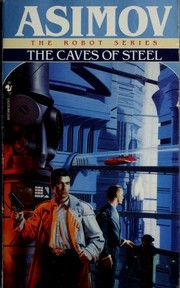
The Caves of Steel
2,445-word summary 11 min read 224 pages in the book
- First published
- 1954
- Publisher
- Doubleday
- Pages
- 224
- ISBN
- 9780553293401
- Series
- Robot (#2)
Reading options
What's inside (9 sections)
I picked this up because people keep calling it the first real science fiction detective novel, and I wanted to see whether the hybrid actually works or just gets praised for trying. It works. What surprised me is where the energy comes from. The murder is fine and the solution is clever, but the best parts are the City itself and the argument the book is quietly having about whether a crowded, comfortable, risk-free life is worth having at all.
A quick note on the editions, since I looked them up. The Caves of Steel first appeared as a serial in Galaxy Science Fiction in the fall of 1953, and Doubleday published the hardcover in February 1954. The first edition runs 224 pages, which is part of why it moves the way it does. It is also the first of Asimov's robot novels to feature the detective Elijah Baley and his partner, R. Daneel Olivaw, and it has aged in interesting ways.
A city with a lid on it
The story is set roughly three thousand years from now, and the humans who never left Earth live in what the book calls Cities, big enough to deserve the capital letter. There are about eight hundred of them, averaging ten million people each. New York City in this future swallows present-day New York and a good chunk of New Jersey under one lid. Nobody sees the sun. Weather happens somewhere else, on the surface, where people do not go. Residents ride moving strips to work, eat in communal kitchens, use shared washing and toilet facilities called Personals, and live on yeast-based food grown and processed out in the country by machines.
The population of Earth is around eight billion, a number that was a shocking forecast in 1954 and is now roughly the actual population of the planet. The Spacers, humans whose ancestors left for fifty worlds among the nearby stars, went the other direction. Their planets average a hundred million people each. They have robots for every chore, long lives, private space, and no patience for Earth. Spacetown, a Spacer enclave, sits just outside the New York dome, and relations between the two kinds of humans are ugly in a way anyone who has watched a rich enclave and a poor city eye each other across a fence will recognize.
The local version of that resentment is a movement called the Medievalists, who want families to go back to small communities, open air, and handmade things, and who hate robots with real passion. Earth's official policy runs the same direction. Robots are restricted in the Cities because every robot on a job is a human pushed out of one. Then a Spacer named Roj Nemmenuh Sarton, an ambassador and roboticist in Spacetown whose whole project is getting Earth to accept robots and settle new worlds, is found dead outside his home, his chest blown in by an energy blaster. No weapon. No obvious suspect. The New York police commissioner, Julius Enderby, hands the case to a plainclothes detective named Elijah Baley, whom everyone calls Lije.
The partner who does not blink
Lije is a good detective and a limited man, and the book knows it. His father was declassified when Lije was young, dropped down the City's rigid ladder, and Lije has spent his whole life afraid of the same fall. He is prejudiced against robots in the ordinary way of his culture, the way Asimov elsewhere calls the Frankenstein complex, and the Spacers hand him the worst possible partner: R. Daneel Olivaw, a humaniform robot built by Sarton himself, in Sarton's own likeness, visually indistinguishable from a man until you look too closely. Daneel can read human emotions off the electrical patterns of a brain. The Spacers insist he works the case with Lije, so Lije has to bring a machine into the police department, into his interviews, and into his home.
The station already has a robot clerk, R. Sammy, and everyone treats the thing like furniture. Lije resents him most of all, because a young man named Vince Barrett lost his job to that robot. This is the emotional ground the murder case stands on: men being replaced, men frightened of being replaced, and a Spacer culture that thinks the replacement is obvious progress.
The partnership gets its first test when Lije brings Daneel back into the City and they walk into a scuffle at a shoe counter, where a woman refuses to be served by a machine and the crowd around her turns nasty fast. Daneel handles it with a stillness that is somehow more frightening than shouting. That evening, Lije brings him to the apartment he shares with his wife, Jessie, and their sixteen-year-old son, Bentley. Jessie is uneasy around the tall, polite stranger until she works out what he is, and then she is terrified. She begs Lije to drop the case, even if it means losing his rating and being declassified, and the couple argue in the half-dark the way people argue when the walls are thin and the stakes feel like the end of the world, because in this City they nearly are. Jessie's full name, by the way, is Jezebel, which she picked up from the Bible as a girl and has regretted ever since. Asimov spends a page on that joke, and it is one of the few places the novel lets its people be funny about themselves.
Spacetown, Dr. Fastolfe, and a needle
The investigation takes Lije and Daneel into Spacetown, where they meet Dr. Han Fastolfe, a roboticist from Aurora and Sarton's colleague. Fastolfe is the book's best talker and its most dangerous one. He lays out the Spacer case: Earth is stagnating in its caves, the Spacer worlds are stagnating in their luxury, and the way out is for Earthmen to colonize new planets with the help of robots, a partnership he describes as carbon and iron working together. He does not pretend this is charity. If Earth does not move, Earth will rot.
There is a fine scene at Spacetown where Lije accuses Daneel of being Sarton himself, hiding behind a robot story, and the theory collapses without ceremony. Enderby joins the meeting by holographic link, watches the humiliation, and laughs until it stops being funny. Then, while Lije is still off balance, Fastolfe gives him an injection he did not ask for, a mild drug that loosens the tongue and lets the Spacer interview the man underneath the detective. Lije talks, gets angry, and finds himself agreeing with parts of the Spacer argument before he has decided whether he wants to. The violation is real, and the book does not fully reckon with it later, though Lije does get his anger in.
Back on Earth, Lije consults a roboticist named Dr. Gerrigel about humaniform robots and the Three Laws. The answer is the one from every Asimov robot story: no robot can kill a human being or stand by while one comes to harm. Gerrigel explains that humaniform robots are so difficult to build that Daneel appears to be one of a kind. That leaves the official theory in a knot. A robot could not have killed Sarton, and an Earthman crossing the open country between the City and Spacetown is nearly unthinkable, because the open air terrifies everyone in the City.
Medievalists and a dead police robot
The trail runs through the Medievalists. Jessie, it turns out, has been sitting in on their meetings, pulled in by the same fear that fills the book. She confesses this to Lije and gives him a name, Francis Clousarr, a man she saw at the shoe counter, a man with a record for inciting a riot against robots. Lije and Daneel interview Clousarr at his work and get the small, creepy detail that he will not touch Daneel, which means he already knows what Daneel is. Whatever the Medievalists know, they learned it from someone inside the case.
Then everything tilts. The Spacers, who have spent the book waiting for Earth to make its choice, decide the murder is a lost cause and prepare to leave. Fastolfe gives Lije ninety minutes, because the Spacer presence on Earth is now doing more harm than good. Before Lije can use the time, R. Sammy is found destroyed in the station, quietly and thoroughly, and suddenly Lije's access to weapons and his proximity to the robot become a story the department is willing to believe. Somebody is building a case against the detective, and doing it competently.
The chase that follows runs through the levels and moving strips of the City, with Lije and Daneel cutting through crowds, riding the express strips, and stepping off at the wrong moments to shed the men behind them. It is the most conventionally thriller-like stretch of the book, and it reads almost like a different novel, which is half its charm.
The insight, when it comes, is not about a Medievalist. It is about a weapon. Every blaster in Spacetown was accounted for, and every Earthman was supposedly too frightened of the open to cross the country between the dome and the Spacer compound. But a robot is not afraid of anything. A robot could carry a weapon across that empty land, and a robot would obey a familiar human voice without asking what the weapon was for, which means the First Law would never be triggered. The whole murder was arranged so that a machine would do the part no machine could be asked to do.
The murderer's glasses
The man Lije finally accuses is Enderby, his old friend from college, the commissioner, the man who assigned him the case. Enderby sits at the center of the investigation, which is exactly why nobody looked at him. He was secretly a Medievalist sympathizer. He used his position to arrange meetings with Sarton under the cover of cooperation, and his actual target was R. Daneel, the humaniform robot, the symbol of everything he feared about machines wearing human faces.
The mechanics are lovely. Enderby handed his blaster to R. Sammy, who carried it through the open country because he could not disobey and did not understand. Enderby took the weapon back in Spacetown, did the shooting, and returned it, so it vanished from every search. Later, when the trail got warm, Enderby destroyed R. Sammy and let suspicion fall on Lije. The Spacers had even put Enderby through a cerebroanalysis, a scan of his temperament, and concluded that he could not have killed Sarton, which is why his name kept sliding off the list.
The flaw in the plan was a pair of glasses. Enderby wears eyeglasses, an oddity the book notes early, and he cleans them compulsively when he is nervous. In Spacetown, nervous, he dropped and broke a lens. Without it, in the dim light, he could not tell Sarton from Daneel, because Daneel was built to look like Sarton. He shot the wrong man and killed the master instead of the machine. Broken glass was recovered from the scene, and when Lije replays the recording of the room, the pieces become evidence. Enderby does not hold up long once it is all on the table.
A deal instead of an arrest
Here is where the book gets colder than most detective stories. The Spacers do not want Enderby punished. They want him useful. A confession would put the commissioner in prison and hand the Medievalists a martyr inside the police department. A quiet arrangement gives the Spacers a compromised insider who can spend years nudging the Medievalists toward the idea of colonization, which is the outcome Fastolfe wanted from the start and the thing Sarton died for. Daneel agrees to the trade, and Lije, who has been arguing against the Spacers since the first chapter, lets it stand. He is on their side by now. The last scene is Lije and Daneel leaving the office together, partners in fact as well as name, and the final pages belong to Lije's change of heart about the sky, the stars, and what Earthmen might do with a frontier again.
It is worth knowing what happened later. When Asimov wrote The Caves of Steel he treated it as separate from his Foundation novels. Decades afterward he tied the two universes together and made Daneel Olivaw the thread, a robot who lives for tens of thousands of years and shapes the fall and rise of galactic civilization. That retcon gives the handshake at the end of this book a strange weight when you come back to it. The little murder in Spacetown turns out to be the hinge of a much bigger story.
What holds up and what does not
The City is the best thing in the book. The claustrophobia is not decoration. It shapes every relationship, from the way Lije thinks about open country to the way Jessie panics at the idea of losing their rating. The Three Laws puzzle is well built, and the trick of using a robot as an unwitting smuggler is the kind of idea that makes the hybrid genre worth having. Lije and Daneel are a genuinely good pair, one stubborn and one learning, and the book earns the change in Lije's attitude instead of announcing it.
The problems are real too. The solution leans hard on that broken lens, a coincidence doing the work of evidence, and readers who like their mysteries airtight will feel the seams. Jessie exists mainly to worry and to be endangered, and the wider cast of women is thin even by 1954 standards. The middle chapters slow down into exposition, with experts explaining robotic brains in long paragraphs while the plot waits outside. The Medievalists are a mood more than a movement, and the drug scene at Spacetown tries to make mind games feel like world politics, which it only half does. None of this sinks the book, but it keeps a clever novel from being a great one.
What survives is the image at the center: a species that solved crowding by putting a roof over everything, and then forgot it needed a frontier. Asimov was nominated for a retroactive Hugo for this one in 2004, years after his death, and the BBC filmed it in 1964 with Peter Cushing as Lije, which tells you how quickly the industry noticed what he had done with the form. If you like your mysteries with one foot outside the crime scene, the case here is easy to recommend, and the City is the reason.
FAQ
Do I need to read I, Robot before The Caves of Steel?
Not strictly. The Caves of Steel is a self-contained mystery, and many readers start here. I, Robot introduces the Three Laws and the robot universe in linked stories, so reading it first adds context but is not required.
Who killed Dr. Sarton?
Commissioner Julius Enderby, Baley's boss. He meant to destroy the humaniform robot R. Daneel Olivaw, but after breaking a lens from his eyeglasses he mistook Sarton for Daneel and shot the wrong man.
Is The Caves of Steel connected to the Foundation series?
At first it was separate. Asimov later linked the Robot and Foundation stories into one future history, with R. Daneel Olivaw surviving for tens of thousands of years and shaping the events of the Foundation era.
Similar books
More from Robot first, then related titles.
The Moonstone
A cursed yellow diamond vanishes on the night of a birthday party, and eight witnesses tell what they saw.
2,603-word summary · 12 min read
We
In a city of glass ruled by the Benefactor, a state engineer building a spaceship falls for a woman who wants to tear the One State down.
2,247-word summary · 10 min read
The Memoirs of Sherlock Holmes
Doyle's second Holmes collection gathers twelve Strand stories, including the early case of the Gloria Scott and the confrontation with Moriarty at Reichenbach…
2,390-word summary · 11 min read
The Illustrated Man
A tattooed drifter's moving pictures retell eighteen Bradbury stories of children, rockets, Mars and the last night of the world.
2,791-word summary · 12 min read
The Murder on the Links
Poirot arrives in France too late to save his client, who is found stabbed in a grave and was not the man he claimed to be. Christie's second Poirot novel.
2,055-word summary · 9 min read
The Maltese Falcon
Sam Spade hunts a jeweled bird through lies after his partner is killed.
2,529-word summary · 11 min read
The Body in the Library
A strange girl found dead in a library pulls Miss Marple into lies about dance halls and film.
2,017-word summary · 9 min read
Pines
A Secret Service agent wakes hurt in Wayward Pines, Idaho, hunting two missing agents, and finds a town that will not let him leave.
2,452-word summary · 11 min read
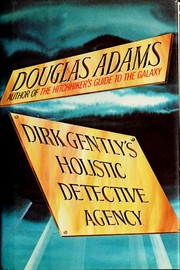
Dirk Gently's Holistic Detective Agency
Holistic detective Dirk Gently links a Cambridge murder, a ghost, and time travel to stop a four-billion-year-old mistake.
3,000-word summary · 13 min read
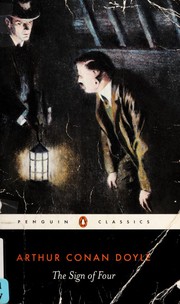
The Sign of Four
Mary Morstan's pearls lead Holmes and Watson from foggy London to Agra treasure and a Thames chase.
2,114-word summary · 9 min read
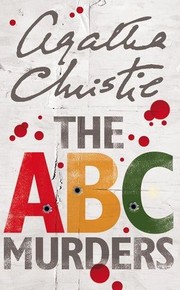
The ABC Murders
Poirot and Hastings chase a killer who leaves an ABC railway guide near victims in Andover, Bexhill, and Churston. A salesman looks guilty, but publicity hides…
3,302-word summary · 15 min read
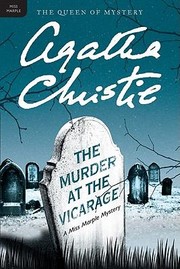
The Murder at the Vicarage
Vicar Leonard Clement narrates the shooting of Colonel Protheroe while Miss Marple watches St Mary Mead.
2,926-word summary · 13 min read
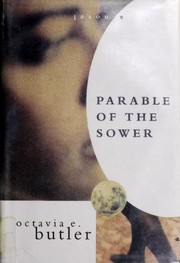
Parable of the Sower
Lauren Olamina flees burning Robledo with her Earthseed verses and walks north to plant a new faith.
2,311-word summary · 10 min read
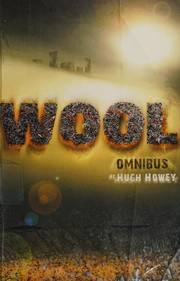
Wool Omnibus
In a buried silo, a sheriff asks to go outside, and a mechanic learns why no one returns from cleaning.
2,095-word summary · 9 min read
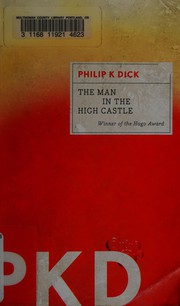
The Man in the High Castle
In a 1962 America split between Japan and Germany, an antiques dealer, a craftsman, and a judo teacher cross paths over a banned novel claiming the Allies won,…
2,317-word summary · 10 min read
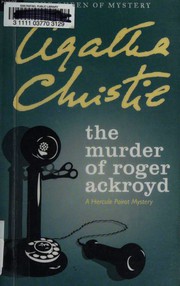
The Murder of Roger Ackroyd
Retired Poirot probes a locked study murder in King's Abbot, told by the village doctor.
3,582-word summary · 16 min read
The City of Ember
Two twelve-year-olds trade jobs and chase a chewed-up note to save their fading underground city before its lights fail.
2,998-word summary · 13 min read
The Adventures of Sherlock Holmes
Twelve Strand cases from Irene Adler to the Copper Beeches, with Holmes at his sharpest and strangest.
3,579-word summary · 16 min read
Death on the Nile
Poirot takes a Nile cruise where a young heiress is shot dead in her cabin.
4,077-word summary · 18 min read
The Hound of the Baskervilles
Holmes Watson probe spectral hound killing Baskervilles on Dartmoor.
2,596-word summary · 12 min read
The Mysterious Affair at Styles
Hastings reunites with refugee Poirot at Styles Court after Emily Inglethorp is poisoned in her locked room.
2,856-word summary · 13 min read
Do Androids Dream of Electric Sheep?
Bounty hunter Rick Deckard retires escaped androids in ruined San Francisco while doubting what empathy still means.
2,841-word summary · 13 min read
A Study in Scarlet
Watson meets Holmes in Baker Street, a Brixton body bears the word Rache, and a Utah revenge tale explains it.
2,208-word summary · 10 min read
Watchmen
A full retelling of Alan Moore's Watchmen: a retired hero's death in 1985 America sparks a sprawling plot with an exiled god and a shocking bid for peace, from…
2,762-word summary · 12 min read
The Time Machine
Wells sends a Victorian inventor to the year 802,701, where idle Eloi and blind Morlocks share a dark human fate.
2,335-word summary · 10 min read
Murder on the Orient Express
Poirot is trapped by snow with thirteen strangers after an American is found stabbed in his berth.
2,004-word summary · 9 min read
The Maze Runner
Maze Runner retold: Thomas wakes in Glade, walls move, Grievers sting, Teresa triggers end.
1,907-word summary · 8 min read