
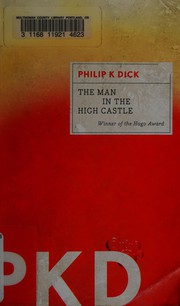
The Man in the High Castle
2,317-word summary 10 min read 274 pages in the book
- First published
- 1962
- Publisher
- G.P. Putnam's Sons
- Pages
- 274
- ISBN
- 9780547572482
Reading options
What's inside (8 sections)
I picked up the novel because the streaming version left me curious about the source. Philip K. Dick published it with G.P. Putnam's Sons in 1962, and the modern Mariner paperback tied to ISBN 9780547572482 runs 274 pages. The show leans on suspense and gunfights. The book moves slower. It stays close to shopkeepers and clerks trying to get through a week.
The premise turns on one killing. Giuseppe Zangara succeeds in shooting Franklin D. Roosevelt in Miami in 1933. America never pulls out of the Depression and stays out of the war in Europe. Germany takes the continent and Russia. Japan takes the Pacific and the West Coast. The Allies surrender in 1947. When the story opens in 1962, the United States has lived under partition for fifteen years.
What defeat looks like fifteen years later
The map shapes every life in the story. Japan rules the West Coast as the Pacific States of America, centered on San Francisco. Germany controls the East through puppet administrations. Between them lies the Rocky Mountain buffer, with towns like Canon City and Denver living under loose oversight. People need papers to cross. Rules on books and speech change with each border.
San Francisco runs on protocol. White Americans bow to Japanese officials and practice correct phrases. Black Americans have been forced back into slavery under the occupation. Chinese residents face contempt in the streets. Jews live under false names or face arrest and handover east. A censored novel can sell openly in California while remaining banned past the Rockies.
Japan and Germany now eye each other with cold suspicion. Germany holds superior weapons and transport. Its engineers drained the Mediterranean for farmland. Its rockets reached the Moon and aim further. Its forces used hydrogen bombs in Africa and threaten action in South America. Japan knows its margin is thin. Officials in the Trade Ministry drink tea and exchange poems while reading reports that worry them.
Berlin adds pressure from above. Hitler lies incapacitated in a sanatorium. Martin Bormann took over as Chancellor and dies early in the narrative after brief illness. Joseph Goebbels takes the post next. Reinhard Heydrich leads a rival SS faction with army backing. A shift in Berlin could mean a purge or a strike across the Pacific. Clerks in San Francisco follow the bulletins between sales.
Dick explains little outright. He lets detail accumulate through transactions. A buyer mentions space shots while paying for a watch. A radio note about Bormann interrupts lunch. You learn who holds power by watching who waits and who bows.
Robert Childan sells the past
Robert Childan owns an antiques shop serving Japanese collectors. He deals in prewar American objects with papers attesting age. His manner mixes eagerness and resentment. He practices polite forms of address. He fears giving offense. He depends on the same buyers he privately scorns.
Much of his stock comes from Wyndam-Matson, a metal works that also turns out fakes. No buyer can be sure which pistol saw service and which left a modern bench. Price rests on story. Childan understands the fraud well enough to avoid asking close questions.
Trade official Nobusuke Tagomi asks Childan for a gift suited to a visiting Swedish businessman named Baynes. Childan lacks the requested Civil War poster and offers other pieces instead. Later he accepts new handmade jewelry on consignment from Frank Frink and Ed McCarthy, hoping fresh work might suit Paul Kasoura, a young Japanese client with an eye for craft. Kasoura studies a brooch and finds in it wu, a kind of inward worth apart from market value. Childan hears praise and thinks of margin.
A dinner at the Kasoura home exposes Childan fully. He tries to discuss art without mentioning money and fails. Betty Kasoura treats him with cool courtesy. Paul asks whether Americans now only copy their own past for sale. Childan leaves both pleased to have been invited and stung. The scene runs long, and Dick lets the embarrassment breathe.
By the close Childan defends the Frink piece with more honesty than he showed at the start. The change is narrow. He still counts yen during conversation. But his willingness to argue for new American work marks a break from mere peddling.
Frank Frink starts over under a false name
Frank Frink works at Wyndam-Matson when the book begins. He was born Frank Fink. He is Jewish and altered the spelling to pass. He served in the lost war and holds raw anger about the outcome. After a clash with management he loses his post. The dismissal cuts income and opens time.
He joins Ed McCarthy to make original jewelry. They cast small pendants and pins with plain abstract forms. Ed brings bench skill. Frank brings drive and a wish to prove that Americans can shape new things rather than forge old weapons. They dispute costs and taste and whether occupied buyers will pay for work without a pedigree.
Frank also tries pressure. He threatens to expose Wyndam-Matson fakes unless the firm pays for his silence. The firm pays enough to fund tools and rent. Police files already note him as suspect. His former wife Juliana lives in Colorado and writes seldom. His days compress to casting, cleaning, and listening for steps outside.
Arrest arrives without drama. San Francisco police detain him on identity grounds. Transfer east would mean death in a camp system the book treats as ongoing fact. Rescue comes from elsewhere. A Japanese official he never met declines to sign the extradition paper. Frank leaves custody bewildered, carrying pieces few shops wanted weeks earlier. His craft earned one serious admirer. His life continues on that thin basis.
Tagomi and the visitor called Baynes
Nobusuke Tagomi works as Assistant Trade Minister. He rules on imports and receives foreign firms. He casts the I Ching for counsel before hard calls. He has heart trouble and a practising Buddhist conscience. He wants to act decently inside an indecent structure.
Baynes presents himself as a Swedish industrialist. He is in fact Captain Rudolf Wegener, a German officer travelling covertly. Wegener answers to moderates in the German command who fear both Goebbels and Heydrich. He brings warning that Berlin plans a surprise nuclear strike on Japan under the name Operation Dandelion. He seeks a meeting with a general travelling from Tokyo and asks that Japan signal backing before the order issues. Open speech would bring arrest by German security agents posted in San Francisco.
Tagomi hosts delaying teas while the general travels. Bulletins announce Bormann death and Goebbels succession. Wegener thins with strain. Tagomi notes evasion yet keeps the channel open through courtesy and procedure.
Two German security men force entry to seize Wegener and remove witnesses. Tagomi reaches for an old American pistol from Childan stock, kept near as display, and fires. Both intruders die. The act sickens him. He shakes for hours. He cannot square killing with his vows. He attempts to return the weapon to Childan. On the counter he notices a Frink brooch and feels the quality Kasoura described. He buys it instead.
Later, worn and grieving near the Embarcadero, Tagomi slips into another San Francisco. Whites do not defer. A great freeway stands where none should run. The air smells of fuel and speed. No one bows. The spell breaks quickly and leaves him shaken. Dick offers no mechanics. The passage reads as a tear in routine through which another possible city shows.
Tagomi then pays a price for conscience. The German consul demands Frank extradition. Tagomi refuses signature though refusal risks post and safety. Staff watch in silence. The consul protests. The paper stays unsigned. A craftsman across town stays alive because a bureaucrat held a pen.
Juliana drives toward Cheyenne
Juliana Frink lives in Canon City in the buffer zone. She teaches judo in a rented hall. Her marriage to Frank ended under strain of money and fear. She still thinks of him with crabbed affection. She casts the I Ching before travel and romance and reads the lines with care.
She becomes involved with Joe Cinnadella, an Italian driver moving freight between zones. Joe talks freely about politics and shows fixed hatreds. He expresses keen interest in Hawthorne Abendsen, author of The Grasshopper Lies Heavy, a forbidden-in-the-east novel in which the Allies beat the Axis. He proposes a drive to Denver. Juliana accepts from restlessness and because Joe funds fuel and rooms. Her castings warn against entanglement. She goes regardless.
Denver talk centers on Abendsen. Readers debate his alternate Allied victory. Joe presses for a side run to Cheyenne to call on the author at the place readers call the High Castle. Near Wyoming his habits alter. He shaves and dresses with care. He rehearses questions about guards and schedules. Juliana, trained to read bodies, grasps that Joe means to kill the writer. In a motel room he admits service as a Swiss killer in German pay. They struggle. Juliana kills him and drives on alone to warn Abendsen.
She finds no fortress. Abendsen lives in a plain Cheyenne house with his wife and children. He quit guarded quarters because dread had grown tedious and he preferred ordinary days. Neighbours nod from lawns. Juliana feels her pilgrimage tilt from awe to anger. She reports Joe death and demands answers about method.
Abendsen says he plotted the novel with the I Ching. He cast for turns and obeyed results even when they cut against outline. Juliana tests him on the spot. She asks the oracle why it produced a book in which Japan and Germany lose. The reading points to Inner Truth. She understands this to mean that Allied victory holds true on a plane above daily rule, and that her present world of partition stands as illusion or error. Dick ends near that claim without staging revolt.
Her arc carries force because she misjudges and adjusts. Desire for Joe blinds her for days. Training saves her when talk fails. Curiosity pushes her past fear to Abendsen door. Television versions sharpen her into an operative. The novel keeps her less settled, which fits a story built on divination and doubt.
The book inside the book and a fair accounting
The Grasshopper Lies Heavy supposes Roosevelt survives Zangara yet declines a third term in 1940. Rexford Tugwell takes office and keeps the fleet from Pearl Harbor, so Japan never lands its crippling blow. Britain stops Rommel in Africa, links with Soviet forces through the Caucasus, and joins the drive on Berlin. Italy quits the Axis. Nazi chiefs face trial. Hitler dies with words shaped after Martin Luther. The war closes in 1945 with Allied success, two years before the 1947 defeat remembered by Dick people.
Abendsen follows victory into uneasy peace. Tugwell funds rebuilding in China and schooling across poor regions, sending sets that teach reading and well work. American firms build plants abroad. Britain under Churchill keeps empire habits, jails suspect colonial subjects, suspects Washington of stoking revolt, and drifts into a cold contest with America that London may win. Readers inside the novel quarrel over those chapters. Some find them bitter. Some find them candid. The dispute shows how alternate pasts serve present needs.
Nazis ban the book because a victorious Allies tale denies doctrine. Japanese censors permit it from confidence. Americans use it for solace or scorn. Childan calls it cheap fiction. Paul Kasoura treats it as a model to probe. Juliana treats it as evidence. Abendsen treats it as labour guided by the oracle. No office rules on meaning. Use decides.
The I Ching threads all plots. Frank asks about enterprise. Juliana asks about a man and a trip. Tagomi asks about a meeting. Abendsen asks about chapters. Dick himself cast during composition to settle turns, a habit noted in later letters and notes. That practice explains looseness. A poster hunt matters beside a chancellorship. A pin sale bends a conscience. Chance governs beside power.
Criticism is owed. Movement drags in stretches. Office waits and road miles fill pages while Berlin decides mass death offstage. Wegener warns Tokyo then flies toward a coup the reader never sees resolved. Frank never meets his rescuer. Threads close on mood rather than settlement. Readers who require tied ends will feel shorted.
Distance can chill. Dick renders minds through routine and formula more than warmth. Childan irritates with servility. Joe repels. Wegener stays veiled. Betty Kasoura gets few pages beyond hostess duty. Black captivity appears as background law rather than lived account, though slavery is declared restored. The lens stays close to white Americans and Japanese officials. That narrow view reflects era limits and weakens the claim to show a whole order.
Pacing tested my patience near the Denver leg, where Joe talk loops. The motel fight and the Cheyenne interview restored pull. The shooting in Tagomi office and the Embarcadero slip repay attention. The final oracle reading lands because prior small stakes taught how to read it.
I still commend the novel to patient readers. Few alternate histories dwell so fully on clerks and teachers under tyranny. A fake pistol. A consigned brooch. Coins on a spread. A freeway that should not stand. A plain house where readers expected walls. These particulars carry more charge than speeches about liberty. They show people bargaining and bowing and asking for signs while distant commands decide bombing lists.
Facts cited here match the record. First release by G.P. Putnam's Sons in October 1962. Hugo Award for Best Novel in 1963. Modern Mariner text at 274 pages. Early hardcover often catalogued near 239 pages and Vintage paperback near 259, so citations shift with printing. The tale stays set in 1962, fifteen years after its imagined 1947 surrender, which gives past and present the same year with opposite outcomes. That doubled date still gives the book its pull.
FAQ
When was The Man in the High Castle published?
G.P. Putnam's Sons published it in October 1962. The standard modern Mariner paperback runs 274 pages and the ISBN is 9780547572482.
What is the novel inside The Man in the High Castle?
The Grasshopper Lies Heavy by Hawthorne Abendsen. Inside the story it imagines an Allied victory, and characters argue over whether it tells a deeper truth.
Is there a TV version?
Yes, Amazon adapted it as a multi-season series starting in 2015. The show keeps the split America and Abendsen but adds new plots and action.
Similar books
Do Androids Dream of Electric Sheep?
Bounty hunter Rick Deckard retires escaped androids in ruined San Francisco while doubting what empathy still means.
2,841-word summary · 13 min read
Brave New World
Huxley's Brave New World retold: hatcheries, soma, Bernard and Lenina, John the Savage, and the lighthouse.
2,513-word summary · 11 min read

Out of the Silent Planet
A Cambridge philologist is kidnapped and taken to Mars, where the natives are civilized and the humans are the dangerous invaders.
2,612-word summary · 12 min read
We
In a city of glass ruled by the Benefactor, a state engineer building a spaceship falls for a woman who wants to tear the One State down.
2,247-word summary · 10 min read
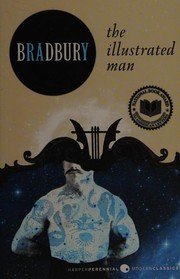
The Illustrated Man
A tattooed drifter's moving pictures retell eighteen Bradbury stories of children, rockets, Mars and the last night of the world.
2,791-word summary · 12 min read
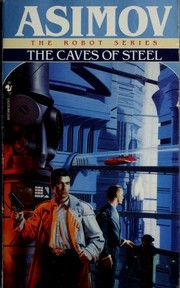
The Caves of Steel
Detective Elijah Baley must solve a Spacer's murder in a domed New York, partnered with R. Daneel Olivaw, a humaniform robot built in the victim's image.
2,445-word summary · 11 min read
A Canticle for Leibowitz
After nuclear war, monks save books across centuries while the world rebuilds and falls again.
2,381-word summary · 11 min read
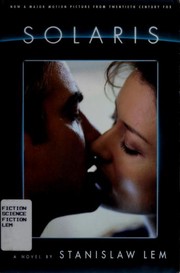
Solaris
Kelvin reaches a silent station above Solaris and finds grief made solid when the ocean returns his dead wife Rheya, testing memory, science, and the limits of…
2,548-word summary · 11 min read
The Island of Doctor Moreau
Shipwrecked Prendick finds Doctor Moreau shaping beasts into men by pain on lost island.
2,137-word summary · 9 min read
The Dispossessed: An Ambiguous Utopia
Physicist Shevek leaves anarchist Anarres for capitalist Urras to share time theory, finding walls both places.
2,288-word summary · 10 min read
Childhood's End
Silver ships end war and want while Overlords midwife humanity's children into something beyond human.
2,054-word summary · 9 min read
Parable of the Sower
Lauren Olamina flees burning Robledo with her Earthseed verses and walks north to plant a new faith.
2,311-word summary · 10 min read
Starship Troopers
Rico earns citizenship through Mobile Infantry drops against Bugs.
2,071-word summary · 9 min read
Hyperion
Seven pilgrims cross Hyperion telling tales of faith, war, and time while the Shrike waits at the Tombs.
1,996-word summary · 9 min read
Stranger in a Strange Land
A Mars-raised man lands on Earth, learns religion and love, and founds a church that shocks everyone.
2,725-word summary · 12 min read
The Time Machine
Wells sends a Victorian inventor to the year 802,701, where idle Eloi and blind Morlocks share a dark human fate.
2,335-word summary · 10 min read
The Handmaid's Tale
Atwood's The Handmaid's Tale retold: Offred in Gilead, the Commander, Serena Joy, Mayday, and the van.
2,369-word summary · 11 min read
The Giver
Lois Lowry's The Giver retold: Jonas's Assignment, the memories, release, and the sled ride out.
2,510-word summary · 11 min read
Fahrenheit 451
Bradbury's Fahrenheit 451 retold: Montag burns books, meets Clarisse, hides books, and follows the river to the readers.
2,336-word summary · 10 min read
1984
A long retelling of George Orwell's 1984: Winston Smith's quiet rebellion in Oceania, the Party's grip on truth and memory, and why the ending still lands as…
2,110-word summary · 9 min read
A Scanner Darkly
Undercover narc Fred is ordered to surveil a drug user named Bob Arctor in near-future Orange County, not realizing the man on the screen is himself.
2,251-word summary · 10 min read
Ubik
A psychic agency crew dies in a blast and reality decays unless a spray called Ubik saves them.
2,674-word summary · 12 min read
Rosencrantz and Guildenstern Are Dead
Stoppard's 1966 play retells Hamlet from the wings, where two minor courtiers wait, joke, and walk toward a death they cannot see.
2,021-word summary · 9 min read

Iron Widow
Wu Zetian enlists to avenge her sister, kills her pilot, and becomes an Iron Widow in a mecha Huaxia where the machines are built to kill women.
2,444-word summary · 11 min read
Foundation's Edge
Exiled councilman Golan Trevize hunts for the Second Foundation and the lost world of Earth, and finds a planet with one mind waiting to change the galaxy.
2,335-word summary · 10 min read

Fathers and Sons
Arkady brings the nihilist Bazarov home to his father's estate, and a generational argument turns into love, a duel, and an early death.
2,192-word summary · 10 min read
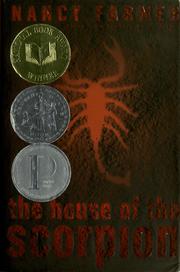
The House of the Scorpion
A clone raised in a drug lord's poppy fields learns what he was made for and chooses what to do with the life he was given.
2,527-word summary · 11 min read

The Age of Miracles
A California girl grows up while the Earth's rotation slows, and ordinary adolescence continues alongside slow catastrophe.
2,417-word summary · 11 min read
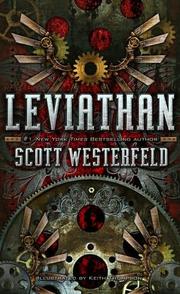
Leviathan
In an alternate 1914, a prince on the run and a girl disguised as a soldier meet aboard a living airship.
2,406-word summary · 11 min read
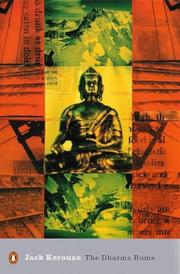
The Dharma Bums
Ray Smith rides freight trains, climbs Matterhorn Peak and argues about Zen with the poet Japhy Ryder in Kerouac's 1958 road novel.
2,729-word summary · 12 min read