
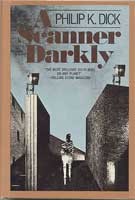
A Scanner Darkly
2,251-word summary 10 min read 220 pages in the book
- First published
- 1977
- Publisher
- Doubleday
- Pages
- 220
- ISBN
- 9780385016131
Reading options
What's inside (10 sections)
I came to A Scanner Darkly after reading a couple of Dick's more famous books and expecting another puzzle box about reality. What I got instead was closer to a confession. It still has the paranoia and the gadgets, but the center of it is a man watching himself fall apart on a screen, and the author clearly knew that feeling well enough to write it down. That is why this one stays with me more than the others. It is ugly in a way that feels honest.
A house full of junkies in Orange County
The book opens in a near-future Southern California, June 1994 as Dick imagined it, in a county that looks a lot like the real Orange County of the mid seventies with a few extra machines bolted on. We are in a run-down house shared by a rotating cast of users. Bob Arctor is the anchor of the household, or as close to an anchor as anyone gets. His housemates are James Barris, Ernie Luckman, and a younger man named Charles Freck who drifts in and out. There is also Donna Hawthorne, who sells drugs and whom Bob is in love with, though "in love" is doing a lot of work in a book this damaged.
These people do not do much. They sit around, they talk, they take Substance D, they watch television, they make coffee, they accuse each other of stealing, they laugh at jokes that are not funny. Dick lets those conversations run long. A lot of them read as if they were written from memory rather than invented, with all the false starts and dead ends left intact. That is the texture of the book. It is not plot heavy at first, and readers who want a tight thriller will get impatient. I nearly did. Then I noticed that the boredom is the point. The drug has flattened their lives into this loop of talk and sleep and talk.
The detail that dates it and also makes it timeless is that everyone speaks in leftover hippie slang. Dick moved the year to 1994 at his editor's suggestion and added the surveillance technology, but he kept the voices from 1971. The gap is one of the book's strange charms. The future has holograms and the past has "man" and "like," and nobody in the room notices the seam.
Substance D, the suit, and the double life
The drug is called Substance D. Everyone calls it Death, or just D. It is a psychoactive compound that nobody seems able to trace back to a manufacturer. It arrives, it gets sold, it gets taken. What it does to the brain is the engine of the whole plot. With enough use it causes the left and right hemispheres to stop communicating and start competing. The self splits. That is the idea Dick builds everything on.
Bob Arctor is not only a user. He is an undercover narcotics agent who goes by the name Fred when he is on duty. His assignment is to infiltrate the drug scene and work his way up to the people making and moving Substance D. To do that he has been living as a dealer and a user for so long that the cover has become the life.
When he reports in, Fred wears a scramble suit. This is the best invention in the book. The suit projects a shifting composite of thousands of faces and voices onto the wearer, so that no one, not even other officers, can tell who is inside it. The person under it is not hidden by darkness or a mask. He is hidden by being too many people at once, a blur that never settles. It came, Dick said, out of one of his strange religious experiences, and it feels like a machine built out of a hallucination.
The suit means Fred can sit with his superiors and discuss the case without anyone knowing who he is. It also means the police have created the perfect conditions for losing a person. If no one can see your face and no one knows your name, then the organs of the self have nothing to hold on to.
The order to watch himself
The turn that gives the book its shape comes quietly. Fred's supervisors, worried by his psychological tests and his heavy use, decide to pull him back from the field and give him a desk job. The new job is surveillance. He is told to monitor a house where a man named Bob Arctor and his friends are suspected of dealing. Fred dutifully sets up the holo scanners, the cameras that watch and record the rooms, and he goes to the facility and watches the footage. He does not know who he is watching.
He watches Bob Arctor cook, argue, laugh, sleep, and it never once crosses his mind that he is looking at himself. This is not a cheap trick. It follows from the drug. The hemispheres have drifted apart, and the part of him that is Fred, the cop, cannot recognize the part that is Bob. When the footage shows a man who looks like Arctor, Fred studies him with professional distance and writes reports. The reader knows. Fred does not. Dick stages it so the horror lands slowly rather than as a shock.
It gets worse. Fred's own supervisor eventually floats the possibility that Fred might, in fact, be Bob Arctor. Fred considers this calmly and rejects it. He is a federal agent. The idea is absurd. He goes back to watching. I found this stretch genuinely distressing in a way that most science fiction is not, because there is no monster and no villain. There is just a man filing paperwork about his own dissolution.
Donna, and the thing he cannot have
Running under all of it is Donna. She is small, guarded, tough, and she keeps Bob at arm's length in a way that reads at first like a love story with a sad ending. He wants her. She mostly says no. She deals to him, she sleeps in her car, she takes long unexplained trips. Bob's devotion to her is one of the few clean things in the novel, and Dick uses it to keep a thread of ordinary human longing running through the drug haze.
What Bob does not know is that Donna is not simply a dealer. She is working, and she has been part of the same operation that put Bob in that house. The distance she keeps, the odd hours, the refusals: they are the distances an agent keeps. When that becomes clear it reframes every scene they share. The person he loves has been his handler. The reader has to go back and reread her patience as professional.
I have seen this called the cruelest thing in the book, and it may be. It also fits the theme exactly. Nobody in this world is only one person. Everyone is running at least two lives, and the effort of running them has worn through the floor.
The house breaks apart
Around the middle, the household comes undone. Fear and the drug and the constant mutual suspicion turn the roommates against one another. Barris, who fancies himself an inventor and a technician, becomes a source of low level menace, always scheming, always ready to turn a situation to his advantage. Freck's life collapses first, in one of the book's bleakest runs of pages: a young man with nothing left who reaches for the exit and botches it. Dick wrote these friends from people he had actually housed, and it shows. The deaths and the near misses are not there for shock. They are there because they happened to somebody he knew.
The pacing sags most here. There are long stretches of the house talking in circles while the plot waits. Some readers quit in this section. I do not blame them, but I think the boredom is doing labor for the story: it is what the drug feels like from the inside, time going soft and sticky while the person inside it slowly stops being a person.
Meanwhile the tests on Fred keep coming back worse. His brain is separating. He can use both hands with equal skill in a way that unsettles the people testing him. The agency decides he is no longer fit for the job. The most useful thing he can still be is a body placed somewhere it can observe, so that is what he becomes.
New Path, and the name Bruce
Donna takes Bob to New Path, a rehabilitation organization that runs clinics and communes and presents itself as a place that helps addicts. The reader is told early that a police operation wants to find out where New Path gets its money, and Bob has been chosen, without being told, to be the one who gets inside it. He arrives already broken, and he is given a new name: Bruce.
New Path does not treat him gently. The program runs on confrontation sessions modeled on real recovery groups of the era, where residents break each other down in front of the room. The intent, as the book shows it, is control rather than cure. Residents are made to confess, to expose, to submit. Bob, now Bruce, is in no state to resist. His memory is going. His mind has been chewed down to stubble.
The book does not pretend rehabilitation is a rescue here. It is a machine that takes a person apart and does not put him back together, and the people running it have reasons of their own for keeping him that way.
The blue flowers
The ending is the part people remember, and it is worth spoiling because the whole book has been building toward it. Bruce ends up working on a New Path farm, a commune out among the cornfields, and by now he is close to what the staff consider a shell. He can follow simple instructions. He is mostly gone.
Then, in the fields, he sees rows of blue flowers growing hidden between the rows of corn, and something in whatever is left of him recognizes them. The flowers are the source of Substance D. The drug that hollowed out his mind is a plant, and the people supposedly rehabilitating him are growing it. Every clinic that claims to be fixing the damage is part of the machinery that makes it.
Bruce does the small, stubborn thing that is all a person like him can still do. He hides one flower in his shoe as evidence, planning to bring it to his friends on Thanksgiving, and he wants to give it to Donna. It is a nearly hopeless gesture from a nearly erased man, and the book ends there, on that cracked note. The whole apparatus of police and clinics and supply is too large for one stolen flower. He does it anyway.
What the novel is actually about
The title comes from the King James Bible, from 1 Corinthians: for now we see through a glass, darkly. Dick means the phrase literally and technically. We look at the world through a lens that distorts, and we cannot see ourselves through it either. The surveillance state in this book does not do the damage. The damage was already inside. The scanners and the scramble suit only make visible a splitting that the drug and the fear were going to cause anyway.
It is also, plainly, a book about Dick's own friends. He wrote an afterword listing the people he had known who were crippled or killed by drugs, and he put his own name on the list. He said the novel was about some people who were punished entirely too much for what they did. He was sometimes accused of preaching in that afterword, and the accusation has some weight. He is not neutral. He is furious and grief stricken and he says so. I think the book is better for it, even if the tone turns to sermon right at the end.
The hardware, too, has aged unevenly. The holograms and the scramble suit read as period props now. The two hemisphere theory was always more metaphor than medicine. None of that matters. The images Dick invented have outlived the science: the man in the blur window watching a stranger who is himself, the recovery program that needs its patients broken, blue flowers hiding in a field of corn.
Fair criticism belongs in any honest account. This is a slog in places. The conversations repeat, the structure wanders, and the villain is diffuse: the evil here is a system with no single face, which is true to life and hard to dramatize. The book is bleak almost without relief, and it does not offer a way out. Readers who want hope or a clean resolution will not find either. If you want a tighter, more propulsive Dick, go to the earlier books. Come here when you want the one that hurts.
For me, that is the reason to read it. It is not the most fun of his novels. It is the one where the ideas and the damaged life behind them are the same thing, and you can feel the author in the room watching his friends and watching himself, seeing through the screen darkly, hoping that someone, someday, would find the flowers.
FAQ
What is Substance D and what does it do in A Scanner Darkly?
Substance D, also called Death or simply D, is a psychoactive drug of unknown origin. Heavy use makes the two hemispheres of the user's brain function independently, splitting the personality, and the drug turns out to come from a plant with blue flowers.
What is the scramble suit that Fred wears?
The scramble suit projects a shifting composite of thousands of faces and voices over the wearer, so his identity cannot be determined, even by other police officers. It lets the undercover agent Fred report in without anyone knowing who he is.
Is A Scanner Darkly based on real events?
Yes, in part. Dick drew on the early 1970s, when he lived around a rotating group of young drug users in Marin County, and his afterword lists friends who were harmed or killed by drugs, adding his own name to the list.
Similar books
The Man in the High Castle
In a 1962 America split between Japan and Germany, an antiques dealer, a craftsman, and a judo teacher cross paths over a banned novel claiming the Allies won,…
2,317-word summary · 10 min read
Do Androids Dream of Electric Sheep?
Bounty hunter Rick Deckard retires escaped androids in ruined San Francisco while doubting what empathy still means.
2,841-word summary · 13 min read
Authority
The new director of the Southern Reach takes over an agency that is hiding the truth about Area X, and the building starts to change around him.
2,029-word summary · 9 min read

Iron Widow
Wu Zetian enlists to avenge her sister, kills her pilot, and becomes an Iron Widow in a mecha Huaxia where the machines are built to kill women.
2,444-word summary · 11 min read
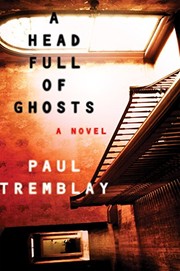
A Head Full of Ghosts
A broke Massachusetts family lets a reality TV crew film their daughter's exorcism, and fifteen years later the only survivor tries to explain what really…
2,588-word summary · 12 min read
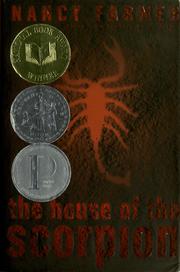
The House of the Scorpion
A clone raised in a drug lord's poppy fields learns what he was made for and chooses what to do with the life he was given.
2,527-word summary · 11 min read

The Age of Miracles
A California girl grows up while the Earth's rotation slows, and ordinary adolescence continues alongside slow catastrophe.
2,417-word summary · 11 min read
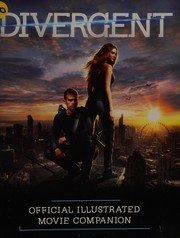
Divergent: Official Illustrated Movie Companion
An oversize behind-the-scenes guide to the 2014 Divergent film, with casting stories, costume and set design, and scores of photos.
2,524-word summary · 11 min read
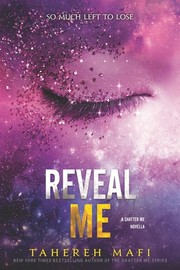
Reveal Me
A Shatter Me novella told by Kenji, set between Defy Me and Imagine Me, as the rebels learn Anderson has taken hostages and Juliette faces Emmaline.
2,098-word summary · 9 min read

I Who Have Never Known Men
Forty women in a cage, one child who remembers nothing, and a nearly empty world above the bunker. Harpman's quiet, unexplained dystopia.
2,025-word summary · 9 min read

Wither
In a future where women die at twenty, sixteen-year-old Rhine is sold as a bride to a wealthy stranger and plots an escape from a beautiful prison.
2,395-word summary · 11 min read

We
In a city of glass ruled by the Benefactor, a state engineer building a spaceship falls for a woman who wants to tear the One State down.
2,247-word summary · 10 min read

The Memory Police
On an unnamed island, ordinary things keep vanishing from memory, and a novelist hides her editor from the police who make sure the vanished stay forgotten.
2,440-word summary · 11 min read
The Illustrated Man
A tattooed drifter's moving pictures retell eighteen Bradbury stories of children, rockets, Mars and the last night of the world.
2,791-word summary · 12 min read

Never Fade
Ruby, now a leader in the Children's League, must track down the boy whose memories she erased, because he holds the only proof of what caused the disease that…
2,188-word summary · 10 min read
The Twelve
The middle volume of the Passage trilogy braids the year America died, a picnic massacre decades earlier, and the survivors' war against the twelve master…
2,089-word summary · 9 min read
The Caves of Steel
Detective Elijah Baley must solve a Spacer's murder in a domed New York, partnered with R. Daneel Olivaw, a humaniform robot built in the victim's image.
2,445-word summary · 11 min read
Severance
Candace keeps office routine as fever empties New York, then joins survivors.
2,340-word summary · 10 min read
Y: The Last Man, Vol. 1: Unmanned
Yorick Brown and his monkey Ampersand survive a plague that kills every Y-chromosome mammal and cross a collapsed America.
2,525-word summary · 11 min read
Under the Never Sky
Exiled from her Pod, Aria crosses a storm-scarred wilderness with Outsider Perry to find family and the fabled Still Blue.
2,572-word summary · 11 min read
Shadow Me
Kenji Kishimoto narrates for the first time as he joins Nazeera on a quiet mission after Restore Me, carrying painful secrets into Defy Me.
2,512-word summary · 11 min read

The Year of the Flood
Toby and Ren live through the plague apart, guided by God's Gardeners, then join to find Amanda.
2,422-word summary · 11 min read

Life As We Knew It
Sixteen-year-old Miranda keeps a diary while an asteroid strike on the moon brings tsunamis, blackouts, and a frozen year of hunger to her Pennsylvania town.
2,485-word summary · 11 min read
Among the Hidden
Twelve-year-old Luke, an illegal third child, befriends Jen and faces the cost of stepping out of hiding.
2,923-word summary · 13 min read
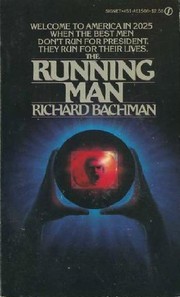
The Running Man
Out of work in a broken 2025, Ben Richards enters a televised manhunt where each hour alive pays cash.
2,922-word summary · 13 min read
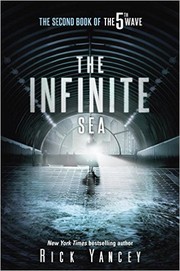
The Infinite Sea
Cassie and Squad 53 wait out winter in a hotel while Ringer is retaken and learns the truth behind the 5th Wave.
2,985-word summary · 13 min read