

The Memory Police
2,440-word summary 11 min read 288 pages in the book
- First published
- 1994
- Publisher
- Pantheon Books
- Pages
- 288
- ISBN
- 9781101870600
- Original title
- 密やかな結晶
Reading options
What's inside (8 sections)
The first thing to understand about this novel is that nothing gets explained. Yōko Ogawa published 密やかな結晶 (Hisoyaka na Kesshō), which translates roughly as "Secret Crystallization," in Japan in 1994, and it took twenty-five years for Stephen Snyder's English translation to reach American readers as The Memory Police, from Pantheon in 2019. By then the book had become something rare: a patient, dreamlike Japanese novel that reviewers kept comparing to Orwell and Kafka, even though it behaves like neither. Ogawa was already known in English for The Housekeeper and the Professor, a gentler book about a mathematician who forgets everything every eighty minutes. The Memory Police takes that same obsession with memory and strips out the warmth, leaving a story that feels like a long afternoon in a house where the rooms keep getting smaller.
The Island and the Things That Vanish
The book is set on an unnamed island. This is not a place you can locate on a map, and Ogawa never tells you where it is or what country governs it. What you learn instead is the local weather of the place: from time to time, something disappears. It goes in a particular order, and the order matters. First an object stops existing as an idea. People wake up one morning and no longer know what a hat is, or a ribbon, or a bird, or a rose. The association simply is not there anymore, the way a word can sit on the tip of your tongue and refuse to come. Then, once the thing is gone from the mind, it goes from the world. People gather up whatever remains and carry it to the river or the incinerator and get rid of it.
That is the ordinary rhythm of life on the island, and most of the inhabitants accept it without much protest. The narrator notices this and reports it with the evenness of someone describing a change in the tides. When roses disappear, the wind seems to understand the new rule and blows only the rose petals away, leaving the other flowers alone. Nature cooperates. The disappearances are not a catastrophe that arrives and ends. They are a condition, a season, something you adapt to the way you adapt to a cold climate. The unsettling part is not the loss itself but how calmly everyone absorbs it.
Against this stands a minority. Some people cannot forget. When a thing disappears, these people keep their memory of it intact, which means they keep a piece of themselves that the island has decided should not exist. This makes them dangerous. A state force called the Memory Police exists to hunt them down, and once they are taken to the headquarters, they tend not to come back. The narrator's mother was one of the ones who remembered. When the narrator was a girl, her mother showed her a cabinet of forbidden objects, things that had disappeared years earlier, and talked about them as if they were still part of the world. The narrator could not form any associations with these objects, could not feel what her mother felt, but she loved listening anyway. Eventually the Memory Police learned that her mother was immune to the forgetting. They summoned her to headquarters. A week later she was dead, and the narrator has never doubted who killed her.
Her father was an ornithologist, and he died of natural causes before birds disappeared. The narrator says she is glad he did not live to see that particular erasure. That small detail is one of the clearest windows into how this book works. Grief here is not a single event. It is a set of near misses, the relief that someone was spared, the guilt of being relieved.
The Novelist and the Editor in the Floor
The narrator is a novelist. She has published a few books and she trusts her editor, a man known only as R, with her manuscripts. When she learns that R is also one of the people who remember, she understands that he is living on borrowed time. He has a wife, and the knowledge that he could be taken at any moment has begun to hollow out his life. So she and an old family friend, referred to throughout as the old man, devise a plan. In her father's former office, they build a hidden room, a space concealed behind the shelves and the wall, and R moves in.
This is the engine that drives the middle of the book. R leaves his wife behind and takes up residence in a room the size of a large closet, and the narrator becomes his only link to the surface. She brings him meals. She sits with him. They talk, because there is nothing else to do, and the talk slowly turns into the real substance of the novel: two people comparing what it is like to remember with what it is like to forget. R is warm and alive to the world in a way the narrator is not. He can describe a vanished object to her, and she can listen, and something almost like feeling stirs, but it never fully arrives. The gap between them is not ignorance. It is a kind of grief the narrator can no longer name, because the language for it has been erased.
Over time the narrator realizes she has fallen in love with R, or at least with the memory he carries for her. Ogawa handles this with the same restraint she brings to everything. There is no declaration, no scene in which the two of them finally say it. It is a quiet, lopsided attachment, one person reaching across a gap the other cannot cross. If the book has a romance, this is it, and it is a romance made mostly of absence.
The Story Inside the Story
Interrupting the main narrative, every so often, are excerpts from the manuscript the narrator is writing. This inner novel is about a young woman who falls in love with her typing teacher. The teacher has a clocktower studio where he gives lessons, and the woman learns to type so well that the typewriter becomes a second voice. Then something happens to her speech. She loses her voice, and from then on she can only communicate by writing, by placing words on paper and handing them to people.
One day the typewriter breaks, and the teacher promises to repair it. Instead he leads her up to a room at the top of the clocktower, a room lined with broken typewriters stacked to the ceiling, and tells her the truth: he is the one who took her voice, and he has locked it inside a typewriter somewhere in that pile. Then he locks her in the room and leaves her there. He comes back for a while to feed her and to use her, then loses interest and turns his attention to a new student. The woman cannot escape and cannot speak, and eventually she is absorbed into the room itself, becoming part of the clutter of ruined machines while the teacher starts over with his next victim.
Readers disagree about how to take this embedded story. Some see it as a mirror held up to the main narrative: a woman stripped of her voice by a man who pretends to help her, locked into a small space and slowly erased. Others find it gratuitously cruel, a story so much nastier than the world around it that it feels like a different book. Ogawa is deliberately letting the writer write her own fear, and the discomfort is part of the point. The manuscript is the narrator's only way of touching her situation indirectly, because she cannot look at it straight on.
The Old Man and the Hidden Objects
The old man is the third member of this strange household, a friend of the family who has lived alongside the narrator for years. He is practical, kind, and increasingly puzzled by the world. He cooks, he fixes things, he keeps the house running while the narrator writes and R hides. He is also forgetful in the island's way, which means he cannot help R with the task R has set himself: trying to bring back what the disappearances took.
R collects things. He has kept objects that were supposed to have been destroyed, a music box among them, and he shows them to the old man and the narrator in the hope that the sight of a forbidden item will wake some dormant memory. It never works. They look, they find the object curious, they form no attachment to it, and they hand it back. The failure is the point. You cannot force someone to remember a thing that has been surgically removed from them, no matter how carefully you revive its shape.
There is a larger version of this experiment stored in the narrator's past. After an earthquake damages some of her mother's old sculptures, the family discovers that the sculptures were hollow, and that her mother had hidden objects inside them: small things that had disappeared years ago and that she refused to let the Memory Police take. A ferry ticket. A harmonica. The narrator and the old man recover what they can and bring it home. Even faced with her own mother's smuggled relics, the narrator cannot retrieve the feelings that should belong to them. Memory, Ogawa suggests, is not stored in objects. It lives in people, and when the people have been emptied, the objects are just shell.
What the Memory Police Take
The island's decline accelerates through a series of losses that are clearly designed to keep tightening the screws. Calendars disappear, and with them any reliable sense of time. The island gets stuck in winter, snow falling most days, spring never arriving. Then novels themselves disappear. The narrator, who has built her life on writing, reluctantly burns most of her books and takes work as a typist, a job that lets her keep producing words without keeping the dangerous objects that hold them. R begs her not to give up her library. She gives up most of it anyway. That capitulation is one of the book's most honest moments, because it refuses to make its heroine a hero. She complies, the way almost everyone on the island complies, because the alternative is being taken.
The Memory Police become more aggressive as the disappearances deepen. They begin searching entire neighborhoods without warning. The old man is arrested and interrogated, and the narrator goes to headquarters to try to see him and is turned away without explanation. He is released later that week, diminished. Then one night the police storm the narrator's house. She and the old man watch from the next room as the officers open drawers and overturn furniture, and R sits silent in the hidden room while boots move across the floor above him. They do not find him. It is sheer luck, and Ogawa lets you feel how thin the luck is.
Then the old man dies, and the narrator is left with only R, hidden in the floor, and her unfinished manuscript. She forces herself to finish the novel about the voiceless woman in the tower, even though writing has become almost impossible, and in an odd way the two stories end the same way: the woman in the tower is swallowed by the room, and the narrator begins to be swallowed by the island.
The final movement is the most daring. Left legs disappear. Then, gradually, every other part of the body. The islanders are reduced to voices, to speech floating without flesh, and the narrator joins them. As a voice, she sits with R in the hidden room and he begs her to remember her own body, to hold onto it, and she tells him she cannot. Then her voice goes too. R is left alone, and something about that last disappearance breaks the rules of the island. The fear leaves him. He no longer believes the Memory Police are coming. He walks out of the hidden room and up into whatever is left, and the narrator, no longer any kind of body or voice, continues to disappear.
The Case For and Against
The Memory Police is not a thriller, whatever the jacket copy says. It is slow, repetitive by design, and almost entirely without conventional plot. The disappearances do not build to a revelation. There is no explanation of what causes them, no villain unmasked, no resistance movement that turns the tide. Ogawa withholds all of it on purpose, and readers who need their dystopias to have a mechanism and a climax will find the book frustrating. The repeated scenes of inventory and erasure, the cataloging of what is gone, can start to feel like a litany. The embedded story about the typing teacher is genuinely disturbing in a way the framing narrative mostly is not, and some readers will find the tonal mismatch jarring rather than productive.
What the book does have is control. Ogawa writes in a flat, uncluttered style, and Snyder's translation preserves that calm surface, which is precisely what makes the horror land. The violence in the novel is almost all offstage or bureaucratic, and the most frightening thing in it is how ordinary the forgetting becomes, how quickly people adjust to living with less. Read that way, it is less a warning about a specific regime than a study of complicity, and it is hard to finish without thinking about the things you have already agreed to stop missing.
The reception in English was strong. It was a finalist for the 2019 National Book Award for Translated Literature and for the 2020 International Booker Prize, a finalist for the 2020 World Fantasy Award, and a winner of the 2020 American Book Award. A film adaptation was announced in 2020 with Reed Morano set to direct and Charlie Kaufman writing the screenplay, and by 2024 Lily Gladstone was attached to star. None of that changes what the book is: a slim, strange novel about a woman who cannot feel the losses piling up around her, told in a voice so level that the levelness itself becomes the subject. It is not for everyone. If you want answers, you will not get them. If you want to sit inside a mood until it becomes a way of seeing, this is one of the best books of its kind, and it has stayed with me longer than novels three times its length.
FAQ
What is The Memory Police about?
It follows an unnamed novelist on an island where objects, ideas, and eventually body parts disappear from everyone's memory, and a police force removes any remaining traces. She hides her editor, who still remembers, in a secret room while she keeps writing.
When was The Memory Police first published?
It first appeared in Japan in 1994 as 密やかな結晶 (Hisoyaka na Kesshō), published by Kodansha. Stephen Snyder's English translation was published by Pantheon Books in 2019; the 288-page count and ISBN on this page come from that Pantheon edition.
Who translated The Memory Police into English?
Stephen Snyder, who has translated much of Yōko Ogawa's fiction, including The Housekeeper and the Professor and Revenge. His translation of The Memory Police was a finalist for the 2019 National Book Award for Translated Literature.
Similar books
Dance Dance Dance
A divorced Tokyo writer returns to a Sapporo hotel that has been rebuilt, then follows a woman who may be a ghost and a teenage girl through a mystery about…
2,407-word summary · 11 min read
Hard-Boiled Wonderland and the End of the World
A Tokyo encoder who rents out his subconscious and a newcomer in a walled Town turn out to share one fate about memory.
2,406-word summary · 11 min read
1Q84
Aomame slips into a Tokyo with two moons while Tengo rewrites a strange girl's novel, and their childhood bond pulls tight.
3,056-word summary · 14 min read

The Age of Miracles
A California girl grows up while the Earth's rotation slows, and ordinary adolescence continues alongside slow catastrophe.
2,417-word summary · 11 min read

The Bone Clocks
A teenage runaway, a Cambridge con artist, a war reporter and a dying novelist circle a hidden war between immortals across sixty years, with Holly Sykes at…
2,125-word summary · 9 min read

I Who Have Never Known Men
Forty women in a cage, one child who remembers nothing, and a nearly empty world above the bunker. Harpman's quiet, unexplained dystopia.
2,025-word summary · 9 min read
Severance
Candace keeps office routine as fever empties New York, then joins survivors.
2,340-word summary · 10 min read
A Wild Sheep Chase
An ad man chases a starred sheep to Hokkaido for a dying Boss while Rat hides with the Sheep Man.
2,579-word summary · 11 min read

South of the Border, West of the Sun
A married Tokyo bar owner reunites with his lost childhood sweetheart and must choose between steady family life and a haunting first love.
2,844-word summary · 13 min read

Sputnik Sweetheart
K loves Sumire, Sumire loves Miu, and then Sumire vanishes from a Greek island into Murakami's quiet other side.
2,055-word summary · 9 min read
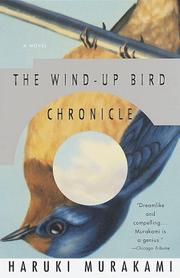
The Wind-Up Bird Chronicle
An unemployed Tokyo man hunts a lost cat, then his missing wife, and slips from quiet suburbs into wells and wartime memory.
3,344-word summary · 15 min read
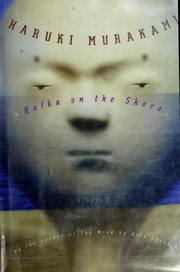
Kafka on the Shore
Fifteen year old Kafka Tamura flees Tokyo while old Nakata, who talks to cats, drifts toward the same library town in Shikoku in parallel.
2,496-word summary · 11 min read

Station Eleven
After a flu empties the world, a traveling troupe plays Shakespeare for small towns linked by one dead actor.
2,480-word summary · 11 min read
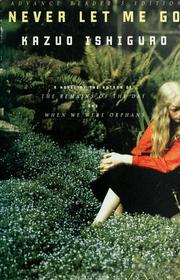
Never Let Me Go
Kathy looks back on Hailsham, the English school where she and her friends were raised for an unspoken purpose.
2,102-word summary · 9 min read

1984
A long retelling of George Orwell's 1984: Winston Smith's quiet rebellion in Oceania, the Party's grip on truth and memory, and why the ending still lands as…
2,110-word summary · 9 min read

Iron Widow
Wu Zetian enlists to avenge her sister, kills her pilot, and becomes an Iron Widow in a mecha Huaxia where the machines are built to kill women.
2,444-word summary · 11 min read
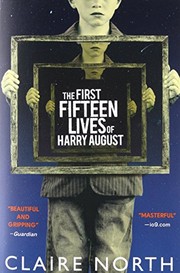
The First Fifteen Lives of Harry August
Harry August dies and is born again into the same life, again and again, until a warning from a child tells him the world is ending faster with each pass.
2,189-word summary · 10 min read
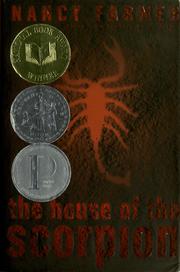
The House of the Scorpion
A clone raised in a drug lord's poppy fields learns what he was made for and chooses what to do with the life he was given.
2,527-word summary · 11 min read

Her Body and Other Parties: Stories
Eight stories where bodies, medicine and old fairy tales get taken apart, with a green ribbon running through the whole book.
2,997-word summary · 13 min read

Divergent: Official Illustrated Movie Companion
An oversize behind-the-scenes guide to the 2014 Divergent film, with casting stories, costume and set design, and scores of photos.
2,524-word summary · 11 min read

Reveal Me
A Shatter Me novella told by Kenji, set between Defy Me and Imagine Me, as the rebels learn Anderson has taken hostages and Juliette faces Emmaline.
2,098-word summary · 9 min read

And Every Morning the Way Home Gets Longer and Longer
An elderly grandfather, his son, and his grandson share memories and fears as the old man's mind begins to fade, in a short novel about grief and love.
2,078-word summary · 9 min read

Wither
In a future where women die at twenty, sixteen-year-old Rhine is sold as a bride to a wealthy stranger and plots an escape from a beautiful prison.
2,395-word summary · 11 min read
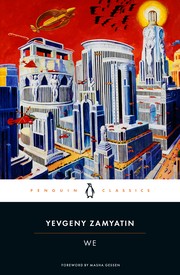
We
In a city of glass ruled by the Benefactor, a state engineer building a spaceship falls for a woman who wants to tear the One State down.
2,247-word summary · 10 min read

The Tiger's Wife
A young doctor in a war-scarred Balkan country chases the stories her grandfather left behind, including a deathless man and a deaf girl who loved an escaped…
2,232-word summary · 10 min read

The Illustrated Man
A tattooed drifter's moving pictures retell eighteen Bradbury stories of children, rockets, Mars and the last night of the world.
2,791-word summary · 12 min read

Never Fade
Ruby, now a leader in the Children's League, must track down the boy whose memories she erased, because he holds the only proof of what caused the disease that…
2,188-word summary · 10 min read
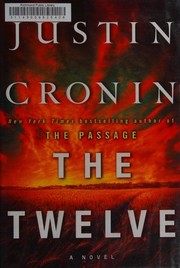
The Twelve
The middle volume of the Passage trilogy braids the year America died, a picnic massacre decades earlier, and the survivors' war against the twelve master…
2,089-word summary · 9 min read
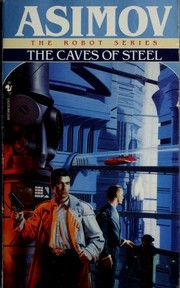
The Caves of Steel
Detective Elijah Baley must solve a Spacer's murder in a domed New York, partnered with R. Daneel Olivaw, a humaniform robot built in the victim's image.
2,445-word summary · 11 min read
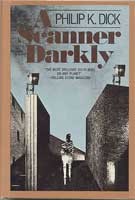
A Scanner Darkly
Undercover narc Fred is ordered to surveil a drug user named Bob Arctor in near-future Orange County, not realizing the man on the screen is himself.
2,251-word summary · 10 min read