
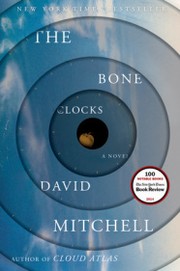
The Bone Clocks
2,125-word summary 9 min read 624 pages in the book
- First published
- 2014
- Publisher
- Random House
- Pages
- 624
- ISBN
- 9781400065677
Reading options
What's inside (9 sections)
The first thing to know about The Bone Clocks is that it is not one book. It is six books stacked on top of each other, with a teenage girl at the bottom and an old woman at the top. David Mitchell published it in 2014, and it moves from a very ordinary English summer in 1984 to a ruined Ireland in 2043. In between there is a Cambridge con artist, a war correspondent, a bitter novelist, and a hidden war between two kinds of immortals. The miracle is that it holds together.
The girl is Holly Sykes. When we meet her she is fifteen, living in Gravesend, and running away from home after finding her boyfriend Vinny with her best friend Stella. Holly is stubborn, mouthy, and more vulnerable than she lets on. Before she leaves, her little brother Jacko gives her a paper maze and makes her promise to memorize it. Jacko is seven or eight, odd and sweet, and he says things that do not quite fit a child. That maze matters later. So does Jacko.
A Hot Spell, 1984
Holly's runaway day turns strange fast. She meets an old woman named Esther Little, who offers her green tea and asks for asylum. Holly thinks Esther is a harmless eccentric, maybe a little mad. Then she hitches a ride with a couple named Heidi and Ian, wakes up to find them dead, and is attacked by a man called Rhîmes. The dead couple's bodies move. Esther has been using them as a disguise. Esther enters Holly's mind, hides there, and erases Holly's memory of the attack.
Holly makes it to a strawberry farm in Kent, where she meets another runaway named Gwyn and starts to build a temporary life. Then Ed Brubeck arrives. Ed is a young man who fed her earlier and told her about the farm. He brings news that Jacko is missing, and the police think Holly may have taken him. Holly goes home. Jacko is not there. He never really comes back.
That opening section is one of the best things Mitchell has written. It works as a realist story about a girl running away from a bad family night, and it works as a horror story about something ancient moving under the surface. The supernatural elements do not announce themselves. They arrive as a dead couple, a woman with green tea, and a child who knows too much.
Myrrh Is Mine, Its Bitter Perfume, 1991
The second section jumps to Hugo Lamb, a Cambridge student with no conscience worth mentioning. Hugo cheats on essays, steals from friends, runs scams, and treats other people as furniture. He is charming in the way a con man is charming, which is to say he is excellent company until you realize he is calculating the cost of everything you say.
Hugo's life gets complicated by gambling debts, a theft, and the death of a friend named Jonny Penhaligon. He is also being watched by Immaculée Constantin, a woman who hints that there is a way to live forever. Hugo is interested. He is the kind of person who would be interested.
On a holiday in Switzerland, Hugo meets Holly, who is now working as a bar manager. They talk about Jacko, who is still missing. They sleep together on a chaotic New Year's Eve. There is a real connection between them, or at least a real moment of honesty. Then two men named Elijah D'Arnoq and Baptiste Pfenninger reveal themselves as Anchorites and offer Hugo a place among them. Hugo's legal and social troubles are closing in. He looks at the future with Holly, decides it is not enough, and accepts.
This is the section where the novel's cosmology starts to show its shape. The Anchorites are not vampires. They are people who have found a way to extend their lives by consuming the psychic energy of gifted children. Their immortality is built on murder. Hugo, who has spent his life taking from others, fits right in.
The Wedding Bash, 2004
The third section belongs to Ed Brubeck, now a war correspondent and Holly's partner. They have a six-year-old daughter named Aoife. Ed is supposed to be settling into family life. He is secretly planning to go back to Baghdad. He is haunted by the deaths of his Iraqi guides, Aziz and Nassar, who were killed in a bombing meant for foreign journalists.
The family is in Brighton for Holly's younger sister's wedding. Aoife disappears on the pier after encountering Immaculée. Holly goes into a trance and repeats the words "ten" and "fifteen." A fortune-teller named Dwight Silverwind helps Ed work out that the numbers point to hotel room 1015. Ed finds Aoife there. He tells the family a version of the story that leaves out the supernatural. Later he tells Holly the truth.
The section works because it takes the weirdness seriously without losing the domestic texture. Ed is a man who has seen violence in Iraq and still cannot explain what happened on a pier in England. His love for Aoife is the engine of the rescue, and the psychic clue is just the map. Mitchell is good at this kind of thing: he lets the supernatural intrude on a family crisis and then makes the family crisis the part that matters.
Crispin Hershey's Lonely Planet, 2015 to 2020
The fourth section is a satire of literary life. Crispin Hershey is a novelist whose career is sliding. His marriage is over. His books no longer sell the way they used to. Holly, meanwhile, has published a memoir called The Radio People, and it is a success that eclipses him. Crispin is jealous, needy, and funny in a way that makes you wince.
His feud with a critic named Richard Cheeseman becomes the center of the section. Cheeseman wrote a hostile review, and Crispin retaliates by planting cocaine in his luggage. The plan goes further than Crispin intended. Cheeseman is sentenced to six years, and Crispin has to live with what he did.
Crispin becomes close to Holly, and through her he sees things that make her psychic claims hard to dismiss. She speaks in tongues during a seizure. She predicts ten coin tosses in a row. She keeps associating him with a spider, a spiral, and a one-eyed man. Crispin does not know what to do with any of it, so he turns it into material.
In Iceland, the now-immortal Hugo attacks and interrogates him, then erases his memory. Crispin learns that Holly has terminal cancer and that a doctor named Iris Fenby is offering an experimental treatment. By 2020 Crispin is broke and teaching at a college in New York. Cheeseman, out of prison and wearing an eye patch, confronts him and lets him go. Then Soleil Moore, a young poet Crispin ignored, arrives and shoots him. As he dies, he sees the spiral, the spider, and the one-eyed toy pirate. Holly's images were not random. They were a warning, or a map, or both.
The Crispin section divides readers. Some find it a brilliant, nasty comedy of literary manners. Others find it long and self-indulgent, a detour away from Holly. I land somewhere in the middle. It is the funniest part of the book, and it is also the part where the plot waits the longest for the next turn.
An Horologist's Labyrinth, 2025
The fifth section is the big reveal, and it belongs to Marinus, a Horologist who is currently inhabiting the body of Dr. Iris Fenby. Marinus receives psychic messages from Esther Little and discovers that Esther has been hidden inside Holly's memories since 1984. The section explains the war.
Horologists reincarnate naturally. They die and come back in new bodies without harming anyone. Anchorites prolong their lives by murdering psychically gifted children and making Black Wine. The Blind Cathar is the metaphysical source of their power. The two groups have been fighting for centuries, and Holly has been caught in the middle since she was a teenager.
Holly learns that Jacko was Xi Lo, a Horologist who died during a failed mission in 1984. The little brother she lost was not a little brother at all, or not only that. He was an immortal who loved her enough to give her a maze. Holly, who is dying of cancer, agrees to help the Horologists.
Marinus uses Esther's long name to extract her from Holly's mind. The Horologists attack the Chapel of the Blind Cathar. There is a battle, and it is full of the kind of jargon that Mitchell enjoys: psychosoteric combat, black wine, golden apples. Esther destroys the Blind Cathar. Marinus's body is lost, but her consciousness continues through Holly. Holly reaches the center of the maze Jacko gave her and confronts Immaculée. Marinus distracts her, and Holly knocks her out with a rolling pin. A golden apple opens a route to safety. Marinus leaves Holly's mind and stays behind with Hugo, who admits that he truly loved Holly. The chapel collapses. Hugo's fate is left unclear.
The rolling pin is the best detail in the book. After hundreds of pages of immortal warfare and cosmic stakes, the decisive blow comes from a kitchen utensil. Mitchell knows that the sublime and the ridiculous are neighbors.
Sheep's Head, 2043
The final section is quiet, and it is the one I think about most. Holly is an old woman living on Sheep's Head in rural Ireland. Five years earlier, the Endarkenment began: climate change, resource depletion, and infrastructure failure have broken the world. Holly cares for her teenage granddaughter Lorelei, whose parents died in a plane crash, and for Rafiq, a diabetic refugee boy from Morocco. Ireland has been relatively stable because of an agreement with China involving land, oil, and restricted internet access. Now China is withdrawing its support.
Government remnants and militias fight over fuel and solar equipment. The violence creates openings for local communities to organize and survive. An Icelandic vessel arrives to repatriate Lorelei because her father was Icelandic. One of the crew members is a reincarnation of Marinus, though the powers are diminished. Holly persuades Marinus to help Rafiq too. The ship takes Lorelei and Rafiq. Holly stays in Ireland. She knows she will probably die there. She chooses to protect the younger generation instead of chasing her own survival.
That ending could be sentimental, but Mitchell keeps it hard. Holly does not give a speech about hope. She makes a practical decision, lets the children go, and stays with the house and the garden and the failing world. The novel's title comes from the immortals' slang for ordinary people, whose bodies are bone clocks ticking down. Holly is a bone clock. So is everyone she loves. The book's final argument is that this is not a reason to stop caring.
What the book is doing
The Bone Clocks is about mortality, but it is also about form. Each section is a different genre: YA runaway story, campus con-artist novel, war journalism, literary satire, occult thriller, climate dystopia. Mitchell is showing off, and he knows it. The pleasure of the book is watching him switch voices and still keep Holly at the center. She is the one who connects the sections, even when she is offstage. Her life is the clock the title refers to.
The weakness is that the cosmology can feel like a machine built to explain the plot rather than a belief system that earns its place. The Horologists and Anchorites are compelling in their basic contrast, natural reincarnation versus predatory immortality, but the vocabulary can get thick. Readers who want a single continuous story may find the Crispin section and the Marinus exposition slow. The ending leaves several immortal fates unresolved, which is deliberate but not entirely satisfying.
Still, the book has a big heart. It cares about memory, about the stories we tell to survive, and about the difference between taking from the world and leaving something for the people who come after you. Holly is not a chosen one in the usual sense. She is a girl who was in the wrong place at the wrong time, and then a woman who kept choosing to stay. By the end, that is enough.
I would recommend it to readers who like ambitious, genre-mixing fiction and do not mind being patient. It is not a fast book, despite the switches. It is a book that rewards attention, especially to the small objects: a maze, a photograph, a rolling pin, a golden apple. Those objects carry more meaning than the speeches about the Blind Cathar. They are the things people leave behind.
FAQ
Is The Bone Clocks connected to David Mitchell's other novels?
Yes. It shares characters and motifs with Mitchell's wider fictional universe, including Cloud Atlas and The Thousand Autumns of Jacob de Zoet, but it can be read on its own.
What are Horologists and Anchorites?
They are two immortal factions. Horologists reincarnate naturally in new bodies. Anchorites extend their lives by consuming psychically gifted children and making Black Wine, which makes their survival a form of murder.
Does Holly die at the end of The Bone Clocks?
The novel ends in 2043 with Holly remaining on Sheep's Head as Irish society collapses. Her death is not shown, but she expects to die there after sending her granddaughter Lorelei and the refugee Rafiq to safety.
Similar books
Cloud Atlas
Six lives from 1850 to a post-apocalypse nest inside each other, linked by a comet birthmark, as souls drift like clouds across power and kindness.
2,390-word summary · 11 min read
The First Fifteen Lives of Harry August
Harry August dies and is born again into the same life, again and again, until a warning from a child tells him the world is ending faster with each pass.
2,189-word summary · 10 min read
The Memory Police
On an unnamed island, ordinary things keep vanishing from memory, and a novelist hides her editor from the police who make sure the vanished stay forgotten.
2,440-word summary · 11 min read
Severance
Candace keeps office routine as fever empties New York, then joins survivors.
2,340-word summary · 10 min read
The Stone Sky
A dying mother and her angry daughter pull at the Obelisk Gate while the lost moon returns to end the Seasons.
2,934-word summary · 13 min read
Hard-Boiled Wonderland and the End of the World
A Tokyo encoder who rents out his subconscious and a newcomer in a walled Town turn out to share one fate about memory.
2,406-word summary · 11 min read
The Fifth Season
A hiding orogene hunts her missing daughter across a breaking continent while three lives turn out to be one.
3,876-word summary · 17 min read
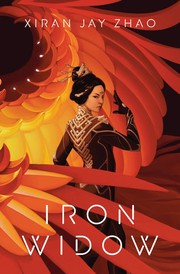
Iron Widow
Wu Zetian enlists to avenge her sister, kills her pilot, and becomes an Iron Widow in a mecha Huaxia where the machines are built to kill women.
2,444-word summary · 11 min read

Archenemies
Nova steals for the Anarchists while Adrian hides his Sentinel identity, and a serum that erases prodigy powers puts them both at risk.
2,485-word summary · 11 min read
Dance Dance Dance
A divorced Tokyo writer returns to a Sapporo hotel that has been rebuilt, then follows a woman who may be a ghost and a teenage girl through a mystery about…
2,407-word summary · 11 min read

The Age of Miracles
A California girl grows up while the Earth's rotation slows, and ordinary adolescence continues alongside slow catastrophe.
2,417-word summary · 11 min read
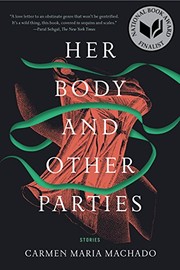
Her Body and Other Parties: Stories
Eight stories where bodies, medicine and old fairy tales get taken apart, with a green ribbon running through the whole book.
2,997-word summary · 13 min read
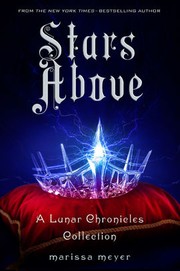
Stars Above: A Lunar Chronicles Collection
Nine Lunar Chronicles stories fill in the histories of Cinder, Wolf, Thorne, Cress, Winter, and Jacin, and end with a wedding after the war.
2,230-word summary · 10 min read
Saga, Volume 3
Marko, Alana, and Hazel hide on the planet Quietus with the reclusive author who inspired their romance, while assassins and a prince close in.
1,989-word summary · 9 min read
Orlando
A young Elizabethan nobleman becomes a woman and lives for centuries, moving through English history while writing a single poem about an oak tree.
2,030-word summary · 9 min read
I Who Have Never Known Men
Forty women in a cage, one child who remembers nothing, and a nearly empty world above the bunker. Harpman's quiet, unexplained dystopia.
2,025-word summary · 9 min read

And Every Morning the Way Home Gets Longer and Longer
An elderly grandfather, his son, and his grandson share memories and fears as the old man's mind begins to fade, in a short novel about grief and love.
2,078-word summary · 9 min read
Pestilence
Firefighter Sara Burns shoots the Horseman Pestilence and discovers he cannot die. Taken captive, she rides with him as his plague sweeps the world.
2,508-word summary · 11 min read
The Buried Giant
An old couple crosses a misty post Arthur Britain searching for a son.
2,593-word summary · 12 min read
A Swiftly Tilting Planet
Charles Wallace rides time with a unicorn to stop a dictator before birth.
2,193-word summary · 10 min read
Y: The Last Man, Vol. 1: Unmanned
Yorick Brown and his monkey Ampersand survive a plague that kills every Y-chromosome mammal and cross a collapsed America.
2,525-word summary · 11 min read
Saga, Volume 2
Alana and Marko flee with baby Hazel while exes, princes, and ghosts close the net.
2,028-word summary · 9 min read
Shadow Me
Kenji Kishimoto narrates for the first time as he joins Nazeera on a quiet mission after Restore Me, carrying painful secrets into Defy Me.
2,512-word summary · 11 min read
Seveneves
Stephenson 880-page William Morrow epic, May 2015: the Moon shatters, the Cloud Ark fails, seven women restart humanity, and heirs meet survivors on Earth.
2,389-word summary · 11 min read
The Eyre Affair
Literary detective Thursday Next chases a villain who kidnaps Jane Eyre from her own novel in an alternate 1985 England.
1,929-word summary · 9 min read
A Wind in the Door
Meg must save Charles Wallace from a cosmic sickness by naming and loving what she fears, helped by a cherubim called Progo.
2,214-word summary · 10 min read
The Humans
An alien borrows Andrew Martin's life to erase a proof, then a dog, peanut butter, and a tired family win him over.
2,959-word summary · 13 min read
South of the Border, West of the Sun
A married Tokyo bar owner reunites with his lost childhood sweetheart and must choose between steady family life and a haunting first love.
2,844-word summary · 13 min read
Gideon the Ninth
Swordswoman Gideon guards necromancer Harrow in a deadly Emperor trial.
2,232-word summary · 10 min read