
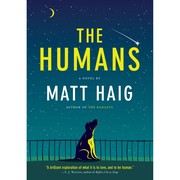
The Humans
2,959-word summary 13 min read 320 pages in the book
- First published
- 2013
- Publisher
- Canongate Books
- Pages
- 320
- ISBN
- 9780857868770
Reading options
What's inside (8 sections)
I picked up The Humans because a friend kept pushing it at me after I finished The Midnight Library. She said the earlier book was funnier and stranger, and that it had changed how she thought about ordinary days. I expected a light alien comedy. What I got was sadder and kinder than that, though still funny in places. Matt Haig first published the novel in 2013 with Canongate Books, and the facts here follow that 320 page edition, ISBN 9780857868770. It stands alone. There is no series to catch up on.
The setup is plain. Professor Andrew Martin teaches mathematics at Cambridge. He solves the Riemann hypothesis, the famous problem about the pattern of prime numbers. On his home world far away, the narrator hears about this and panics. His people, the Vonnadorians, believe humans are violent and rash, and that such knowledge would let them race ahead before they are ready. So they remove the real Andrew Martin and send the narrator to take his place. His orders are cold. Destroy the proof. Kill anyone Andrew told. Leave no trace.
He arrives with no preparation for what a body feels like.
Naked on the motorway
The book opens with the alien waking up on a motorway near Cambridge with no clothes and no sense of how to act. He does not know how to walk properly. He does not know that nudity in public will stop traffic. A car clips him. An ambulance takes him. He hates the siren and the lights and the hands on him. At a petrol station he tries to read a magazine to learn the language, and the clerk calls the police.
I found these early pages very funny, but also uncomfortable in a good way. He narrates like a scientist filing a report, noting how humans cover themselves and how odd their faces look up close. The police bring him to the university because he keeps repeating Andrew Martin's name and address. Then a psychiatrist interviews him. His answers sound mad, so he is kept in a psychiatric unit for a short stay.
Isobel Martin comes to see him. She is Andrew's wife, a historian with her own work and her own tired patience. She has lived with a distant husband for years. Now this man looks like her husband and talks like no one she knows. She takes him home anyway, because that is what you do when someone you married seems broken.
Back at the house he meets Newton, the dog. Newton is the first creature who accepts him without a test. The alien does not understand dogs yet. He only knows Newton smells strong and stays close. He sleeps in a bedroom that feels wrong. Isobel puts a television in the room to calm him. The news confuses him more than anything so far. War follows sport follows weather, all read in the same bright voice. He starts to see that humans can watch terrible things and then ask what is for dinner.
The hosts speak to him without sound during this stretch. They remind him to stay on task and to feel nothing. Fear is normal, they tell him. Attachment is failure. He repeats their rule to himself like a student trying to remember a formula.
The proof that had to disappear
Once Isobel leaves for groceries, he rides a bike to the college. The bike almost defeats him. In Andrew's office he logs on and finds the file. The solution is there, long and careful, the work of a man who gave his marriage and his sleep to numbers. The alien reads enough to know how large it is. Then he deletes it. He puts a virus in the machine so copies cannot be pulled back easily. He checks sent mail and sees the worst part. Andrew already forwarded the work to Daniel Russell, another professor, a respected older man who trusted Andrew.
That discovery sets the next killing in motion.
He visits Daniel at home. They talk about mathematics and reputation and old friendship. Daniel is proud and a little vain, but not cruel. The alien ends his life in a way that looks like a heart attack. He walks home feeling sick in a way his species has no name for. For the first time he thinks about death as something that happens to others while you remain. On Vonnadoria, where minds last and bodies are repaired, loss is abstract. Here it has a weight. He sits with Newton that night and plays music to settle his nerves. He also heals a sore on Newton's paw without thinking, a small use of his old abilities, and Newton follows him from room to room after that.
He tells the hosts the work is gone except for Daniel, and that Daniel is handled. They answer that Isobel and Gulliver must also be checked. If they know anything, they must go too. He says they know nothing. The hosts do not believe him yet. They tell him to be hard and closed, like a prime number, divisible only by itself and one. He holds that image in his head while he washes dishes he does not know how to wash.
This middle part made me pause. The mission plot moves fast, almost like a thriller, but Haig keeps cutting away to small domestic scenes. A kettle. A school letter on the counter. Isobel's book on a shelf. The alien picked up one of her books in a shop earlier and barely glanced at it. Now in the house he starts to notice her as a person with work of her own, rather than only the wife of the man he replaced.
Peanut butter and Newton
What slows the alien down is sense pleasure. Food first disgusted him. Cooked meat smelled like burning. Milk seemed wrong. Then Isobel leaves peanut butter in the cupboard, the crunchy whole nut kind, and he tries it on toast. He loves it. He eats it by the spoonful. Red wine follows. He learns to sit with a glass and let his shoulders drop. Clothes still bother him. Shoes feel like traps. But a warm shower starts to feel good, and clean sheets feel better than he expected.
Music cracks him open further. He listens to the Beach Boys on a stereo and cannot explain why the harmonies lift him. A friend later plays him more rock and pop, and he starts to keep favorites. Poetry does the same work in a quieter way. He reads Emily Dickinson and copies lines into his head. Someone who has lived without need cannot at first grasp why a short poem about hope or grief would matter. Then he reads one twice and then again.
He also learns about shame and humor. Humans laugh when they are nervous. They apologize for things that are not their fault. They say sorry to fill silence. He tries jokes and fails. He tells the truth at the wrong moment and watches faces change. Newton helps here. A dog does not care if you phrase things poorly. You throw a ball. You walk. You sit nearby while evening comes.
One scene I liked more than I expected involves the mathematician Grigori Perelman. The alien reads about how Perelman solved a huge problem and then turned down prizes and attention to live quietly. This puzzles him. On his world, achievement brings rank. Why would a human refuse honor. Slowly he starts to see humility as a choice rather than a lack. Humans can want less. That idea will matter later when he has to decide what kind of life he wants.
There were moments in this stretch where I wanted Haig to trust silence more. The narrator explains his own growth as he goes. After a while the observations pile up. Peanut butter means joy. Music means feeling. I preferred the pages where he simply watches Isobel move through a kitchen or tries and fails to fold a shirt, with no moral attached.
Isobel and Gulliver
Isobel and Gulliver Martin carry the heart of the book. Isobel is tired in the way people get when they have been alone inside a marriage. The old Andrew worked late, snapped about small things, and missed birthdays. She wrote and taught and kept the house running. She also had an unpublished novel in a drawer, a story about a woman in a thin marriage, which the alien finds and reads with growing unease. He understands, page by page, that Andrew made her lonely.
Gulliver is fifteen and raw. He is bullied at school. He skips classes. He answers questions with shrugs or anger. He remembers his father as cold and absent. When the new Andrew starts asking about his day and actually listening, Gulliver does not trust it. He waits for the trick. One afternoon the alien follows him and finds him standing near train tracks, too close, too still. Nothing happens, but the image stays. Later Gulliver climbs onto the roof at night and talks about disappearing. The alien talks him down by staying put and listening, not by giving a speech. Isobel tells him afterward that he did a good thing, and for once praise from a human warms him more than approval from the hosts.
Small repairs follow. The alien learns Gulliver is being harassed online and by boys at school. He uses his leftover alien skill to mess with their accounts and phones, a petty revenge that feels very human. He walks Newton with Gulliver and tells the boy to stand up for himself, not with cruelty but with steadiness. He tells Isobel about the skipped school, which earns Gulliver's anger and then, slowly, a different kind of trust. A father who tells the truth even when it costs something is new in that house.
Isobel changes too, though more slowly. She watches this altered husband make tea and ask about her research. She waits for the old coldness to return. When it does not, she lets herself laugh with him. They cook together. They argue about films. She tells him he was never present for Gulliver, and he takes it without defense. That honesty matters. The old Andrew would have turned such talk into a contest. The new one listens.
My favorite pages here are not dramatic. They show Isobel coming home with groceries while the alien watches how she sets bags down and pushes hair from her face. They show Gulliver teaching him how to hold a game controller. They show Newton asleep with his head on the alien's foot. No one says this is healing. It simply happens while the mission clock ticks.
Cracks in the mission
The hosts do not like delay. When the alien asks for more time, saying humans are more tangled than expected, they answer with pain. A sharp burn moves through him when he resists. He learns to hide his doubts. He also learns his limits. He cannot kill Isobel or Gulliver. He tells the hosts they know nothing about the proof. The hosts say another will be sent if he fails.
Other people press in. Ari, a colleague and friend of the family, invites him for drinks and a football match. Ari is warm and messy, having an affair with a student and complaining about his own marriage. He notices Andrew is different and likes the change. Maggie, a student, flirts with the alien after a lecture where he talks about the odds of alien life. He is vain enough to enjoy the attention and ignorant enough to misread it.
That ignorance leads to the book's ugliest mistake. He sleeps with Maggie without grasping what fidelity means to Isobel. On his world, bodies are shared or repaired without jealousy. Here, the act breaks trust. When Isobel learns, her face closes. I appreciated that Haig does not excuse him. The alien pleads confusion, which is true, but confusion still harms. Love, the book suggests, includes rules you do not get to rewrite alone.
Around this time Ari says things that suggest he suspects something. The alien fears he must kill again. Before he can act, Ari dies. The alien understands at once. A replacement has arrived.
He also tries to tell the truth once at lunch with Ari and finds he cannot speak. Pain stops his throat. That detail stayed with me. His body is still partly theirs. Freedom will have a price if he wants it.
He asks to become human. He wants nerves that ache and a life that ends. He wants to keep Isobel and Gulliver without orders humming under his thoughts. The hosts grant it, almost with curiosity, as if watching an experiment. The link goes quiet. For the first time since the motorway, his head is silent. He burns his hand on a hot plate and feels pain with no filter. He gets tired. He catches colds. He has to learn money and cooking and small talk without help.
I wished this choice had more room. It is the central turn, yet it happens quickly after long chapters of peanut butter and walks. I wanted one more night where he weighs safety against love. Still, the aftermath earns back much of that haste, because being human proves harder than admiring humans.
What stays with me
Human life humbles him fast. He teaches. Students test him. Colleagues gossip. Money runs short. He misses his old ability to fix things with a thought. He writes advice for Gulliver on a computer, plain notes about how to live, and leaves the file where the boy will find it. Some of the notes are simple. Be kind. Listen. Rest. Try to notice beauty without owning it. They read like a father trying to say in writing what he cannot yet say aloud.
Then the second alien moves. The new visitor, who has taken a quiet human shape, tries to kill Gulliver. The narrator steps between them. What follows is violent and brief. He kills one of his own kind to protect the boy. Isobel and Gulliver watch, horrified and confused. No plain story can cover what they saw. He knows he cannot stay and pretend it was normal.
So he tells them who he is. Or he tries. He says he is not Andrew Martin. He says the real Andrew is gone. He says he came to erase and instead learned to love. Isobel grieves, not only for her husband but for the strange second chance she thought she had. Gulliver swings between rage and sorrow. The alien leaves because staying would poison what he helped mend. He takes a teaching post far away in California, at Stanford, and tries to live simply. He travels. He drinks too much for a while. He walks on beaches and looks at stars without analysis.
Distance does not cure him. When Cambridge invites him back to give a lecture, he accepts. He sees Isobel in the hall. She gives money to a homeless man he once met on a bench, a small act he remembers because it showed him kindness without gain. He turns down Maggie's renewed interest with more care than before. He walks toward the Martin house with no plan except to ask if there is a way back. The book ends on that walk, not on a kiss or a promise. He has learned that love is a choice you make without knowing the result.
That restraint is why the ending works for me. Haig could have forced a reunion. Instead he leaves the narrator on the road, hopeful and afraid, fully human at last because he can lose.
Fair criticism belongs here too. The middle repeats its pattern. Alien notices human habit. Alien misunderstands. Alien learns and reports. After many cycles, the surprise fades. Daniel's death, which should haunt every later page, is pushed aside by food and music for long stretches. The hosts are frightening in concept and thin in practice. How they watch, how they punish, how they choose replacements, all of this is sketched rather than shown. Ari's fate arrives fast and leaves little space to mourn. Maggie, too, reads more as a test than as a person. Readers who want tight plotting may feel these seams.
The science also stays soft. The Riemann solution itself is never shown, which is fine, since few novels could show it, but the threat it poses is described in broad terms. Progress will leap. Illness may end. Death may loosen. Those are large claims carried by a few sentences. If you need hard mechanics, this is not that novel. It is a fable about attention dressed as science fiction.
Who should read it. If you liked the sorrow inside The Midnight Library or the long ache inside How to Stop Time, you will recognize Haig's concerns here in earlier, looser form. If you want alien invasion with battles, look elsewhere. This is a book about a kitchen table, a dog asleep by a door, a boy learning to meet eyes, a woman deciding whether to trust again. Give it sixty pages. The hospital chapters are awkward on purpose. The family chapters are where it finds its pulse. Keep an eye on Newton. Dogs often know before people do.
I closed it thinking about how little the narrator needed at the end. Not rank. Not endless mind. Just a house where someone waits, work that helps, food shared without haste. He came to erase a proof and stayed to learn a harder sum. How to be present. How to admit fault. How to love people who will die, knowing you will grieve, and choosing them anyway.
FAQ
When was The Humans published and who published it?
It was first published in 2013 by Canongate Books. The summary follows the 320-page edition with ISBN 9780857868770.
Who are Isobel, Gulliver, and Newton?
Isobel is Andrew's wife, Gulliver is their teenage son, and Newton is the family dog. The alien learns care through them, especially by listening to Gulliver and noticing Isobel's work.
Is The Humans part of a series?
No. It stands alone. It shares themes with The Midnight Library and How to Stop Time, but the story and characters are separate.
Similar books

Fathers and Sons
Arkady brings the nihilist Bazarov home to his father's estate, and a generational argument turns into love, a duel, and an early death.
2,192-word summary · 10 min read

The Age of Miracles
A California girl grows up while the Earth's rotation slows, and ordinary adolescence continues alongside slow catastrophe.
2,417-word summary · 11 min read
A Tale for the Time Being
A diary by bullied Tokyo teen Nao washes up in Canada, pulling novelist Ruth into her family past.
2,148-word summary · 10 min read
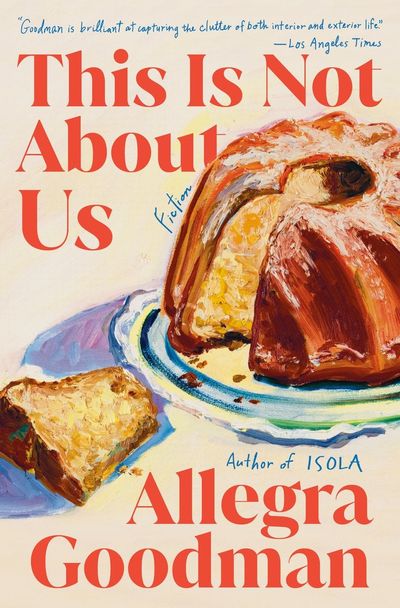
This Is Not About Us
Sisters Sylvia and Helen Rubinstein feud over apple cake in linked stories spanning divorces, bat mitzvahs and three generations of family life.
2,064-word summary · 9 min read
The Elegance of the Hedgehog
A Paris concierge hides her brilliant mind while a gifted girl plans her death, until a new tenant sees through them both.
2,248-word summary · 10 min read
Cloud Atlas
Six lives from 1850 to a post-apocalypse nest inside each other, linked by a comet birthmark, as souls drift like clouds across power and kindness.
2,390-word summary · 11 min read
Breakfast of Champions
A Pontiac dealer breaks down while a broke sci-fi writer brings the book that tells him others are robots.
2,013-word summary · 9 min read
The Karamazov Brothers
Dmitri, Ivan, and Alyosha Karamazov face their father, murder, faith, and doubt in Dostoevsky's final novel.
2,512-word summary · 11 min read
Klara and the Sun
Solar robot Klara loves Josie and bargains with the Sun to save her.
2,251-word summary · 10 min read
How to Stop Time
Tom Hazard, aging one year in fifteen, hides behind new identities until a London classroom and a lost daughter force him to live.
2,597-word summary · 12 min read
The Midnight Library
Matt Haig's The Midnight Library retold: Nora between lives, Mrs Elm, regrets tried on, and choosing to live.
2,410-word summary · 11 min read
The Idiot
A Turkish-American freshman at Harvard falls in love through email with a Hungarian math student and spends a summer in Hungary trying to turn correspondence…
2,019-word summary · 9 min read

Howards End
Forster's 1910 novel follows two families, a house in Hertfordshire, and a burned note, asking whether money and feeling can ever be connected.
2,187-word summary · 10 min read

Hard Luck
Rowley has a girlfriend, so Greg turns to a Magic 8 Ball, a family Easter hunt and the school yearbook for answers.
2,586-word summary · 11 min read
Foundation's Edge
Exiled councilman Golan Trevize hunts for the Second Foundation and the lost world of Earth, and finds a planet with one mind waiting to change the galaxy.
2,335-word summary · 10 min read
Unaccustomed Earth
Lahiri’s second story collection follows Bengali families in America and abroad, tracing the quiet distances between parents and children, spouses, and the…
2,333-word summary · 10 min read
Act Your Age, Eve Brown
Eve Brown crashes into a Lake District bed and breakfast, breaks the owner's arm, and talks her way into his kitchen. A grumpy-sunshine romance about work,…
2,474-word summary · 11 min read
Peace Like a River
An asthmatic boy in the early 1960s narrates his family's search for his older brother, who is accused of two killings and has escaped custody.
1,969-word summary · 9 min read
George's Marvellous Medicine
George stirs a brew of dozens of household chemicals and gives it to his grumpy grandmother, and the medicine works far better than anyone planned.
2,014-word summary · 9 min read

We Are Okay
Marin fled San Francisco after her grandfather vanished and stopped answering anyone. When Mabel visits her college dorm, she has to say what happened.
2,253-word summary · 10 min read

The Chosen
A shattered pair of glasses in a 1944 Brooklyn softball game starts a friendship between a Hasidic boy and his Orthodox neighbor, and their fathers pull them…
2,443-word summary · 11 min read

The Dharma Bums
Ray Smith rides freight trains, climbs Matterhorn Peak and argues about Zen with the poet Japhy Ryder in Kerouac's 1958 road novel.
2,729-word summary · 12 min read
Her Body and Other Parties: Stories
Eight stories where bodies, medicine and old fairy tales get taken apart, with a green ribbon running through the whole book.
2,997-word summary · 13 min read
Eligible
Austen's Bennet sisters move to modern Cincinnati, where marriage is a reality show and the house is losing its value.
2,293-word summary · 10 min read

Big Swiss
A transcriptionist for a sex coach falls for one of his clients, the tall Swiss gynecologist she calls Big Swiss, in a funny novel about work and secrets.
2,523-word summary · 11 min read

A Spool of Blue Thread
Four generations of the Whitshank family in Baltimore, and the silences, resentments and quiet love they hand down without ever saying so.
2,408-word summary · 11 min read

2 States: The Story of My Marriage
A Punjabi boy from Delhi and a Tamil Brahmin girl from Chennai meet at IIM Ahmedabad, and turn a love marriage into a campaign to convince two families.
2,634-word summary · 12 min read
This Is How You Lose Her
Yunior cycles through love affairs and betrayals in nine linked stories, tracing the damage he does and the family history behind it.
2,195-word summary · 10 min read
The Bone Clocks
A teenage runaway, a Cambridge con artist, a war reporter and a dying novelist circle a hidden war between immortals across sixty years, with Holly Sykes at…
2,125-word summary · 9 min read
Saga, Volume 3
Marko, Alana, and Hazel hide on the planet Quietus with the reclusive author who inspired their romance, while assassins and a prince close in.
1,989-word summary · 9 min read