
This Is Not About Us
2,064-word summary 9 min read 336 pages in the book
- First published
- 2026
- Publisher
- The Dial Press
- Pages
- 336
- ISBN
- 9780593447840
Reading options
What's inside (8 sections)
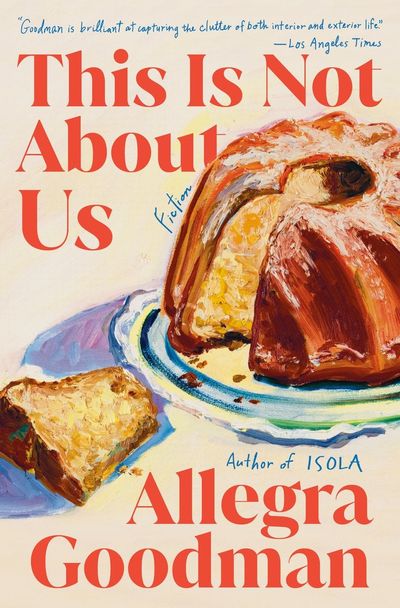
I started this book late on a weeknight because someone told me it was a collection of linked stories about sisters who stop speaking over cake. That sounded small. It is small, and that is why it stuck. This Is Not About Us was published February 10 2026 by The Dial Press, 336 pages, ISBN 9780593447840, by author Allegra Goodman. It follows the Rubinsteins, an East Coast Jewish American family across three generations, through divorces and dating, job trouble, college applications, bat mitzvahs and ballet recitals. The center holds on two sisters, Sylvia and Helen, and a silence that lasts a decade after their younger sister dies. I finished it in four sittings and kept thinking about my own family group chat, who replies, who does not, who keeps score.
Goodman has written about families before. This book returns to that ground in a form that sits between a novel and a story collection. Each chapter centers one person or one event and can stand alone. Together they build a full portrait. You see the same dinner from two angles. You hear a joke in one story that lands as an insult in the next.
Jeannie at the center
The book opens with dying. Jeannie Rubinstein, seventy four, youngest of three sisters, lies with family around her. She has always been the warm one, the one who called, who remembered birthdays, who smoothed fights. Her last words are sharp and funny in a way that catches everyone off guard. No one knows quite what to do with them. Mourn, laugh, argue later about what she meant.
That opening sets the method. Goodman does not give you a single hero. She gives you a family system. Jeannie held it together by force of care. Without her, the remaining sisters have to face each other directly. They are not good at it.
Sylvia is orderly, principled, quick to take offense and slow to drop it. Helen is looser, funnier in public, private about hurt. Both loved Jeannie. Both believe they know what Jeannie wanted. Those beliefs do not match.
The early pages move through the funeral and the food after. Platters, chairs, cousins, old neighbors. Someone brings up who did what for Jeannie in her last months. Someone else remembers it differently. You can feel the air change. Grief makes people generous for about a day. Then the old habits return.
Apple cake and ten years of silence
The famous feud starts with apple cake. I am keeping it vague on purpose because the comedy is in the specifics Goodman lays out, who baked, who was asked to bake, who thought they were asked, who ate, who commented.
In short, a misunderstanding about that cake hardens into a story each sister tells herself. Sylvia hears dismissal where Helen meant distraction. Helen hears control where Sylvia meant care. They are both busy, both tired, both dealing with their own kids. Neither picks up the phone to clear it. A week becomes a month. A month becomes a year. Family events get split. Invitations go through children. Holidays require planning like military moves.
What makes this more than a sitcom plot is how Goodman shows silence as work. Staying angry for ten years takes effort. You have to not call on birthdays. You have to leave rooms. You have to tell your version to your kids just enough that they know which side to sit on, without telling so much that they push back. Sylvia and Helen both do this. They both think they are protecting their dignity. They both miss each other and will not say it.
Children watch all of it. That is the saddest thread. The sisters tell themselves the fight is contained. It is not. Kids learn to carry messages, to edit news, to avoid mentioning Mom sister at dinner. One daughter stops inviting both to the same recital. A son learns to schedule separate calls. No one asked them to do this. They do it to keep peace.
Goodman is precise about how long grudges last when no one apologizes first. Pride sounds noble for a day. After a year it just sounds tired. After ten years it sounds like a habit you cannot remember choosing.
Divorces, dating, applications
The middle stories fan out to the next generation. This is where the linked form pays off. Each adult child gets room.
One daughter divorces and has to tell her mother without setting off a lecture. The scene where she rehearses the call, then gets voicemail, then feels relief and shame at once, felt true to me in a way that made me put the book down for a minute. Another child dates badly in that specific way people do in their forties, picking interesting and unavailable people, then wondering why it hurts.
Career setbacks land hard. A son loses a job he hated but counted on. A daughter in law watches a promotion go to someone louder. Goodman writes work scenes with concrete detail, the bad office coffee, the performance review language, the way people smile while delivering bad news. These are not big dramatic firings with shouting. They are quiet cuts that change what a family can afford and how they talk at holidays.
College applications bring another kind of pressure. Essays, tours, money talk. One teenager writes about her grandmother Jeannie and gets told the essay is too sad. She rewrites it to sound upbeat and hates the result. Her parents argue about whether to push or back off. Underneath is the old question in this family, how much do you shape a kid, how much do you let go. Parental expectations sit heavy here. Love is loud. Approval is quieter and harder to earn.
Then come the rituals. Bat mitzvahs with seating charts that have to account for the sisters feud. Who sits near whom. Who gives a speech. Who cries. Ballet recitals with parking lots and flowers and younger cousins running in aisles. Goodman loves these crowded rooms. She tracks who helps in the kitchen, who arrives late, who leaves early, who takes photos and who actually looks at people.
Dating after divorce gets some of the funniest pages. Helen tries to set someone up and oversells. Sylvia gives advice that sounds like a warning. The kids deflect with humor because direct talk would start a fight. I laughed out loud at a scene involving a restaurant reservation mix up and then felt bad for laughing, which seems to be exactly what Goodman wants.
Grandchildren and the long view
The youngest generation gets shorter stories, but they matter. Kids notice what adults miss. A grandchild asks why Aunt Sylvia never comes. An adult gives a long answer. The kid shrugs and asks for dessert. That shrug does more work than a chapter of analysis.
Another grandchild adores both great aunts and refuses to choose. She draws them together in a school family tree project, literally connecting them with crayon. The teacher praises it. The mothers panic. It is sweet until you see the cost, a child doing emotional labor the adults should have done years ago.
Growing old is a steady theme. Joints, sleep, doctors, wills, who drives at night. Sylvia faces health scares she hides. Helen faces loneliness she jokes about. They both watch friends shrink their lives to one room and vow not to do that, then do small versions of it anyway. Goodman writes aging without pity and without pep talks. People adjust. They use handrails. They pretend they do not need help. They accept help from the wrong people out of pride.
Growing up gets equal weight. Teenagers test limits. They lie about small things. They tell the truth about big things at odd moments, in cars, on walks, while washing dishes. Adults often miss the opening because they are busy fixing logistics. One of my favorite moments is a car ride where a mother finally hears what her son has been trying to say for months, because traffic forces her to sit still and listen.
The linked structure lets time jump. A baby in one story is applying to school in a later one. A marriage that looked solid cracks two stories on. A throwaway line about apple cake returns as a punch to the gut near the end. You start to read with a pencil in your head, connecting dates.
How Goodman writes families
Her sentences are clear and quick. No fog. She likes dialogue that overlaps, interruptions, half finished thoughts. Family talk really sounds like that. People answer the question before it, not the one asked.
Humor runs through even sad scenes. Not jokes for relief, but the way people in families use teasing to say what they cannot say straight. Helen teases to dodge. Sylvia corrects to control. The kids use sarcasm to survive dinners. Jeannie, in memory, used humor to defuse. You can see each person reaching for the same tool and using it differently.
Jewish life is present without explanation dumps. Blessings, food, shiva, holidays, synagogue politics, the particular mix of ritual and argument. Goodman trusts readers to follow. If you know this world, you will nod a lot. If you do not, you will still follow because the emotions are plain. Who cooks, who cleans, who argues about what prayer means.
The East Coast setting matters. Apartments with thin walls. Commuter trains. Cousins close enough to drop in but far enough to need a reason. Money is discussed in code. School names carry weight. No one says class out loud, but everyone knows where everyone stands.
Point of view shifts. One story sits close to Sylvia. The next sits with a daughter in law who finds Sylvia exhausting. That rotation keeps sympathy moving. Just when I decided one sister was right, the next story showed the cost of her rightness. Goodman does not split blame evenly for show. She shows how two people can both have a point and both handle it badly.
What strains and who will love it
Criticism belongs here. Linked stories ask readers to reorient every twenty or thirty pages. New center, new timeline, new stakes. If you want one straight plot with rising tension, this will feel loose. A few middle stories cover similar ground, another holiday, another school event, and the repetition can dull momentum around page 180. I found myself flipping back to check ages and marriages. A family tree at the front would have helped, though I understand why she left it out. Part of the fun is piecing it together.
Some readers may want more of Jeannie. She dies early and lives on in memory, which is the point, but her warmth in the opening made me wish for one full story from her view. We get flashes. They are strong. I wanted more.
A couple of husbands blur. Good men, tired men, men who avoid fights by working late. Two of them have similar voices on the page. Their wives are distinct. They are less so. That may be intentional, how families can flatten in laws, but on a fast read I mixed them once.
Who is this for. Readers who like family sagas in miniature, small slights with large half lives. Readers who liked Goodman's earlier work on American family life will feel at home. Readers who enjoy books where humor and hurt share a paragraph. If you want mystery or fast plot, look elsewhere. If you want to recognize your own relatives and wince, this is your book.
I closed it thinking about the cake. Not the recipe. The way a small slight can stand in for every unspoken complaint. Sylvia and Helen do not really fight for ten years about dessert. They fight about who was seen, who was needed, who was loved best by a sister who is gone and cannot correct the record. That is harder to fix than a recipe. It requires one of them to call first without knowing how it will go.
My favorite line of thought in the whole book comes late, when a child says the adults are making it complex on purpose because simple would require saying sorry. I am paraphrasing, but that is the idea. Simple would require saying sorry. Most of us would rather bake another cake.
FAQ
When was This Is Not About Us published?
It was published February 10 2026 by The Dial Press. The hardcover runs 336 pages with ISBN 9780593447840.
Is This Is Not About Us a novel or a story collection?
It is a book of linked stories. Each chapter centers one Rubinstein or one event, and together they form a full family portrait across three generations.
What is the central feud about?
Yes. It follows sisters Sylvia and Helen after their sister Jeannie dies, as a row over apple cake grows into ten years of silence that pulls in kids and grandkids.
Similar books
Eligible
Austen's Bennet sisters move to modern Cincinnati, where marriage is a reality show and the house is losing its value.
2,293-word summary · 10 min read
The Most Fun We Ever Had
Four Sorenson sisters orbit perfect parents hiding old cracks.
2,590-word summary · 12 min read
We Are All Completely Beside Ourselves
Rosemary tells of twin sister Fern, a chimp raised as family, and research fallout.
2,058-word summary · 9 min read
The Humans
An alien borrows Andrew Martin's life to erase a proof, then a dog, peanut butter, and a tired family win him over.
2,959-word summary · 13 min read
Lost Lambs
A coastal family fractures as an open marriage fails and three sisters spiral while the youngest traces a shipping magnate's plot.
2,471-word summary · 11 min read
Brawler
Nine fierce stories spanning the 1950s to today, following swimmers, siblings and heirs torn between their dark and light angels.
3,103-word summary · 14 min read

The Idiot
A Turkish-American freshman at Harvard falls in love through email with a Hungarian math student and spends a summer in Hungary trying to turn correspondence…
2,019-word summary · 9 min read

The Shadow Sister
Star D'Apliese steps out of her sister's shadow and follows a bookshop clue into the Edwardian life of Flora MacNichol, a woman who gave up love for duty.
2,260-word summary · 10 min read

Little Town on the Prairie
In the spring after the Long Winter, fifteen-year-old Laura sews shirts, studies for a teaching certificate, and helps send her blind sister Mary to college.
2,071-word summary · 9 min read
Mrs. Everything
Two Jewish sisters in Detroit grow up, apart and together, across seven decades of American life, from the 1950s to the 2016 election.
2,362-word summary · 10 min read

Howards End
Forster's 1910 novel follows two families, a house in Hertfordshire, and a burned note, asking whether money and feeling can ever be connected.
2,187-word summary · 10 min read

Hard Luck
Rowley has a girlfriend, so Greg turns to a Magic 8 Ball, a family Easter hunt and the school yearbook for answers.
2,586-word summary · 11 min read

Fathers and Sons
Arkady brings the nihilist Bazarov home to his father's estate, and a generational argument turns into love, a duel, and an early death.
2,192-word summary · 10 min read
Unaccustomed Earth
Lahiri’s second story collection follows Bengali families in America and abroad, tracing the quiet distances between parents and children, spouses, and the…
2,333-word summary · 10 min read

The Age of Miracles
A California girl grows up while the Earth's rotation slows, and ordinary adolescence continues alongside slow catastrophe.
2,417-word summary · 11 min read
Act Your Age, Eve Brown
Eve Brown crashes into a Lake District bed and breakfast, breaks the owner's arm, and talks her way into his kitchen. A grumpy-sunshine romance about work,…
2,474-word summary · 11 min read
The Lowland
Two brothers grow up beside a marshy lowland in Calcutta, and the choices of the younger one draw the older into a life of duty, distance, and quiet grief that…
2,213-word summary · 10 min read
Peace Like a River
An asthmatic boy in the early 1960s narrates his family's search for his older brother, who is accused of two killings and has escaped custody.
1,969-word summary · 9 min read
George's Marvellous Medicine
George stirs a brew of dozens of household chemicals and gives it to his grumpy grandmother, and the medicine works far better than anyone planned.
2,014-word summary · 9 min read

We Are Okay
Marin fled San Francisco after her grandfather vanished and stopped answering anyone. When Mabel visits her college dorm, she has to say what happened.
2,253-word summary · 10 min read

The Chosen
A shattered pair of glasses in a 1944 Brooklyn softball game starts a friendship between a Hasidic boy and his Orthodox neighbor, and their fathers pull them…
2,443-word summary · 11 min read
Between Sisters
Estranged sisters Meghann and Claire reunite in Washington when Claire announces a rushed wedding, then face their mother's desertion and a medical crisis.
2,467-word summary · 11 min read
The House We Grew Up In
The Bird family of the Cotswolds breaks apart after a suicide and spends twenty years not talking about what happened.
2,198-word summary · 10 min read

Big Swiss
A transcriptionist for a sex coach falls for one of his clients, the tall Swiss gynecologist she calls Big Swiss, in a funny novel about work and secrets.
2,523-word summary · 11 min read

A Spool of Blue Thread
Four generations of the Whitshank family in Baltimore, and the silences, resentments and quiet love they hand down without ever saying so.
2,408-word summary · 11 min read
2 States: The Story of My Marriage
A Punjabi boy from Delhi and a Tamil Brahmin girl from Chennai meet at IIM Ahmedabad, and turn a love marriage into a campaign to convince two families.
2,634-word summary · 12 min read
This Is How You Lose Her
Yunior cycles through love affairs and betrayals in nine linked stories, tracing the damage he does and the family history behind it.
2,195-word summary · 10 min read
Flight Behavior
Dellarobia Turnbow is stuck in a Tennessee farm marriage until a valley full of monarch butterflies, and the scientist who comes to study them, force her to…
2,051-word summary · 9 min read

And Every Morning the Way Home Gets Longer and Longer
An elderly grandfather, his son, and his grandson share memories and fears as the old man's mind begins to fade, in a short novel about grief and love.
2,078-word summary · 9 min read
The Tiger's Wife
A young doctor in a war-scarred Balkan country chases the stories her grandfather left behind, including a deathless man and a deaf girl who loved an escaped…
2,232-word summary · 10 min read