
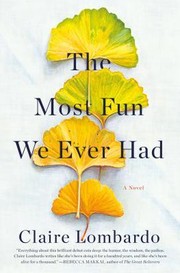
The Most Fun We Ever Had
2,590-word summary 12 min read 537 pages in the book
- First published
- 2019
- Publisher
- Doubleday
- Pages
- 537
- ISBN
- 9780385544252
Reading options
What's inside (9 sections)
- Why I stayed with a 500 page family story
- Marilyn and David and the marriage everyone stares at
- Four sisters in 2016, each stuck her own way
- Jonah Bendt walks in and Violet has to face fifteen years ago
- Liza, Grace, Wendy, and the year that tests them
- How the book is built and how it reads
- What works, what drags, and who should read it
- Key takeaways
- FAQ
Why I stayed with a 500 page family story
I picked up The Most Fun We Ever Had because I wanted a long family novel to live inside for a week. Claire Lombardo wrote it as her debut after studying fiction at the Iowa Writers Workshop and working in social work in Chicago. The edition I read about is the Doubleday 2019 hardcover, 537 pages, ISBN 9780385544252. It follows Marilyn Connolly and David Sorenson and their four daughters across almost fifty years, mostly in Chicago and its suburbs.
I started it on a Sunday with no plan and read fifty pages without moving. Then I slowed down, because this is not a book to rush. It moves between the 1970s and 2016, between parents and daughters, between a love story and the cost of that love story. By the end I felt like I had attended every birthday and fight in one house.
The premise sounds simple. A couple falls hard in the seventies and builds a good marriage. Their four girls grow up watching that marriage like a light they cannot reach. Then a boy given up for adoption fifteen years earlier walks back into their lives and every crack shows. Simple on paper. Heavy in practice.
Marilyn and David and the marriage everyone stares at
Marilyn Connolly and David Sorenson meet young in the seventies. She is bright and warm and a little wild. He is steady, kind, training to become an eye doctor. Their courtship has the glow early love gets in memory. Long walks. Cheap apartments. Friends who drink and talk late. A decision to marry that feels brave rather than planned.
Lombardo writes their early years with care. David works long hours. Marilyn keeps the house and later works and raises girls. Money is tight and then less tight. They fight about small things and repair fast. Friends envy them. Their daughters will later call the marriage perfect, and Lombardo lets us see why they think so while also showing the edits memory makes.
What stuck with me is how physical their love stays. Not only sex, though that is present, but touch. A hand on a back in a kitchen. Sitting close on a porch while kids shout inside. David looking at Marilyn across a crowded room after decades and still lighting up. You believe these two like each other. That matters because the whole book tests whether liking is enough when parenting gets hard.
My reservation starts here too. The parents can feel idealized in the first hundred pages. Marilyn is so warm she glows. David is so decent he barely errs. I kept waiting for a flaw with teeth. It comes, through infidelity and resentment and tired choices, but slowly. Readers who want flawed people on page one may find the opening sweet to the point of ache. I adjusted by reading it as the daughters view, a myth the book plans to revise.
Chicago matters. Lombardo grew up in Oak Park, and the suburbs feel lived in. Brick houses. El tracks. Snow that stays gray for weeks. Good schools that promise more than they give. Summer block parties where everyone knows who drinks too much. The Sorenson house is full of books and laundry and girls talking over each other. I could picture the kitchen table where most big talks happen.
Four sisters in 2016, each stuck her own way
By 2016 the four Sorenson daughters are adults with separate troubles. Lombardo gives each a clear thread and rotates among them.
Wendy is the oldest. She married young and was widowed young. Now she drinks more than she admits and dates younger men who cannot hold her. She works, she parents if she has kids in her orbit, she jokes to cover grief. Her chapters have bite. She says sharp things at family dinners and then hates herself on the drive home. I recognized that loop.
Violet is next. She trained as a lawyer, then left practice to raise kids. She married Graham, a decent man who loves her in a quiet way. She runs a house that looks fine and feels tight. Anxiety hums under her days. She checks locks, replays conversations, fears she failed her children by stepping back from work and by hiding a teenage choice. Her past holds the center of the book. At fifteen she had a baby and placed him for adoption in a closed process. That boy is Jonah.
Liza is third. She is a professor, newly tenured, sharp and nervous and funny in a self cutting way. She is pregnant by a man she does not fully love and unsure whether she wants the baby. Her chapters deal with work politics, with a body changing while a career finally steadies, with a partner who tries and misses. I found her the most relatable on the page. She overthinks emails. She prepares for seminars while nauseous. She loves her sisters but keeps score.
Grace is youngest. She drifts. She works jobs below her ability, stays in a relationship that looks odd from outside, tells a lie about her life that no one in the family catches for a long time because they cast her as the baby. Grace chapters are sad in a soft way. She wants to be seen without being managed. Her lie is not evil. It is a shelter she built and then could not leave.
Lombardo moves among these four without losing voices. Wendy is dry. Violet is worried. Liza is brainy. Grace is vague on purpose. Family dinners crackle because everyone talks at once and hears half. I dog eared mental pages where a sister says the exact wrong kind thing. If you have sisters or close cousins, you will wince in recognition.
A fair criticism. Four full inner lives plus parents plus spouses plus kids is a lot. Some partners blur. I mixed up a husband detail and a boyfriend detail on first pass. The book helps by returning to the same kitchens and holidays, but the first third asks you to hold many names. Take it slow. Make a small family list if that helps.
Jonah Bendt walks in and Violet has to face fifteen years ago
The engine for the present day plot is Jonah Bendt. He was placed for adoption as a newborn about fifteen years earlier by one of the daughters. In 2016 he seeks contact and enters the Sorenson orbit. He is a teenager, watchful, polite, angry in flashes, curious about blood.
His arrival hits Violet hardest, since she is his birth mother. She kept the adoption secret from almost everyone except maybe one confidante. She told herself a closed process meant a clean break. It did not. Seeing Jonah forces her to revisit being fifteen, scared, in a house where a perfect marriage made mistakes feel huge. She replays the hospital, the papers, the years of birthdays she marked alone.
Graham, her husband, has to absorb this too. He married Violet without knowing this part. His reaction is mostly kind and a little lost. He wants to support her while protecting their kids at home. Some of the best marital scenes in the book belong to them. Not shouting. Tired talks after kids sleep. Who do we tell. How much. When.
Jonah also affects the sisters. Wendy mothers him too fast. Liza studies him like a case. Grace befriends him sideways because she knows what it feels to be the odd one. Marilyn and David, as grandparents in age if not in label, fuss and overstep and try to love him right. Jonah takes what he needs and withholds the rest, which feels true for a teen meeting a loud family all at once.
I appreciated that Lombardo does not turn Jonah into a lesson. He has his own adoptive parents, his own school life, his own reasons for searching. He is not there to fix the Sorensons. He is there to find facts about himself. The book respects that line, though some Sorensons cross it. A scene where Violet brings too many photo albums to a meeting rang true and pained me. Trying too hard is still trying, but a teen feels the weight.
This thread will matter most to readers touched by adoption. Lombardo treats closed adoption as a product of its time and shows the ache on both sides without preaching. She does not pretend reunion heals everything. She shows contact as a door that opens onto more rooms, not an ending.
Liza, Grace, Wendy, and the year that tests them
While Violet faces Jonah, the other sisters face their own reckonings across one long year.
Liza weighs pregnancy and partnership. She likes her work. She earned tenure through sharp research and strong teaching. A baby would change rhythm she just secured. The man involved cares for her but does not thrill her, and she does not thrill him in the way Marilyn and David modeled. She asks herself hard questions. Do I want a child or do I fear wanting one. Am I staying with a kind man because leaving feels cruel. Her mother urges trust in love. Her sisters offer conflicting scripts. Wendy says do what keeps you sane. Violet says think of the child first. Grace says little, which says much.
I found Liza chapters strong on work detail. Faculty meetings. Student emails. A department chair who praises her while adding service tasks. Lombardo captures how smart women split themselves between care and ambition. Liza loves ideas and also fears she uses ideas to dodge feeling. That self awareness makes her funny and sad.
Grace sustains a false story about work and love for months. I will not spell out the lie to keep the read fresh, but its shape is familiar. She tells family she is further along than she is, happier than she is, chosen in ways she is not. The lie starts as shame and becomes habit. When it breaks, the fallout is quieter than expected and worse than expected. Her family does not exile her. They hover, which Grace hates more. Her arc asks whether the baby of a family ever gets to be unknown. I thought Lombardo was tender here without excusing the deceit.
Wendy drinks, dates, grieves. Widowhood left her both free and stuck. Younger men offer attention without demand. Booze softens evenings. Friends worry. Her sisters stage soft interventions that fail because Wendy hears judgment inside care. Her turning point is not dramatic. It is a series of smaller choices. Calling a friend instead of pouring. Staying home with a sister kid and finding it less boring than feared. Admitting her late husband still shapes what she wants. I liked that Lombardo did not give Wendy a rescue romance. She gives her steadier habits and a bit more honesty.
Marilyn and David watch all this with fear that their happy marriage set a bar too high. Marilyn wonders if performing joy taught her girls to hide pain. David wonders if providing comfort made struggle feel like failure. Those parental doubts gave me the lump in throat moments. Loving well still leaves gaps. That is a hard truth for good parents to sit with.
How the book is built and how it reads
The structure alternates past and present. Chapters set in the seventies and eighties show Marilyn and David young, then young parents with babies and toddlers and school runs. Chapters set in 2016 show adult daughters in kitchens and cars and offices. The past explains habits. A fight in 1982 about money echoes in a 2016 fight about childcare. A teen humiliation shapes a mothering choice decades later.
This design works because Lombardo plants echoes without hammering them. A song. A recipe. A porch. A phrase David uses. You start to feel time as layers rather than a line. The Chicago setting helps. Same streets, different cars. Same house with new paint.
Prose is warm, detailed, fond of interior thought. Sentences run medium to long, with short punches when someone gets hurt. Dialogue sounds like family talk, interruptions and teasing and old jokes. Lombardo loves lists of small domestic facts. What is in a fridge. What a kid wears to a party. How a classroom smells in September. That richness is a pleasure and, at 537 pages, sometimes a drag. A dinner scene that could run ten pages runs sixteen. I skimmed a few passages where description crowded out motion.
Pacing sags a bit around the second third. After Jonah arrives and each sister problem is set, the book circles. More dinners. More phone calls. More almost talks. Then it finds drive again when secrets break into the open and choices must be made about telling kids, keeping pregnancies, leaving partners, facing adoptive family boundaries. The last hundred pages moved fast for me.
On craft, Lombardo shines at group scenes. Birthdays. Holidays. A hospital waiting room. She tracks who stands where, who refills chips, who steps outside to cry. She is less sharp on workplaces outside home and school, though Liza academic chapters are an exception. Some male partners feel thin compared to the sisters. Graham is the fullest. That may reflect point of view, since the book centers Sorenson women.
Content notes. The book includes drinking, infidelity, abortion and adoption themes, pregnancy decisions, anxiety and panic, grief after a spouse dies, teen sex and pregnancy in flashback, and strong language. Sex scenes are frank but not gratuitous. Nothing felt added for shock. It suits adult readers and older teens with family drama taste, though length will test younger readers.
What works, what drags, and who should read it
What works is heart plus stamina. Lombardo holds six major inner lives across decades without losing warmth. Marilyn and David feel like people you know. The sisters feel distinct. Jonah feels real rather than symbolic. Chicago suburbs feel specific. The theme lands without a speech. A good marriage can shelter kids and also shadow them. Kids must learn to love imperfectly rather than chase a myth.
What drags is length and softness. At 537 pages in the Doubleday 2019 edition, the book repeats domestic beats. Some conflicts resolve through talks that sound alike. A few reveals arrive late and get forgiven fast. Readers who like tight plots may fidget. I did in the middle. The book also leans toward kindness. Even selfish acts get gentle framing. I sometimes wanted a harder edge, a consequence that stings longer.
Who should read it. Readers who love long family novels in the mode of Anne Tyler or Elizabeth Strout or Jonathan Franzen domestic dramas will settle in. Readers who like Reese style book club picks with much to discuss, marriage, sisterhood, adoption reunion, motherhood choices, will find questions on every page. Readers who want fast twists should skip. This is simmer, not boil.
I am glad I stayed. The final scenes, with sisters in a kitchen after a hard year and parents older on a porch, earned their quiet. No one is fixed. Wendy still wants a drink some nights and chooses otherwise more often. Violet still worries and tells the truth sooner. Liza chooses a path and owns the cost. Grace starts again without a script. Marilyn and David hold hands knowing their story looks less spotless and more true. That felt like the most fun and the hardest work at once, which is what family amounts to for most of us.
FAQ
Who are the four sisters in The Most Fun We Ever Had?
Wendy, Violet, Liza, and Grace Sorenson, daughters of Marilyn Connolly and David Sorenson, each adult by 2016 with separate struggles.
Who is Jonah Bendt?
He is the son Violet placed for adoption at fifteen in a closed process, and his search for contact drives the present day plot.
Is this a fast mystery or a slow family novel?
It is a slow family novel at 537 pages, built on dinners, memories, and talks, and suits readers who like long character stories.
Similar books
Freedom
A St. Paul couple and their grown children strain marriage, loyalty, and ideals in 2000s America.
2,678-word summary · 12 min read

Howards End
Forster's 1910 novel follows two families, a house in Hertfordshire, and a burned note, asking whether money and feeling can ever be connected.
2,187-word summary · 10 min read

A Spool of Blue Thread
Four generations of the Whitshank family in Baltimore, and the silences, resentments and quiet love they hand down without ever saying so.
2,408-word summary · 11 min read
Olive, Again
Elizabeth Strout returns to Crosby, Maine, as Olive Kitteridge marries Jack Kennison, confronts her son, and faces old age, grief, and small-town judgment.
2,333-word summary · 10 min read
True Colors
Three Grey sisters split over love and duty after their father judges them.
2,596-word summary · 12 min read
The Identicals
Twin sisters swap Nantucket and Martha Vineyard lives for a summer.
2,556-word summary · 11 min read
The Accidental Tourist
Grieving Macon writes travel guides for haters of travel, then Muriel intrudes.
2,252-word summary · 10 min read
Kitchen
Orphan Mikage finds home in a kitchen with Yuichi and Eriko after loss.
2,597-word summary · 12 min read
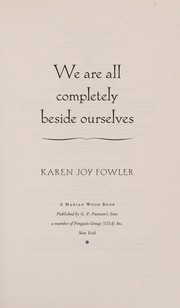
We Are All Completely Beside Ourselves
Rosemary tells of twin sister Fern, a chimp raised as family, and research fallout.
2,058-word summary · 9 min read
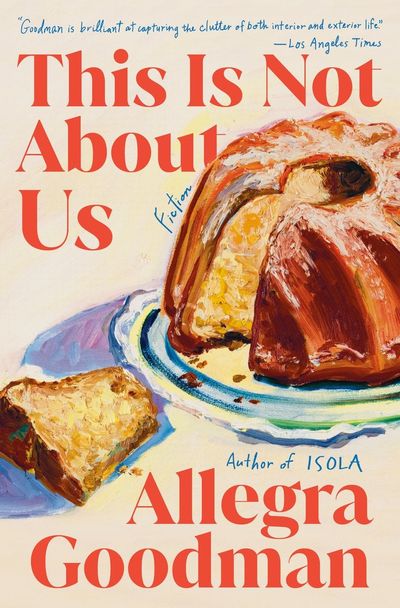
This Is Not About Us
Sisters Sylvia and Helen Rubinstein feud over apple cake in linked stories spanning divorces, bat mitzvahs and three generations of family life.
2,064-word summary · 9 min read
Lost Lambs
A coastal family fractures as an open marriage fails and three sisters spiral while the youngest traces a shipping magnate's plot.
2,471-word summary · 11 min read
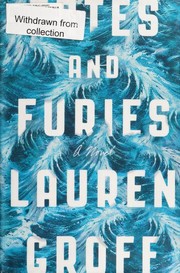
Fates and Furies
Lauren Groff tells one 24 year marriage twice, first through Lotto's bright luck, then through Mathilde's hidden past and quiet control.
2,992-word summary · 13 min read
My Name Is Lucy Barton
Hospitalized for weeks, Lucy Barton is visited by her estranged mother, stirring memories of Amgash poverty, marriage, and becoming a writer.
2,934-word summary · 13 min read
The Vegetarian
After a bloody dream, Yeong-hye stops eating meat, and her ordinary marriage cracks open in Han Kang's spare and unsettling novel.
2,302-word summary · 10 min read
The Corrections
An aging Midwestern couple tries to gather three troubled adult children for one last Christmas at home.
2,094-word summary · 9 min read

Stoner
William Stoner trades farm life for literature, then endures a cold marriage and petty campus wars in John Williams's quiet classic.
2,282-word summary · 10 min read
Olive Kitteridge
Thirteen linked stories orbit blunt Crosby teacher Olive, husband Henry and son Christopher through love, aging and Maine small-town life.
2,385-word summary · 11 min read

Revolutionary Road
A Connecticut couple who believe they are too good for the suburbs plan to move to Paris, and the plan slowly exposes everything they cannot say to each other.
2,085-word summary · 9 min read

Lisey's Story
Two years after her novelist husband dies, Lisey Landon follows a trail of clues into his childhood and the other world that made him a writer.
1,998-word summary · 9 min read

The Shadow Sister
Star D'Apliese steps out of her sister's shadow and follows a bookshop clue into the Edwardian life of Flora MacNichol, a woman who gave up love for duty.
2,260-word summary · 10 min read

Little Town on the Prairie
In the spring after the Long Winter, fifteen-year-old Laura sews shirts, studies for a teaching certificate, and helps send her blind sister Mary to college.
2,071-word summary · 9 min read
Little Earthquakes
Four Philadelphia women meet during pregnancy and discover that new motherhood is nothing like the plan, while friendship becomes the thing that holds them…
1,997-word summary · 9 min read
Mrs. Everything
Two Jewish sisters in Detroit grow up, apart and together, across seven decades of American life, from the 1950s to the 2016 election.
2,362-word summary · 10 min read

Fathers and Sons
Arkady brings the nihilist Bazarov home to his father's estate, and a generational argument turns into love, a duel, and an early death.
2,192-word summary · 10 min read

Unaccustomed Earth
Lahiri’s second story collection follows Bengali families in America and abroad, tracing the quiet distances between parents and children, spouses, and the…
2,333-word summary · 10 min read
The Age of Miracles
A California girl grows up while the Earth's rotation slows, and ordinary adolescence continues alongside slow catastrophe.
2,417-word summary · 11 min read
Summer Island
A radio advice host hides a scandal, and the estranged daughter hired to write about it agrees to care for her at the family's island house.
2,325-word summary · 10 min read
The Lowland
Two brothers grow up beside a marshy lowland in Calcutta, and the choices of the younger one draw the older into a life of duty, distance, and quiet grief that…
2,213-word summary · 10 min read
Peace Like a River
An asthmatic boy in the early 1960s narrates his family's search for his older brother, who is accused of two killings and has escaped custody.
1,969-word summary · 9 min read