
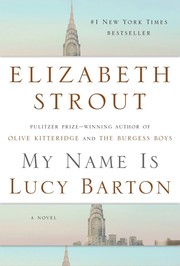
My Name Is Lucy Barton
2,934-word summary 13 min read 208 pages in the book
- First published
- 2016
- Publisher
- Random House
- Pages
- 208
- ISBN
- 9781400067695
Reading options
What's inside (8 sections)
I came to this one sideways, through Olive Kitteridge. I had spent a couple of weeks with Olive and Henry in Crosby, Maine, and I wanted to see what Elizabeth Strout does when she stays inside one head all the way through. A friend who reads mostly short novels told me this was the one to try, all voice and memory, under two hundred pages in some printings.
The edition I am using for facts is the first American edition. Random House published My Name Is Lucy Barton on January 12, 2016, 208 pages in hardcover, ISBN 9781400067695. The paperback that came later runs longer in pages because of type size, 240 pages, but the text is the same short book. It became a number one New York Times bestseller, was longlisted for the Booker Prize, and showed up on a lot of best of the year lists. There is now a stage version associated with Laura Linney, which makes sense because so much of it is one woman talking.
The premise is simple enough to fit in a sentence. Lucy Barton, a writer living in New York, goes in for what should be a routine operation and ends up staying in hospital for almost nine weeks with an infection that will not clear. Her husband and small daughters visit rarely. One afternoon her mother, whom she has not seen in years, is suddenly sitting beside the bed.
That is almost all the plot. The rest is what gets remembered while she lies there, and what gets written down years later.
A hospital bed with a view of the Chrysler Building
The hospital section is set in the mid 1980s, though Lucy is telling it later, in the early 2000s, looking back. She is in a room in New York City. At night she can see the Chrysler Building lit up. During the day it goes flat again, just another tower. May turns into June outside. She watches from the window when she can stand, young women her age on their lunch breaks, blouses moving in the breeze, heads together talking. She thinks she will never walk on a sidewalk again without being glad for it. For years after, she says, she kept that promise to herself.
Strout keeps the medical details vague on purpose. An appendectomy, then a fever, then tests, then waiting. No one gives Lucy a clear answer she can hold. What is clear is the feeling of being left. Her husband William comes and goes. Her two little girls, Becka and Chrissie, are mostly kept away. The nurses are kind and busy. A kind young doctor checks on her. Time passes in small increments. Food trays. Blood draws. The hallway noise at night.
Then her mother arrives.
She just appears one afternoon. Lucy wakes and her mother is there, sitting close. Her mother calls her Wizzle, an old family nickname, and says hi as if no years have passed. William must have called her, must have paid for the ticket, though Lucy never gets the full story straight. Her mother stays for several days, sleeping in a chair, barely leaving the room.
I found these pages hard to put down, not because anything happens but because the strangeness feels true. A grown woman with a life in New York, two kids, rent, a marriage, suddenly becomes a child again because her mother is in the chair. She wants her mother to stay. She is also afraid of what her mother will see in her.
The woman who sat all night
Lucy’s mother talks. That is the main action for a long stretch. She talks about people back home in Amgash, Illinois, the small town where Lucy grew up. Marriages failing. Girls getting pregnant. Men losing jobs. Someone’s son turning out odd. Someone’s daughter moving away and coming back changed.
At first it sounds like idle gossip, the kind of catching up you do to fill a sickroom. Slowly you realize it is the only way they know how to be close. Her mother does not say I love you. She has probably never said it straight out. Instead she stays through the night, watches Lucy sleep, smooths the sheet, tells another story about a neighbor. When Lucy wakes frightened, her mother is still there.
Strout has said in interviews, and has Sarah Payne say it inside the book, that the mother in this story talks compulsively about marriages going bad without knowing she is doing it. I kept noticing that once I read it that way. Almost every anecdote bends toward the same question. Will this couple last. Who left whom. Who should have left years ago.
What makes the mother more than a type is the guardedness underneath. She loves Lucy, fiercely in her way, and she also abandoned her in ways that mattered. She knows Lucy escaped and she does not quite forgive her for it, and she also brags about her in Amgash.
There is a moment I kept turning over. Lucy realizes her mother sat up all night watching her, just to make sure she was breathing. No speech about it. She just did it. That image carried more weight for me than any of the bigger revelations later.
Amgash and the garage years
Lucy grew up poor in a way that marked her body and her manners for years. Amgash is a real feeling place in the book even if you have never been to Illinois. Small houses, corn, church, school buses, people who notice shoes.
Her parents did not have money for basics. Her mother worked as a seamstress when there was work. Her father had been in the war and came home changed, prone to sudden anger, working labor jobs when he could. Lucy has an older sister Vicky and a brother Pete who stayed closer to home. The family lived for a time in very cramped conditions, at one point in a garage, and the kids were teased at school for smelling odd and wearing the same clothes. Lucy remembers showering at the school gym because there was no proper shower at home, and trying to be invisible in hallways.
I am keeping this general because Strout keeps it general. Lucy does not give a tidy timeline of abuse. She gives flashes. Being locked in a truck as punishment. Her father’s rages. Long silences at the table. Hunger that was more about shame than starvation. The feeling of being different and knowing every other child knew it too.
One story she does tell straight stayed with me. Years later in New York, she is seeing an older artist. He asks what her family ate when she was small. She says they had baked beans a lot. He answers with a joke about what they must have done after, all sitting around together, and laughs. Lucy understands in that second she will never marry him. It was not the rudeness alone. It was the proof he could never picture what that kitchen actually felt like. She had wanted children, she had been ready to overlook a lot, but that one remark closed something.
School was both escape and wound. Teachers noticed she read well. She hid in books. She won a scholarship to college in Chicago, which got her out of Amgash physically, though not out in her head. People who grow up with very little money often talk about the strange split afterward, and Lucy lives it. She learns how to order in restaurants, how to dress for New York, how to talk to William’s family, while part of her is still braced for someone to point and laugh.
Her marriage to William carries that split. He comes from a middle class New England family with German roots. Her father, because of the war, held ugly feelings about Germans, and that shadow falls over the marriage without ever becoming a big scene. William is not cruel. He is busy, practical, a scientist by training, baffled by some of what Lucy needs. He loves her, after his fashion, and he also does not visit the hospital as often as she hoped. That absence matters more than any fight.
Becoming a writer: Sarah Payne and Jeremy
Lucy always wanted to write. That desire is the thread that pulls her out of Illinois and then pulls the book into its second half.
The key figure is Sarah Payne, an older novelist Lucy admires. Lucy first meets her by accident in a clothing store in New York. Sarah is buying shoes, black patent leather heels, and is embarrassed to be recognized. She mumbles that she is just a writer, that she writes books, fiction, things like that. Lucy goes home to her apartment in Brooklyn Heights, kids running around asking where the hair dryer is, and pulls Sarah’s books off the shelf. She has read them. She likes them because, as she puts it, she likes writers who try to tell you something truthful. Sarah grew up on a run down apple orchard in New Hampshire and writes about rural people who work hard and suffer and also have decent luck at times.
Months later William encourages Lucy to take a weeklong workshop with Sarah in Arizona. Lucy does not want to leave the children, but William pays and pushes her to go. She brings pages from a novel she is trying to write. At her private conference she instead hands over sketches about her mother visiting her in the hospital, pages she started after seeing Sarah speak at the library.
Sarah reads them and talks to her plainly, tired from too many conferences, touching Lucy’s knee lightly before she sits back. What she says becomes the moral center of the book. People will come after you for putting poverty and abuse together, she warns. They will say there is poverty without cruelty, as if that disproves your life. Do not defend the work. Remember what the story actually is. A man tortured every day by what he did in the war. A wife of that generation who stayed, because most did. A mother who comes to a hospital room and cannot stop talking about other people’s marriages. A mother who loves her daughter, imperfectly, because everyone loves imperfectly. And then the line I underlined: if you find yourself protecting anyone as you write, you are not doing it right.
She also tells Lucy that writers have only one story in them, or words close to that, and that the job is to keep returning to it honestly. A friend of Lucy’s named Jeremy, a gay man she knew in New York during the AIDS years, gave her a version of the same advice earlier. Be ruthless on the page. Do not be nice for the sake of being liked.
The workshop scenes have odd, concrete bits that feel remembered rather than made up. A huge cat jumps through an open window onto the seminar table and everyone screams, Sarah worst of all. A psychoanalyst from California asks Sarah, in a tone Lucy hears as snide, how long she has had post traumatic stress. Sarah packs up her bag, tired, kind, impatient with flattery. When Lucy leaves, Sarah hugs her and makes a small kissing sound with her fingers held to her lips, which reminds Lucy of the kind doctor in the hospital.
Later, after her first book is published, Lucy goes to a gracious woman doctor, not for medicine exactly but to say out loud things she has written down. Things from childhood. Things from the marriage. Things she could not say. The doctor listens and says thank you and says it will be okay. It is a quiet scene, three or four pages, and it works because Strout does not oversell it. No breakthrough music. Just someone hearing her.
There is also a museum memory many readers mention. Lucy looks at a sculpture of Ugolino and his sons at the Met, the starving man locked up with his children. She thinks the sculptor knew something true about how kids will offer anything to ease a parent’s suffering.
Marriage, daughters and the things not said
Outside the hospital, Lucy’s adult life in New York is ordinary on the surface and thin ice underneath.
William works long hours. They move apartments. They have Becka and then Chrissie. Lucy loves the girls with a ferocity that scares her. She watches them for signs she is failing them. She tries not to repeat her parents’ silences and then repeats them in new forms, because that is what happens. She stays home, she writes when she can, she worries about money in a different way than her mother did, less about beans and more about rent and school.
Strout is good on the small logistics of parenting that reveal larger fears. Who picks up whom. What gets packed for lunch.
The marriage frays in slow ways. William has affairs, or the possibility of them hangs in the air depending how you read certain passages. Lucy does not confront him head on in this book. She notes, she stores, she writes around it. The hospital stay exposes the distance. He does not sit all night the way her mother does. He handles arrangements. That contrast hurts Lucy more than she admits.
I should say the book does not give William a fair trial, and that feels deliberate. We see him through Lucy’s sickbed memory and through her mother’s gossip filter. He is decent but distant, generous about the Arizona trip, clumsy about comfort. Readers who want a full portrait of the husband will be frustrated. He remains a shape at the edge of the bed.
Becka and Chrissie are also shapes more than full characters here. We see them small, then older, then in college years in brief flashes forward. Lucy imagines telling them all this one day. She wonders what they will make of Amgash, of grandparents they barely know. That wondering is the point. The book is less about what happened and more about what gets passed down when no one explains.
What strains and who will love this short book
I want to be honest about what tested my patience, because this book is widely loved and that can make it hard to admit when you skimmed.
The middle sags if you need forward motion. After the mother leaves the hospital, the narrative loops through memories and workshop scenes and returns to the hospital and loops again. That circling is the method, but some loops cover the same ground. Mother talked about this neighbor. Mother could not say that thing. Lucy felt shame at school. Lucy feels shame in New York. I started to get the point before Strout stopped making it.
Some side people never come into focus. Vicky and Pete, Lucy’s siblings, are important in theory and vague on the page. William’s parents, the New England family, are mostly background. Even Becka and Chrissie blur together at times. If you liked the crowded town of Olive Kitteridge, where minor characters get whole chapters, this will feel narrow. Almost everything is filtered through Lucy’s soft, hesitant voice, and that voice sometimes smooths edges that needed to stay sharp.
The Sarah Payne material, much as I valued that conference scene, interrupts the hospital spell. The Arizona chapters read like a separate essay on writing tucked inside a novel about mothers. I understand why Strout did it. Lucy the writer has to learn how to tell the story we are reading, or the book cannot exist. Still, the shift from sickbed to seminar room cooled me each time. I wanted to stay in New York in June.
The style itself will divide readers. Sentences are short. Paragraphs are short. Repetition is frequent. Words like love and lonely and poor appear again and again without decoration. One reader will hear honesty. Another will hear sameness. I went back and forth. On good pages the plainness lets a single detail land hard, a hand on a sheet, a pair of shoes, a cat on a table. On tired pages it feels like Lucy hedging, qualifying, starting over.
None of that stopped me from finishing in two sittings. The hospital opening and the closing pages, when Lucy looks back from a steadier place and thinks about her mother and her daughters in one frame, held me. Strout does not force forgiveness. Lucy does not decide her childhood was fine. She holds two facts at once. Her parents failed her. Her mother loved her as best she could. That double hold feels more adult than most family novels manage.
Who should pick it up. Readers who like books told in a strong first person voice, who do not mind slow movement, who care about mothers and daughters, class shame, and how writers actually learn their craft. Readers who want plot, dialogue driven scenes, or a full family saga with dates and events will likely feel hungry after. At 208 pages it asks little time. It asks close attention instead.
I closed it thinking about the Chrysler Building. All those weeks Lucy looked at it from bed, bright at night, plain by day, far away either way. Then she got out and walked under it like everyone else. That image does more work than any lesson. Illness makes the ordinary city strange. Memory makes childhood strange in the same way. You look up, you remember looking up, and for a second both views are true.
FAQ
When was My Name Is Lucy Barton published?
Random House published it on January 12, 2016. The first hardcover runs 208 pages and the ISBN is 9781400067695.
Is My Name Is Lucy Barton part of a series?
No series is listed for this post. Strout later returned to Lucy in other novels, but this book stands alone here.
Did My Name Is Lucy Barton win prizes or get adapted?
It was a number one New York Times bestseller and was longlisted for the Booker Prize. A stage adaptation associated with Laura Linney followed.
Similar books

Olive Kitteridge
Thirteen linked stories orbit blunt Crosby teacher Olive, husband Henry and son Christopher through love, aging and Maine small-town life.
2,385-word summary · 11 min read
Summer Island
A radio advice host hides a scandal, and the estranged daughter hired to write about it agrees to care for her at the family's island house.
2,325-word summary · 10 min read
The Tea Girl of Hummingbird Lane
A Chinese tea farming mother gives up a daughter who later seeks roots.
2,607-word summary · 12 min read
The Most Fun We Ever Had
Four Sorenson sisters orbit perfect parents hiding old cracks.
2,590-word summary · 12 min read
Freedom
A St. Paul couple and their grown children strain marriage, loyalty, and ideals in 2000s America.
2,678-word summary · 12 min read
Olive, Again
Elizabeth Strout returns to Crosby, Maine, as Olive Kitteridge marries Jack Kennison, confronts her son, and faces old age, grief, and small-town judgment.
2,333-word summary · 10 min read
Little Earthquakes
Four Philadelphia women meet during pregnancy and discover that new motherhood is nothing like the plan, while friendship becomes the thing that holds them…
1,997-word summary · 9 min read

Howards End
Forster's 1910 novel follows two families, a house in Hertfordshire, and a burned note, asking whether money and feeling can ever be connected.
2,187-word summary · 10 min read

Two by Two
Sparks's twentieth novel turns from first love to a marriage breaking up: Russell Green loses his wife and his job, then rebuilds his life around his…
2,192-word summary · 10 min read

Sing You Home
A music therapist, her new wife and an evangelical ex-husband end up in court over three frozen IVF embryos.
2,952-word summary · 13 min read

At First Sight
Jeremy and Lexie are married and expecting a baby when anonymous emails tell him the child may not be his.
2,317-word summary · 10 min read

A Spool of Blue Thread
Four generations of the Whitshank family in Baltimore, and the silences, resentments and quiet love they hand down without ever saying so.
2,408-word summary · 11 min read
2 States: The Story of My Marriage
A Punjabi boy from Delhi and a Tamil Brahmin girl from Chennai meet at IIM Ahmedabad, and turn a love marriage into a campaign to convince two families.
2,634-word summary · 12 min read

Marriage for One
Rose marries a cold lawyer to save her coffee shop, then discovers the arrangement was never only business.
2,032-word summary · 9 min read
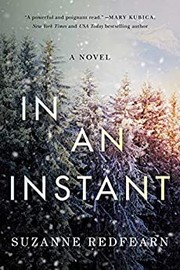
In an Instant
After a family camper crashes down a snowy mountain, sixteen-year-old Finn watches from the afterlife as survivors make impossible choices and try to live with…
2,130-word summary · 9 min read
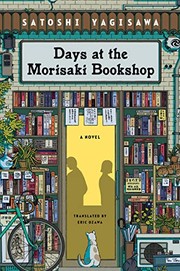
Days at the Morisaki Bookshop
Heartbroken Takako moves into her uncle's tiny secondhand bookshop in Jimbocho, and the shop and its regulars slowly give her back her life.
2,011-word summary · 9 min read
Vanishing Acts
A search-and-rescue worker's perfect life cracks when her past and her father catch up.
2,799-word summary · 12 min read
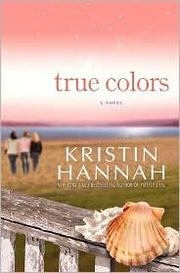
True Colors
Three Grey sisters split over love and duty after their father judges them.
2,596-word summary · 12 min read
The Identicals
Twin sisters swap Nantucket and Martha Vineyard lives for a summer.
2,556-word summary · 11 min read
The Accidental Tourist
Grieving Macon writes travel guides for haters of travel, then Muriel intrudes.
2,252-word summary · 10 min read
News of the World
Captain Kidd carries captive Johanna home across 1870 Texas.
2,571-word summary · 11 min read

Kitchen
Orphan Mikage finds home in a kitchen with Yuichi and Eriko after loss.
2,597-word summary · 12 min read
Anne's House of Dreams
Newlyweds Anne and Gilbert start in a seaside house with kind neighbors.
2,465-word summary · 11 min read
The Time Keeper
Mitch Albom's 2012 fable follows Dor, the first measurer of time punished in a cave, as he returns to guide a heartbroken teen and a dying businessman toward…
2,466-word summary · 11 min read
The Shell Seekers
Elderly Penelope Keeling must decide the fate of her father's treasured painting while her three children press her to sell.
2,592-word summary · 12 min read
Heart of the Matter
Two Boston mothers collide after a burn injury puts a single mom in the orbit of another woman's surgeon husband.
2,585-word summary · 11 min read

The Deep End of the Ocean
A three year old vanishes at a Chicago hotel reunion, and nine years later the Cappadoras must face his return as a teen raised by someone else while grief…
2,951-word summary · 13 min read
The Winners
Two years on, Beartown opens a new rink, welcomes Maya and Benji home, and faces money fights and a gun at the ice.
2,366-word summary · 11 min read
The Bonesetter's Daughter
A ghostwriter translates her mother's hidden Chinese memoir and learns the truth about Immortal Heart, Precious Auntie, and a family curse.
2,720-word summary · 12 min read