
Days at the Morisaki Bookshop
2,011-word summary 9 min read 160 pages in the book
- First published
- 2010
- Publisher
- Harper Perennial
- Pages
- 160
- ISBN
- 9780063278677
- Original title
- 森崎書店の日々
- Series
- Morisaki Bookshop (#1)
Reading options
What's inside (9 sections)
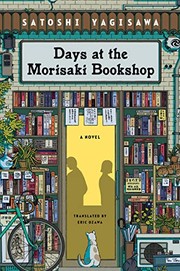
I picked this up because of the title and because the cover promised a small book about a bookshop, which is the sort of promise I distrust and keep falling for anyway. Satoshi Yagisawa's novel came out in Japan in 2010 from Shogakukan as Morisaki Shoten no Hibi, and reached English readers in 2023 through Harper Perennial in Eric Ozawa's translation, 160 pages. It is small in every way except the amount of feeling it fits into a narrow room in Jimbocho, Tokyo's famous secondhand book district.
The setup is almost aggressively ordinary. Takako is twenty-five, working an office job in Tokyo, and believes she is in a stable relationship with a colleague named Hideaki. One day he announces, without much drama, that he is marrying another woman, also a coworker, whom he has been seeing for longer than Takako realized. Then he behaves as if nothing has changed and expects her to be friendly about it. She quits her job. She stops leaving her apartment. She sleeps through most days.
That is where her uncle Satoru finds her. He owns the Morisaki Bookshop, a tiny place crammed with used books, and he invites her to live in the room above the shop in exchange for helping out. Takako remembers him as an eccentric, undignified man who traveled the world before taking over the family business. She goes mostly because she has nowhere else to be.
The Shop as a Small Machine
The first third of the book is about the shop's rhythm. Takako opens in the morning, then retreats upstairs. She does the minimum and expects to be left alone. The regulars have other plans. Sabu, loud and opinionated, scolds her for not reading and tells her that books are how a person avoids becoming shallow. Satoru takes her for a walk to a nearby cafe called Saveur, where she meets Tomo, a quiet graduate student of literature, and Takano, a young cook hopelessly in love with Tomo. It is a small cast with small traffic between them, and the pleasure of the book is watching Takako slowly become part of the traffic.
She starts reading through the night. Not because someone gives her a life-changing list, but because the books are there and the nights are long and the alternative is lying awake. Yagisawa is good at this kind of conversion. There is no thunderclap, just a young woman discovering that a book can hold her attention for an hour, and then two, and then until the light comes.
She also begins to notice Satoru's loneliness. His wife Momoko left him five years earlier with only a note, and he has never stopped loving her. The shop is his waiting room as much as his business. Takako sees that and starts to see her own waiting differently.
The middle section is a gentle comedy of books and community. She becomes a regular at Saveur. She helps Takano work up the courage to approach Tomo. She joins Tomo at the Kanda Used Book Festival, when the streets of Jimbocho fill with stalls and crowds. None of this is dramatic. It is the kind of plot that advances through a few degrees of warmth per chapter, and if you are in the mood for it, it is lovely.
The Confrontation
Hideaki reappears and telephones her. Satoru insists on coming along when Takako goes to meet him. Hideaki refuses to take responsibility and tells her she is being ridiculous. With Satoru sitting beside her, Takako finally says exactly how badly he treated her. That is the whole revolution. There is no shouting match, no revenge, no new lover waiting in the wings. There is a woman stating a fact to a man who does not want to hear it, and then walking out with her uncle.
I have read a lot of breakup scenes and this one stays with me because it is so unglamorous. The book understands that closure is often not a feeling you get but a sentence you manage to say. Takako finds a new job at a small design firm, prepares to move out of the bookshop, and thanks Satoru for giving her a place to heal. The first movement ends there, about as quietly as it began.
A Year and a Half Later
The second half of the novel is where the book earns its keep. About eighteen months later, Takako returns to Jimbocho. Momoko has reappeared and moved back into the room above the shop without explaining her long absence. Takako is wary and protective of her uncle, but Momoko's warmth and unpredictability draw her in. At Saveur, Takako meets Wada, a young man who used to frequent the bookshop and is nursing his own breakup. They bond over books and talk with an ease she never had with Hideaki.
Then Momoko invites Takako on a hiking trip in the mountains. On that trip she tells the truth. She left because she had an abortion during an earlier relationship in Paris, and later gave birth to a stillborn child with Satoru. She has recently had a hysterectomy and is recovering from cancer. She had a dream of Satoru waving to her from shore and came back because she needed to see him. She swears Takako to secrecy.
Momoko leaves again, leaving a note. Takako breaks her promise and tells Satoru everything. He rushes to the temple where they once held a memorial for their child, finds her, and tells her he needs her. She promises to come back after a year. The novel ends a year later with Momoko home for good, Sabu and Satoru teasing Takako about Wada, and the two women walking out together to shop for dinner.
The Shop and the District
Jimbocho is a real neighborhood, and the novel treats it as a character without turning it into a guidebook. The shop is small, the shelves are crowded, and the stock is the kind of secondhand inventory that accumulates rather than gets curated. Satoru is not a bookseller with a vision. He is a man keeping a family business open because closing it would mean admitting something he is not ready to admit. The novel never says that outright, but every scene in the shop hints at it.
The Kanda Used Book Festival is the book's one big public scene, and it gives the story a sense of season and place. The streets fill, the stalls go up, and the regulars become a crowd. Takako moves through it as a participant rather than a spectator for the first time. That shift is small, but it is the kind of small shift the novel is built to notice.
The cafe Saveur functions as the shop's living room. It is where Takako meets Tomo and Takano, where she later meets Wada, and where the characters talk about books without anyone making a production of it. Yagisawa uses food and coffee the way other novelists use weather. A bowl of something warm arrives at the right moment, and the scene changes temperature.
What the book gets right about bookshops is the way they slow people down. Takako does not have a breakthrough because she reads one important novel. She has a series of ordinary evenings when there is nothing else to do, and the books are within reach. That is how reading actually works for most people. It is not a conversion experience. It is a habit that grows in the space left by everything else.
The Reveal on the Mountain
The hiking trip with Momoko is the novel's emotional peak, and it works because it is so plainly staged. Two women, a trail, a rest stop, and a confession that has been waiting for years. Momoko's story includes an abortion in Paris, a stillborn child with Satoru, a hysterectomy, and cancer. It is a lot to put in one conversation, and some readers will find the accumulation melodramatic after the gentle first half.
I think the overload is intentional. Momoko has been carrying all of it alone, and when she finally speaks, it comes out as a pile rather than a speech. Takako's reaction is not to fix anything. She listens, and then she has to decide whether to keep the secret. Her decision to tell Satoru is the most adult thing she does in the book, and it costs her the promise she made. That conflict, between loyalty to Momoko and loyalty to Satoru, is the closest the novel comes to a real dilemma.
What It Is Not
If you want plot, this is not your book. The biggest events are a breakup, a confession on a hike, and a woman coming home. The stakes are domestic and the resolutions are partial. Some readers will finish and wonder what the fuss was about, because the fuss is mostly atmosphere and a very particular kind of Japanese quiet that the translation renders carefully.
It is also a book about grief that refuses to be a grief book. Momoko's losses are enormous, and Yagisawa gives them space without turning the novel into a case study. The same is true of Takako's depression. She does not get a diagnosis or a montage. She gets a room above a shop and a job she is not good at yet, and time.
The minor characters are thinner than I wanted. Tomo and Takano are charming, but they exist mostly to give Takako somewhere to go. Sabu is a comic device with a good heart. The translation reads smoothly, though a reader with Japanese may notice how much of the original's texture is carried by honorifics and shop talk that English cannot reproduce. None of that breaks the book. It just keeps it small.
There is also a cultural specificity that the English edition necessarily softens. The Japanese original is soaked in the rhythms of Jimbocho and in the way family obligations are spoken and unspoken. Ozawa's translation is clean and readable, and it keeps the story's manners intact, but some of the social pressure feels lighter in English than it must in Japanese. That is not a flaw so much as the cost of translation. Read the book for the mood, and trust that the mood is doing the work the plot is not.
Why It Works
The reason to read it is the same reason people keep buying books about bookshops. We want to believe that a place full of other people's reading can put a person back together. Yagisawa does not pretend the shop does the work. Takako does the work. The shop gives her a table, a chair, and a reason to open the door in the morning. That is a more honest version of the fantasy than most books in this genre offer.
It is also, quietly, a book about inheritance. The Morisaki shop is a family thing, passed down and held onto, and the novel is interested in what children owe the adults who failed them and what adults owe the children they let down. Takako and Satoru are both people who were left, and their alliance is the emotional center. When Takako breaks her promise to Momoko and tells Satoru the truth, she chooses her uncle over her new friend, which is the most decisive thing she does in the book.
Read it in one or two sittings, preferably in a chair that is too comfortable, with tea. It is not a masterpiece and it does not want to be. It is a small, warm book about a woman learning to leave the house again, and sometimes that is exactly the right size. If you finish and want more, the sequel is waiting, and it does not betray the quiet of this one. If you finish and feel the book was too slight, that is fair too. It is a novel about recovery, and recovery is mostly made of days that do not feel like a story until someone writes them down.
FAQ
When was Days at the Morisaki Bookshop published in English?
Shogakukan published it in Japan in 2010 as Morisaki Shoten no Hibi. Harper Perennial published Eric Ozawa's English translation in 2023, 160 pages.
Is there a sequel?
Yes. A sequel, More Days at the Morisaki Bookshop, followed in Japan in 2011 and in English in 2024. It continues three years later with Momoko's illness and Takako's engagement to Wada.
What is the book about?
Takako is twenty-five, quits her job after a colleague she was dating announces he is marrying someone else, and goes to live above her uncle Satoru's shop in Jimbocho.
Similar books
More from Morisaki Bookshop first, then related titles.
Little Earthquakes
Four Philadelphia women meet during pregnancy and discover that new motherhood is nothing like the plan, while friendship becomes the thing that holds them…
1,997-word summary · 9 min read
How to Walk Away
Margaret Jacobsen has the job, the fiance, and the future mapped out, until a small-plane crash on Valentine's Day takes almost all of it in one afternoon.
2,012-word summary · 9 min read
True Colors
Three Grey sisters split over love and duty after their father judges them.
2,596-word summary · 12 min read
The One Hundred Years of Lenni and Margot
Dying teen Lenni and 83-year-old Margot paint one hundred years of stories.
2,281-word summary · 10 min read

The Identicals
Twin sisters swap Nantucket and Martha Vineyard lives for a summer.
2,556-word summary · 11 min read
The Bookish Life of Nina Hill
Bookstore Nina gains a family and pub-quiz love in Los Angeles.
2,399-word summary · 11 min read

Kitchen
Orphan Mikage finds home in a kitchen with Yuichi and Eriko after loss.
2,597-word summary · 12 min read
Heart of the Matter
Two Boston mothers collide after a burn injury puts a single mom in the orbit of another woman's surgeon husband.
2,585-word summary · 11 min read
Freedom
A St. Paul couple and their grown children strain marriage, loyalty, and ideals in 2000s America.
2,678-word summary · 12 min read
The Corrections
An aging Midwestern couple tries to gather three troubled adult children for one last Christmas at home.
2,094-word summary · 9 min read
Still Me
Lou spends a year in New York working for the Gopniks, torn between Josh, distant Sam, and the life she wants.
2,939-word summary · 13 min read
The Pact
After Emily Gold dies from a gunshot, her boyfriend Chris Harte says it was a suicide pact and faces trial for murder.
2,873-word summary · 13 min read
My Sister's Keeper
Thirteen-year-old Anna sues her parents for medical emancipation so she can refuse to give her dying sister Kate a kidney.
2,332-word summary · 10 min read

What Happened to Goodbye
Mclean has reinvented herself in four towns since her parents divorced. In Lakeview she uses her real name, and for the first time staying put becomes a choice.
2,796-word summary · 12 min read
Tales from the Café
Four more visitors to a Tokyo café travel through time under strict rules, each hoping to say the thing they could not say before.
2,242-word summary · 10 min read
Summer Island
A radio advice host hides a scandal, and the estranged daughter hired to write about it agrees to care for her at the family's island house.
2,325-word summary · 10 min read

Sam's Letters to Jennifer
A grieving journalist reads her grandmother's letters and finds a decades-long love affair that changes how she sees her family.
2,310-word summary · 10 min read
Between Sisters
Estranged sisters Meghann and Claire reunite in Washington when Claire announces a rushed wedding, then face their mother's desertion and a medical crisis.
2,467-word summary · 11 min read
Saving Noah
A seventeen-year-old swimmer confesses to molesting two girls he coached, and his mother must decide what unconditional love is worth.
2,976-word summary · 13 min read

A Spool of Blue Thread
Four generations of the Whitshank family in Baltimore, and the silences, resentments and quiet love they hand down without ever saying so.
2,408-word summary · 11 min read
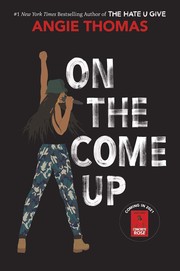
On the Come Up
Bri Jackson, a sixteen-year-old rapper in Garden Heights, chases a record deal while a viral song turns her into a symbol she never wanted to be.
2,034-word summary · 9 min read

Marriage for One
Rose marries a cold lawyer to save her coffee shop, then discovers the arrangement was never only business.
2,032-word summary · 9 min read
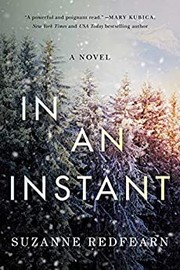
In an Instant
After a family camper crashes down a snowy mountain, sixteen-year-old Finn watches from the afterlife as survivors make impossible choices and try to live with…
2,130-word summary · 9 min read
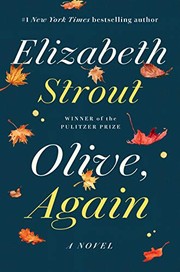
Olive, Again
Elizabeth Strout returns to Crosby, Maine, as Olive Kitteridge marries Jack Kennison, confronts her son, and faces old age, grief, and small-town judgment.
2,333-word summary · 10 min read
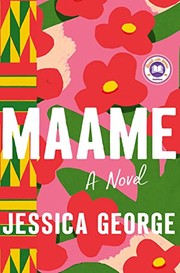
Maame
Maddie Wright, 25, has spent years as the responsible one in her Ghanaian British family, and the year she finally tries to live for herself is the year…
2,108-word summary · 9 min read
Dial A for Aunties
A wedding photographer accidentally kills her blind date, and her mother and three aunties help her hide the body during the biggest wedding of their careers.
2,076-word summary · 9 min read
Vanishing Acts
A search-and-rescue worker's perfect life cracks when her past and her father catch up.
2,799-word summary · 12 min read
The Tea Girl of Hummingbird Lane
A Chinese tea farming mother gives up a daughter who later seeks roots.
2,607-word summary · 12 min read
The Reading List
A lonely widower and a teen library worker connect through a mysterious list of books.
2,810-word summary · 12 min read
The Most Fun We Ever Had
Four Sorenson sisters orbit perfect parents hiding old cracks.
2,590-word summary · 12 min read