
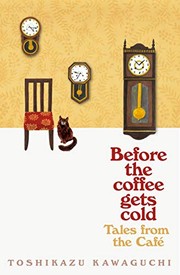
Tales from the Café
2,242-word summary 10 min read 208 pages in the book
- First published
- 2017
- Publisher
- Picador
- Pages
- 208
- ISBN
- 9781529050868
- Series
- Before the Coffee Gets Cold (#2)
Reading options
What's inside (11 sections)
The café is in a basement in Tokyo, down a narrow alley, and it has a chair that lets you travel in time. There are rules. You have to sit in the right chair. You cannot leave the café. You can only meet people who have visited the café. And you have to return before the coffee gets cold. If you do not, you become a ghost and haunt the chair forever.
That is the premise of Toshikazu Kawaguchi's Before the Coffee Gets Cold series, and Tales from the Café is the second book. It was published in Japanese in 2017 and in English by Picador in 2020, translated by Geoffrey Trousselot. It is a short novel made of four stories, all set in the same café, all following the same rules, and all concerned with the same question: what would you say to someone you have lost if you had one more chance?
The café and its people
The café is called Funiculi Funicula. It is run by Nagare, a man with a calm manner and a dry sense of humor, and Kazu, who pours the coffee that makes time travel possible. There is also Miki, a young girl who is growing up in the café, and a woman in white who sits in the corner and never speaks. The woman is a ghost, and her identity is one of the quiet revelations of the series.
The rules are explained every time, which is either comforting or repetitive, depending on your tolerance for ritual. I found it comforting. The repetition is part of the pleasure. The café is a place where the same thing happens over and over, and the sameness is what allows the characters to change. The rules are not an obstacle. They are a frame.
The time travel is not science fiction. Nobody builds a machine. Nobody explains the physics. The chair simply works, and the book is not interested in why. It is interested in what people do with the chance. The past cannot be changed. The present does not shift. The only thing that changes is the traveler. That is the emotional logic of the series, and it is very effective.
Gohtaro and Shuichi
The first story is about Gohtaro Chiba, a man who goes back to see his best friend Shuichi. More than twenty years earlier, Gohtaro was bankrupt, and Shuichi gave him a job in his restaurant. A year later, Shuichi and his wife were killed in a car accident, and Gohtaro raised their daughter, Haruka, as his own. Now Haruka is getting married, and Gohtaro has decided that he must tell her the truth about her father. He also plans to remove himself from her life after the wedding, because he feels he has no right to be her father.
The visit to Shuichi is the heart of the story. Gohtaro lies at first, saying he wants to make a video message for Haruka. Shuichi sees through him. He works out that he is dead, and he tells Gohtaro to stop being a coward. He tells him to stay in Haruka's life, to be her father, and to be happy. Gohtaro returns to the present with a new resolve. He asks Kazu whether the woman in white is her mother, and Kazu confirms it.
This story sets the pattern for the book. A person is stuck. A person travels. A person receives permission to live. The permission is not magic. It is the thing they already knew, said by someone who loves them. Kawaguchi is not trying to surprise you. He is trying to move you.
Yukio and Kinuyo
The second story is darker. Yukio Mita is a potter who has been conned by an investor and is bankrupt. His mother, Kinuyo, has just died after a long illness. He is estranged from his sister Kyoko, who did not tell him their mother was in the hospital because their mother did not want to worry him. Yukio is in despair. He goes to the past to see his mother, and he intends to let his coffee go cold, which would turn him into a ghost. He is planning to die.
The scene with his mother is quiet and devastating. Kinuyo does not give him a lecture. She talks to him the way a mother talks to a son she has not seen in a while. She asks about his work. She worries about him. She tells him she is proud of him. Yukio realizes that he has been carrying a version of his mother that is not the whole person. He drinks the coffee and returns.
The story is about grief and guilt, but it is also about the stories families tell themselves. Kyoko kept the illness from Yukio because she thought she was protecting him. Yukio felt abandoned because nobody told him. Both of them were trying to do the right thing, and both of them got it wrong. The café does not fix their relationship. It gives Yukio a reason to try.
Kurata and Asami
The third story is the most romantic and the most complicated. Katsuki Kurata is a man who travels from the past to the future. He has leukemia, and he knows he is going to die. He was about to propose to his girlfriend, Asami, when he got the diagnosis. He kept it from her. He told his friend Fumiko to bring Asami to the café on Christmas Day, but only if he had died or if Asami was happily married to someone else.
In the present, Asami has not married. She is still grieving. Fumiko tells her about Kurata's plan, and Asami decides to go to the café and pretend to be married. She borrows a wedding ring from Fumiko. She sits down across from Kurata and tells him she is happy. She gives him permission to let go.
The story is a reverse of the first two. Instead of a person from the present visiting the past, a person from the past visits the future. The emotional logic is the same. Kurata needs to know that Asami is okay. Asami needs to give him that knowledge. The lie is an act of love. It is also a sacrifice, because Asami has to pretend to be over him in order to free him.
The story is the saddest in the book, and it is also the one that feels most complete. The time travel is used to resolve a relationship that death interrupted. The rules are stretched, but they are not broken. Kawaguchi is careful about that. The café can give people a conversation, not a second chance.
Kiyoshi and Kimiko
The fourth story is about a detective, Kiyoshi Manda, who goes back to see his wife, Kimiko, thirty years after her death. He has blamed himself for her death because he was supposed to meet her at the café but was delayed by work. She left the café and was killed in a mugging. He has carried that guilt for decades.
Kazu is pregnant in this story, and she can no longer pour the coffee. Miki, who has just turned seven, pours it for the first time. The passing of the ritual from one generation to the next is the quiet miracle of the book. Miki is delighted. Kiyoshi is nervous. The scene is funny and tender at the same time.
Kiyoshi meets Kimiko in the past. She does not recognize him as an older man. He tells her he has a present from her husband. She opens the necklace and cries. She tells him she thought her husband was going to break up with her. He is shocked, because he had no idea. He reveals that he came from the future, and that he wanted to tell her he was giving up being a detective. She recognizes him by the hunting cap she gave him.
The story ends with Kiyoshi telling Kazu that she is allowed to be happy. Kazu has been grieving her mother, Kaname, and blaming herself for her death. Kiyoshi's words give her permission to live. She places her hand on her stomach and says she will be happy. Kaname appears, smiles, and disappears.
This is the story that ties the book together. The café is not just a place for individual regrets. It is a place where the living and the dead can take care of each other. The fourth story is about inheritance: of grief, of love, of the right to be happy. It is the most sentimental story in the book, and it earns its sentiment.
The rules, and why they matter
The rules are the most discussed part of the series. Readers either find them charming or repetitive. I find them useful. They create a structure that allows Kawaguchi to tell four variations on the same theme without the book feeling like a collection of unrelated short stories. The rules are also a metaphor. You cannot change the past. You cannot stay. You have to return to your life before the coffee gets cold.
That metaphor is the reason the books sell. Everyone has someone they would like to see again. Everyone has something they would like to say. The café offers a controlled, temporary version of that fantasy. It is not a way to escape. It is a way to say goodbye.
The woman in white is the other thread that ties the stories together. She is Kaname, Kazu's mother. Her presence in the café is a reminder that the boundary between the living and the dead is thin. She does not speak, but she watches. She is the quiet center of the series, and the fourth story gives her a moment of peace.
The series began as a play, and the novel keeps the theater's economy: a single set, a small cast, and scenes that begin and end with someone entering or leaving the café. That origin explains a lot about the book's pleasures and its limits. The dialogue is built to be spoken. The emotions are pitched to the back of a room. The four stories are less like chapters than like short plays, each with its own guest and its own small curtain.
That theatrical structure is also why the book is so easy to read in one sitting. There is no subplot to track, no secondary world to learn. There is a chair, a clock, a cup of coffee, and a person who needs to say something. The simplicity is not an accident. It is the whole design.
What works and what does not
The emotional directness is the book's greatest strength. Kawaguchi does not hide behind irony. He writes about grief, love, and forgiveness in plain language, and he trusts the reader to feel it. The stories are short, but they are not shallow. Each one has a clear emotional arc, and each one lands.
The café is a wonderful setting. It is small, warm, and specific. The coffee, the chairs, the clock, the basement stairs. The book makes you want to sit in a café and stay for a while. That is a rare achievement. The setting does a lot of the emotional work, because it gives the characters a place to be vulnerable.
The translation by Geoffrey Trousselot is smooth. The prose is simple, but it does not feel flat. The dialogue is natural. The book reads quickly, which is appropriate for a story about time running out.
What does not work
The repetition is the main issue. Every story explains the rules. Every story has a moment where someone says, "But you cannot change the past." Every story ends with a small epiphany. If you read the book in one sitting, the pattern becomes obvious. It is a feature of the series, but it can also feel like filler.
The characters are sketched rather than developed. They have one wound, one regret, and one conversation. That is enough for a short story, but it means the book does not have the depth of a novel. The supporting cast is thin. Nagare and Miki are charming, but they are mostly there to facilitate the guests.
The sentimentality is also a risk. The stories are designed to make you cry, and some readers will resist that. The fourth story, in particular, piles on the revelations. If you are allergic to earnestness, this book will test you. If you are not, it will probably work.
Who should read it
Tales from the Café is for readers who loved Before the Coffee Gets Cold and want more of the same. It is also for anyone who likes gentle, sad, hopeful stories about ordinary people. It is a good book for a rainy afternoon, a train ride, or a sleepless night. It is not a book for readers who want complex worldbuilding or moral ambiguity. It is a book about kindness, and it is not embarrassed by that.
I read it in two sittings, and I cried at the fourth story. I am not proud of that, but I am not surprised. Kawaguchi knows exactly what he is doing. He has built a small, warm machine for making people feel less alone. The coffee gets cold, the rules hold, and the dead get one more chance to say what they needed to say. That is enough.
FAQ
Can the characters change the past in Tales from the Café?
No. The rules say nothing done in the past changes the present, and the travelers only return with a new understanding.
Do I need to read Before the Coffee Gets Cold first?
It helps, because the café, the staff, and the rules carry over, but Tales from the Café can be read on its own.
How many stories are in Tales from the Café?
There are four stories, each centered on a different visitor and a different person they travel back or forward to see.
Similar books
More from Before the Coffee Gets Cold first, then related titles.
Before the Coffee Gets Cold
In a Tokyo cafe where guests can revisit the past until their coffee cools, four visitors seek words left unsaid with lovers and kin.
2,233-word summary · 10 min read
Ship of Magic
A sentient ship wakes when her captain dies, and the family that owns her starts to come apart over who gets to sail her.
2,026-word summary · 9 min read
The Time Paradox
When his mother falls ill with a fairy disease, Artemis Fowl travels back in time to find the extinct lemur that can cure her and confronts his younger self.
2,601-word summary · 12 min read
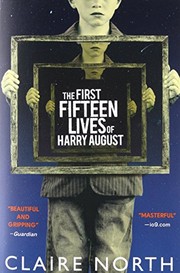
The First Fifteen Lives of Harry August
Harry August dies and is born again into the same life, again and again, until a warning from a child tells him the world is ending faster with each pass.
2,189-word summary · 10 min read

Unaccustomed Earth
Lahiri’s second story collection follows Bengali families in America and abroad, tracing the quiet distances between parents and children, spouses, and the…
2,333-word summary · 10 min read

What the Wind Knows
Annie scatters her grandfather's ashes on Lough Gill and is pulled into 1921 Ireland, where she becomes the missing Anne Gallagher and falls for Dr. Thomas…
2,056-word summary · 9 min read

This Is How You Lose Her
Yunior cycles through love affairs and betrayals in nine linked stories, tracing the damage he does and the family history behind it.
2,195-word summary · 10 min read
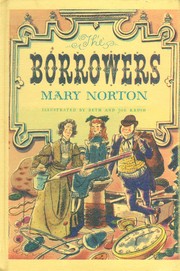
The Borrowers
A family of tiny people live under the floorboards of an English house, borrowing what they need until a lonely boy and a suspicious housekeeper change…
2,164-word summary · 10 min read

Stars Above: A Lunar Chronicles Collection
Nine Lunar Chronicles stories fill in the histories of Cinder, Wolf, Thorne, Cress, Winter, and Jacin, and end with a wedding after the war.
2,230-word summary · 10 min read
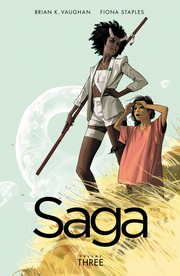
Saga, Volume 3
Marko, Alana, and Hazel hide on the planet Quietus with the reclusive author who inspired their romance, while assassins and a prince close in.
1,989-word summary · 9 min read
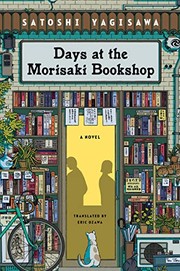
Days at the Morisaki Bookshop
Heartbroken Takako moves into her uncle's tiny secondhand bookshop in Jimbocho, and the shop and its regulars slowly give her back her life.
2,011-word summary · 9 min read
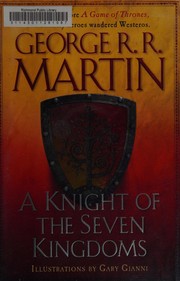
A Knight of the Seven Kingdoms
Three novellas follow Ser Duncan the Tall and his squire, Egg, through tourneys, feuds, and conspiracies in Westeros ninety years before A Game of Thrones.
2,059-word summary · 9 min read

Olive, Again
Elizabeth Strout returns to Crosby, Maine, as Olive Kitteridge marries Jack Kennison, confronts her son, and faces old age, grief, and small-town judgment.
2,333-word summary · 10 min read

The Bane Chronicles
Eleven stories across five centuries follow Magnus Bane from a ban in Peru to his first date with Alec in this illustrated Shadowhunter companion.
2,470-word summary · 11 min read
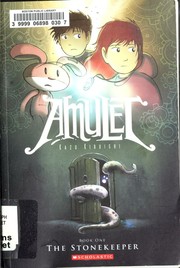
The Stonekeeper
After their father's death, Emily and Navin chase a monster into a hidden world to save their mother, and Emily's great-grandfather's amulet offers power at a…
2,753-word summary · 12 min read
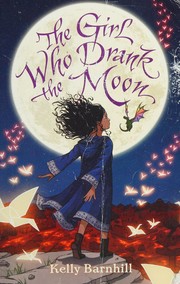
The Girl Who Drank the Moon
A witch who secretly rescues the town's sacrificed babies accidentally enmagicks one with moonlight, and the girl grows up with a power she cannot name.
2,078-word summary · 9 min read

Emerald Green
Gwyneth must close the blood circle that will crown an immortal tyrant, and the prophecy says her death is the final lock.
2,044-word summary · 9 min read
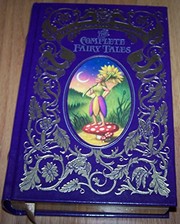
The Complete Fairy Tales
Mermaids, snow queens and tin soldiers in the full Andersen collection.
2,414-word summary · 11 min read

Stories of Your Life and Others
Eight stories about language, time and choice, including the tale behind Arrival.
2,402-word summary · 11 min read

Men Without Women
Seven stories about men living after women leave, die, or stay distant.
2,673-word summary · 12 min read

Kitchen
Orphan Mikage finds home in a kitchen with Yuichi and Eriko after loss.
2,597-word summary · 12 min read

A Swiftly Tilting Planet
Charles Wallace rides time with a unicorn to stop a dictator before birth.
2,193-word summary · 10 min read
The Time Keeper
Mitch Albom's 2012 fable follows Dor, the first measurer of time punished in a cave, as he returns to guide a heartbroken teen and a dying businessman toward…
2,466-word summary · 11 min read

Sapphire Blue
Gwyneth trains with Gideon for new jumps while Lucy and Paul warn the circle must stay open.
2,218-word summary · 10 min read

Night Watch
Vimes is thrown back in time and must train his young self through a revolution.
2,003-word summary · 9 min read
The Rules of Magic
Franny, Jet, and Vincent Owens test strict family rules and a love curse in 1960s Manhattan and Massachusetts in Alice Hoffman's warm prequel about love, loss,…
2,686-word summary · 12 min read

The Eyre Affair
Literary detective Thursday Next chases a villain who kidnaps Jane Eyre from her own novel in an alternate 1985 England.
1,929-word summary · 9 min read
Rise of the Evening Star
Kendra and Seth return to Fablehaven as the Society of the Evening Star closes in, with a traitor inside the house and a demon prison key at stake.
2,874-word summary · 13 min read

A Wind in the Door
Meg must save Charles Wallace from a cosmic sickness by naming and loving what she fears, helped by a cherubim called Progo.
2,214-word summary · 10 min read
A Tale for the Time Being
A diary by bullied Tokyo teen Nao washes up in Canada, pulling novelist Ruth into her family past.
2,148-word summary · 10 min read