
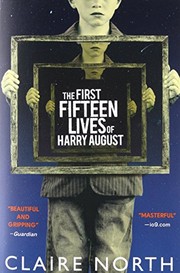
The First Fifteen Lives of Harry August
2,189-word summary 10 min read 405 pages in the book
- First published
- 2014
- Publisher
- Redhook
- Pages
- 405
- ISBN
- 9780316399623
Reading options
What's inside (9 sections)
Harry August is born in the women's washroom of a railway station in Berwick-upon-Tweed on the first day of 1919. His mother dies in childbirth. His father is a soldier who never sees him. He is adopted by a groundsman and his wife, grows up ordinary, and dies in a hospital in Newcastle in 1989. Then he is born again, in the same washroom, on the same day, with all of his memories intact.
That is the premise, and it is a very good one. Harry is a kalachakra, one of a small number of people who live the same life over and over. He does not travel through time. He does not change the past. He simply dies and wakes up as a baby, with everything he learned still in his head. The world resets. The people he loves are born again. The century runs its course. He gets another go.
Claire North, a pseudonym for the British writer Catherine Webb, published the novel in 2014. It won the John W. Campbell Memorial Award and was nominated for the Arthur C. Clarke and BSFA awards. It is a science fiction book that reads like a memoir, a thriller, and a philosophical argument at the same time. It is also very funny in places, which people do not always mention.
I came to it expecting a time-loop puzzle and found a book about friendship, betrayal, and the temptation to fix the world by force. The loop is the mechanism. The relationship is the story.
The rules
The rules are strict, and North never cheats them. Harry is reborn at the same moment, in the same place, to the same mother. He cannot choose a different family or a different century. He cannot prevent his mother's death. He cannot save everyone he loves. He can only make different choices within the life he has.
He remembers everything. That is his particular gift. Most kalachakra lose details over time. Harry is a mnemonic, which means his memory is perfect and permanent. He can recite conversations from lives that ended decades ago. He can learn a language in one life and speak it in the next. He can accumulate expertise the way other people accumulate furniture.
The Cronus Club is the society that finds people like him. Its members track new kalachakra, help them through childhood, and teach them the rules. The most important rule is not to interfere. History is fragile. Small changes can have large consequences. The Club has seen what happens when a member decides to improve the world, and the memory of that disaster shapes everything.
Virginia is the Club elder who becomes Harry's guide. She is theatrical, sharp, and kind in a way that is not always comfortable. She rescues him from an asylum, introduces him to the Club, and teaches him how to survive. She is also, later, one of the people he has to stop. That is the book's pattern. The people who save you are not separate from the people who hurt you. They are often the same people, in different circumstances.
The lives
The novel is structured around Harry's lives, but it is not a simple catalogue. North jumps backward and forward, letting Harry tell the story in the order that makes emotional sense. We see him as a child, a soldier, a doctor, a physicist, a prisoner, a spy. We see him fall in love and lose the person he loves. We see him try to be good and fail.
One of the best sections is his marriage to Jenny Munroe, a surgeon he meets in Glasgow. They are happy for a while. Then Harry tells her the truth about his lives. He cannot help himself. He wants to be known. Jenny listens, watches his predictions come true, and then leaves. The truth is too much. It changes the ground under her feet. Harry learns that honesty is not always a gift. Sometimes it is a burden you hand to someone else because you cannot carry it alone.
Another section follows his imprisonment by Franklin Phearson, an intelligence agent who learns that Harry can predict the future. Phearson is not a cartoon villain. He believes he is helping his country. He uses drugs, isolation, and torture to extract information. Harry resists until he cannot. The scenes are tense and claustrophobic. They also show how quickly a person with unusual knowledge becomes a resource to be mined.
The asylum chapters are even worse. Harry is committed because his memories sound like delusions. The doctors medicate him. The staff treat him as a case. He is not believed, and the not being believed is its own kind of violence. North is good at showing how institutions handle people who do not fit their categories. They do not argue with them. They sedate them.
Vincent
Vincent Rankis is the other half of the book. Harry meets him at Cambridge, where Vincent is a brilliant, impatient physics student. They argue about time, causality, and the nature of the universe. They become friends. Then they discover that they are both kalachakra, and the friendship becomes something else: a rivalry, a collaboration, a bond that neither of them can name.
Vincent wants to build a quantum mirror. The idea is simple and terrifying: a machine that can deduce the entire state of the universe from a single atom. If it works, it will answer every question. It will also give its builder access to knowledge that no human being should have. Vincent believes the risk is worth it. Harry believes the risk is the point. The machine is not just a scientific project. It is a bid for godhood.
Vincent's project is built at Pietrok-112, a secret research compound in the Soviet Union. Harry joins him, partly out of curiosity, partly out of friendship, partly because he wants to understand what Vincent is. The compound is a labyrinth of labs, barracks, and security checkpoints. The workers are watched. The science is real. The politics are lethal.
Then Harry discovers that the Cronus Club has been attacked. Members are disappearing. Some have been killed before birth. The Forgetting, a procedure that erases memory, is being used on others. The trail leads back to Vincent. Vincent has decided that the Club is an obstacle to progress. He is willing to destroy it to build his machine.
The betrayal is personal and political at once. Harry has spent lifetimes trying to avoid exactly this kind of intervention. Vincent has spent lifetimes preparing for it. The novel does not pretend that one is simply good and the other simply evil. Vincent is charming, generous, and genuinely brilliant. He is also a man who has decided that other people's lives are acceptable collateral. Harry is not much better by the end.
The long game
The middle of the book is a cat-and-mouse game across lives. Harry hides his origins, rebuilds the Club, and tries to find a way to stop Vincent without becoming him. Vincent hunts Harry, erases his allies, and builds his machine. The two men keep meeting, keep hurting each other, and keep failing to walk away.
One of the most effective sections is Harry's time as Vincent's secretary. He works beside the man he is trying to destroy. He takes notes, manages schedules, and watches Vincent be kind to his staff. He also sabotages the project in small ways. He alters calculations. He substitutes materials. He makes the machine fail without making it obvious. The sabotage is not heroic. It is petty, patient, and deeply satisfying.
North is good at the texture of long life. Harry has favorite meals, favorite streets, favorite versions of people. He knows which waiter will remember his order and which one will not. He knows how a city will change before it changes. The accumulated detail gives the book weight. It also makes the losses hurt more. When a person dies, Harry knows exactly what the world has lost.
The novel's treatment of memory is one of its strongest ideas. Harry remembers everything, but he cannot always understand what he remembers. He has the facts without the wisdom. He can replay a conversation and still miss the point. That gap between data and meaning is the book's real subject. It is also the reason the ending works.
The mirror
The quantum mirror is not a weapon. It is a machine for knowing. Vincent believes that if he can understand the universe completely, he can fix it. Harry believes that the attempt to fix it is what breaks it. The novel sides with Harry, but it does not let him off the hook. Harry's sabotage causes a disaster. People die. The machine overheats and releases radiation. Harry saves Vincent from the explosion, which is either mercy or weakness, depending on how you read it.
Both men end up in the hospital with radiation sickness. Vincent is dying. He gives Harry the one thing he has always kept secret: his birth name, his parents' names, the place and date of his birth. It is an act of intimacy. It is also a weapon. A kalachakra can be killed permanently if someone prevents their birth. Vincent has just handed Harry the means to erase him.
Harry's final plan is to find Vincent's parents in a future life and poison them before Vincent is conceived. He will kill two innocent people to stop one guilty one. He will do it because he has decided that Vincent's existence is too dangerous to allow. The book ends before we see whether he goes through with it. The plan itself is the ending. Harry has become the thing he spent lifetimes opposing.
That is a bold choice, and it is the reason the book stays with people. It refuses the comfort of a clean victory. Harry does not defeat Vincent by being better. He defeats him by being willing to do something terrible. The reader has to decide whether that is justice, necessity, or revenge. North does not decide for us.
What works and what does not
The book is not perfect. The first hundred pages are slow. North is building a world and a voice, and she takes her time. Some readers will find the early lives repetitive. They are supposed to be repetitive, but that does not make them less repetitive.
The science is soft. The quantum mirror is a thought experiment, not a plausible machine. North knows this. The book is not interested in the engineering. It is interested in the ethics. Readers who want hard science fiction will be disappointed. Readers who want a novel of ideas will be satisfied.
The female characters are uneven. Virginia is vivid, Jenny is memorable, and Akinleye is a good friend, but they often exist to teach Harry something or to be lost. The book is narrated by a man who has spent centuries inside his own head, and it shows. Some of the women feel like ideas rather than people. That is a fair criticism, and it is not fully answered by the ending.
The prose is deliberate. North writes long, winding sentences and short, sharp ones. She uses repetition as a rhythm. Some readers find it hypnotic. Others find it affected. I like it, but I can see why it would wear on someone. The book is 400 pages of a very specific voice. You have to want to be inside that voice.
Why it lasts
The First Fifteen Lives of Harry August lasts because it asks a question that most time-loop stories avoid: what would you become if you had to live the same life again and again? Harry becomes patient, lonely, and morally compromised. Vincent becomes brilliant, ruthless, and convinced of his own rightness. Neither of them becomes wise. Wisdom is not what repetition gives you. Repetition gives you skill.
The book also understands that friendship is not the opposite of betrayal. It is the thing that makes betrayal possible. Harry and Vincent love each other. That is why the ending hurts. If they were enemies from the start, the story would be a simple duel. Because they are friends, it is a tragedy.
And the book is fun. It has spies, secret societies, a mad scientist, a chase across Europe, and a machine that might end the world. It has a narrator who can tell you what will happen and still surprise you. It has a final image that is both intimate and apocalyptic. That is a rare combination.
Read it if you like speculative fiction that takes ideas seriously. Read it if you have ever wondered what you would do differently in your own life. Read it if you want a book that trusts you to sit with an uncomfortable ending. Do not read it if you need a hero. There are no heroes here. There are only people who have lived too long and have to decide what they are willing to do with the time they have.
FAQ
Is The First Fifteen Lives of Harry August a time travel book?
It is usually shelved as science fiction about repeated lives rather than machine-based time travel. Harry relives the same years from 1919 onward.
What is a kalachakra in the novel?
A person who is reborn into the same life after death and can carry memories across cycles. Harry is an unusually precise rememberer, called a mnemonic.
Does the book stand alone?
Yes. It is a single novel, though Claire North has written other books in a similar speculative style.
Similar books
The Eyre Affair
Literary detective Thursday Next chases a villain who kidnaps Jane Eyre from her own novel in an alternate 1985 England.
1,929-word summary · 9 min read
Recursion
False pasts feel truer than true ones as a memory chair lets the grieving rewrite deaths.
1,995-word summary · 9 min read
The Bone Clocks
A teenage runaway, a Cambridge con artist, a war reporter and a dying novelist circle a hidden war between immortals across sixty years, with Holly Sykes at…
2,125-word summary · 9 min read

Paper Girls, Volume 1
Four paper girls in 1988 Ohio chase a stolen walkie-talkie into a basement and stumble into a time war, flying dinosaurs, and an older version of themselves.
2,235-word summary · 10 min read
When You Reach Me
A sixth grader in 1970s New York gets strange notes that seem to predict the future.
2,456-word summary · 11 min read
A Swiftly Tilting Planet
Charles Wallace rides time with a unicorn to stop a dictator before birth.
2,193-word summary · 10 min read
Gideon the Ninth
Swordswoman Gideon guards necromancer Harrow in a deadly Emperor trial.
2,232-word summary · 10 min read
Dirk Gently's Holistic Detective Agency
Holistic detective Dirk Gently links a Cambridge murder, a ghost, and time travel to stop a four-billion-year-old mistake.
3,000-word summary · 13 min read
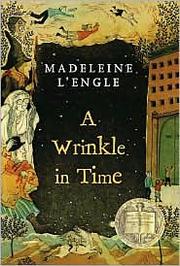
A Wrinkle in Time
Meg Murry, Charles Wallace and Calvin tessar past Mrs Whatsit, Mrs Who and Mrs Which to Camazotz to free Mr Murry from IT.
2,055-word summary · 9 min read
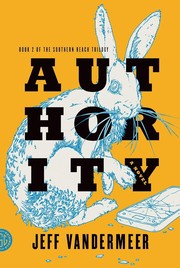
Authority
The new director of the Southern Reach takes over an agency that is hiding the truth about Area X, and the building starts to change around him.
2,029-word summary · 9 min read
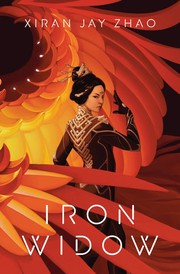
Iron Widow
Wu Zetian enlists to avenge her sister, kills her pilot, and becomes an Iron Widow in a mecha Huaxia where the machines are built to kill women.
2,444-word summary · 11 min read

Archenemies
Nova steals for the Anarchists while Adrian hides his Sentinel identity, and a serum that erases prodigy powers puts them both at risk.
2,485-word summary · 11 min read
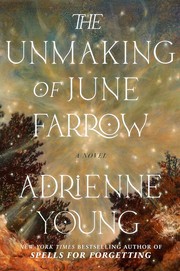
The Unmaking of June Farrow
A woman in a North Carolina flower-farming family walks through a red door into 1951, where she must solve her mother's disappearance and decide whether to…
2,701-word summary · 12 min read
The Time Paradox
When his mother falls ill with a fairy disease, Artemis Fowl travels back in time to find the extinct lemur that can cure her and confronts his younger self.
2,601-word summary · 12 min read
Tales from the Café
Four more visitors to a Tokyo café travel through time under strict rules, each hoping to say the thing they could not say before.
2,242-word summary · 10 min read
Sleeping Giants
A girl falls into a field and lands in a giant metal hand. Years later a secret team assembles the rest of the machine, and it chooses its own pilots.
2,466-word summary · 11 min read
Once Upon a River
A wounded man stumbles into a riverside inn carrying what appears to be a drowned child who is not quite dead, and the story braids the guesses of everyone who…
2,173-word summary · 10 min read
The Last Mile
Melvin Mars is hours from execution for his parents' murder when another man confesses, and FBI cold case detective Amos Decker goes looking for the trap.
2,746-word summary · 12 min read

The Hazel Wood
Alice Proserpine has spent her life running from bad luck. When her mother vanishes, she follows a trail of fairy-tale clues to her grandmother's estate and…
2,064-word summary · 9 min read
Stars Above: A Lunar Chronicles Collection
Nine Lunar Chronicles stories fill in the histories of Cinder, Wolf, Thorne, Cress, Winter, and Jacin, and end with a wedding after the war.
2,230-word summary · 10 min read
Saga, Volume 3
Marko, Alana, and Hazel hide on the planet Quietus with the reclusive author who inspired their romance, while assassins and a prince close in.
1,989-word summary · 9 min read
Locke & Key, Vol. 1: Welcome to Lovecraft
After their father is murdered, the Locke children move into a haunted family estate where keys unlock doors to ghosts, other places, and dangerous secrets.
2,019-word summary · 9 min read
House of Salt and Sorrows
Annaleigh Thaumas investigates her sister's death in a cursed island manor where the balls are illusions and the sea god is always listening.
2,025-word summary · 9 min read

The Memory Police
On an unnamed island, ordinary things keep vanishing from memory, and a novelist hides her editor from the police who make sure the vanished stay forgotten.
2,440-word summary · 11 min read
Ghost Story
Dead but not gone, Harry Dresden returns as a spirit to find his killer, protect the friends he left behind, and learn why the afterlife gave him a second…
1,978-word summary · 9 min read
Cold Days
Back from the dead as the Winter Knight, Harry Dresden must follow Mab's order to kill an immortal and defend Demonreach on Halloween night.
2,361-word summary · 10 min read
The Caves of Steel
Detective Elijah Baley must solve a Spacer's murder in a domed New York, partnered with R. Daneel Olivaw, a humaniform robot built in the victim's image.
2,445-word summary · 11 min read
Men at Arms
The City Watch gets new recruits and a murder case when the Disc's only handgun turns up in Ankh-Morpork, in the fifteenth Discworld novel.
2,216-word summary · 10 min read
Emerald Green
Gwyneth must close the blood circle that will crown an immortal tyrant, and the prophecy says her death is the final lock.
2,044-word summary · 9 min read
Deadlocked
A dead woman on Eric's lawn starts a murder investigation, a vampire queen wants Eric as her consort, and the fairies in Sookie's life close in.
2,885-word summary · 13 min read